 English EN


How Are Collagen Peptides Applied In Modern Industries
Collagen peptides are applied in food, pharma, cosmetics, and eco-materials, supporting joint health, skin, and sustainable industrial solutions.
More
For overseas buyers in the nutraceutical and cosmetic ingredient space, sourcing a reliable, vegan-friendly active peptide is often a challenge. Wheat peptides, derived from plant-based hydrolyzed protein, offer a compelling solution for daily skincare formulations. They provide excellent moisture retention, film-forming properties, and antioxidant support without the odor or allergen concerns sometimes associated with marine or bovine sources. This article explores how wheat peptides fit into modern beauty-from-within and topical skincare products, with real parameter ranges and application guidance for purchasing managers and R&D teams.
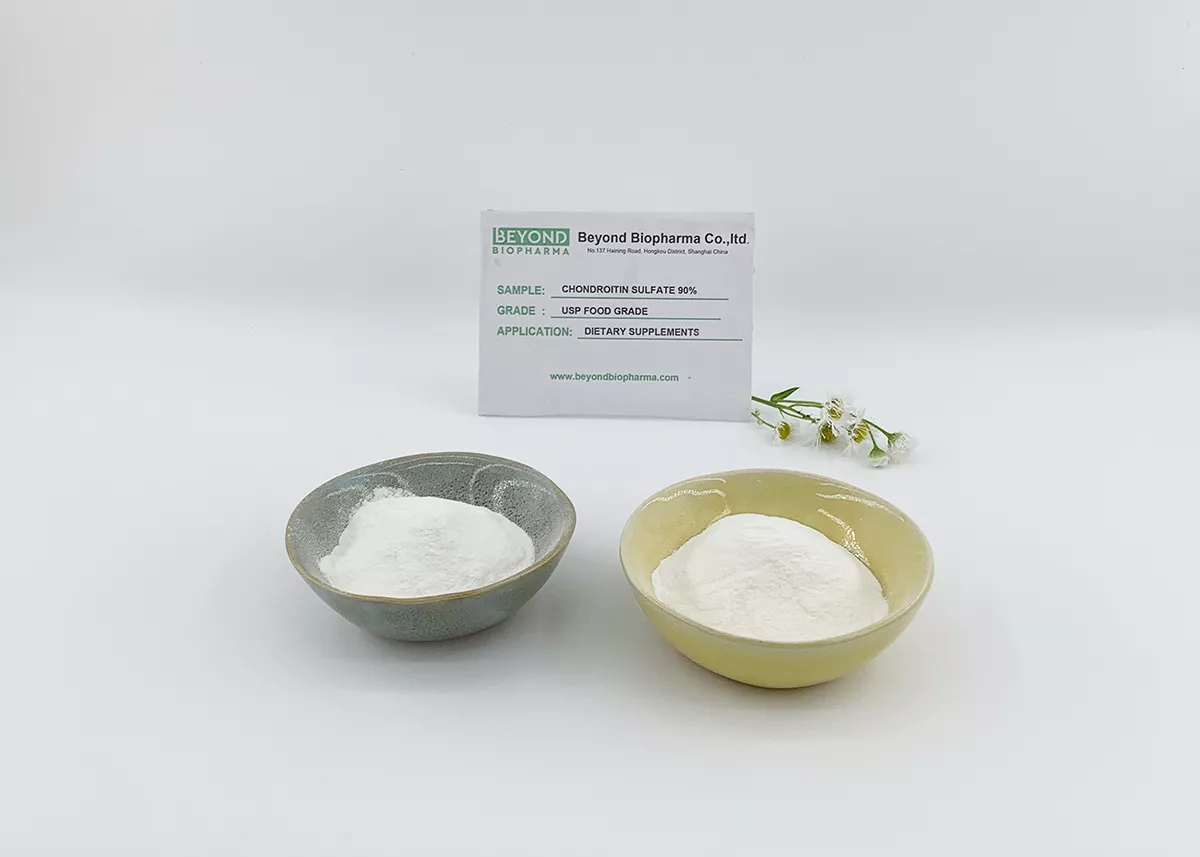
Wheat peptides are short-chain amino acid sequences obtained through enzymatic hydrolysis of wheat protein. In daily skincare routines, they function as bioactive humectants and film formers. Unlike some collagen peptides that require animal sourcing, wheat peptides are entirely plant-based, making them a strong alternative for vegan and allergen-free formulations. A common sourcing pain point for buyers is batch consistency and solubility — wheat peptides typically offer high solubility in water and low viscosity, which simplifies cold-process manufacturing.
For product developers, the key advantage lies in molecular weight. Most wheat peptides fall within a range of 500–3,000 Da, which supports skin penetration and moisture-binding capacity. This makes them comparable to low-molecular-weight fish collagen peptides in terms of absorption, but without the fishy smell that sometimes requires masking in cosmetic formulas.
The production process involves controlled enzymatic hydrolysis of wheat gluten or wheat protein isolate. Temperature and pH are carefully monitored to achieve a consistent peptide profile. The resulting powder is typically light beige to off-white, with a neutral taste and mild cereal-like odor. Quality markers include protein content (typically ≥85%), solubility (≥98% in water), and absence of heavy metals or microbial contaminants.
For buyers, the most reliable way to assess quality is through the Certificate of Analysis (COA), which should specify molecular weight distribution, ash content, and microbiological limits. In-house lab testing, such as that performed at Beyond Biopharma’s facility, ensures each batch meets food-grade or cosmetic-grade specifications before shipment.
Below is a table of commonly accepted industry parameters for wheat peptides used in skincare and nutraceutical applications. Note that these are typical ranges; final values should always be confirmed per COA or sample.
| Parameter | Typical Range | Notes |
|---|---|---|
| Protein Content | ≥85% | Dry basis; higher values indicate purity |
| Molecular Weight | 500–3,000 Da | Lower MW supports skin absorption |
| Solubility | ≥98% | In water at 20°C |
| Moisture | ≤8% | Low moisture extends shelf life |
| Ash | ≤2% | Indicates mineral content |
| pH (1% solution) | 5.0–7.0 | Compatible with most skincare pH |
Typical industry range; final values per COA / sample.
Selection depends on your product form and target market. For topical serums and creams, a low-molecular-weight wheat peptide (under 1,500 Da) with high solubility is ideal. For oral beauty supplements or nutraceutical powders, a standard food-grade wheat peptide with protein ≥85% works well. If you are formulating for vegan or allergen-free claims, ensure the supplier provides documentation on source and processing aids.
For gummies and softgels, wheat peptides can be combined with edible gelatin or pharmaceutical gelatin to create hybrid delivery systems. In joint health blends, wheat peptides can complement bovine chondroitin sulfate sodium and food-grade hyaluronic acid powder for a comprehensive beauty-from-within formula.
Beyond Biopharma, headquartered in Shanghai, China, has over 10 years of experience in the food-ingredient industry. Our product portfolio includes collagen peptides, gelatin, and plant protein peptides — including wheat peptides — all manufactured in a GMP clean workshop with fully automatic production lines and stainless-steel sealed piping. We export to more than 50 countries and hold ISO 9001, US FDA registration, and select Halal/Kosher certifications.
Our in-house lab performs heavy-metal and microbiological testing on every batch, supported by a dedicated QA/QC team. We offer free samples and formulation support across three grades: food, pharmaceutical, and cosmetic. Whether you need a standard wheat peptide or a custom molecular weight profile, we can accommodate bulk supply and OEM requirements.
Wheat peptides are derived from wheat protein, which contains gluten. They are not suitable for individuals with celiac disease or gluten intolerance. For gluten-free formulations, consider plant protein peptides from pea or rice sources, which are available as alternatives.
When stored in a cool, dry place away from direct sunlight, wheat peptide powder typically has a shelf life of 24 months from the date of manufacture. Always check the COA for specific storage recommendations and expiration dates.
Yes, wheat peptides can serve as a vegan alternative to collagen peptides in topical skincare. They provide similar moisture-binding and film-forming benefits. However, for oral supplements targeting joint or bone health, collagen peptides or pharmaceutical gelatin may be more appropriate.
For international buyers, ISO 9001, US FDA registration, and Halal or Kosher certifications are common requirements. Ensure the supplier provides a COA with heavy-metal and microbiological data. Beyond Biopharma offers these certifications for select products.
Both wheat peptides and fish collagen peptides have low molecular weights that support absorption. Fish collagen peptides typically range from 2,000–5,000 Da, while wheat peptides are often smaller (500–3,000 Da). The choice depends on your target market — vegan versus marine-sourced — and formulation requirements.
Wheat peptides are heat-stable up to 80°C for short periods. For extended heating or high-temperature processing, it is advisable to add them during the cooling phase to preserve bioactivity. Always test compatibility with your specific formulation conditions.
If you are evaluating wheat peptides for your next skincare or nutraceutical product, we invite you to contact Beyond Biopharma. Please provide the following details so we can send you free samples and a tailored quote:
Our team will respond with product documentation, COA samples, and formulation guidance. Wheat peptides are a versatile, plant-based ingredient that can elevate your daily skincare product line — and we are here to help you source them reliably.

We provide you with comprehensive foreign trade solutions to help enterprises achieve global development
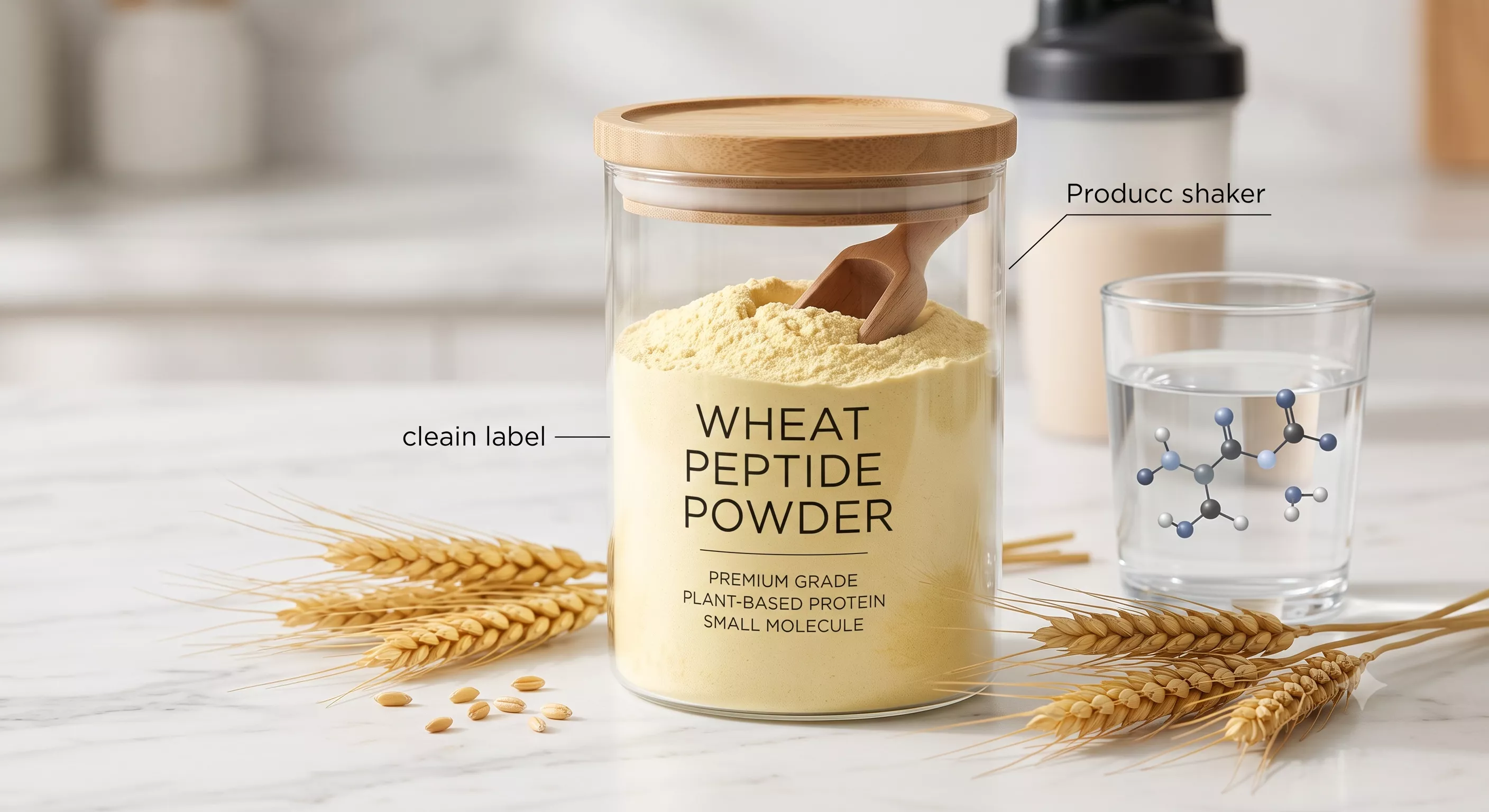
Source ultra-pure, high-solubility wholesale hydrolyzed wheat gluten peptide in bulk. Rich in plant-bound Glutamine ($\ge 25\%$) for muscle recovery and gut barrier health.
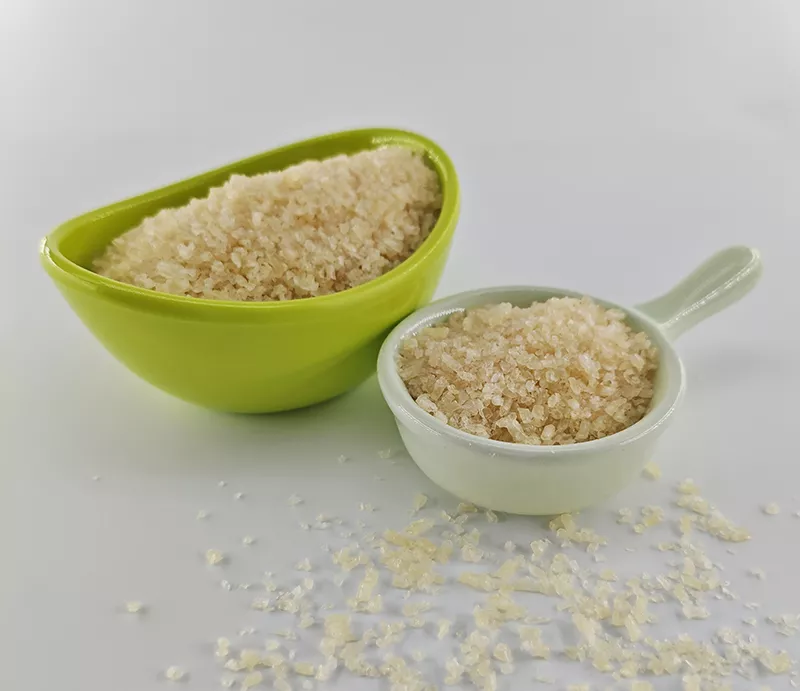
Stability, Swallowing Enhancement, and Controlled Release
BEYOND BIOPHARMA is a specialized manufacturer of high-quality Undenatured Collagen Type II. Utilizing low-temperature, non-enzymatic extraction methods, our Undenatured Collagen Type II retains its native, triple-helix structure, essential for modulating the immune system's response to joint health and providing superior support for mobility, flexibility, and overall joint comfort.
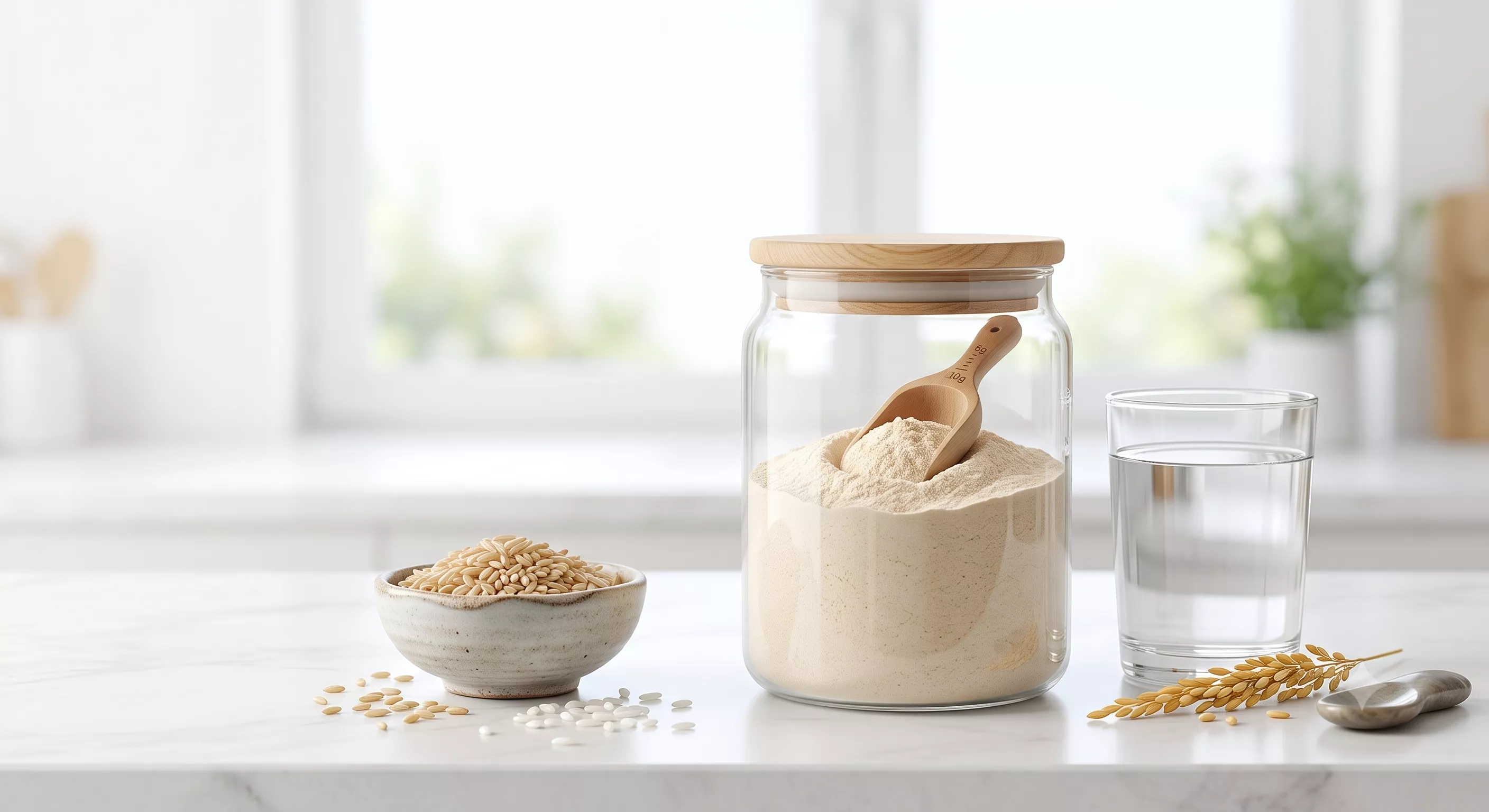
Source ultra-pure, 100% water-soluble wholesale hydrolyzed rice protein peptide in bulk. Over 85% molecules under 1000 Da. Ideal for infant nutrition, clean-label sports formulas, and sensitive skincare.
Select the most popular foreign trade service products to meet your diverse needs
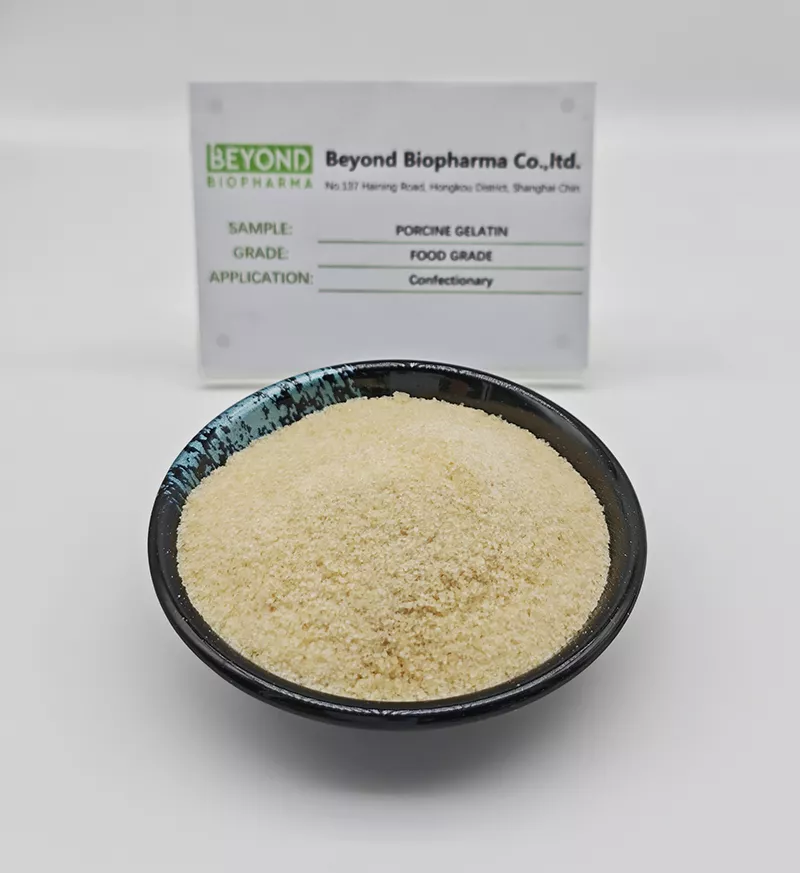
Food-grade porcine gelatin is a highly versatile and cost-effective natural protein derived from the collagen found in pig skin and bones. It is a premier gelling agent known for its exceptional clarity, neutral taste, and thermal reversibility.
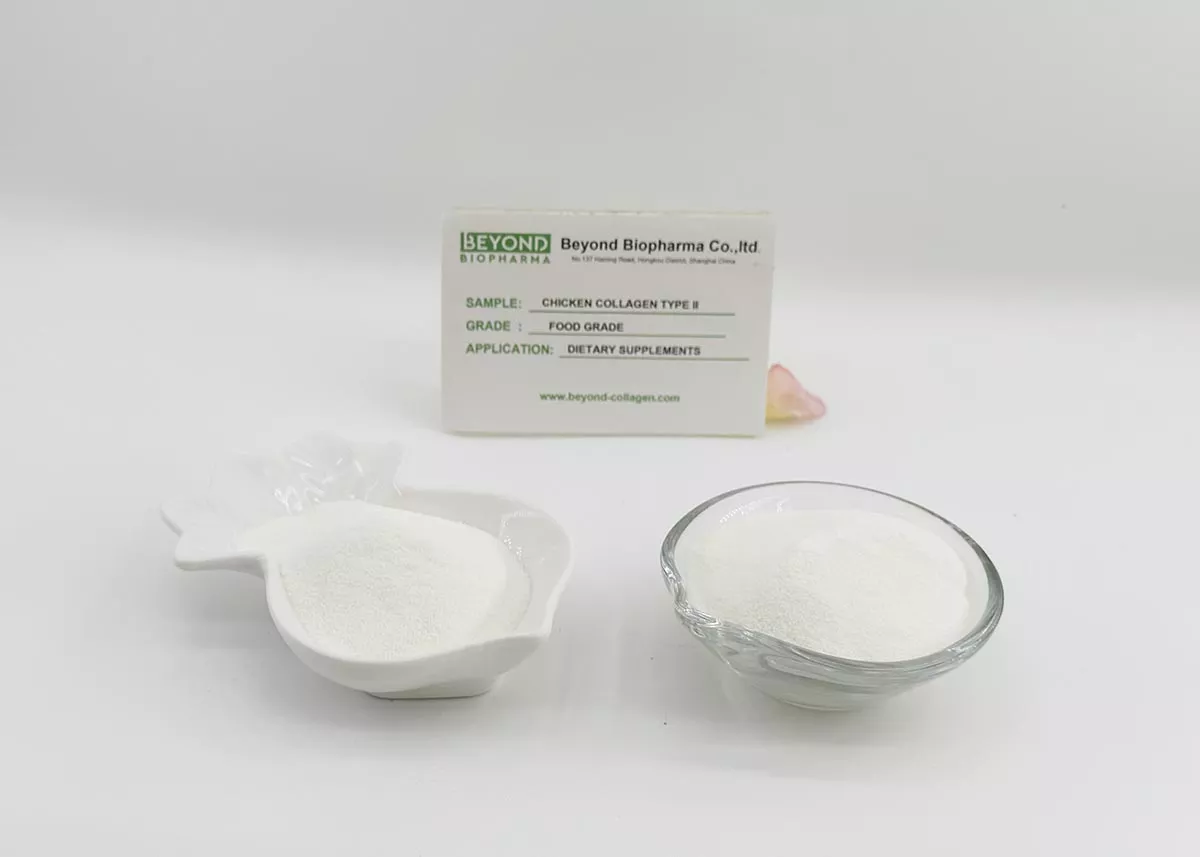
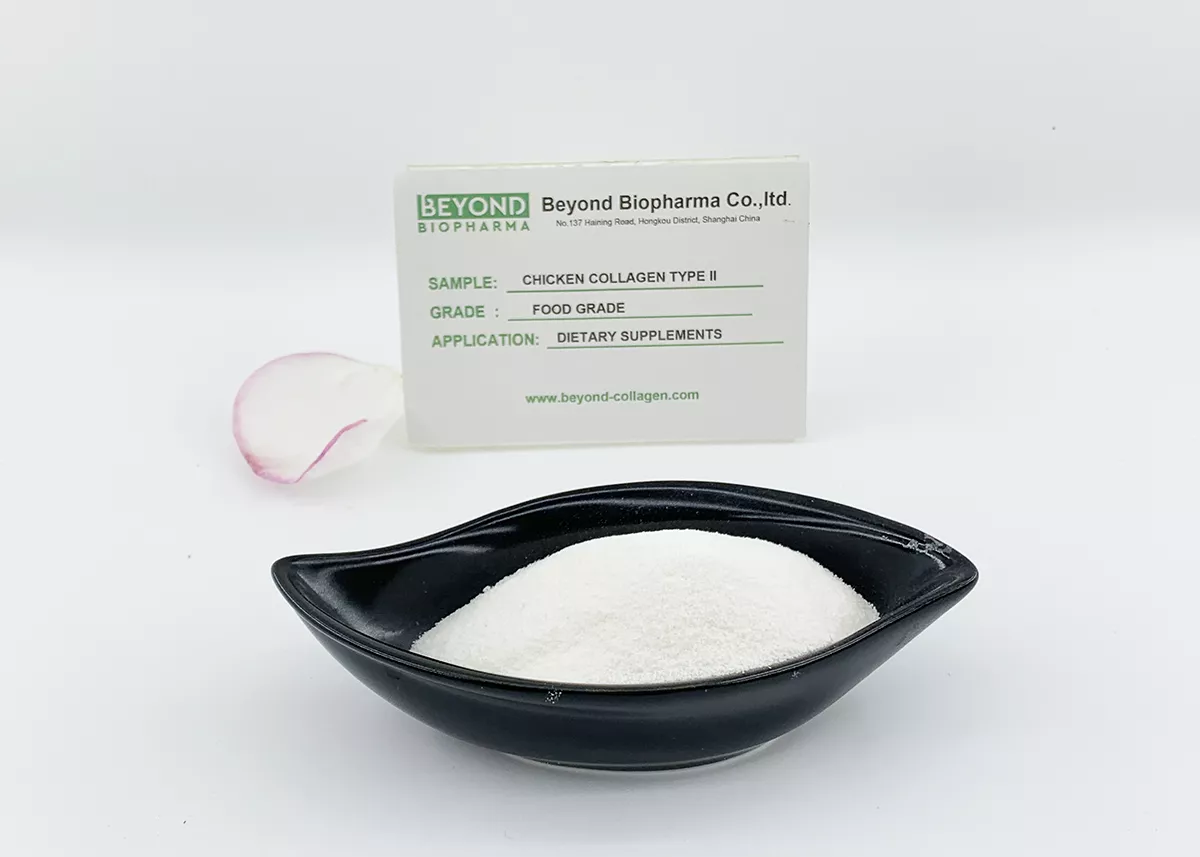
BEYOND BIOPHARMA is a specialized manufacturer of highly purified Hydrolyzed Collagen Type II. Through advanced enzymatic hydrolysis, we create low-molecular-weight collagen peptides that are highly bioavailable, offering foundational nutritional support for cartilage repair, joint function, and skin health. Our product is designed for rapid absorption and maximum efficacy in oral supplements.
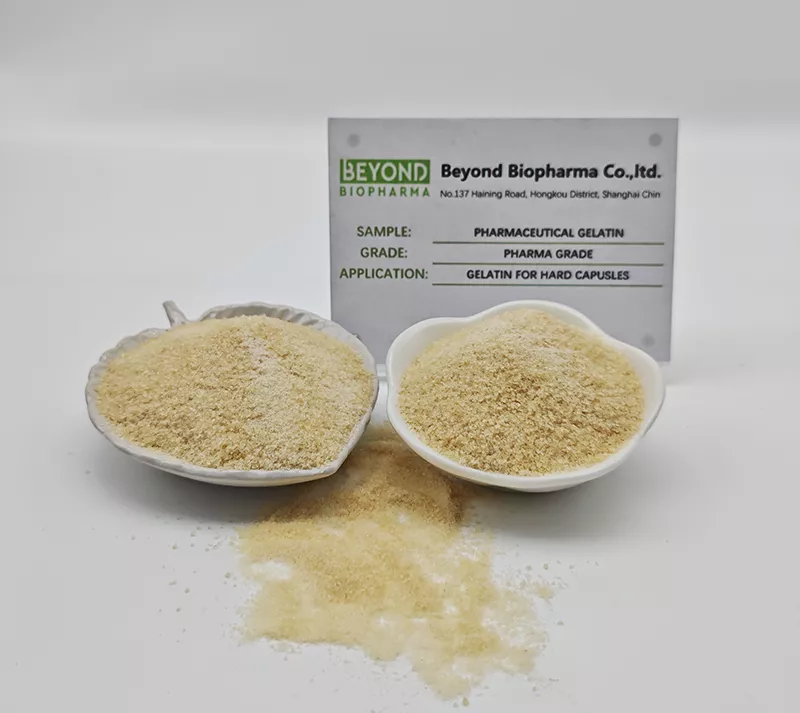
The high-strength and rapid-setting characteristics of Bovine Bone Gelatin ensure it forms a stable, uniform, and durable shell that preserves the integrity of the active pharmaceutical ingredient (API).
Tel:+86 21 65010906
Cell/Whatsapp/Wechat:
+86 13482884055
+86 18657345785
Email: sales@beyondbiopharma.com





User Comments
Service Experience Sharing from Real Customers
Megan
Bakery Shift SupervisorI’ve been using Wheat Peptides in our sourdough starter for about three months now, and the difference in crumb structure is unreal. Our loaves are holding moisture way longer without getting gummy. Even our pickiest regulars have noticed a softer crust. Definitely worth the switch.
Liam
R&D Food TechnologistTested these peptides in a high-protein cracker prototype. The water binding capacity is solid, and it didn't mess with the final flavor profile like some hydrolyzed proteins do. Only gave 4 stars because the solubility could be a tad better in cold mixing, but for hot-process applications it’s a win.
Tanya
Plant ManagerWe switched our entire line of gluten-free bread mixes to include Wheat Peptides for structure. The dough handling improved dramatically—less stickiness on the conveyor belts, fewer rejects. Production downtime dropped by about 12% since the change. My maintenance team is happy, and so is accounting.
Derek
Sous ChefTried incorporating these into a vegan pasta dough for a pop-up event. It did help with elasticity, but I noticed a faint cereal-like aftertaste that I couldn’t mask completely with herbs. Might work better in savory pastries or breadsticks. Not a bad product, just not a perfect fit for my specific use case.