How Soy Peptides Enhance Skin Structure and Elasticity
Article Summary: Soy peptides are gaining traction in the nutraceutical and food-ingredient space as a plant-based, allergen-friendly solution for supporting skin structure and elasticity. This article explores how soy peptides work at the molecular level, their typical specifications, and practical applications for supplement and functional food formulators. We also provide sourcing guidance for overseas buyers looking for reliable bulk supply.
For overseas buyers and product developers in the supplement, nutraceutical, and pharmaceutical excipient industries, sourcing ingredients that deliver proven benefits without compromising on safety or regulatory compliance is a constant challenge. Soy peptides have emerged as a compelling option for those seeking to enhance skin structure and elasticity through plant-based formulations. Unlike some animal-derived collagen peptides, soy peptides offer a vegan-friendly profile that meets the growing demand for allergen-free and sustainable ingredients. This article provides a professional, data-driven look at how soy peptides work, their key specifications, and how you can integrate them into your product lines.
What Are Soy Peptides and How Do They Support Skin Health?
Soy peptides are short chains of amino acids derived from soy protein through enzymatic hydrolysis. This process breaks down the protein into smaller, more bioavailable fragments, typically with a molecular weight below 5,000 Da. The resulting peptides are highly soluble and easily absorbed by the body. In the context of skin health, soy peptides are believed to stimulate fibroblast activity, which in turn promotes the production of collagen and elastin — two key proteins that maintain skin firmness and elasticity. Research suggests that specific soy peptide sequences can inhibit enzymes like collagenase and elastase, which break down skin matrix components, thereby helping to preserve skin structure.
How Are Soy Peptides Produced?
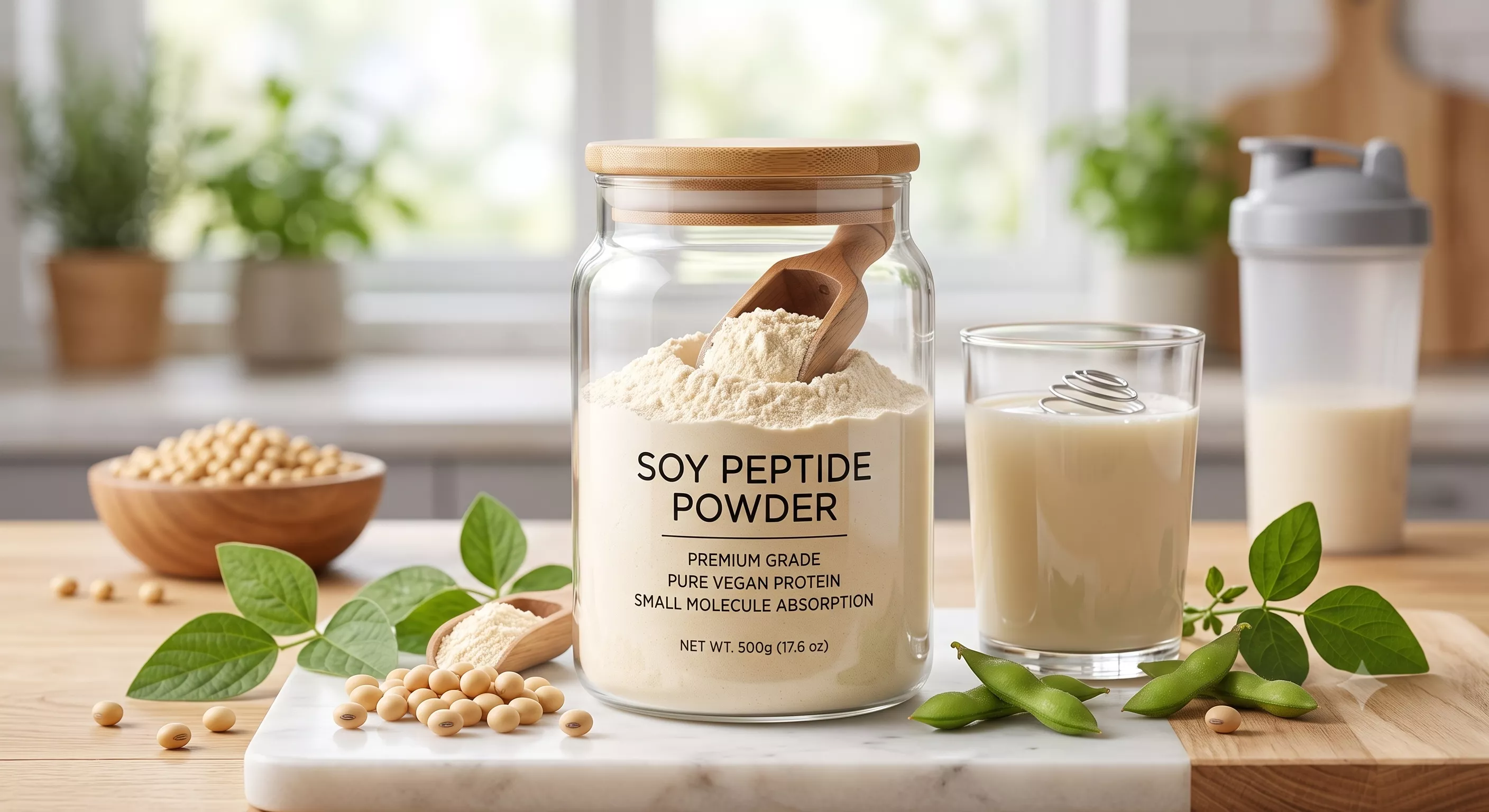
The production process for soy peptides typically involves the following steps: soy protein isolate is first extracted from defatted soybeans. Then, controlled enzymatic hydrolysis using food-grade proteases breaks the protein into peptides. The hydrolysate is then filtered, concentrated, and spray-dried into a fine powder. Key quality markers include low bitterness (achieved through specific enzyme selection and processing conditions), high solubility in cold water, and a consistent amino acid profile. The molecular weight distribution is a critical parameter, as it influences absorption rate and biological activity. For skin health applications, lower molecular weight fractions (around 500–2,000 Da) are often preferred for faster uptake.
Typical Specifications for Soy Peptides (Industry Reference Ranges)
The table below outlines common parameter ranges for soy peptides used in nutraceutical and food applications. Please note these are typical industry ranges; final values should be confirmed per Certificate of Analysis (COA) and sample testing.
| Parameter |
Typical Range |
Notes |
| Protein Content |
80–90% |
Dry basis, nitrogen-to-protein factor 6.25 |
| Molecular Weight |
Below 5,000 Da (often 500–2,000 Da) |
Lower MW enhances absorption |
| Solubility |
≥ 98% in cold water |
High solubility for clear beverages |
| Moisture |
≤ 7% |
Standard for powder stability |
| Ash |
≤ 6% |
Low ash indicates purity |
| Heavy Metals |
Compliant with USP/EP limits |
e.g., Lead ≤ 1 ppm, Arsenic ≤ 1 ppm |
* Typical industry range; final values per COA / sample.
What Are the Key Applications for Soy Peptides in Skin Health?
Soy peptides can be incorporated into a variety of product formats. Here are the most common applications and recommended selection guidance:
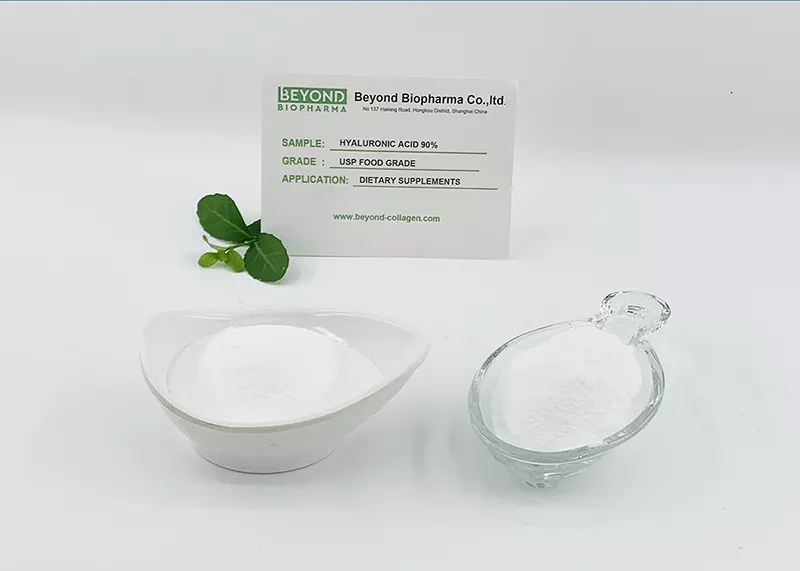
- Beauty-from-within supplements: Capsules, tablets, or powdered drink mixes. Look for soy peptides with low molecular weight and high solubility for easy formulation. Compatible with other ingredients like food-grade hyaluronic acid for synergistic effects on skin hydration.
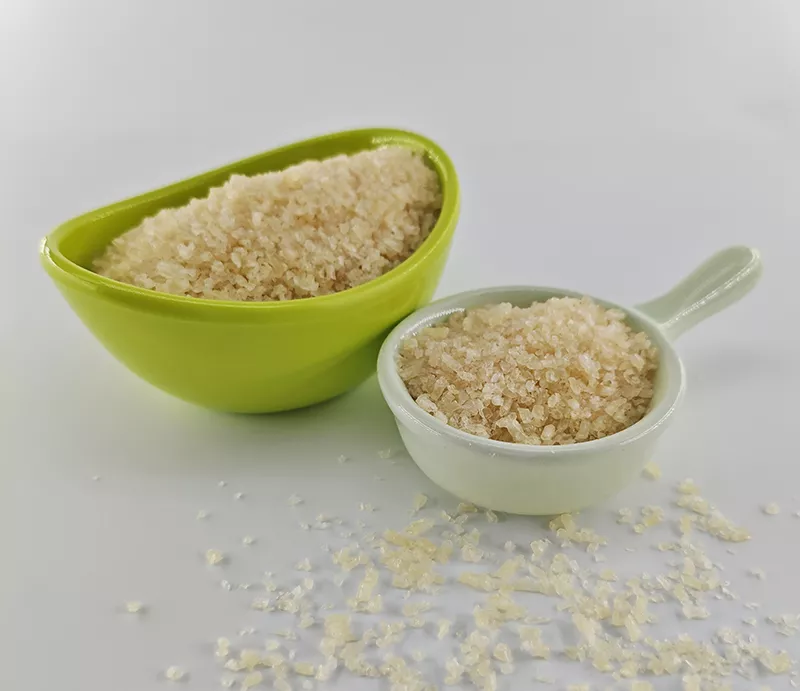
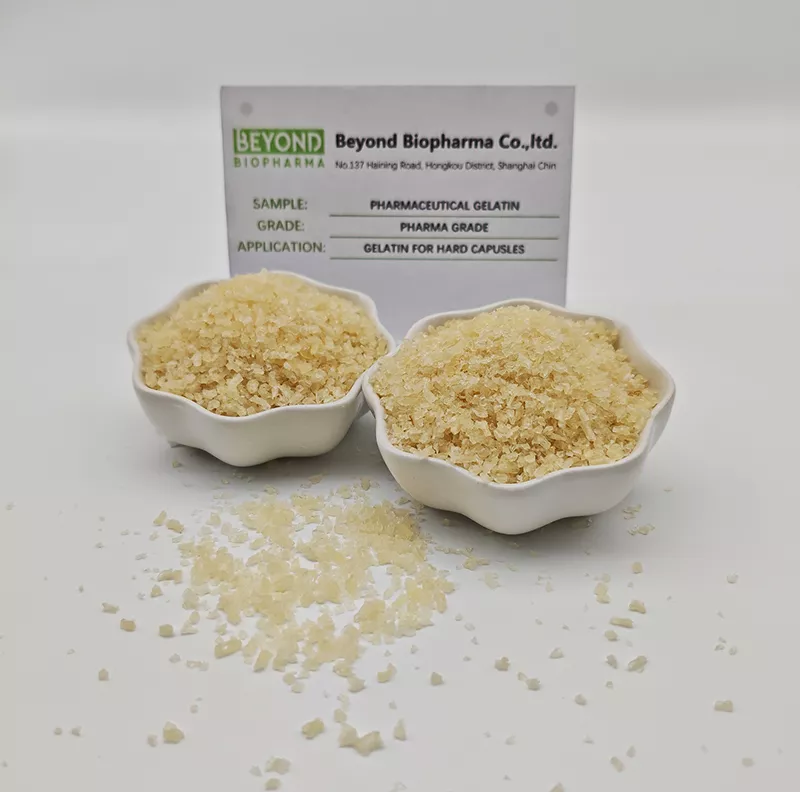
- Functional foods and beverages: Protein bars, smoothies, and ready-to-drink shakes. Soy peptides with neutral taste and low bitterness are preferred. They can be combined with edible gelatin for texture modification in gummy formats.
- Sports nutrition: Post-workout recovery formulas that also support skin health. Soy peptides provide a complete amino acid profile, making them a dual-purpose ingredient for muscle repair and skin matrix support.
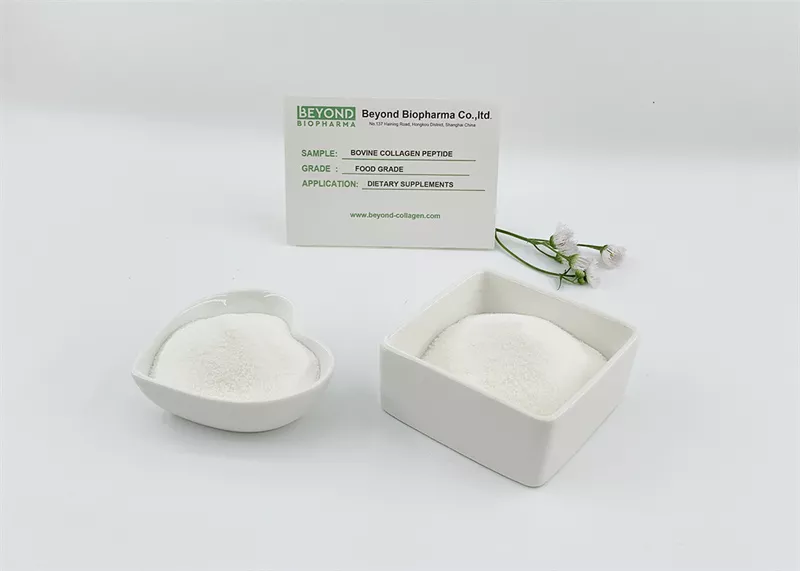
- Plant-based and vegan formulations: As a direct alternative to animal-derived collagen peptides. Soy peptides are naturally vegan and free from common allergens like dairy and gluten. They can be positioned alongside plant protein peptides for comprehensive plant-based nutrition.
- Pharmaceutical excipient applications: In tablet binding or as a carrier for active ingredients. The high purity and consistent particle size of pharmaceutical-grade soy peptides make them suitable for controlled-release formulations.
Why Choose Beyond Biopharma for Soy Peptides?
Beyond Biopharma, based in Shanghai, China, is a manufacturer with over 10 years of experience in the food-ingredient industry. Our product portfolio includes collagen peptides, gelatin, and plant protein peptides — including soy peptides — all produced in a GMP clean workshop with fully automatic production lines. We export to more than 50 countries and maintain an annual production capacity of approximately 3,000 MT for collagen and 5,000 MT for gelatin. Our facilities feature stainless-steel sealed piping and automated temperature/pH control to ensure batch-to-batch consistency. Quality is verified through our in-house lab, which conducts heavy-metal and microbiological testing, and our QA/QC team oversees every shipment. Select products carry Halal and Kosher certifications, and our bovine bone gelatin is BSE-free. We are ISO 9001 certified and US FDA registered. For soy peptides, we offer food, pharmaceutical, and cosmetic grades, and we provide free samples along with formulation and selection support.
Frequently Asked Questions About Soy Peptides for Skin
Q1: Are soy peptides as effective as animal-derived collagen peptides for skin elasticity?
Yes, soy peptides can be a highly effective plant-based alternative. They work by stimulating the body's own collagen production rather than directly providing collagen. Clinical studies on specific soy peptide fractions have shown improvements in skin firmness and elasticity comparable to some fish or bovine collagen peptides. The choice depends on your target market's dietary preferences and allergen requirements.
Q2: What is the typical molecular weight for soy peptides used in skin supplements?
For skin health applications, the ideal molecular weight is generally below 2,000 Da, with many products targeting 500–1,500 Da. Lower molecular weight peptides are absorbed more efficiently through the gut and can reach the skin tissue. Always request a molecular weight distribution profile from your supplier to verify the product meets your specifications.
Q3: Do soy peptides have a strong taste or odor that affects formulation?
High-quality soy peptides produced through controlled enzymatic hydrolysis have a mild, neutral flavor with minimal bitterness. Some degree of bitterness can occur if the hydrolysis is not carefully managed, but reputable manufacturers use debittering techniques. We recommend requesting a sample for sensory evaluation before committing to large volumes.
Q4: Are soy peptides suitable for vegan and allergen-free product lines?
Yes, soy peptides are plant-based and vegan-friendly. However, soy is a known allergen, so products containing soy peptides must be labeled accordingly. For consumers with soy allergies, alternatives like pea or rice protein peptides may be more appropriate. Always check the allergen statement on the COA.
Q5: What certifications should I look for when sourcing soy peptides?
Key certifications include ISO 9001 for quality management, GMP for manufacturing standards, and Halal or Kosher if targeting specific markets. For pharmaceutical applications, USP or EP compliance is important. Beyond Biopharma's soy peptides are produced in a GMP-certified facility with ISO 9001 certification, and we can provide Halal-certified options upon request.
Q6: How do I determine the right soy peptide grade for my product?
The grade depends on your application. For dietary supplements and functional foods, food-grade soy peptides with high solubility and low bitterness are suitable. For pharmaceutical excipient use, pharmaceutical-grade material with tighter microbiological and purity specs is required. Cosmetic-grade peptides may have additional specifications for topical formulations. Beyond Biopharma offers all three grades with supporting documentation.
Request a Quote and Free Samples for Soy Peptides
If you are evaluating soy peptides for your next product launch or reformulation, we invite you to reach out to Beyond Biopharma. To help us provide the most accurate quotation and sample, please include the following details in your inquiry:
- Intended application (food, pharmaceutical, cosmetic, or nutraceutical)
- Required grade (food / pharmaceutical / cosmetic)
- Estimated quantity and minimum order quantity (MOQ)
- Target specifications (molecular weight, solubility, protein content, certifications)
- Destination country for shipping and regulatory requirements
Beyond Biopharma offers free samples and formulation support to help you evaluate our soy peptides in your specific application. Our team is ready to assist with technical documentation, COAs, and regulatory guidance. Contact us today to start the conversation.
In summary, soy peptides represent a versatile, plant-based ingredient for enhancing skin structure and elasticity. With proper sourcing and formulation, they can be a valuable addition to your product portfolio. Beyond Biopharma is committed to providing high-quality soy peptides backed by rigorous quality control and years of industry experience.

 English EN








User Comments
Service Experience Sharing from Real Customers
Liam
Lead Formulation ScientistI've been testing soy peptides in our plant-based protein blends for about six months now. The solubility is way better than pea or rice isolates, and the amino acid profile actually holds up in sensory panels. We've seen a 15% improvement in emulsification stability in our RTD prototypes. Not bad for a clean-label ingredient.
Emma
Sports Nutrition CoachSwitched a few of my clients to a soy peptide supplement post-workout because they complained about bloating from whey. Honestly, the recovery feedback has been solid—less soreness the next day and they say it mixes into water without turning into a slimy mess. Only giving it 4 stars because the taste is slightly beany if you use too much, but overall a win.
Noah
R&D TechnicianWe were reformulating a high-protein snack bar and the texture kept turning into concrete. Soy peptides saved the batch—they bind moisture without making it gummy. Also zero issues with off-notes when we paired them with dark chocolate. For a non-dairy option, this is gold. My lab team is already planning more trials.
Sophie
Holistic NutritionistI recommended soy peptides to a client with dairy sensitivity and she liked the energy boost, but we noticed some mild digestive discomfort at the full serving size. Might be a dose adjustment thing. The ingredient itself is clean and sustainable, which I appreciate. Not revolutionary, but a decent alternative to collagen or whey.