Soy peptides are rapidly gaining traction in the nutraceutical and functional food industries as a highly bioavailable, plant-derived protein ingredient. Unlike traditional soy protein concentrates or isolates, soy peptides undergo controlled enzymatic hydrolysis to yield smaller protein fragments that offer superior solubility, faster absorption, and greater formulation flexibility. This article explores the science behind soy peptides, their functional advantages over intact plant proteins, and their practical applications across sports nutrition, functional beverages, dietary supplements, and plant-based food systems. Industry professionals will gain actionable insights into ingredient sourcing, quality evaluation, and product development strategies.
Soy peptides offer significantly higher digestibility and absorption rates compared to intact soy protein, making them ideal for high-performance nutrition.
Enzymatic hydrolysis converts soy protein into low-molecular-weight peptides, improving solubility, dispersibility, and mouthfeel in liquid formulations.
Soy peptides are versatile ingredients suitable for protein beverages, functional foods, sports nutrition, and aging-related nutritional products.
Evaluating supplier quality through raw material traceability, enzyme technology, and regulatory certifications is critical for consistent product performance.
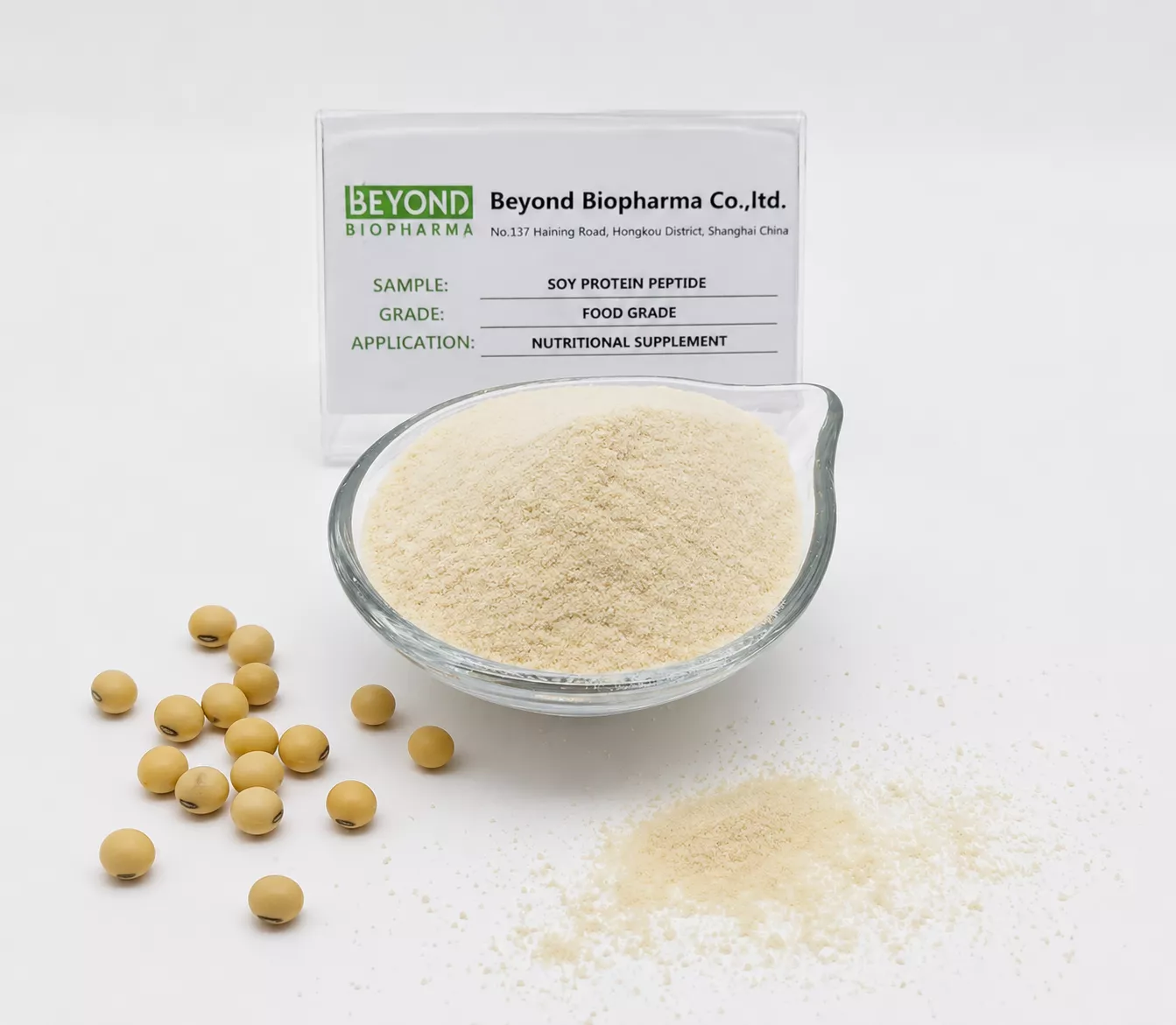 What Are Soy Peptides?
Soy peptides are short-chain amino acid sequences derived from soy protein through a controlled enzymatic hydrolysis process. Unlike intact soy protein, which consists of large, complex protein molecules, soy peptides are broken down into smaller fragments, typically ranging from 2 to 20 amino acids in length. This reduction in molecular weight fundamentally alters the ingredient's functional and biological properties.
The primary source for soy peptides is non-GM or conventional soybeans. High-quality soy protein concentrate or isolate serves as the starting material. The soybeans are dehulled, defatted, and processed to remove soluble carbohydrates and fiber, yielding a protein-rich base with a protein content typically exceeding 80%.
The manufacturing process involves several key steps:
Protein extraction: Soy protein is isolated from defatted soybean flakes using aqueous or alkaline extraction methods.
Enzymatic hydrolysis: Food-grade proteases (e.g., alcalase, flavourzyme, or papain) are added under controlled pH and temperature conditions to cleave peptide bonds. The degree of hydrolysis (DH) is carefully monitored to achieve the desired molecular weight profile.
Separation and purification: The hydrolysate is filtered, centrifuged, and sometimes passed through ultrafiltration membranes to remove larger undigested proteins and bitter-tasting peptides.
Drying: The purified peptide solution is spray-dried or freeze-dried to produce a fine, free-flowing powder with consistent particle size.
Soy peptides are distinguished by several key physicochemical properties:
Molecular weight: Typically below 3,000 Da, with a significant fraction under 1,000 Da. This low molecular weight contributes to rapid absorption and high solubility.
Solubility: Excellent solubility across a wide pH range (pH 2–10), even at high concentrations. This is a major advantage over intact soy protein, which tends to precipitate near its isoelectric point (pH 4.5).
Dispersibility: Rapid dispersion in cold or warm water without clumping, facilitating easy incorporation into liquid formulations.
Digestibility: Nearly complete digestibility, with in vitro studies suggesting over 95% of peptide bonds are cleaved by gastrointestinal enzymes.
Formula compatibility: Compatible with other protein sources, carbohydrates, fats, vitamins, minerals, and common food additives without significant interactions.
The conversion of intact soy protein into soy peptides unlocks several functional benefits that are critical for modern product development.
Intact soy protein requires extensive gastric digestion and pancreatic enzyme action to be broken down into absorbable di- and tripeptides. In contrast, soy peptides are already partially hydrolyzed, meaning they are more readily available for absorption in the small intestine. Research suggests that low-molecular-weight peptides can be absorbed via peptide transporters (PepT1) more efficiently than free amino acids, leading to a faster and more sustained rise in plasma amino acid levels. This makes soy peptides particularly valuable in sports nutrition and clinical nutrition applications where rapid protein delivery is desired.
One of the most significant formulation challenges with traditional plant proteins is their poor solubility, especially in acidic conditions. Soy protein isolates tend to form cloudy suspensions or precipitates in low-pH beverages. Soy peptides, however, remain clear and stable even at pH levels as low as 3.0. This clarity is a major advantage for ready-to-drink protein waters, clear protein shakes, and fortified juices, where visual appeal is important. Under typical formulation conditions, soy peptide solutions at 5–10% concentration remain transparent and free of sedimentation for extended periods.
Intact soy protein often imparts a gritty or chalky texture and a characteristic beany flavor that can be difficult to mask. The enzymatic hydrolysis process reduces particle size and alters protein structure, resulting in a smoother, creamier mouthfeel. Additionally, controlled hydrolysis can reduce the intensity of undesirable off-flavors. Depending on the degree of hydrolysis and the specific enzyme used, soy peptide powders can be formulated with minimal bitterness, making them more palatable in neutral and flavored applications.
Beyond their nutritional value, certain soy peptide sequences have demonstrated bioactive properties in preclinical studies. For example, peptides with the sequence Ile-Arg-Leu-Ile-Gln (IRLIQ) have been associated with ACE-inhibitory activity, while other fragments may exhibit antioxidant or immunomodulatory effects. Industry experience indicates that specific peptide profiles can be enriched through targeted enzyme selection and hydrolysis conditions, allowing manufacturers to develop functional ingredients with added health benefits beyond basic protein nutrition. However, it is important to note that these effects are context-dependent and should be validated in the intended product matrix.
Soy peptides are increasingly adopted across multiple product categories where traditional plant proteins fall short. The following table summarizes the comparative performance of soy peptides versus intact soy protein in key formulation parameters.
| Property | Traditional Soy Protein | Soy Peptides |
|---|---|---|
| Digestibility | Moderate (70–85%) | High (>95%) |
| Solubility at pH 4.5 | Poor (precipitates) | Excellent (clear solution) |
| Formula Flexibility | Limited (thickens, gels) | High (low viscosity, stable) |
| Mouthfeel | Gritty, chalky | Smooth, clean |
| Application Range | Bars, powders, some beverages | Clear drinks, gels, supplements, functional foods |
In the sports nutrition segment, rapid protein absorption and high leucine content are critical for muscle protein synthesis. Soy peptides provide a fast-digesting protein source that can be formulated into clear protein waters, isotonic drinks, and post-workout recovery shakes. Their low viscosity at high concentrations (up to 15% w/v) allows for the production of concentrated protein shots without the thick, heavy texture associated with intact protein.
✅ Product Positioning Tip: Position soy peptide-based sports drinks as "clear protein" or "fast-absorbing plant protein" to differentiate from traditional whey and soy isolates.
The beverage industry faces the challenge of incorporating protein without compromising clarity, stability, or taste. Soy peptides are particularly well-suited for acidic beverages (pH 3–4) such as fruit juices, flavored waters, and functional sodas. Unlike milk protein or intact soy protein, soy peptides do not precipitate or form haze under acidic conditions. This allows for the development of shelf-stable, high-protein beverages with a clean, transparent appearance.
✅ Recommended Application: Clear protein waters, protein-enhanced iced teas, and fortified fruit juices at 5–10 g protein per serving.
Soy peptides can be incorporated into a wide range of functional food formats, including protein bars, puddings, soups, and meal replacements. Their high solubility and low viscosity make them easier to blend into wet or semi-solid matrices without affecting texture. In dietary supplement applications, soy peptides are often used in powdered blends, stick packs, and capsules. They are compatible with other nutraceutical ingredients such as vitamins, minerals, and botanical extracts, and they do not interfere with the bioavailability of co-administered nutrients.
✅ Formulation Consideration: Use soy peptides at 10–30% of total protein content in combination with other plant proteins (e.g., pea, rice) to balance amino acid profile and cost.
Older adults and clinical populations often have reduced digestive capacity and increased protein requirements. Soy peptides offer a solution by providing a highly digestible, low-residue protein source that is easy to consume. They can be formulated into clear liquid nutritional supplements, oral nutritional supplements (ONS), and tube-feeding formulas. Their rapid absorption helps counteract sarcopenia and support recovery in hospitalized or malnourished patients.
✅ Product Development Tip: Combine soy peptides with medium-chain triglycerides (MCTs) and soluble fiber for a complete, easy-to-digest nutritional formula for elderly consumers.
As the plant-based market expands, manufacturers are seeking protein ingredients that deliver both nutrition and functionality. Soy peptides can be used to boost protein content in plant-based yogurts, cheeses, and meat analogs without negatively impacting texture or flavor. They also serve as a clean-label alternative to chemically modified starches or gums for improving water binding and emulsification in vegan formulations.
✅ Ingredient Selection Note: Choose non-GM or organic soy peptide sources to align with clean-label and sustainability claims in premium plant-based products.
Selecting a reliable supplier for soy peptides requires a thorough assessment of technical capabilities, quality systems, and regulatory compliance. The following criteria are essential for ensuring consistent ingredient performance.
The starting soy protein should be sourced from reputable growers with documented non-GM or organic certification. Full traceability from farm to finished product is critical for quality assurance and regulatory compliance. Suppliers should provide certificates of analysis (COA) for each batch, including protein content, degree of hydrolysis, molecular weight distribution, and microbiological specifications.
The quality of enzymatic hydrolysis directly impacts peptide functionality. Look for suppliers that use food-grade, non-GMO enzymes and maintain strict control over hydrolysis parameters (pH, temperature, enzyme-to-substrate ratio, and reaction time). Advanced suppliers may offer customized peptide profiles tailored to specific applications, such as low-bitter profiles for beverages or high-bioactive fractions for supplements.
Reputable suppliers operate under internationally recognized quality management systems. Key certifications to look for include:
ISO 9001 (quality management)
FSSC 22000 or ISO 22000 (food safety)
HACCP (hazard analysis and critical control points)
GMP (good manufacturing practices)
Halal and Kosher certifications (if required for target markets)
✅ Procurement Checklist for Soy Peptides
✓ Raw material traceability documentation (source, variety, non-GM status)
✓ Complete technical data sheet including molecular weight profile, solubility, and pH stability
✓ Batch-specific certificate of analysis (COA) with microbiological and chemical parameters
✓ Application support and formulation guidance from technical team
✓ Supply chain reliability including lead times, minimum order quantities, and inventory management
Soy peptides are produced by enzymatic hydrolysis of soy protein, resulting in shorter amino acid chains with lower molecular weight. This gives them superior solubility, faster digestibility, and better formulation flexibility compared to intact soy protein, which consists of large, complex molecules that can be difficult to dissolve and digest.
Yes. A higher degree of hydrolysis (DH) produces shorter peptides with better solubility and faster absorption but may also increase bitterness. Lower DH retains some functional properties of intact protein while improving digestibility. The optimal DH depends on the target application—beverages often benefit from higher DH, while bars or gels may perform better with moderate hydrolysis.
Soy peptides are widely used in clear protein beverages, sports nutrition drinks, functional waters, dietary supplement powders, protein bars, meal replacements, and clinical nutrition products. They are also increasingly incorporated into plant-based dairy and meat alternatives to boost protein content without compromising texture.
Key quality indicators include molecular weight distribution (ideally >80% below 3,000 Da), solubility at target pH, degree of hydrolysis, microbiological purity, and sensory profile (low bitterness). Request a complete technical data sheet and batch-specific COA from the supplier. Also verify certifications such as ISO, FSSC 22000, and GMP, and ask for application support from their technical team.
Soy peptides represent a significant advancement in plant-based protein technology, addressing the key limitations of traditional soy protein in terms of digestibility, solubility, and formulation versatility. Their low molecular weight, high bioavailability, and compatibility with diverse product formats make them a valuable ingredient for sports nutrition, functional beverages, dietary supplements, and plant-based foods. For manufacturers and product developers, the ability to create clear, stable, high-protein formulations without compromising taste or texture opens new opportunities in the growing plant-based and performance nutrition markets.
To move forward, consider requesting a technical data sheet and sample from a qualified supplier to evaluate soy peptide performance in your specific formulation. Engaging with an application engineer early in the development process can help optimize peptide selection, hydrolysis profile, and processing conditions for your target product.
📄 Next Step: Request a technical data sheet and product sample to evaluate soy peptide performance in your specific application. Consult with an application engineer to determine the optimal hydrolysis profile and formulation strategy for your product line.



Tel:+86 21 65010906
Cell/Whatsapp/Wechat:
+86 13482884055
+86 18657345785
Email: sales@beyondbiopharma.com


 English EN