 English EN


Gelatin sheet vs powder what science says in 2026
Gelatin sheet offers chefs better clarity, smooth texture, and consistent results than powdered gelatin, making it the top choice for desserts in 2026.
More
Sourcing the right gelatin form—powder or sheets—directly impacts your product consistency, production efficiency, and cost. This guide breaks down the technical differences between gelatin powder and sheets, from bloom strength and solubility to application-specific recommendations, helping overseas buyers make informed procurement decisions for food, pharmaceutical, and nutraceutical formulations.
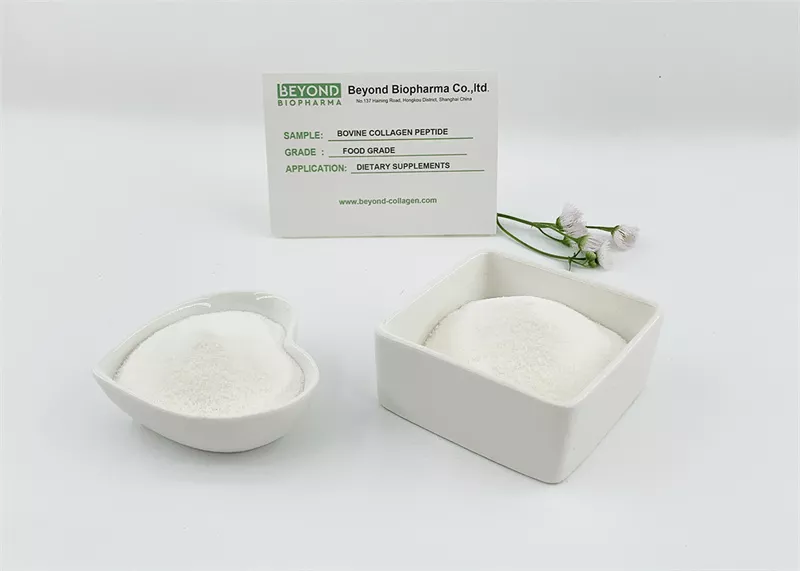
Gelatin powder and sheets are both derived from collagen, but they differ in physical form, hydration requirements, and handling. Gelatin powder is a granular, free-flowing ingredient that hydrates quickly in cold water and dissolves rapidly when heated. Gelatin sheets, also called leaf gelatin, are thin, translucent sheets that require soaking in cold water to soften before use. The primary functional difference lies in bloom strength—a measure of gel firmness—which can vary between forms. For industrial buyers, the choice often depends on batch consistency, production speed, and end-product texture. Edible gelatin from Beyond Biopharma is available in both forms to meet diverse manufacturing needs.
Both forms start with collagen-rich raw materials—bovine hide, bone, porcine skin, or fish skin. The production process involves acid or alkaline pretreatment, hot water extraction, filtration, concentration, and drying. For gelatin powder, the dried gelatin is milled into a fine or coarse powder. For sheets, the gelatin solution is cast into thin layers, dried, and cut into standardized sheets. The key difference is that sheets undergo a more controlled drying process to ensure uniform thickness and bloom. Beyond Biopharma uses a fully automatic production line with stainless-steel sealed piping and automated temperature/pH control, ensuring consistent quality across both forms. The company produces approximately 5,000 MT/year of gelatin, including pharmaceutical gelatin for hard capsules and high-bloom bovine hide gelatin for softgels.
The table below summarizes common specifications for gelatin powder and sheets. Note: these are typical industry ranges; final values should be verified per Certificate of Analysis (COA) or sample testing.
| Parameter | Gelatin Powder | Gelatin Sheets |
|---|---|---|
| Bloom Strength | 50–300 g (typical range; pharma/gummies often 150–260 Bloom) | 100–250 g (typical range; sheets often standardized to 160–220 Bloom) |
| Viscosity | 2.0–5.5 mPa·s (typical range) | 2.0–5.0 mPa·s (typical range) |
| Mesh Size | 8–60 mesh (typical range) | N/A (standardized sheet thickness) |
| Moisture | ≤14% (typical range) | ≤14% (typical range) |
| Hydration Method | Disperse in cold water, then heat | Soak in cold water for 5–10 minutes, then dissolve |
| Typical Applications | Gummies, capsules, powders, dry blends | Desserts, confectionery, clear gels |
For bovine collagen peptide and fish collagen peptide, molecular weight typically ranges from 2,000–5,000 Da, with fish variants often lower for faster absorption. Plant protein peptides from Beyond Biopharma offer protein content of 80–90% and molecular weight below 5,000 Da, suitable for allergen-free formulations.
Selecting between gelatin powder and sheets depends on your specific application and production workflow:
Beyond Biopharma supports custom bulk supply and formulation/OEM for all these applications, with three grades available: food, pharmaceutical, and cosmetic.
Beyond Biopharma is a Shanghai, China–based manufacturer with over 10 years of experience in the food-ingredient industry. Our products are exported to more than 50 countries. We operate a fully automatic production line in a GMP clean workshop, with stainless-steel sealed piping and automated temperature/pH control. Our annual capacity is approximately 3,000 MT for collagen and 5,000 MT for gelatin. We hold ISO 9001 certification, US FDA registration, and select products carry Halal or Kosher certification (e.g., fish gelatin). Our bovine bone gelatin is BSE-free. An in-house lab conducts heavy-metal and microbiological testing, supported by a dedicated QA/QC team. We offer free samples and formulation support across food, pharmaceutical, and cosmetic grades.
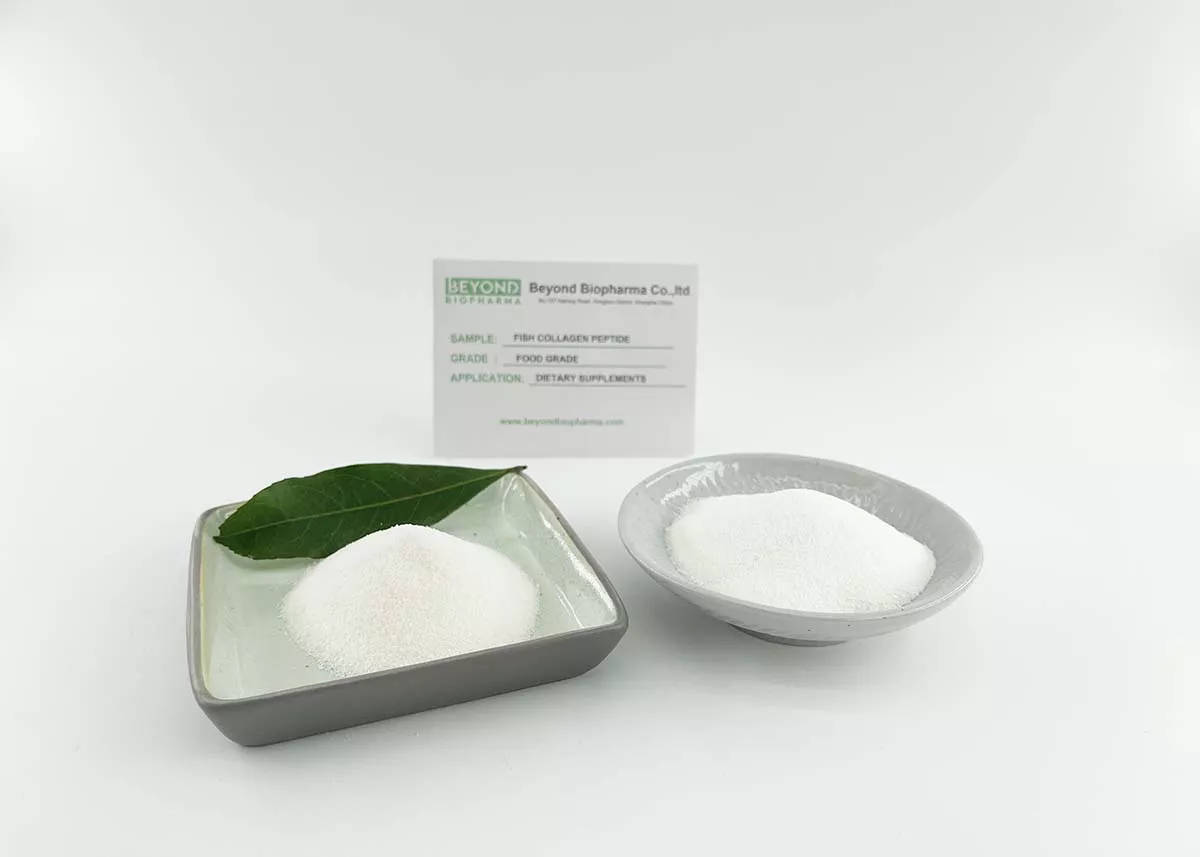
1. Can I substitute gelatin powder for sheets in a recipe?
Yes, but you need to adjust the bloom strength and hydration method. As a general rule, 1 sheet of gelatin (about 2 g) with 160 Bloom is equivalent to 2 g of gelatin powder with the same bloom. Always check the bloom value on the COA for accurate substitution.
2. Which form has better batch consistency for industrial production?
Gelatin powder generally offers better batch consistency due to uniform particle size and easier blending. Sheets can vary slightly in thickness, but standardized sheets from reputable suppliers like Beyond Biopharma minimize this issue.
3. Is gelatin powder or sheets more cost-effective?
Gelatin powder is typically more cost-effective for large-scale production due to lower processing costs and faster hydration. Sheets are often used in premium culinary applications where clarity and texture are prioritized.
4. What certifications should I look for when sourcing gelatin?
For food-grade gelatin, look for ISO 9001, FDA registration, and Halal or Kosher certification if required. For pharmaceutical use, GMP compliance and BSE-free certification are critical. Beyond Biopharma provides all these certifications upon request.
5. Can gelatin sheets be used in capsule manufacturing?
No, gelatin sheets are not suitable for capsule production. Hard capsules require gelatin powder with specific bloom and viscosity, while softgels use ultra-high-viscosity gelatin. Sheets are designed for culinary and confectionery applications.
6. How do I store gelatin powder and sheets?
Both should be stored in a cool, dry place away from direct sunlight and moisture. Gelatin powder should be kept in sealed containers to prevent clumping. Sheets should be kept in their original packaging to maintain uniform thickness.
To get started with the right gelatin form for your application, please provide the following details to Beyond Biopharma: your intended application (food, pharmaceutical, or cosmetic), required grade, quantity or MOQ, target specifications (bloom, mesh, molecular weight, certifications), and destination country. We will send free samples and a competitive quote. Understanding the difference between gelatin powder and sheets is the first step to optimizing your product. Contact us today to discuss your bulk supply needs.
For joint health formulations, explore our hydrolyzed collagen type II powder and other joint health ingredients like bovine chondroitin sulfate, glucosamine HCl, and hyaluronic acid. Our team is ready to support your product development with reliable supply and technical expertise.

We provide you with comprehensive foreign trade solutions to help enterprises achieve global development
Manufacturer of bovine collagen peptide, shipping in containers all around the world
The High-Performance Barrier for Core Material Protection and Controlled Release.
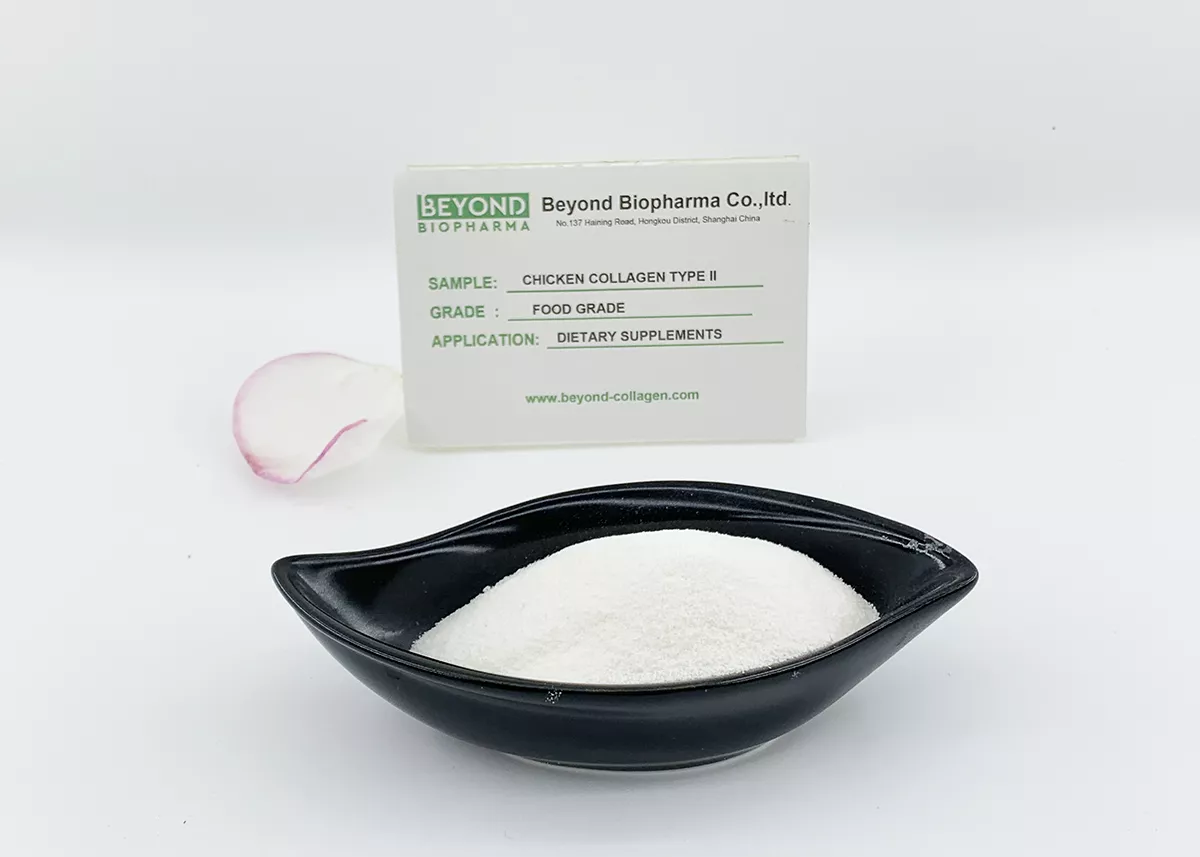
BEYOND BIOPHARMA is a specialized manufacturer of high-quality Undenatured Collagen Type II. Utilizing low-temperature, non-enzymatic extraction methods, our Undenatured Collagen Type II retains its native, triple-helix structure, essential for modulating the immune system's response to joint health and providing superior support for mobility, flexibility, and overall joint comfort.
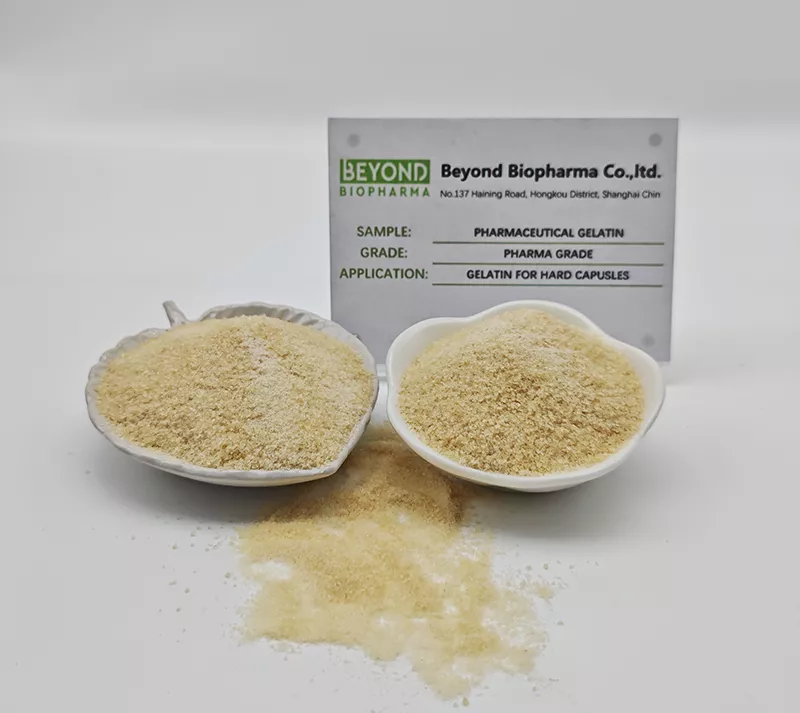
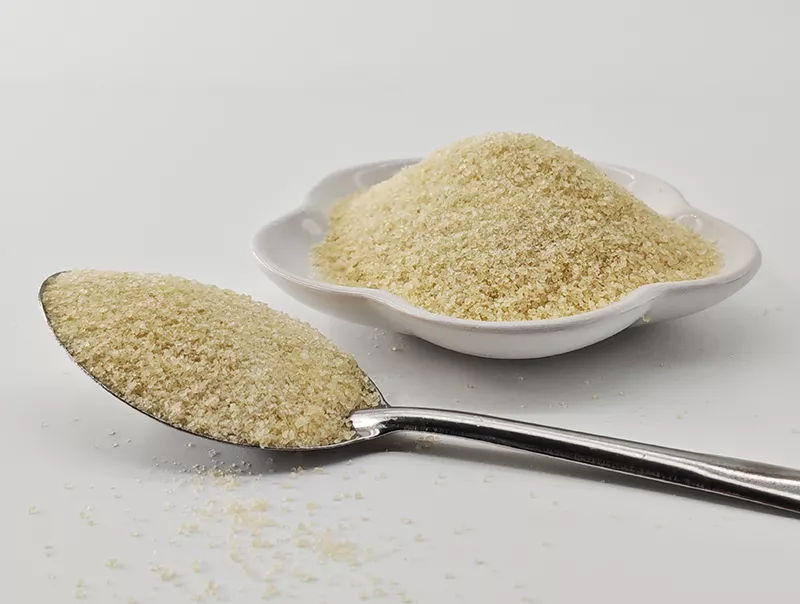
The high-strength and rapid-setting characteristics of Bovine Bone Gelatin ensure it forms a stable, uniform, and durable shell that preserves the integrity of the active pharmaceutical ingredient (API).
Select the most popular foreign trade service products to meet your diverse needs
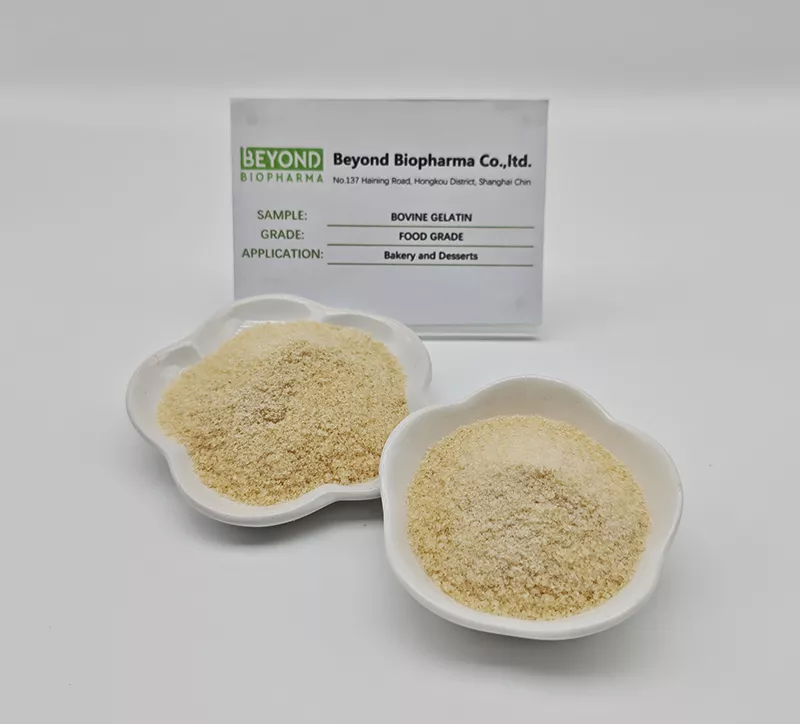
20 years experiences, 5000 ton/year capacity, Sustained supply with stable quality
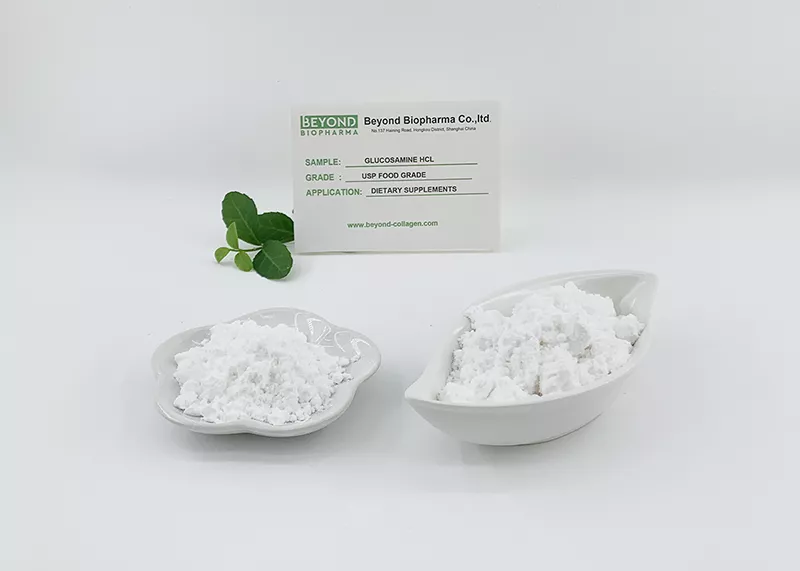
The Purest Plant-Based Joint Support Solution
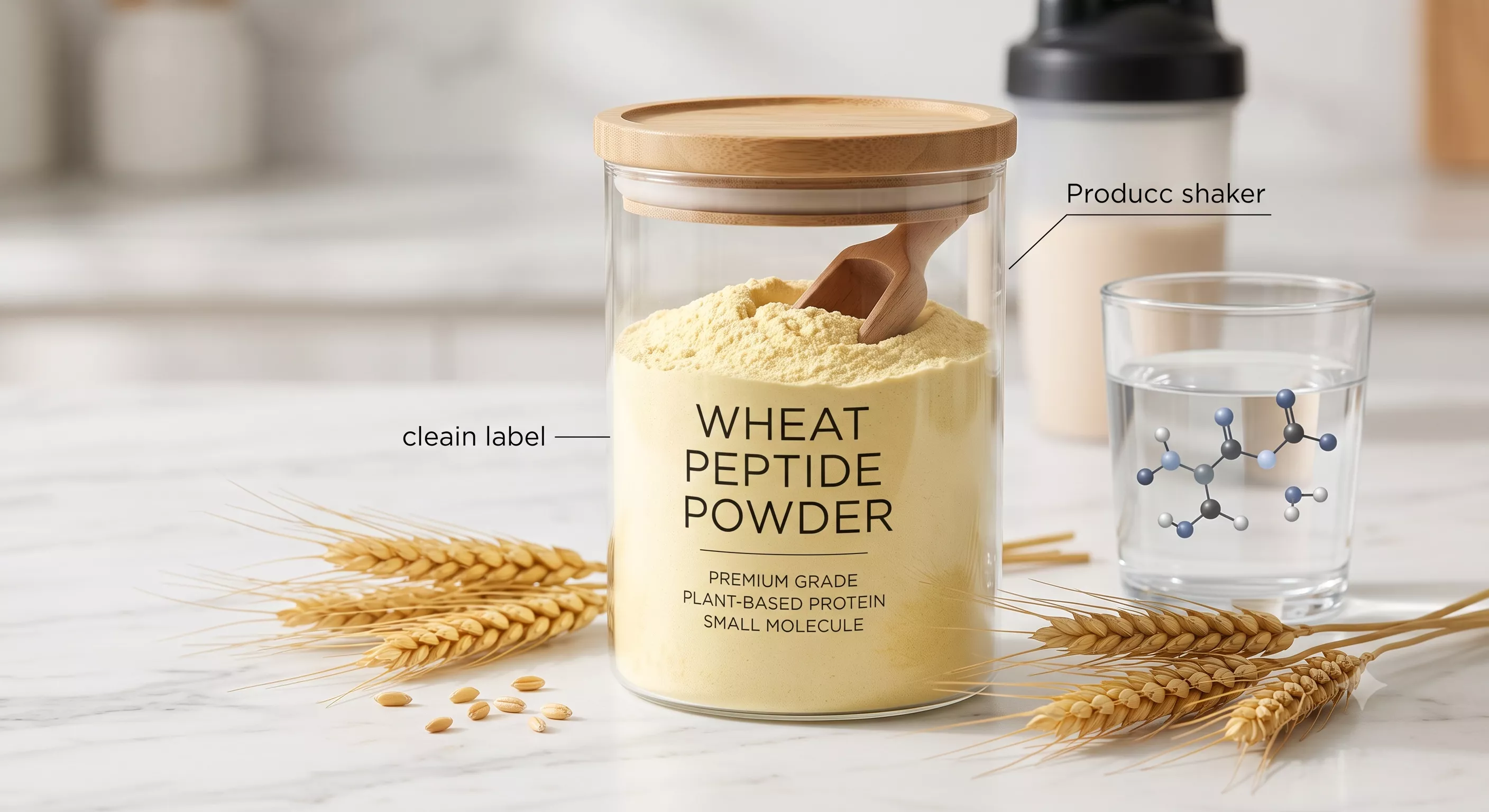
Source ultra-pure, high-solubility wholesale hydrolyzed wheat gluten peptide in bulk. Rich in plant-bound Glutamine ($\ge 25\%$) for muscle recovery and gut barrier health.
Tel:+86 21 65010906
Cell/Whatsapp/Wechat:
+86 13482884055
+86 18657345785
Email: sales@beyondbiopharma.com





User Comments
Service Experience Sharing from Real Customers
Megan
Pastry ChefAs a professional baker, I've used both forms for years. The powder is unbeatable for consistent, quick-set desserts in a busy kitchen, but for my delicate panna cottas where clarity is everything, sheets are my secret weapon. This comparison finally put into words what I instinctively knew!
Leo
Home Cook & BloggerTotal game-changer for me. I always struggled with how much powder to substitute when a recipe called for sheets (and vice versa). The explanation about bloom strength and weight vs. sheets was exactly the kind of practical detail us hobbyists need. My marshmallows have improved dramatically!
Chloe
Science TeacherI used this info for a food science module with my high schoolers. The clear breakdown of how each type is processed and dissolves differently made a complex topic accessible. We did a side-by-side experiment – the kids were fascinated. Brilliant, practical resource beyond just cooking!
Raj
Startup FounderLaunching a small-batch craft gummy business and this was the most straightforward comparison I've found. The cost analysis and shelf-life notes for powder vs. sheets saved me weeks of trial and error. It's the little things like mentioning storage in a cool, dry place that make a difference for a newbie like me.