 English EN


Porcine gelatin always protects vaccines from harm
Porcine gelatin stabilizes vaccines, ensuring safety and effectiveness. Most people tolerate it well, with rare allergic reactions and strict quality controls.
More
For purchasing managers and product developers sourcing gelatin used in food, the biggest pain points often revolve around batch consistency, off-odors (especially fishy smell), solubility, and navigating certification barriers like Halal, Kosher, or allergen-free requirements. Gelatin is not a one-size-fits-all ingredient; its performance depends heavily on source animal, processing method, and specification range. This guide breaks down what you need to know to make informed sourcing decisions.
Gelatin is produced through partial hydrolysis of collagen, typically from bovine hides and bones, porcine skin, or fish skin. The process involves acid or alkaline pretreatment followed by hot water extraction, filtration, and drying. Key performance parameters include:
For collagen peptides (hydrolyzed gelatin), molecular weight typically falls between 2,000 and 5,000 Da. Fish-sourced peptides tend to have lower molecular weight, leading to faster absorption. Protein content is generally ≥90%, with high solubility and low odor as key quality markers. These are typical industry ranges; final values should always be confirmed per Certificate of Analysis (COA) or sample.
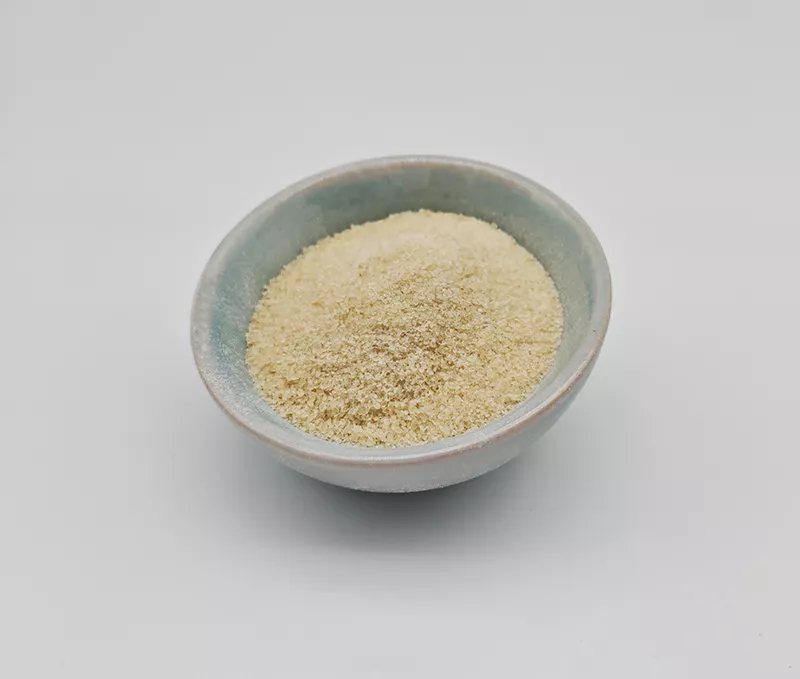
Below is a reference table of common gelatin specifications. Note that these are generic industry ranges; always request a COA for your specific batch.
| Parameter | Typical Range (Industry Standard) | Common Application |
|---|---|---|
| Bloom (g) | 50–300 | Gummies (200–260), marshmallows (150–200), hard capsules (150–260) |
| Viscosity (mPa·s) | 2.0–5.5 | Softgels, tablet coating |
| Mesh size | 8–60 | Instant dissolution (fine mesh), slow release (coarse) |
| Moisture (%) | ≤14 | All food and pharma grades |
| Protein (%) | ≥90 (collagen peptides) | Sports nutrition, beauty-from-within |
Choosing the right gelatin used in food depends on your end product. Here is a breakdown by industry:
Beyond Biopharma is a Shanghai-based manufacturer with over 10 years of experience in the food-ingredient industry. Our products are exported to more than 50 countries. We operate fully automatic production lines in GMP clean workshops, with stainless-steel sealed piping and automated temperature/pH control. Our annual capacity is approximately 3,000 MT for collagen and 5,000 MT for gelatin. We hold ISO 9001 certification, are US FDA registered, and select products carry Halal or Kosher certification (e.g., fish gelatin). Our bovine bone gelatin is BSE-free. An in-house lab conducts heavy-metal and microbiological testing, supported by a dedicated QA/QC team. We offer three grades: food, pharmaceutical, and cosmetic, and provide free samples along with formulation and selection support.
Q1: What is the difference between gelatin and collagen peptides?
Gelatin is partially hydrolyzed collagen, forming a gel when cooled. Collagen peptides are more fully hydrolyzed, resulting in smaller molecular weight (2,000–5,000 Da) and cold-water solubility. Both are derived from the same sources but serve different functional roles in food and supplements.
Q2: Can gelatin be used in vegan or plant-based products?
Traditional gelatin is animal-derived and not vegan. For plant-based applications, alternatives like plant protein peptides (pea, rice, soy) or hydrocolloids (agar, pectin) are used. Beyond Biopharma offers plant protein peptides suitable for allergen-free and vegan formulations.
Q3: How do I ensure batch-to-batch consistency when sourcing gelatin?
Request a Certificate of Analysis (COA) for each batch, specifying bloom, viscosity, mesh, moisture, and microbial limits. Work with manufacturers that have automated production lines and in-house QA labs, like Beyond Biopharma, to minimize variability.
Q4: What certifications should I look for when importing gelatin?
Common certifications include ISO 9001, FDA registration, Halal, and Kosher. For bovine gelatin, BSE-free certification is critical. Beyond Biopharma holds these certifications and provides documentation upon request.
Q5: Is fish gelatin a good alternative for kosher or halal applications?
Yes, fish gelatin is generally acceptable under kosher and halal dietary laws, provided the fish species is permissible and processing is certified. Beyond Biopharma offers fish gelatin with Halal and Kosher certification.
Q6: How does molecular weight affect collagen peptide absorption?
Lower molecular weight (2,000–3,000 Da) is associated with faster absorption and higher bioavailability. Fish collagen peptides typically have lower molecular weight than bovine, making them popular for beauty and sports nutrition products.
Request a Quote or Free Sample
To get started with sourcing gelatin used in food or other ingredients, please provide your application, required grade (food / pharmaceutical / cosmetic), estimated quantity or MOQ, target specifications (bloom, mesh, molecular weight, certifications), and destination country. Beyond Biopharma will send free samples and a competitive quote tailored to your needs.

We provide you with comprehensive foreign trade solutions to help enterprises achieve global development
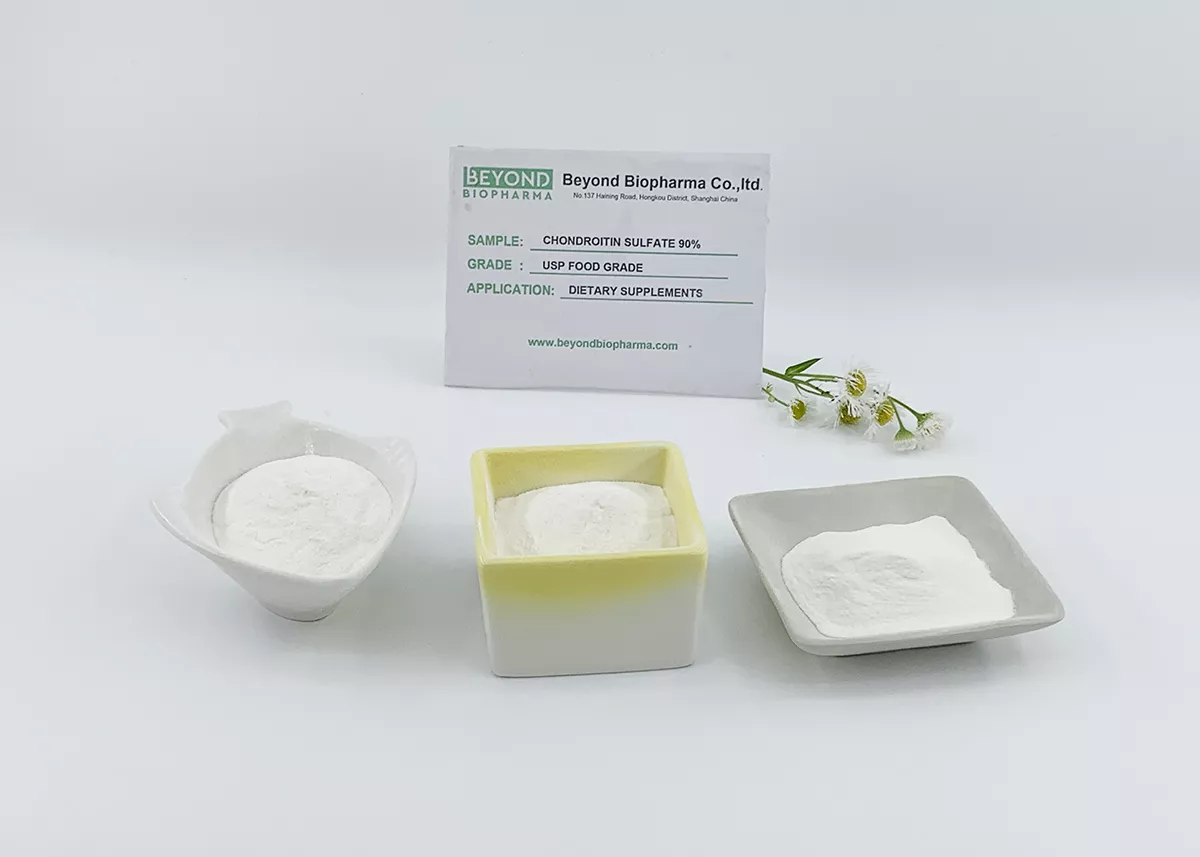
High Purity and Efficacy for Joint Health Formulations
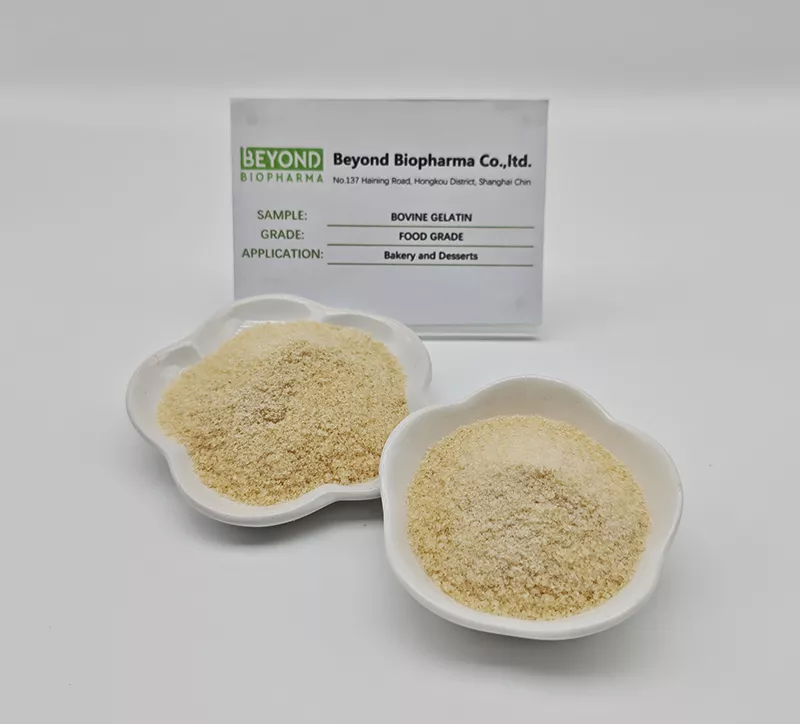
20 years experiences, 5000 ton/year capacity, Sustained supply with stable quality
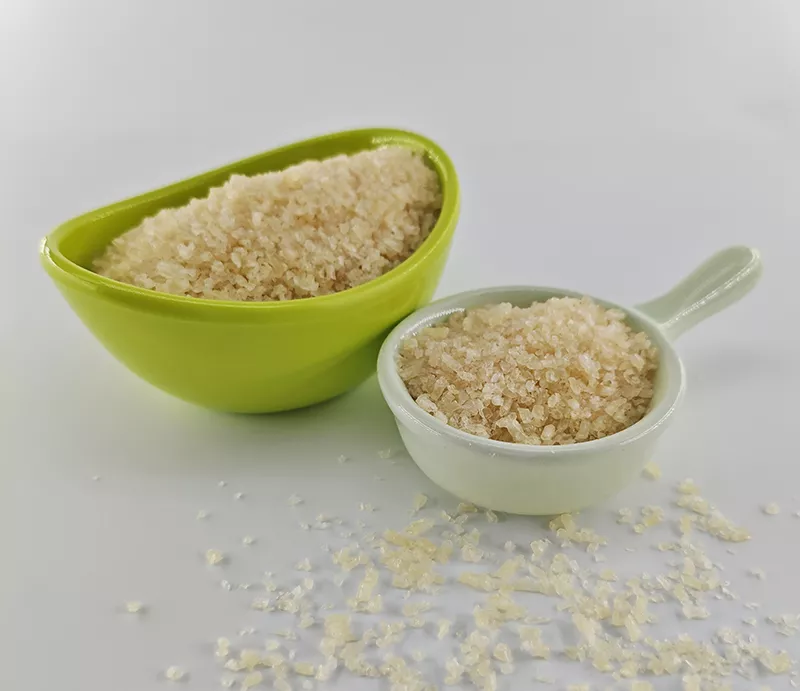
Stability, Swallowing Enhancement, and Controlled Release
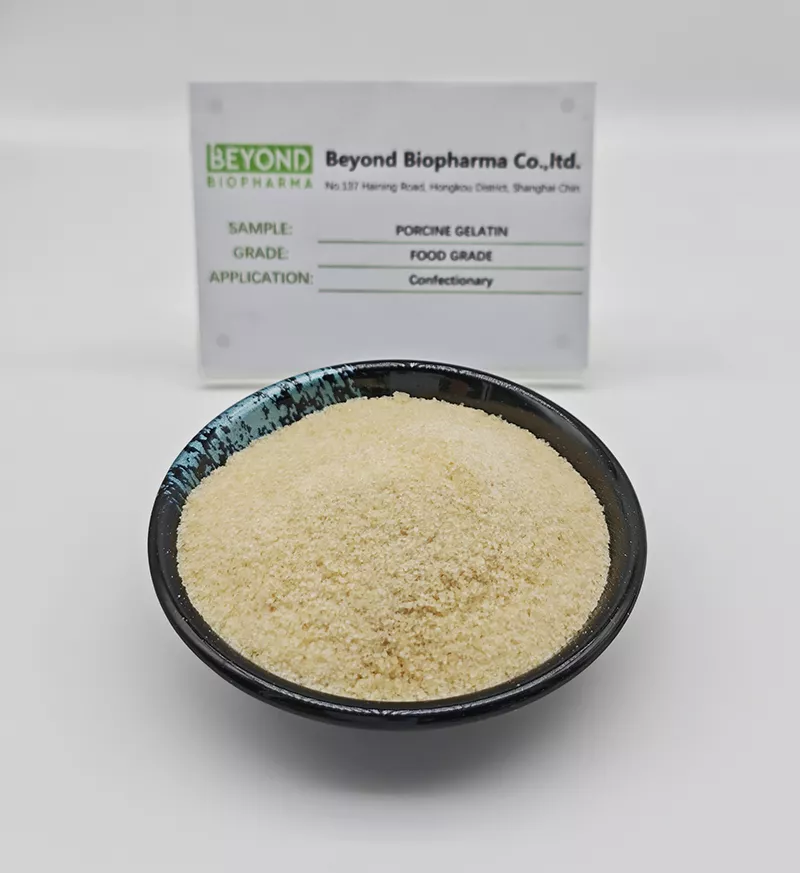
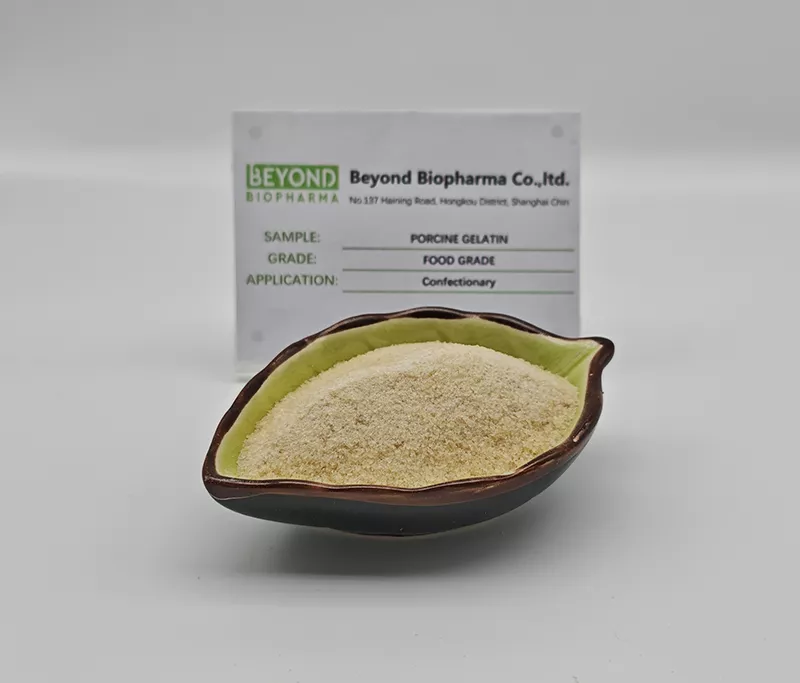
Food-grade porcine gelatin is a highly versatile and cost-effective natural protein derived from the collagen found in pig skin and bones. It is a premier gelling agent known for its exceptional clarity, neutral taste, and thermal reversibility.
Select the most popular foreign trade service products to meet your diverse needs
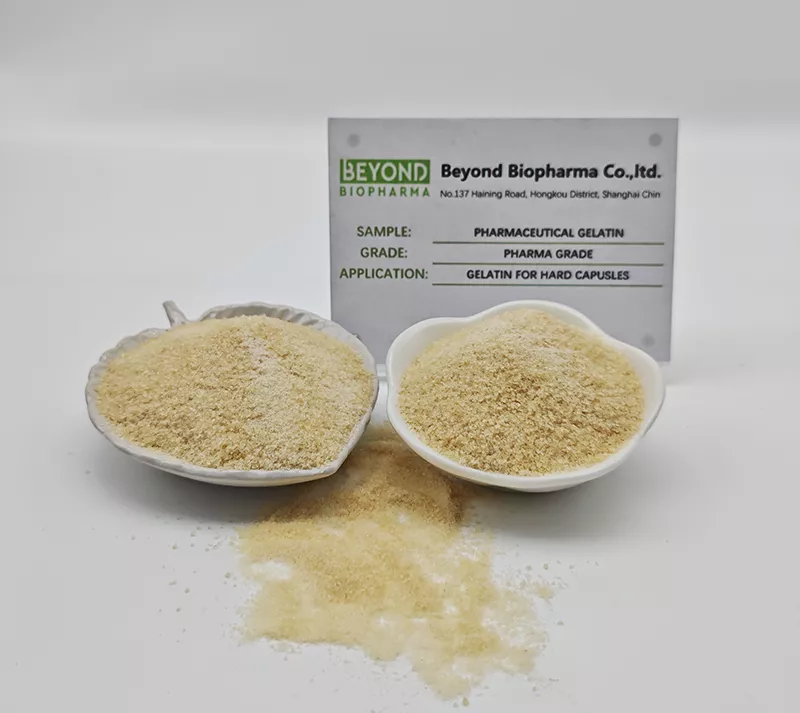
The high-strength and rapid-setting characteristics of Bovine Bone Gelatin ensure it forms a stable, uniform, and durable shell that preserves the integrity of the active pharmaceutical ingredient (API).
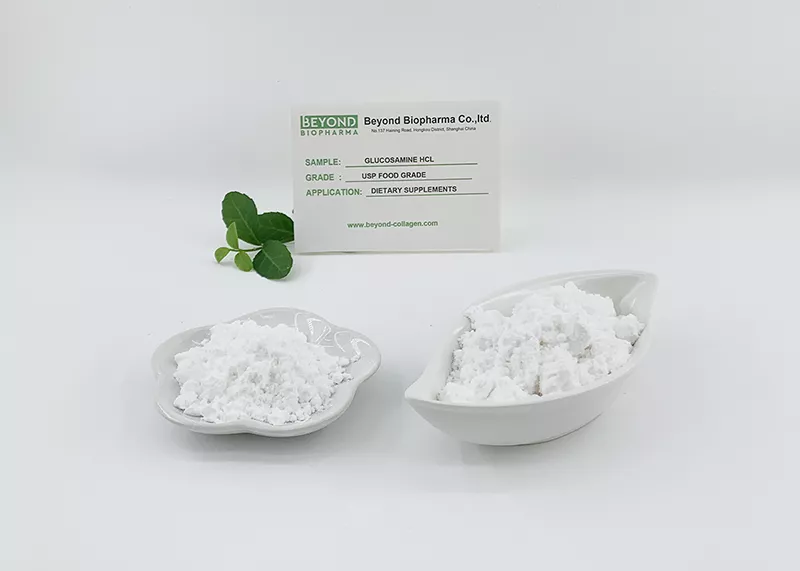
The Purest Plant-Based Joint Support Solution
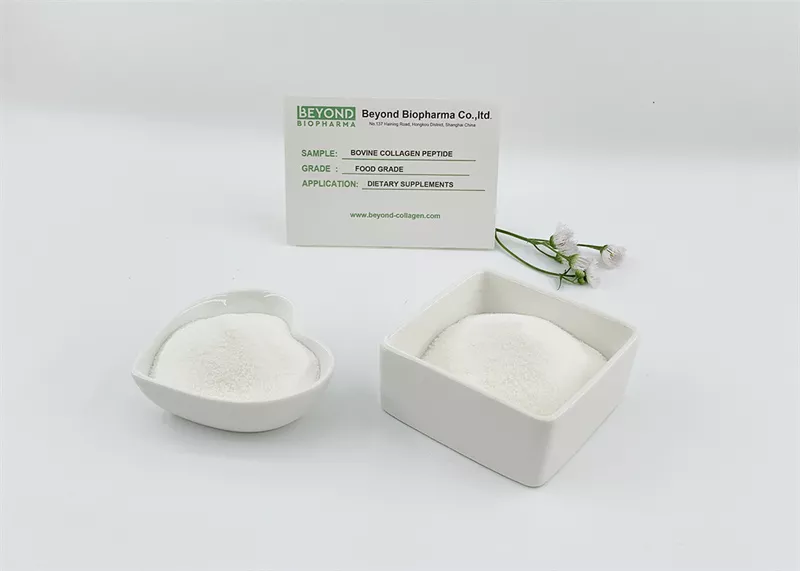
Manufacturer of bovine collagen peptide, shipping in containers all around the world
Tel:+86 21 65010906
Cell/Whatsapp/Wechat:
+86 13482884055
+86 18657345785
Email: sales@beyondbiopharma.com





User Comments
Service Experience Sharing from Real Customers
Megan
Pastry ChefAs someone who makes desserts for a living, I'm picky about ingredients. This gelatin sets perfectly every time—no weird aftertaste, and it gives my panna cottas that gorgeous, silky texture my regulars love. Honestly a game-changer for my menu.
Leo
Home BakerI was kinda skeptical at first because I'd only used the store-brand stuff before. Tried this for my kid's birthday jelly treats and wow—the colors stayed vibrant and it didn't melt as fast in the heat. Lost one star because the packaging is a bit tricky to open.
Sam
Food Science InternWe tested three different gelatins in our lab for a new gummy product line, and this one had by far the best clarity and melt-in-mouth consistency. My supervisor was impressed with the purity specs too. Definitely recommending it for production.
Chloe
NutritionistI advise clients on clean-label foods, and while I usually avoid additives, this gelatin is surprisingly clean-sourced. Used it to make protein gummies for post-workout recovery—clients actually enjoy them! Would love to see a grass-fed version someday though.