 English EN


Bovine gelatin pros and cons everyone should know
Bovine gelatin offers strong gelling and health benefits but has dietary, ethical, and allergen concerns. Compare bovine gelatin to other gelatin options here.
More
For overseas buyers in the food-ingredient, supplement, and pharmaceutical industries, the term gelatin food often brings to mind the iconic molded salads and desserts of the 1950s. But beyond nostalgia, gelatin remains a versatile functional ingredient with real sourcing challenges—batch consistency, odor control, solubility, and certification barriers. This article provides a professional, data-driven look at the history of 50s gelatin food, how gelatin is produced, its key specifications, and how you can source reliable gelatin for your product lines today.
Gelatin food refers to any edible product where gelatin—a protein derived from collagen—serves as the primary gelling, thickening, or stabilizing agent. In the 1950s, this meant colorful Jell-O molds, layered salads, and savory aspics. Today, the same functional properties make gelatin essential for gummy candies, softgel capsules, marshmallows, and even nutraceutical gummies. The key sourcing pain point? Ensuring consistent bloom strength, low odor, and compliance with food-grade or pharmaceutical-grade standards.
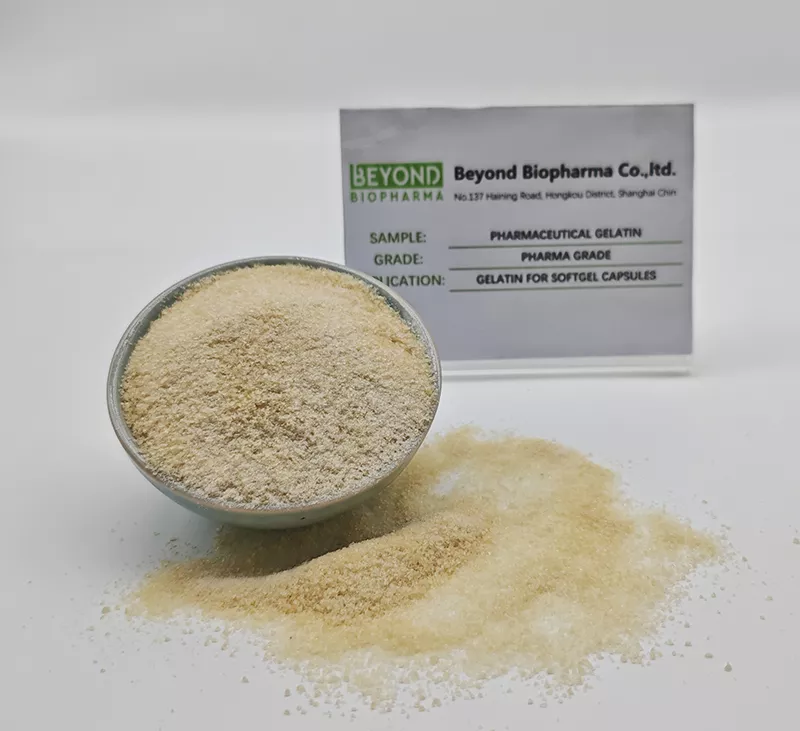
Modern gelatin production follows a controlled enzymatic hydrolysis process. Collagen-rich raw materials (bovine hide, bone, porcine skin, or fish skin) are cleaned, acid- or alkali-treated, and then extracted with hot water. The resulting gelatin solution is filtered, concentrated, dried, and milled into powder. Key quality markers include bloom (gel strength), viscosity, and mesh size. For pharmaceutical-grade gelatin, additional purification steps ensure low heavy metals and microbial counts. For buyers, understanding these steps helps evaluate supplier capabilities—especially for high-bloom gelatin for hard capsules or ultra-high-viscosity gelatin for softgels.
When sourcing gelatin for food or pharmaceutical use, buyers should review these common parameters. Note: these are typical industry ranges; final values per COA or sample.
| Parameter | Typical Range | Application Notes |
|---|---|---|
| Bloom (g) | 50–300 | Pharma/gummies often 150–260 Bloom |
| Viscosity (mPa·s) | 2.0–5.5 | Higher for softgel shells |
| Mesh | 8–60 | Finer mesh dissolves faster |
| Moisture | ≤14% | Standard for shelf stability |
Gelatin food has evolved far beyond the 1950s kitchen. Here are the key industry segments and selection guidance:
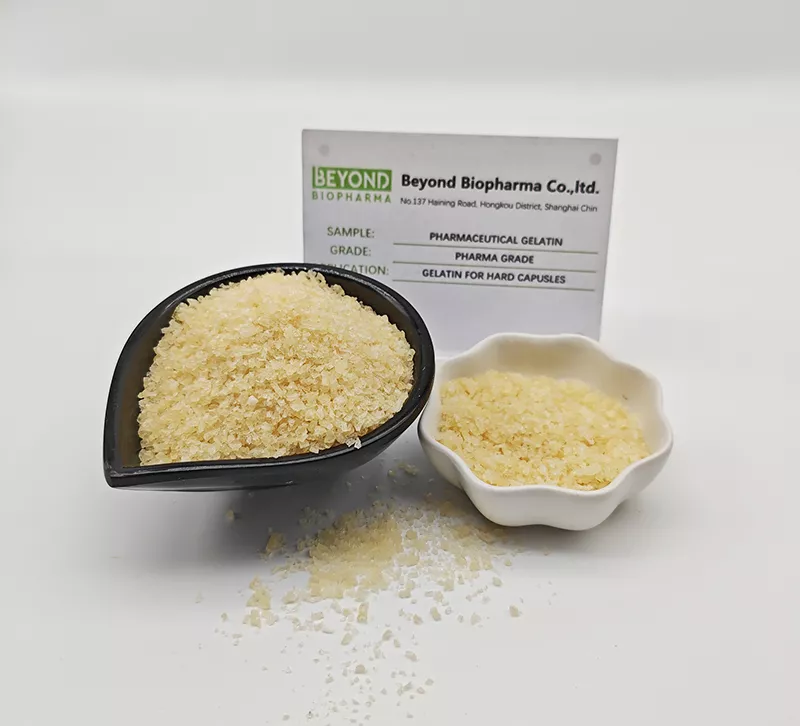
Beyond Biopharma, based in Shanghai, China, is a B2B manufacturer specializing in collagen peptides, gelatin, and plant protein peptides. With over 10 years in the food-ingredient industry, we export to 50+ countries. Our facility produces approximately 3,000 MT/year of collagen and 5,000 MT/year of gelatin, using fully automatic production lines, GMP clean workshops, and stainless-steel sealed piping with automated temperature/pH control.
We hold ISO 9001, US FDA registration, and GMP certification. Select products carry Halal or Kosher certification (e.g., fish gelatin). Our bovine bone gelatin is BSE-free. An in-house lab conducts heavy-metal and microbiological testing, supported by a dedicated QA/QC team. We offer three grades—food, pharmaceutical, and cosmetic—and provide free samples along with formulation and selection support. For applications requiring bovine collagen peptide for energy bar products or food-grade hyaluronic acid powder, we have you covered.
Q1: What is the difference between edible gelatin and pharmaceutical gelatin?
Edible gelatin meets food-grade standards for taste, odor, and safety, while pharmaceutical gelatin has stricter limits on heavy metals and microbial content, making it suitable for capsule shells and medical applications.
Q2: How do I choose between bovine, porcine, and fish gelatin?
Bovine gelatin offers high bloom and is BSE-free when sourced properly. Porcine gelatin is common in food. Fish gelatin is preferred for Halal/Kosher and lower melting point applications. Your choice depends on target market, certification needs, and functional requirements.
Q3: What causes fishy smell in gelatin, and how can it be avoided?
Fishy odor often results from poor raw material handling or insufficient processing. High-quality suppliers use fresh raw materials, controlled hydrolysis, and deodorization steps. Always request a sample and check COA for odor specifications.
Q4: Can gelatin food be used in vegan products?
No, gelatin is animal-derived. For vegan formulations, consider plant protein peptides such as pea or rice protein hydrolysates, which can provide similar functional benefits like solubility and emulsification.
Q5: What certifications should I look for when sourcing gelatin?
Common certifications include ISO 9001, US FDA registration, GMP, Halal, and Kosher. For bovine gelatin, ensure BSE-free certification. Always verify with the supplier's documentation.
Q6: How do I test gelatin bloom at my facility?
Bloom is measured using a standard texture analyzer (Bloom gelometer) following the GMIA method. If you lack equipment, request a COA from your supplier that includes bloom value, viscosity, and moisture content.
If you are sourcing gelatin for food, pharmaceutical, or nutraceutical applications, we invite you to contact Beyond Biopharma. Please provide your application, required grade (food/pharma/cosmetic), quantity/MOQ, target specs (bloom, mesh, molecular weight, certifications), and destination country. We will send free samples and a competitive quote. Our team is ready to support your next formulation with reliable, high-quality gelatin food ingredients.

We provide you with comprehensive foreign trade solutions to help enterprises achieve global development
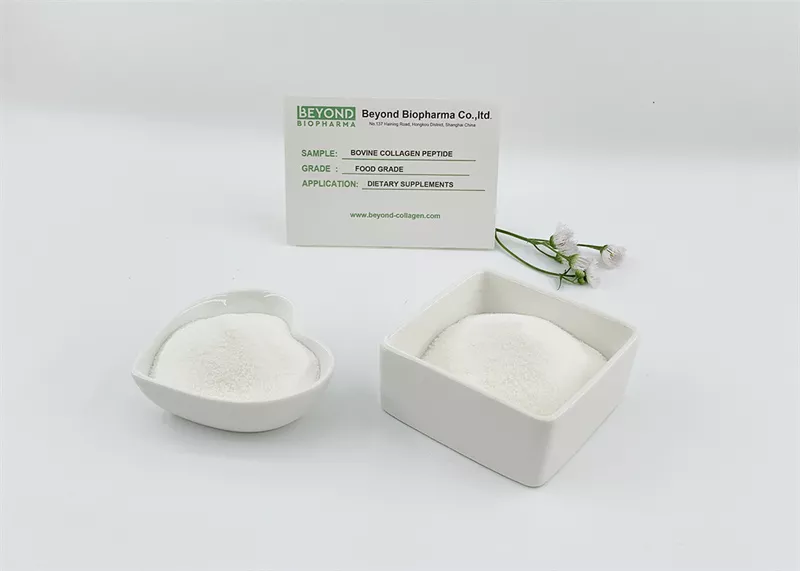
Manufacturer of bovine collagen peptide, shipping in containers all around the world
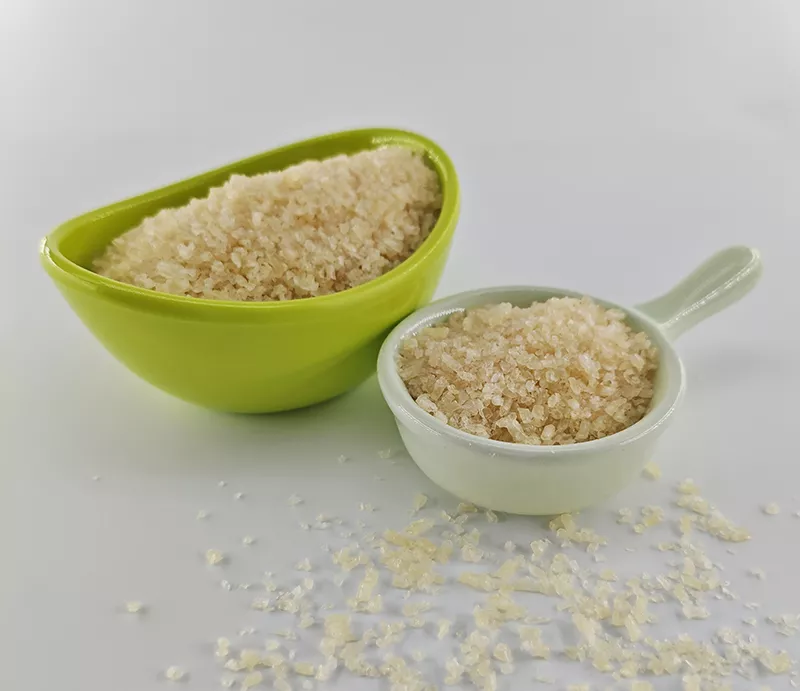
Stability, Swallowing Enhancement, and Controlled Release
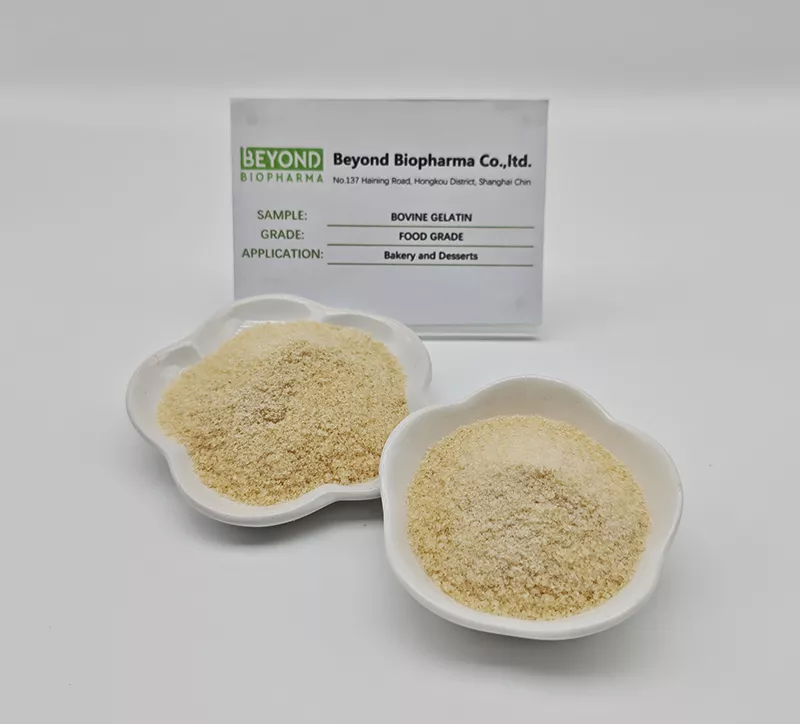
20 years experiences, 5000 ton/year capacity, Sustained supply with stable quality
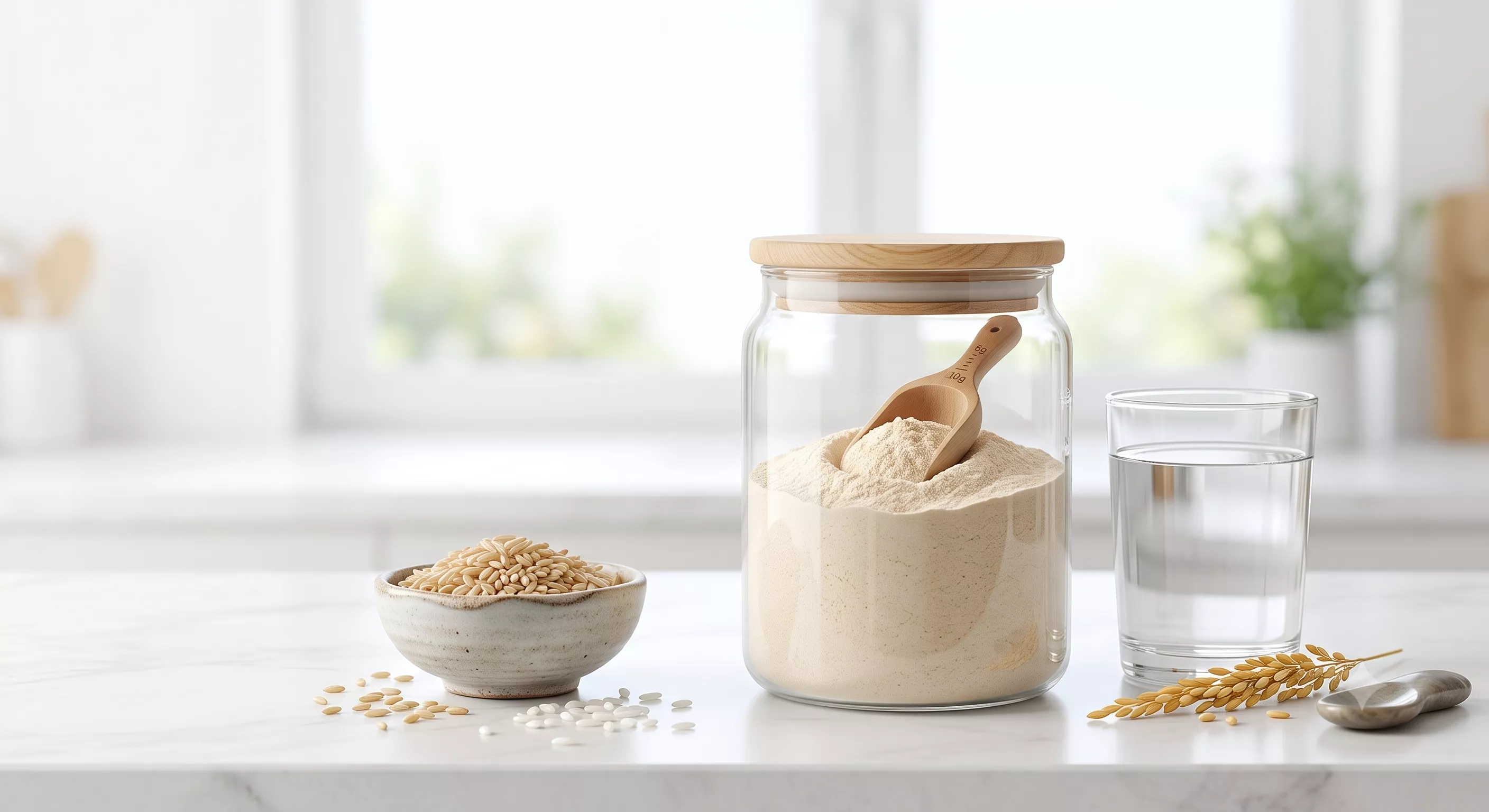
Source ultra-pure, 100% water-soluble wholesale hydrolyzed rice protein peptide in bulk. Over 85% molecules under 1000 Da. Ideal for infant nutrition, clean-label sports formulas, and sensitive skincare.
Select the most popular foreign trade service products to meet your diverse needs
Stability, Swallowing Enhancement, and Controlled Release
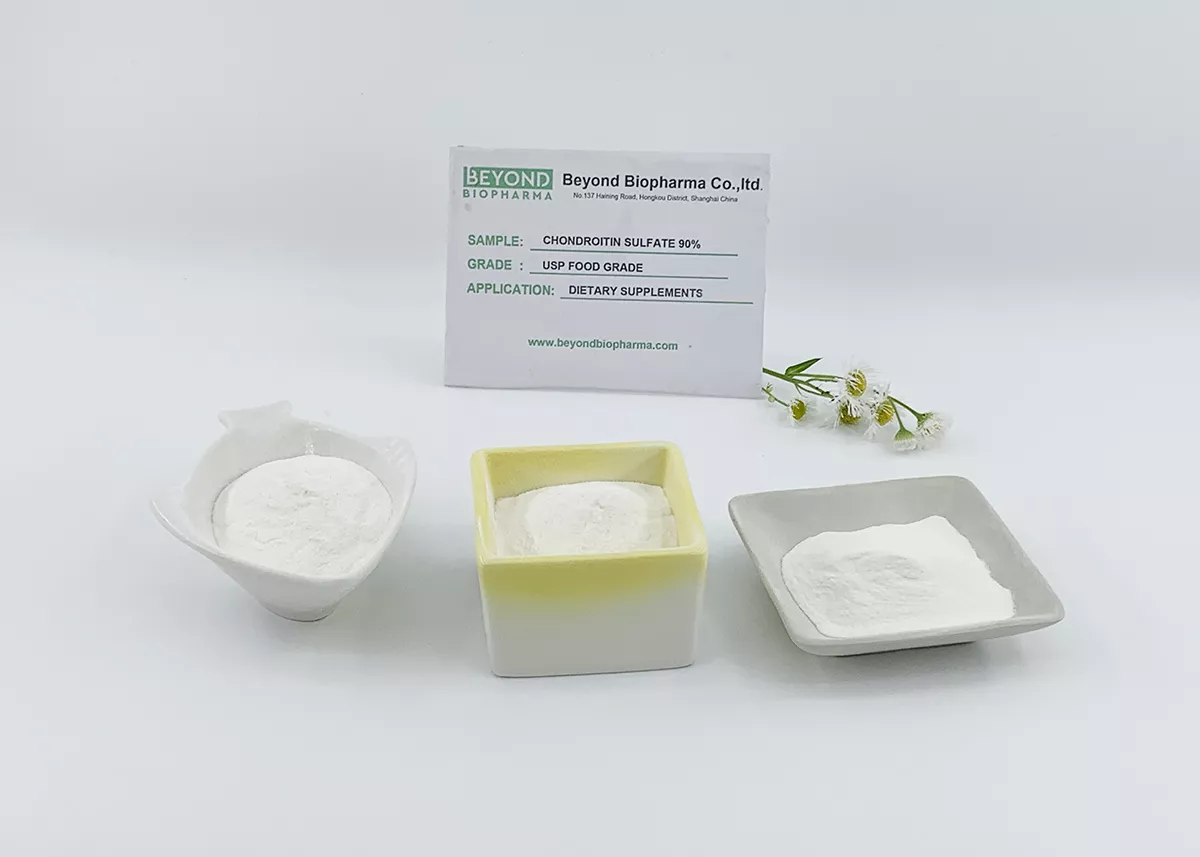
High Purity and Efficacy for Joint Health Formulations
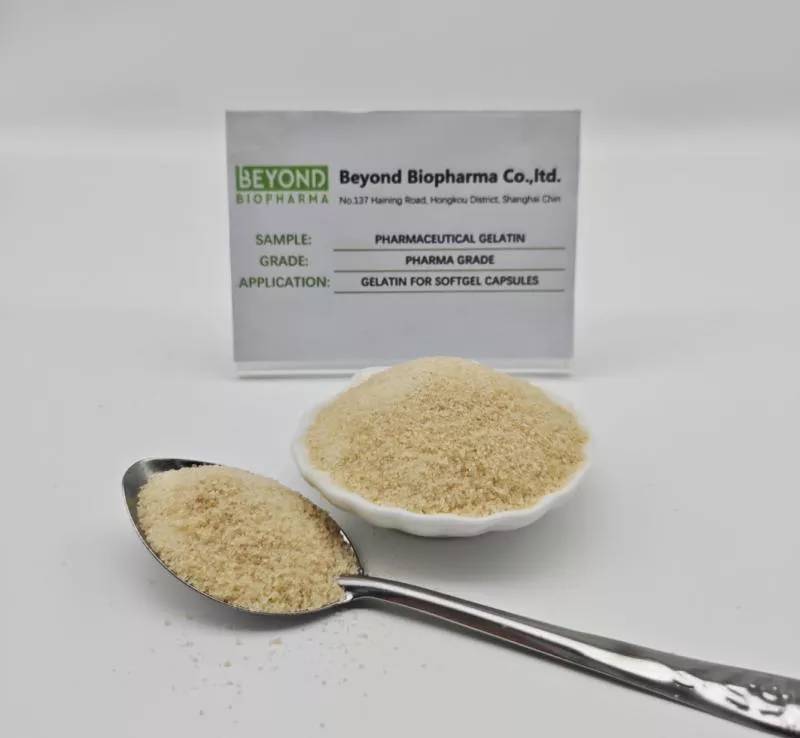
Softgel encapsulation demands a gelatin with unique physical attributes to perform optimally during the high-speed manufacturing process
Tel:+86 21 65010906
Cell/Whatsapp/Wechat:
+86 13482884055
+86 18657345785
Email: sales@beyondbiopharma.com





User Comments
Service Experience Sharing from Real Customers