 English EN


Bovine gelatin pros and cons everyone should know
Bovine gelatin offers strong gelling and health benefits but has dietary, ethical, and allergen concerns. Compare bovine gelatin to other gelatin options here.
More
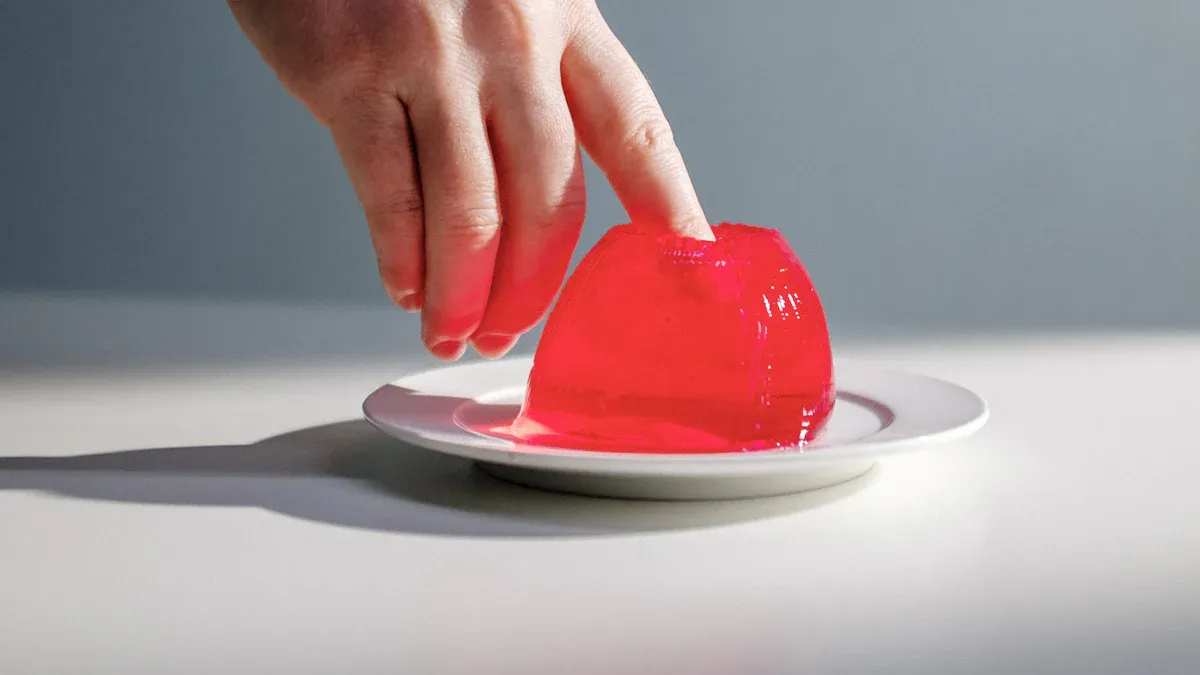
You find further food gelatin in many health and wellness products. This pure protein offers you muscle support, better gut health, and stronger skin and joints.
The global gelatin market is growing fast:
Expected to reach $6.5 billion by 2032
Growth rate near 6.6% yearly
| Health Benefit | Description |
|---|---|
| Muscle Support | Helps your muscles recover and stay strong |
| Gut Health | May soothe stomach problems and support digestion |
| Skin Improvement | Improves skin elasticity and moisture |
| Joint and Bone Health | Eases joint pain and supports strong bones |
| Tissue Repair | Aids in healing and injury prevention |
People who want natural protein for their diet, athletes, or those seeking joint and skin support can use further food gelatin.
Further food gelatin is a pure protein that supports muscle recovery, gut health, and skin elasticity.
The production process of further food gelatin involves careful sourcing, pretreatment, hydrolysis, extraction, purification, and drying to ensure high quality and safety.
Using further food gelatin in your diet can enhance joint health, improve skin, and aid digestion, making it a beneficial addition to health and wellness routines.
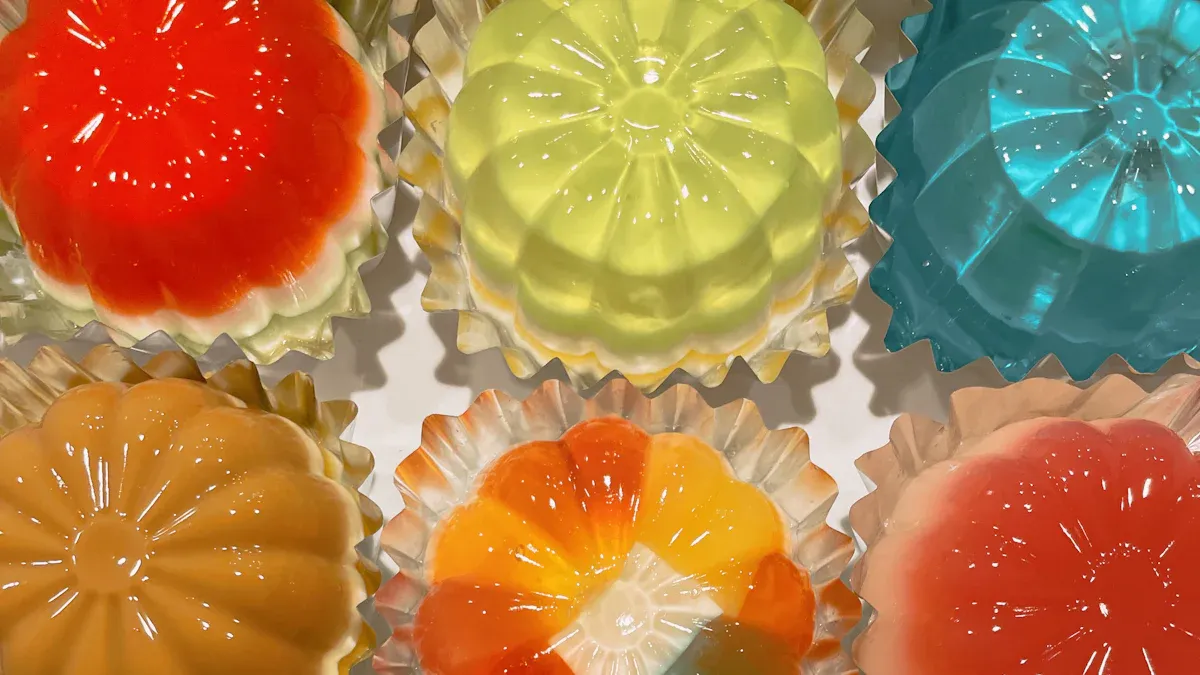
You can recognize further food gelatin by its strong gelling power and high purity. This gelatin comes mainly from beef hide, which gives it a clean taste and a clear color. You will notice that it dissolves easily in hot liquids and forms a firm gel when cooled. These qualities make it perfect for recipes that need a stable texture.
The physical and chemical properties of gelatin depend on the source. Here is a table that shows how mammalian gelatin, like further food gelatin, compares to fish gelatin:
| Property | Fish Gelatin | Mammalian Gelatin (Further Food Gelatin) |
|---|---|---|
| Gelling Temperature | Lower than mammalian gelatin | Higher than fish gelatin |
| Melting Temperature | Lower than mammalian gelatin | Higher than fish gelatin |
| Gel Strength | Weaker compared to mammalian | Stronger than fish gelatin |
| Gel Modulus | Low for cold water species | Higher for mammalian sources |
You get a stronger and more stable gel with further food gelatin. This makes it a favorite for baking, desserts, and supplements.
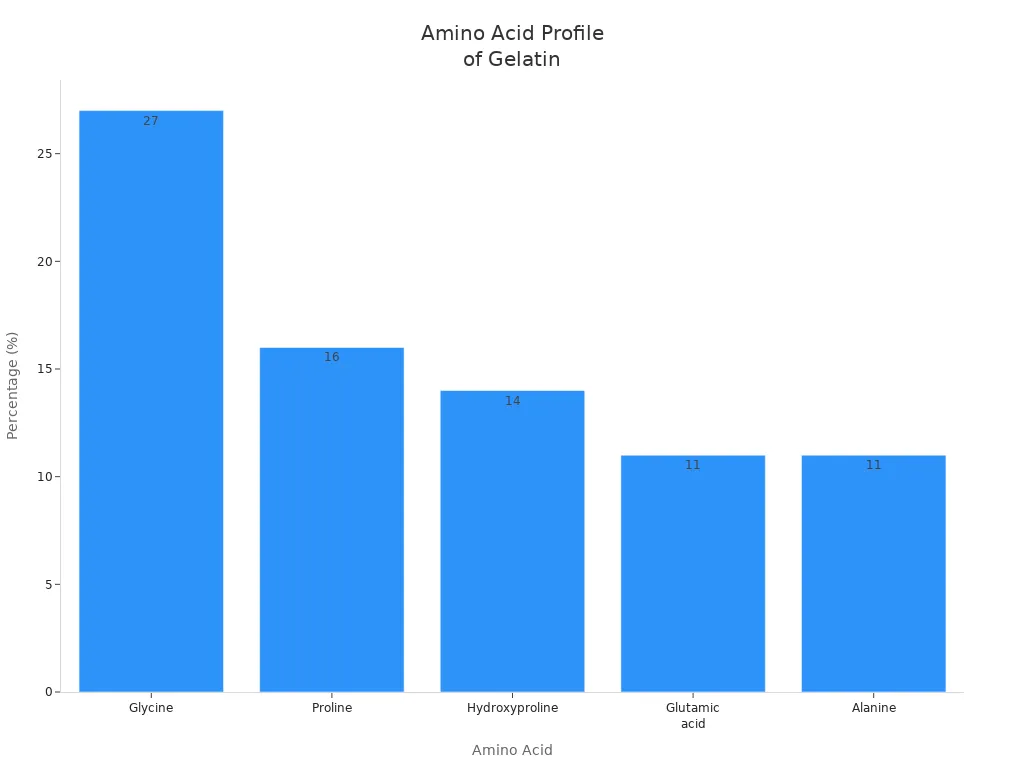
You receive a high amount of protein when you use further food gelatin. Each serving contains about 93.77% protein, which supports your muscles and tissues. The amino acid profile is unique and rich in glycine, proline, and hydroxyproline. These amino acids help your body build collagen, repair tissues, and keep your skin and joints healthy.
Here is a table that shows the main amino acids in further food gelatin:
| Amino Acid | Percentage | Description |
|---|---|---|
| Glycine | 27% | The richest food source of glycine, important for collagen synthesis. |
| Proline | 16% | Essential for collagen creation; low levels can lead to tissue damage and poor wound healing. |
| Hydroxyproline | 14% | Major component of collagen, helps strengthen and fortify it. |
| Glutamic acid | 11% | Converts to glutamate in the body, used for protein formation. |
| Alanine | 11% | Found in animal collagen, plays a role in protein synthesis. |
| Essential Amino Acids | 9 of 10 | Gelatin lacks tryptophan, making it not a complete protein source. |
You can use further food gelatin to support your gut, skin, and joints. Studies in labs show that gelatin peptides may help reduce gut inflammation and improve the gut microbiome. Some people say it helps with joint pain and wound healing, but more human studies are needed.
You may wonder how further food gelatin compares to other types. The source and processing method affect the final product. For example, porcine gelatin (from pigs) has higher levels of some amino acids and a stronger gel than bovine gelatin. Processing methods, like acid or alkaline treatment, also change the viscosity and texture.
Here is a table that compares different gelatin sources and their processing:
| Source Material | Pre-treatment Type | Resulting Viscosity |
|---|---|---|
| Pig Skin | Acid Treatment | Lower Viscosity |
| Bovine Bones | Acid/Alkaline | Higher Viscosity (Alkaline) |
You should also think about dietary needs. Bovine gelatin, like further food gelatin, can be halal or kosher if certified. Pork gelatin is not allowed for Muslims or Jews. Fish gelatin is usually accepted for most religious diets, but it has a weaker gel.
| Gelatin Type | Source | Halal Status | Kosher Status | Dietary Restrictions |
|---|---|---|---|---|
| Bovine | Cows and bulls | Halal if certified | Kosher if certified | Permissible if certified halal/kosher |
| Fish | Fish | Generally halal | Generally kosher | Widely accepted for religious compliance |
| Pork | Pigs | Not halal | Not kosher | Forbidden for Muslims and Jews |
Tip: If you have allergies to red meat or follow a vegetarian diet, you should look for plant-based alternatives.
You will find further food gelatin in many foods and supplements. It works well in gummies, marshmallows, yogurt, and protein supplements. Over 10,000 five-star reviews show that people trust and enjoy using it.
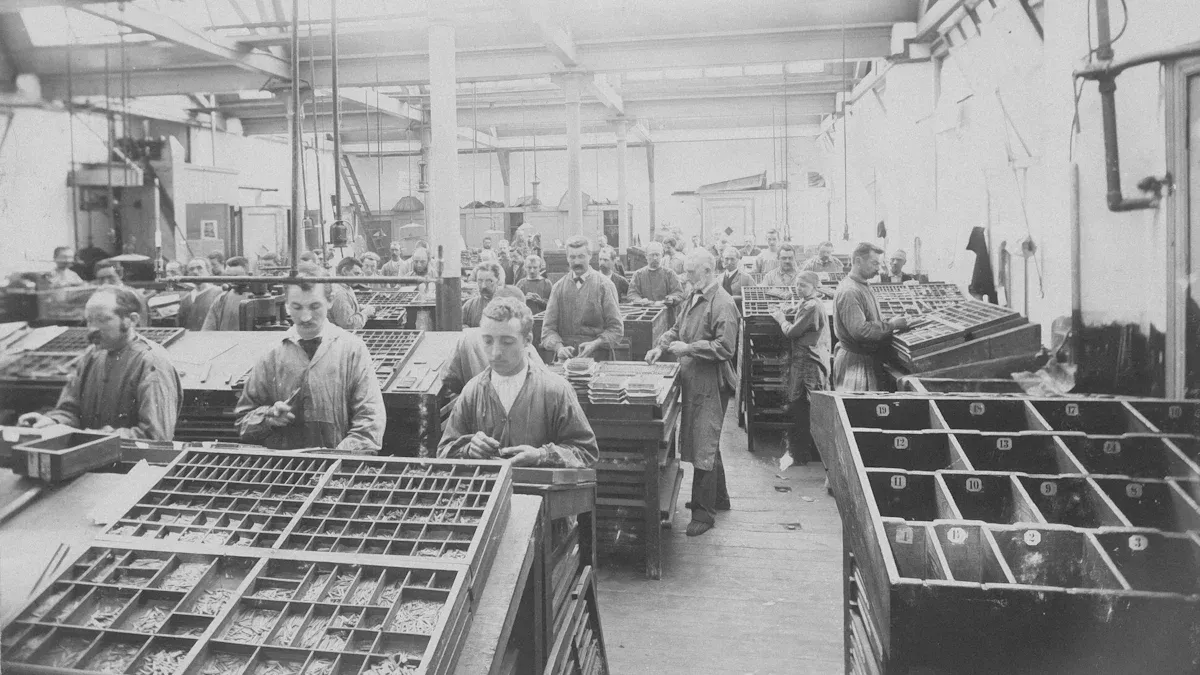
You start the production of further food gelatin by choosing the right beef hides. The quality of the hide affects the final gelatin. Producers select hides from healthy, well-fed cattle. These cattle must be rested before slaughter. You find that most hides come from halal-slaughtered animals. This ensures the gelatin meets religious dietary standards. The process follows Islamic principles, using halal-compliant cleaning agents and packaging. Equipment must be cleaned thoroughly to prevent contamination. Chemicals used in processing must also be halal-suitable. Only hides that meet these strict standards move forward in production.
Obtain beef hides from halal-slaughtered cattle.
Ensure cattle are healthy, well-fed, and rested.
Slaughter according to Islamic principles (zabihah).
Use halal-compliant cleaning agents.
Avoid cross-contamination with non-halal materials.
Ensure chemicals used in processing are halal-suitable.
Maintain thorough cleaning of equipment to prevent contamination.
Package in halal-compliant materials.
The geographic origin of the hides also matters. You see that hides from yellow cattle and yak have unique properties. Yak hide gelatin contains 18 amino acids, including essential ones. The location where cattle are raised can change the nutritional value and functional properties of the gelatin. This means that the source of the hide impacts the quality of further food gelatin.
Note: The selection process ensures you get a product that is both high-quality and suitable for many dietary needs.
You must prepare the hides before extracting gelatin. Pretreatment helps break down the collagen in the hide. There are two main types of pretreatment: acid and alkali. Acid pretreatment works best for less mature materials, like pig skin or young cattle bones. Alkali pretreatment is used for stable, highly crosslinked materials, such as beef hides and bones. This step determines the type of gelatin produced.
| Pretreatment Type | Characteristics | Resulting Gelatin Type |
|---|---|---|
| Acid Pretreatment | Applied to less mature materials with low crosslink concentration (e.g., pig skin, young cattle bones) | Type A gelatin (isoelectric point pH 6–9) |
| Alkali Pretreatment | Used for stable, highly crosslinked materials (e.g., hides, bones) | Type B gelatin (isoelectric point close to pH 5) |
You use chemicals and enzymes to help with pretreatment. Proteolytic enzymes like pepsin, trypsin, and papain break down collagen. Acids such as phosphoric acid and acetic acid help remove minerals and disrupt tissue. These steps make it easier to extract gelatin later.
Proteolytic Enzymes: Pepsin, prosubtilis protease, trypsin, alcalase, papain
Acids: Phosphoric acid, acetic acid
Tip: Pretreatment is important because it affects the yield and quality of further food gelatin.
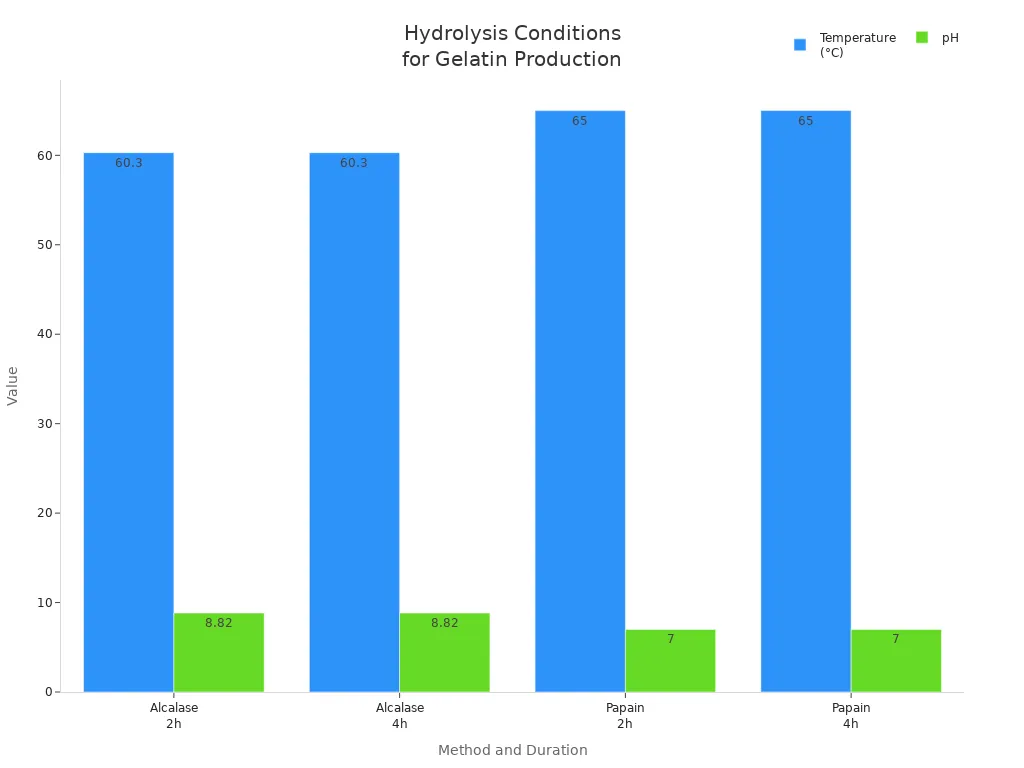
You move to hydrolysis after pretreatment. Hydrolysis breaks down collagen into gelatin. You control temperature, pH, and duration to maximize yield and quality. Different enzymes work at different conditions. For example, alcalase works best at 60.3°C and pH 8.82 for 2-4 hours. Papain works at 65°C and pH 7 for 2-4 hours. These conditions help you get the most gelatin from the hide.
| Hydrolysis Method | Temperature (°C) | pH | Duration (h) |
|---|---|---|---|
| Alcalase (0.2%) | 60.3 | 8.82 | 2 |
| Alcalase (0.2%) | 60.3 | 8.82 | 4 |
| Papain (0.2%) | 65 | 7 | 2 |
| Papain (0.2%) | 65 | 7 | 4 |
You use different extraction methods to get gelatin from the treated hides. Acidic treatment swells the collagen and improves extraction efficiency. Microwave treatment boosts viscosity and gel strength. The extraction pH changes the amino acid composition and molecular weight. Gelatin extracted in a weak acidic environment has higher molecular weight and more ordered structures. This gives it better thermal stability and elasticity. Higher molecular weight gelatin is stronger and more stable, which is important for food applications.
Callout: Extraction methods and conditions play a big role in the quality and properties of further food gelatin.
You must purify the gelatin to remove impurities. Filtration and activated carbon treatment are common methods. These steps help you achieve a high purity level in the final product. Purification ensures that further food gelatin is safe and clean for consumption.
Filtration
Activated carbon treatment
You dry the purified gelatin to finish the process. Drying methods affect the texture and solubility of the gelatin. Freeze-drying gives you higher gel strength. Spray-drying can lower gel strength if you use high temperatures. The color of gelatin changes with drying temperature, becoming more yellow at higher temperatures. Pretreatment with citric acid reduces fishy odor compared to acetic acid. The drying method and pretreatment together shape the final properties of further food gelatin.
Tip: The drying process is key to making gelatin easy to use in recipes and supplements.
You see that each step in the production process affects the quality, purity, and functionality of further food gelatin. Careful sourcing, pretreatment, hydrolysis, extraction, purification, and drying ensure you get a product that meets high standards.
You want to know that your gelatin is pure and safe. Producers use advanced laboratory tests to check for contaminants and confirm the source. These tests help you avoid unwanted animal sources and ensure high quality. Here is a table showing common testing methods:
| Testing Method | Description |
|---|---|
| PCR | Identifies the source of gelatin. |
| ELISA | Uses antibodies to detect proteins, but can be costly. |
| LC-QTOF/MS | Differentiates animal sources with high accuracy. |
| HPLC | Affordable method to check gelatin sources. |
| UHPLC-DAD | Offers improved sensitivity for analysis. |
You should also know about possible allergic reactions. Most people tolerate gelatin well, but some may experience:
Systemic allergic reactions
Anaphylaxis (rare but serious)
Localized reactions, such as rashes
For example, a young child developed a rash after eating cake icing with gelatin. He had a history of reactions to gummy candies.
You can trust further food gelatin because it meets strict safety standards. Regulatory agencies in different countries oversee its safety. Here is a table of agencies and their regulations:
| Region | Regulatory Agency/Framework | Key Regulations/Standards |
|---|---|---|
| United States | FDA | GRAS, Food Contact Notification |
| European Union | EFSA | Food Additives Regulation |
| Japan | MHLW | Food Sanitation Act |
| China | NHC | National Food Safety Standard |
These agencies make sure your gelatin is safe for food use.
You may care about how your gelatin is sourced. Producers follow ethical standards and certifications. Here is a table of common certifications:
| Certification/Standard | Description |
|---|---|
| Halal gelatine | Sourced from cows slaughtered by Islamic law. |
| Kosher gelatine | Meets Jewish dietary laws. |
| BSE-Free Certification | Ensures herds are free from disease. |
| ISO 9001 and GMP | Guarantees strict quality control. |
You can feel confident that your gelatin supports both safety and ethical values.
You see that further food gelatin comes from a careful process that uses high-quality beef hides and advanced purification. Understanding its production helps you choose safe, ethical products. You benefit from joint support, better gut health, and improved skin, making it a smart choice for your wellness goals.
You can dissolve it in hot liquids. Stir well until it fully dissolves. Let it cool to form a gel for desserts or snacks.
You can safely use it every day. Most people tolerate it well. Always follow the serving size on the package for best results.
You will notice that further food gelatin has a neutral taste and almost no smell. This makes it easy to add to drinks or foods without changing flavor.
The Process and Ingredients Behind Edible Gelatin Production
Understanding Bovine Gelatin Powder: Composition and Production
Comparing Bovine Gelatin Powder With Fish and Pork Varieties

We provide you with comprehensive foreign trade solutions to help enterprises achieve global development
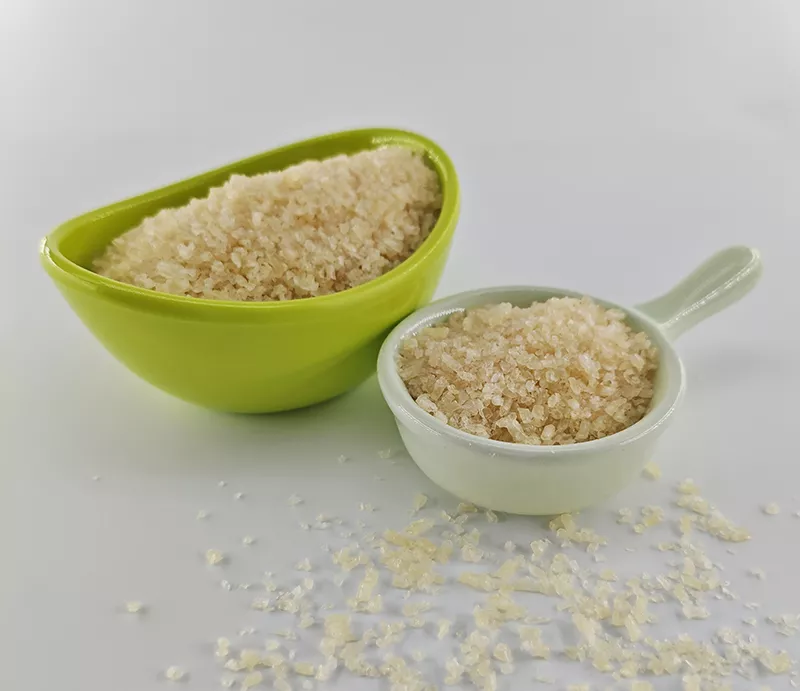
Stability, Swallowing Enhancement, and Controlled Release
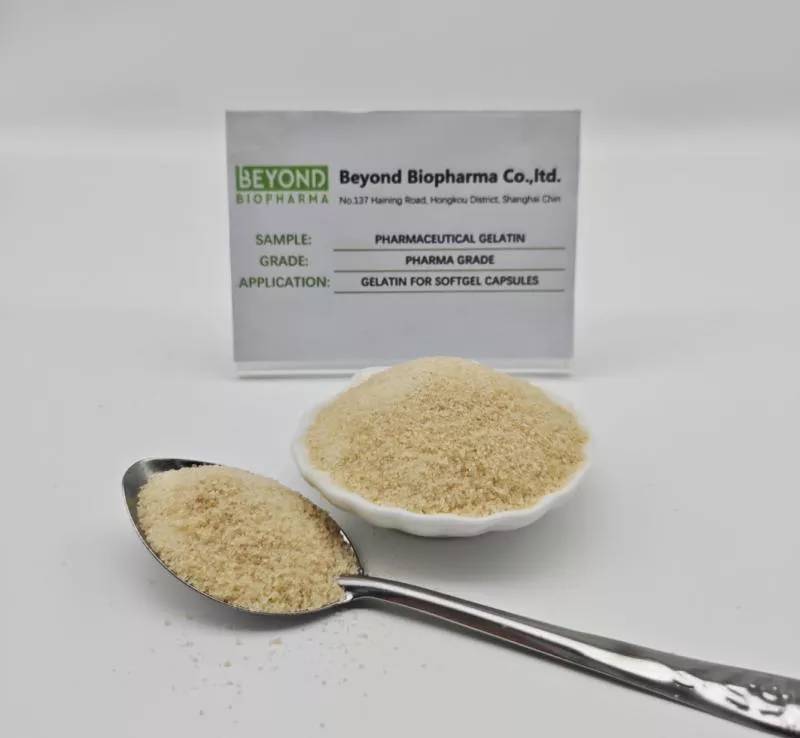
Softgel encapsulation demands a gelatin with unique physical attributes to perform optimally during the high-speed manufacturing process
Source wholesale hydrolyzed walnut protein peptide powder in bulk. Over 85% low-molecular-weight oligopeptides rich in Glutamic Acid. Perfect for cognitive formulas and sleep aid supplements.
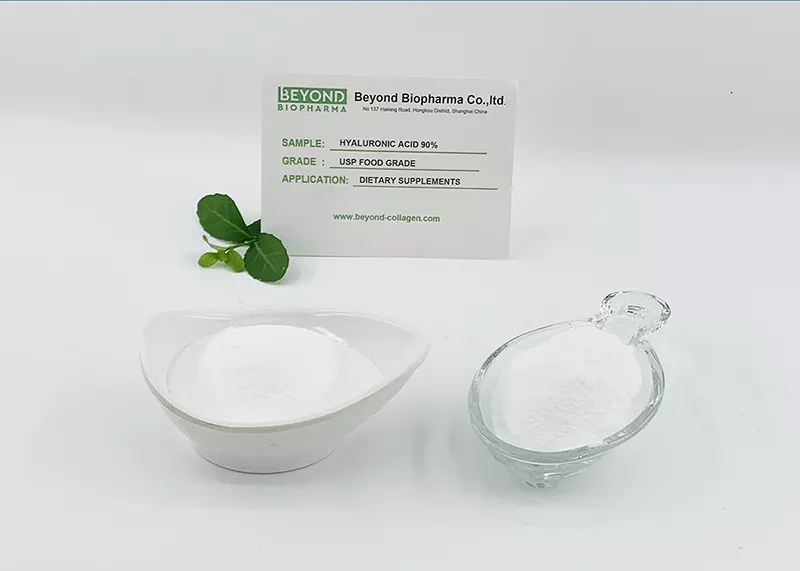
High Molecular Weight for Superior Joint, Skin, and Eye Health.
Select the most popular foreign trade service products to meet your diverse needs
Softgel encapsulation demands a gelatin with unique physical attributes to perform optimally during the high-speed manufacturing process
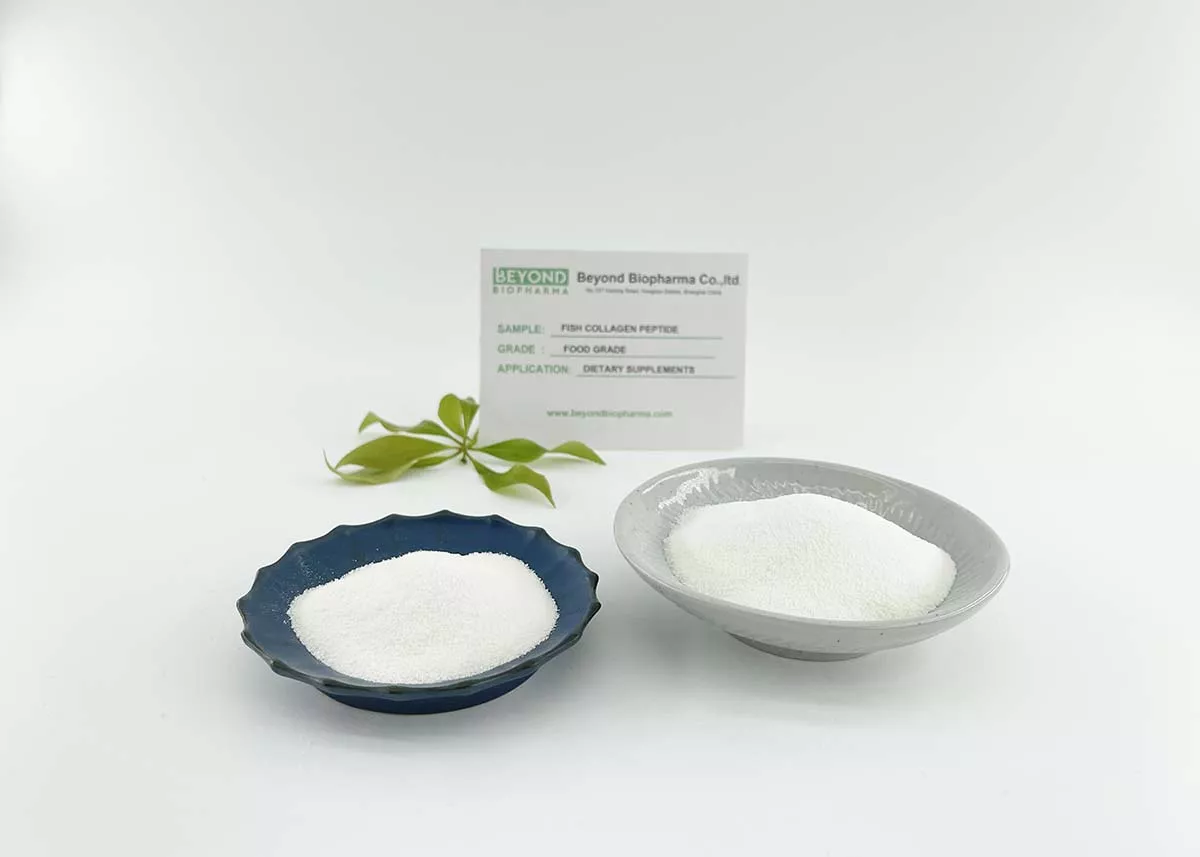
Premium marine-sourced collagen peptides with >90% protein content and low molecular weight (1000-3000 Da) for superior bioavailability. Sustainably sourced, neutral taste, and fully soluble—ideal for nutricosmetics and functional foods.
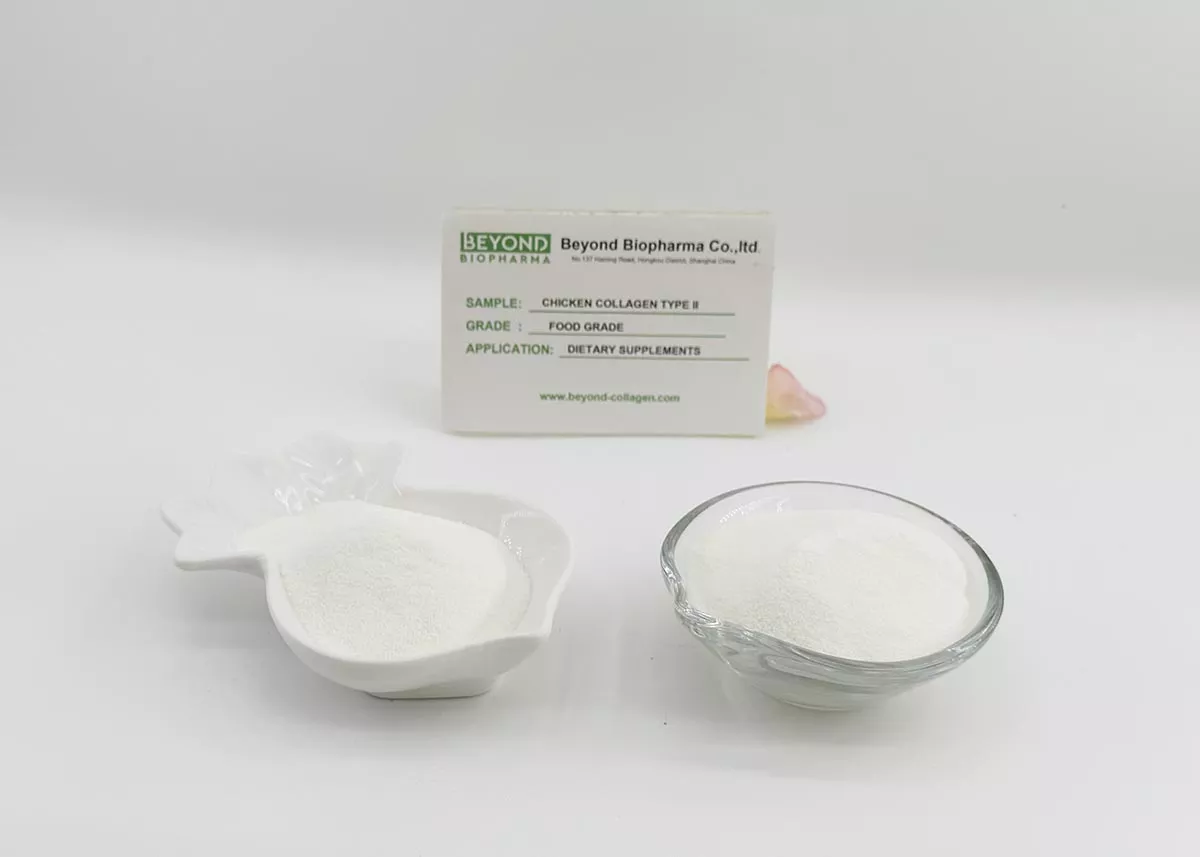
BEYOND BIOPHARMA is a specialized manufacturer of highly purified Hydrolyzed Collagen Type II. Through advanced enzymatic hydrolysis, we create low-molecular-weight collagen peptides that are highly bioavailable, offering foundational nutritional support for cartilage repair, joint function, and skin health. Our product is designed for rapid absorption and maximum efficacy in oral supplements.
Tel:+86 21 65010906
Cell/Whatsapp/Wechat:
+86 13482884055
+86 18657345785
Email: sales@beyondbiopharma.com





User Comments
Service Experience Sharing from Real Customers
Megan
Pastry ChefI've tried a few different gelatins for my gluten-free desserts, and Further Food's is by far the most reliable. It sets perfectly every time without any weird aftertaste. My customers with dietary restrictions can't tell the difference! Been using it for six months now.
Leo
Fitness InstructorAs someone who deals with joint pain from old sports injuries, I started adding this to my morning smoothie about 3 weeks ago. Not a miracle cure, but I've definitely noticed my knees feel less stiff during workouts. Mixes in easily, which is a huge plus.
Chloe
HomemakerMy kid is a picky eater and has gut issues. I sneak this into homemade gummies and soups. It's been a game-changer for his digestion—less bloating and way more regular. I appreciate that it's from a trusted source. Totally worth the price for peace of mind.
Ryan
Research AssistantWe use it in the lab for preliminary biocompatibility tests because of its high purity. Outside work, I personally take it for skin and nail health. Seems to help with my brittle nails—they're less prone to splitting now. The quality is consistently good across batches.