English EN


How to Use Gelatin Powder? Applications of Gelatin Powder
Use gelatin powder by blooming it in cold water, dissolving gently, and adding to recipes for perfect texture in desserts, sauces, and supplements.
More
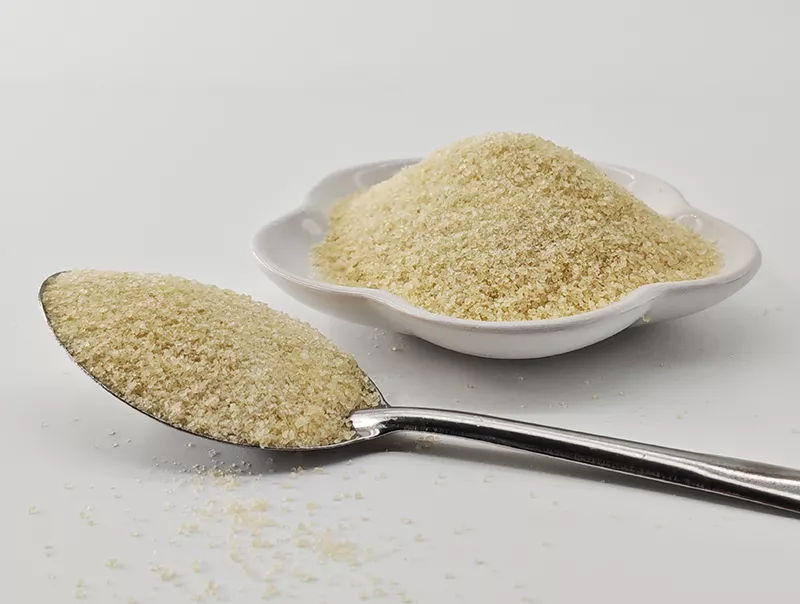
Gelatin comes in two main forms: powder and leaves (also called sheets). Many home cooks prefer leaves for their clarity and gentle setting, but powder is more widely available and cost-effective. The conversion is straightforward once you know the weight equivalence. One standard gelatin leaf (typically 2 grams) equals about 1 teaspoon of powdered gelatin (roughly 2.8 to 3 grams). For most recipes, you can use a 1:1 ratio by weight, but for best results, always check the bloom strength of your gelatin.
To convert powder to leaves, start by weighing the amount of powder your recipe calls for. For example, if a recipe requires 10 grams of gelatin powder, you will need approximately 5 to 6 leaves (depending on leaf size). The key step is hydration. For leaves, soak them in cold water for 5 to 10 minutes until soft and pliable. For powder, you typically sprinkle it over cold water and let it bloom for 5 minutes. The texture after blooming is similar, making the swap seamless.
One practical tip: if you are substituting leaves for powder in a hot liquid, gently squeeze the excess water from the soaked leaves before adding them. This prevents diluting your recipe. Conversely, when using powder instead of leaves, dissolve the bloomed powder in a small amount of warm liquid before incorporating it into the main mixture. This avoids lumps and ensures even distribution.
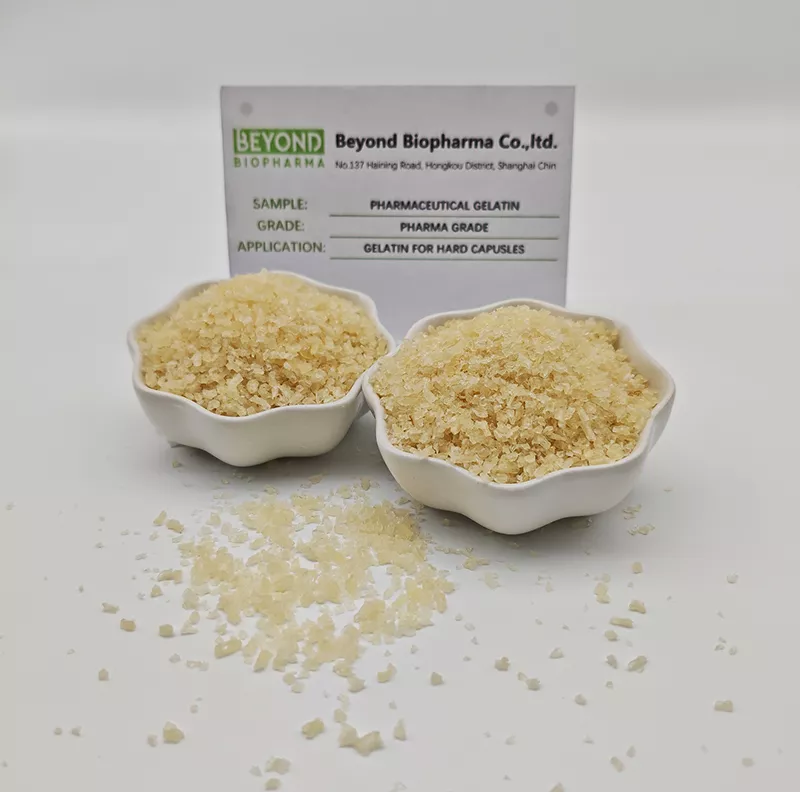
For professional-grade results, consider the gelatin source. Bovine and porcine gelatins have slightly different setting properties. Bovine gelatin, often used in pharmaceutical capsules, has a higher melting point and firmer set. Porcine gelatin is softer and clearer. If you are working with specialty products like pharmaceutical-grade bovine bone gelatin, the conversion remains the same, but the bloom strength may be higher, so adjust liquid ratios slightly.
Another common scenario is using gelatin for encapsulation or supplement making. In such cases, precision matters. A digital scale accurate to 0.1 grams is recommended. For example, when making hard capsules, the gelatin leaf form is often preferred because it dissolves uniformly. If you only have powder, you can still achieve the same consistency by hydrating it in a 1:5 ratio with cold water (1 part gelatin to 5 parts water) and then gently heating to dissolve.
Storage is also important. Gelatin leaves should be kept in a cool, dry place, away from moisture. Powdered gelatin has a longer shelf life if sealed properly. If you convert a large batch of powder into leaves for convenience, store the homemade leaves in an airtight container with a silica gel packet to prevent clumping.
For those working with plant-based alternatives, note that agar-agar has a different conversion ratio. However, for traditional gelatin, the powder-to-leaf conversion is reliable across brands. Always test a small batch first if you are trying a new brand or type, as bloom strength can vary by 10 to 20 percent.
In commercial kitchens, gelatin leaves are often used for mirror glazes and mousses because they produce a crystal-clear finish. Powder can achieve the same effect if you filter the dissolved gelatin through a fine-mesh sieve. The conversion method remains identical, so you can confidently substitute either form without compromising the final dish.
To summarize the steps: weigh your powder, calculate the equivalent leaf weight, hydrate both forms in cold water, then dissolve into your warm liquid. With practice, the swap becomes second nature. For more detailed guidance on specific applications like gelatin for micro-encapsulation, refer to manufacturer instructions, as the bloom strength and particle size may require slight adjustments.
Finally, remember that gelatin is a protein, so avoid boiling it after hydration, as high heat can break down its gelling power. Keep your liquid temperature below 80°C (176°F) when dissolving. This tip applies to both powder and leaves, ensuring your conversion always yields a perfect set.


We provide you with comprehensive foreign trade solutions to help enterprises achieve global development
The High-Performance Barrier for Core Material Protection and Controlled Release.
Precision, Purity, and Optimal Machinability
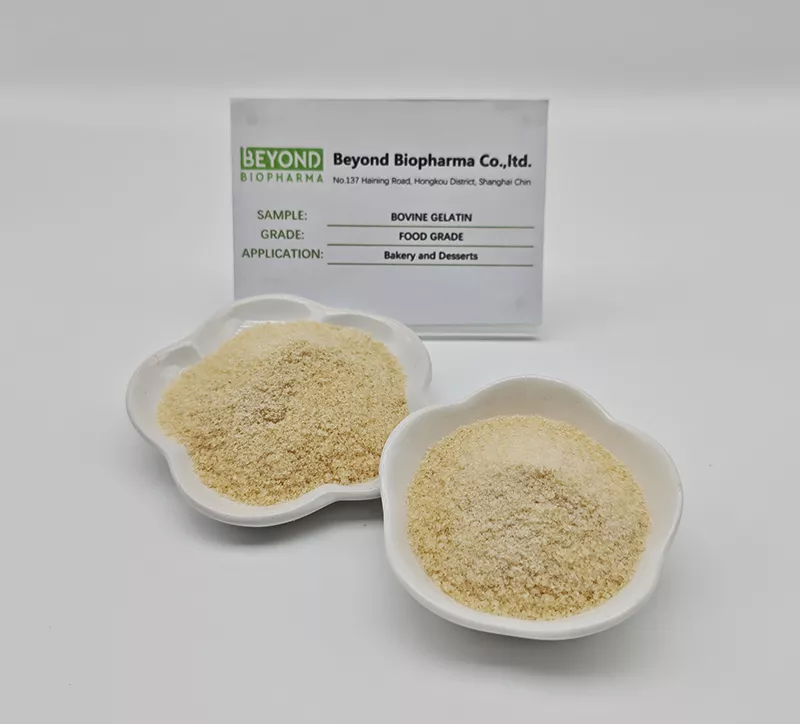
20 years experiences, 5000 ton/year capacity, Sustained supply with stable quality
High Molecular Weight for Superior Joint, Skin, and Eye Health.
Tel:+86 21 65010906
Cell/Whatsapp/Wechat:
+86 13482884055
+86 18657345785
Email: sales@beyondbiopharma.com