English EN


How to Use Gelatin Powder? Applications of Gelatin Powder
Use gelatin powder by blooming it in cold water, dissolving gently, and adding to recipes for perfect texture in desserts, sauces, and supplements.
More
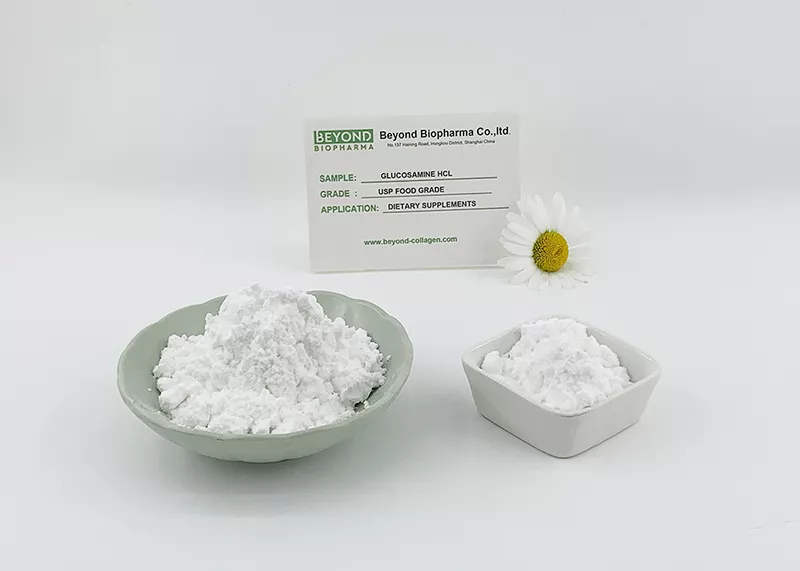
Gelatin sheets and powder are both made from collagen, but they differ in how they are processed and used. Sheets are often preferred for their clarity and gentle setting properties, while powder offers more flexibility in measurement and dissolves quickly in warm liquids. The key to converting between them lies in understanding their bloom strength and weight equivalence.
Most standard gelatin sheets have a bloom strength of around 200 to 250, which is similar to common powdered gelatin. As a general rule, one sheet of gelatin (about 2 to 2.5 grams) is equivalent to approximately 1 teaspoon of powdered gelatin (about 3 grams). However, always check the specific brand instructions since bloom values can vary.
To convert sheets to powder, simply weigh the sheets you need and replace them with the same weight of powder. For example, if a recipe calls for 4 sheets (roughly 10 grams), use 10 grams of powdered gelatin. If you do not have a scale, use the volume guide: 4 sheets equal about 2 teaspoons of powder. Remember to bloom the powder in cold water first—use a ratio of 1 part gelatin to 3 parts water by weight—then dissolve it gently over low heat or in warm liquid.
One advantage of using powder is that you can adjust the setting strength more precisely. For softer gels, reduce the powder slightly; for firmer textures, add a little more. This flexibility is especially useful in making desserts like panna cotta, mousses, or fruit jellies. If you are working with acidic ingredients like citrus juice, increase the gelatin amount by about 20% to compensate for the acid weakening the gel.
Storage matters too. Keep both sheets and powder in a cool, dry place away from direct sunlight. Powdered gelatin has a longer shelf life if sealed properly, while sheets are more sensitive to humidity. Once opened, transfer sheets to an airtight container and use within six months for best performance.
For professional applications, such as in confectionery or pharmaceutical products, always verify the bloom strength with your supplier. Some specialty gelatins, like those used for standardized gelatin sheets or food grade porcine gelatin, have specific conversion charts. Always follow the manufacturer's recommendations to ensure consistent results in your recipes.
In summary, converting gelatin sheets to powder is straightforward once you know the weight equivalence. Keep a small kitchen scale handy for accuracy, and always bloom the powder before use. With these tips, you can confidently substitute one form for the other without compromising the texture of your final dish.


We provide you with comprehensive foreign trade solutions to help enterprises achieve global development
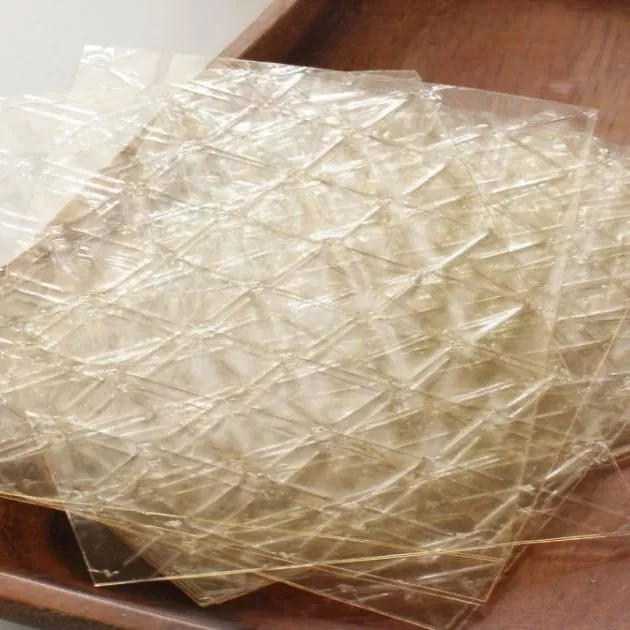
Our Gelatin Sheets are produced to precise standards, ensuring consistency and reliability across different Bloom grades (Silver being the most common professional choice).
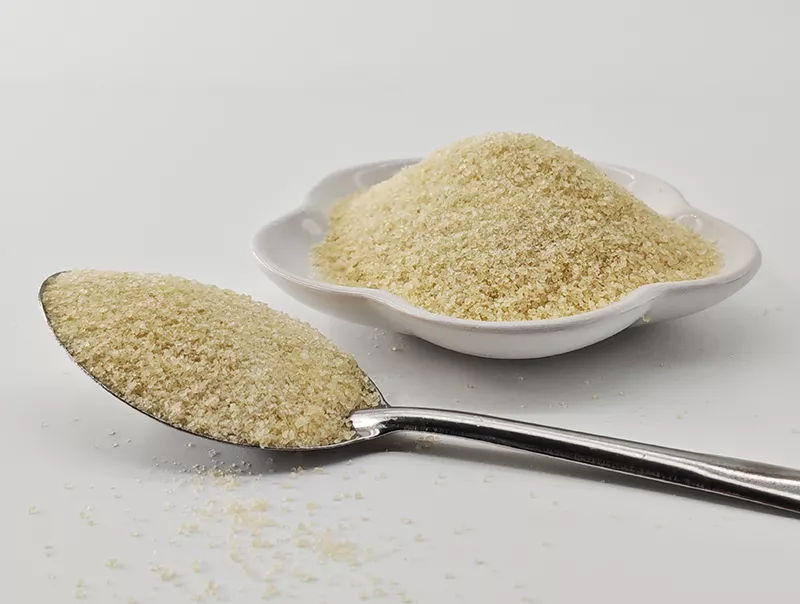
The High-Performance Barrier for Core Material Protection and Controlled Release.
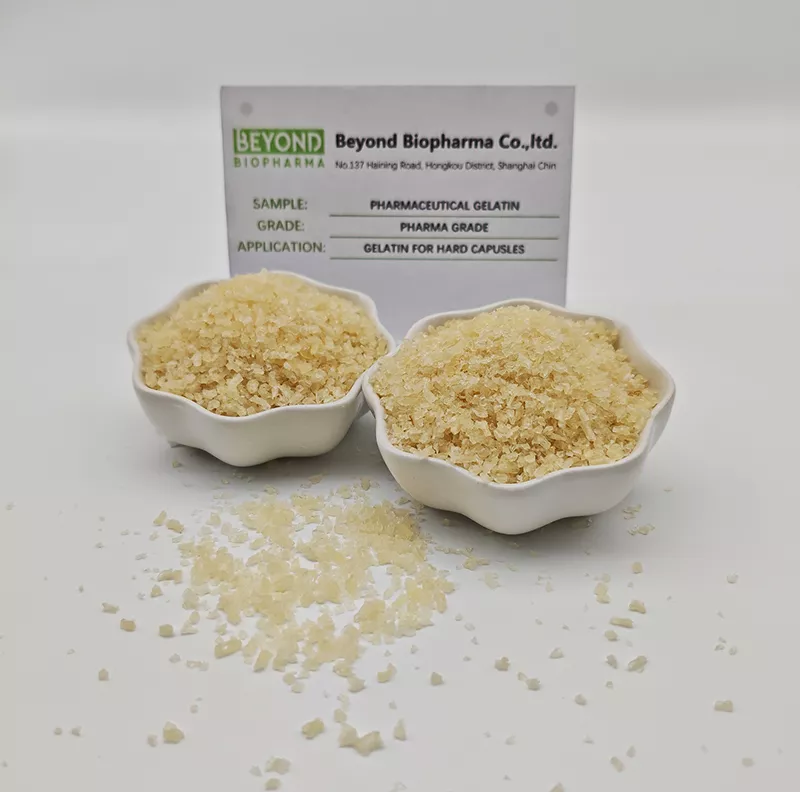
Precision, Purity, and Optimal Machinability
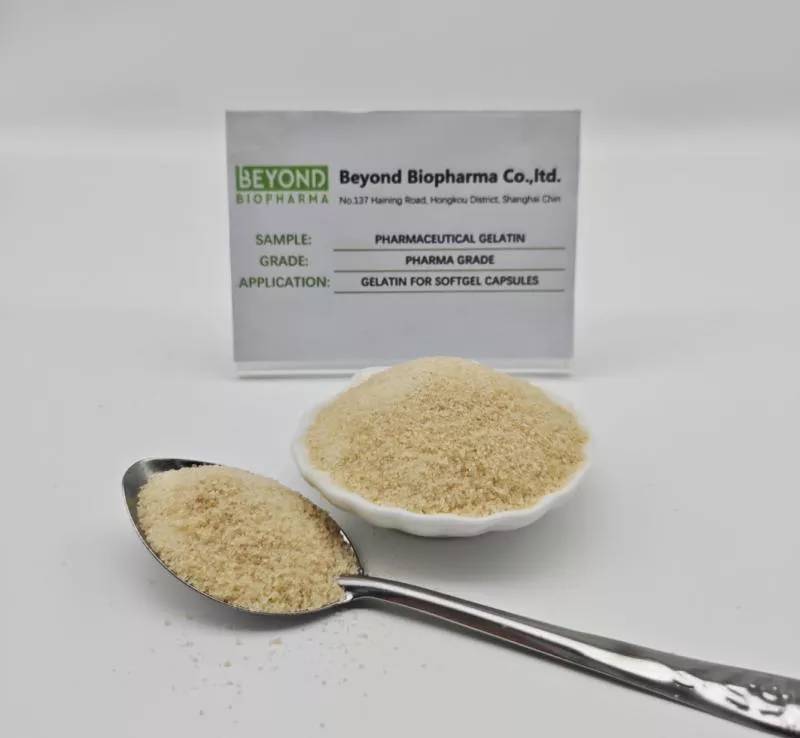
Softgel encapsulation demands a gelatin with unique physical attributes to perform optimally during the high-speed manufacturing process
Tel:+86 21 65010906
Cell/Whatsapp/Wechat:
+86 13482884055
+86 18657345785
Email: sales@beyondbiopharma.com