 English EN


Bovine gelatin pros and cons everyone should know
Bovine gelatin offers strong gelling and health benefits but has dietary, ethical, and allergen concerns. Compare bovine gelatin to other gelatin options here.
More
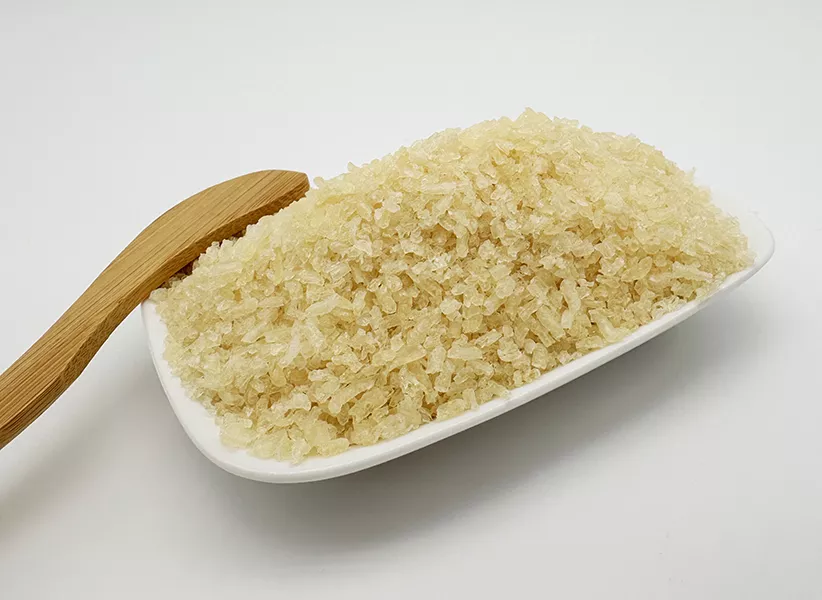
Edible crystals with gelatin are shelf-stable, crystalline forms of gelatin that dissolve easily in warm liquids or melt in the mouth. They are produced by controlled hydration, heating, and drying of gelatin solutions. For purchasing managers, the key challenge is batch consistency—variations in bloom, viscosity, or mesh size can affect final product texture and solubility. Gelatin sourced from bovine, porcine, or fish origins each behaves differently during crystallization. This guide focuses on edible gelatin (Bloom 150–260 g) commonly used in gummies and confectionery.
The process relies on gelatin’s ability to form a thermoreversible gel. When gelatin is hydrated in cold water (typically 1:3 ratio by weight), the granules swell. Heating to 50–60°C dissolves the protein chains. Controlled cooling allows the chains to re-associate into a network. For crystals, the solution is spread thin and dried at low humidity, forming brittle flakes or granules. Key parameters include:
Enzymatic hydrolysis is not used here—this is a physical process. The resulting crystals have a glass transition temperature around 30–40°C, making them stable at room temperature.
Below are common parameter ranges for edible gelatin used in crystal production. These are typical industry ranges; final values per COA/sample should be confirmed with your supplier.
| Parameter | Typical Range | Notes |
|---|---|---|
| Bloom (g) | 150–260 | Higher bloom = firmer gel; gummies often use 200–250 Bloom |
| Viscosity (mPa·s) | 2.0–5.5 | Measured at 6.67% solution, 60°C |
| Mesh size | 8–60 | Coarser mesh for crystals; finer for quick dissolution |
| Moisture (%) | ≤14 | Lower moisture extends shelf life |
| Protein (%) | ≥85 | Gelatin is >90% protein |
Different industries require specific gelatin properties. Here is a selection guide:
Beyond Biopharma, based in Shanghai, China, is a B2B manufacturer of collagen peptides, gelatin, and plant protein peptides with over 10 years in the food-ingredient industry. Our products are exported to 50+ countries. Key differentiators include:
Our products are compatible with industry standards from suppliers like Rousselot, Gelita, and Nitta Gelatin, offering a reliable alternative without affiliation.
1. What bloom strength is best for edible gelatin crystals?
For gummies and confectionery, Bloom 200–260 g is ideal. Lower bloom (150–180 g) works for softer gels. Always check the COA for exact values.
2. Can I use fish gelatin for edible crystals?
Yes. Fish gelatin has lower bloom (typically 150–200 g) and a lower melting point, which can be an advantage for melt-in-the-mouth products. It is also Kosher/Halal certified.
3. How do I ensure consistent crystal size in production?
Control the cooling rate (0.5–1°C/min) and drying humidity (40–50% RH). Using a consistent mesh size (e.g., 8–20 mesh) after grinding ensures uniformity.
4. What certifications should I look for when sourcing gelatin?
ISO 9001, FDA registration, and GMP are standard. For religious compliance, Halal or Kosher certification is needed. BSE-free certification is critical for bovine gelatin.
5. Can gelatin crystals be used in vegan products?
No, gelatin is animal-derived. For vegan formulations, use plant protein peptides (pea, rice, soy) that form gels via different mechanisms. These are available as alternatives.
6. How do I test the quality of gelatin crystals before ordering bulk?
Request free samples from the supplier. Test bloom, viscosity, and solubility in your application. Check the COA for heavy metals and microbial limits.
To get started with your gelatin crystal project, provide the following details to Beyond Biopharma for a customized quote and free samples:
Contact Beyond Biopharma today to discuss your sourcing needs. Our team offers formulation support and bulk supply options tailored to your market.

We provide you with comprehensive foreign trade solutions to help enterprises achieve global development
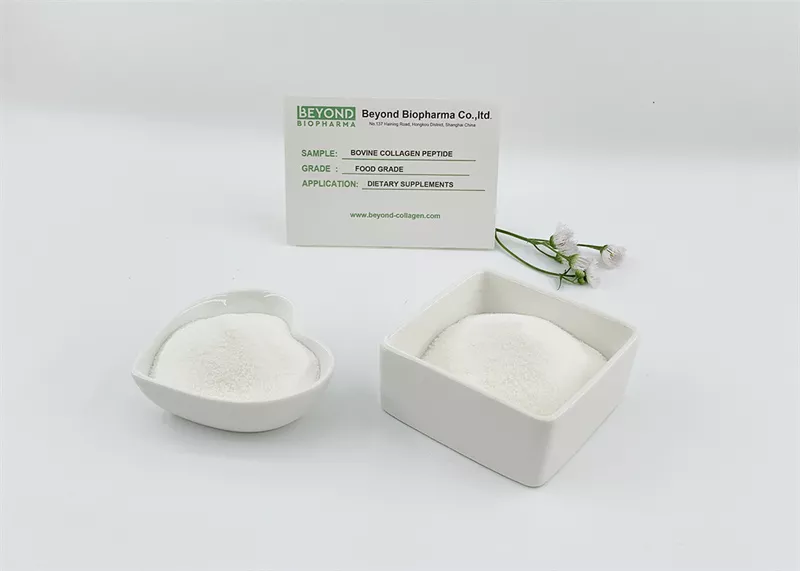
Manufacturer of bovine collagen peptide, shipping in containers all around the world
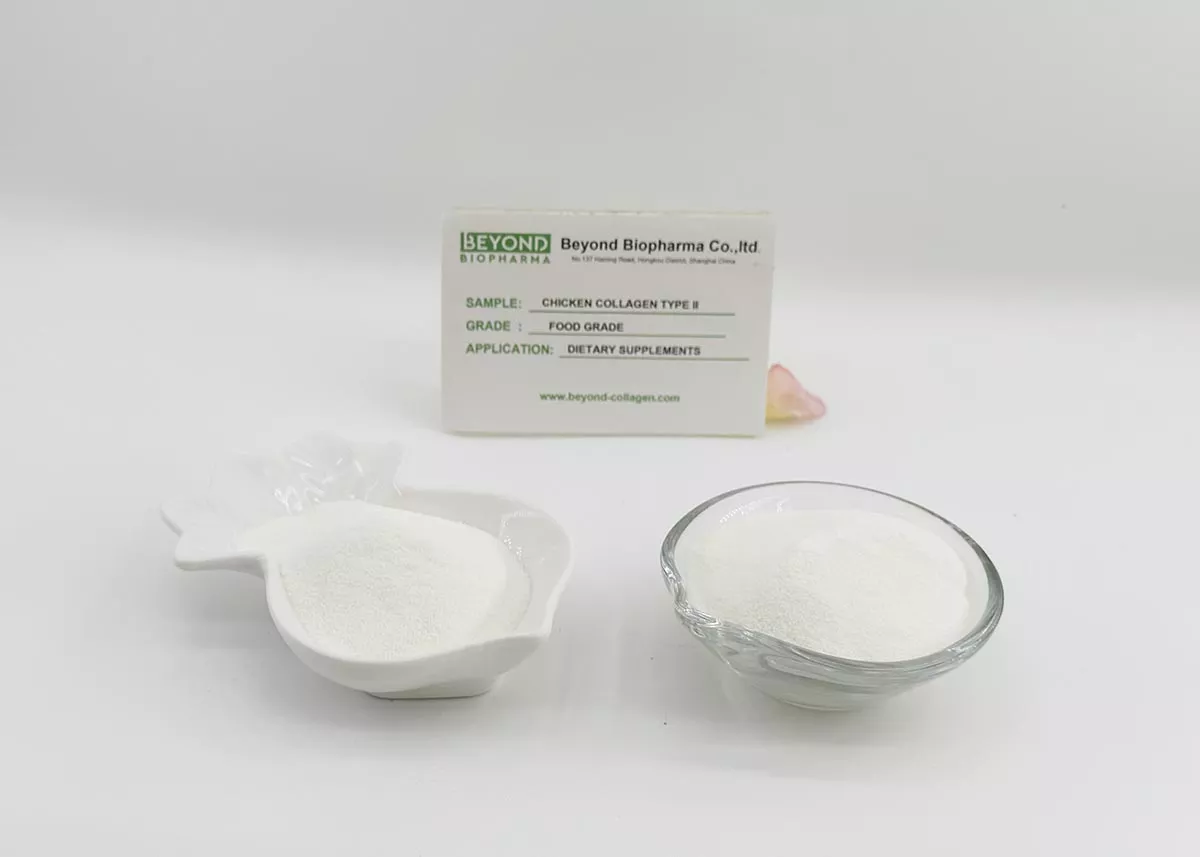
BEYOND BIOPHARMA is a specialized manufacturer of highly purified Hydrolyzed Collagen Type II. Through advanced enzymatic hydrolysis, we create low-molecular-weight collagen peptides that are highly bioavailable, offering foundational nutritional support for cartilage repair, joint function, and skin health. Our product is designed for rapid absorption and maximum efficacy in oral supplements.
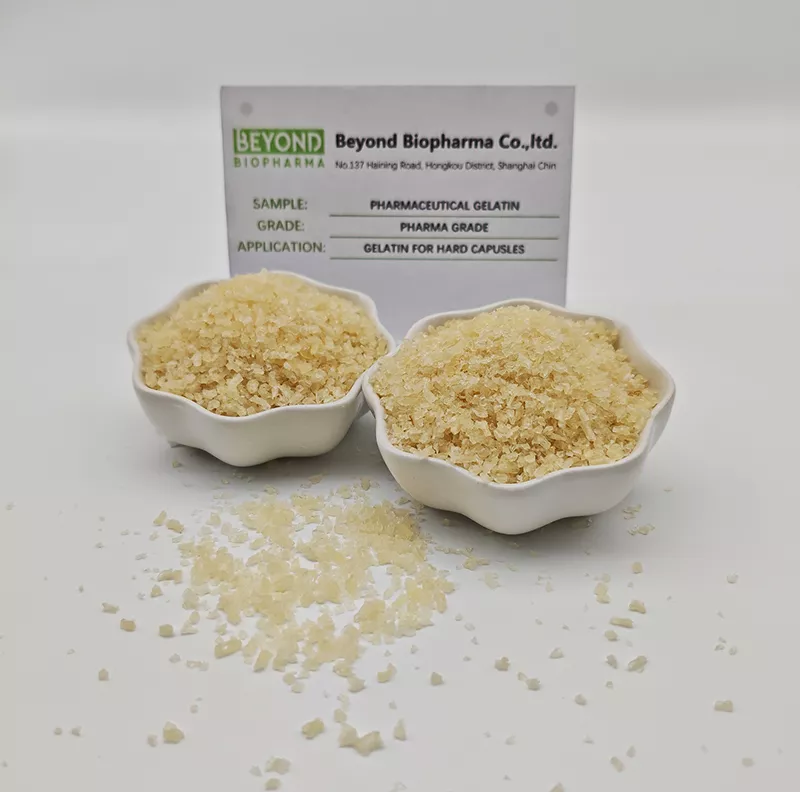
Precision, Purity, and Optimal Machinability
Our Bovine Hides Gelatin is engineered for versatility and compliance, ensuring performance across various applications.
Select the most popular foreign trade service products to meet your diverse needs
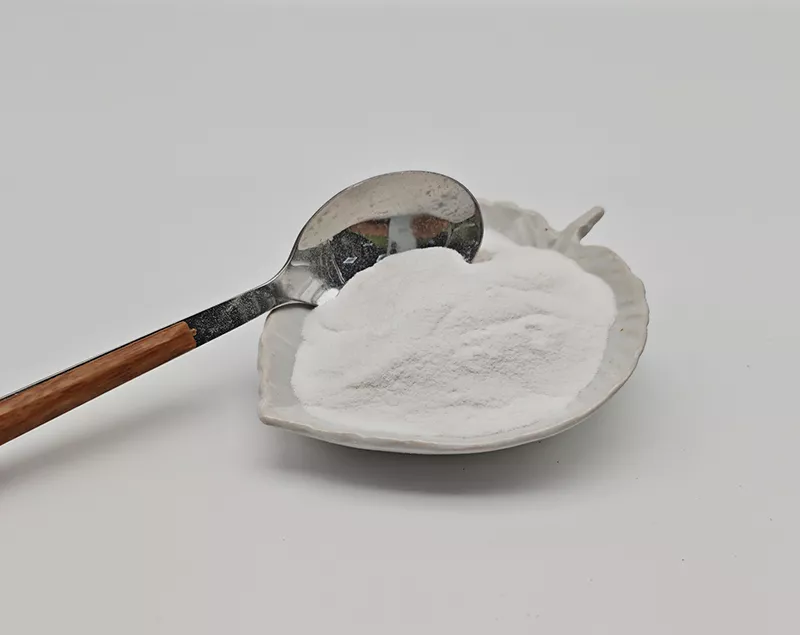
Fish Gelatin for foods is increasingly recognized as the premium alternative to traditional mammalian sources, meeting the growing global demand for clean-label ingredients that align with diverse dietary and religious requirements. Derived from the skin and scales of fish like cod and tilapia, fish gelatin offers unique functional benefits that make it an exceptional gelling, stabilizing, and texturizing agent.
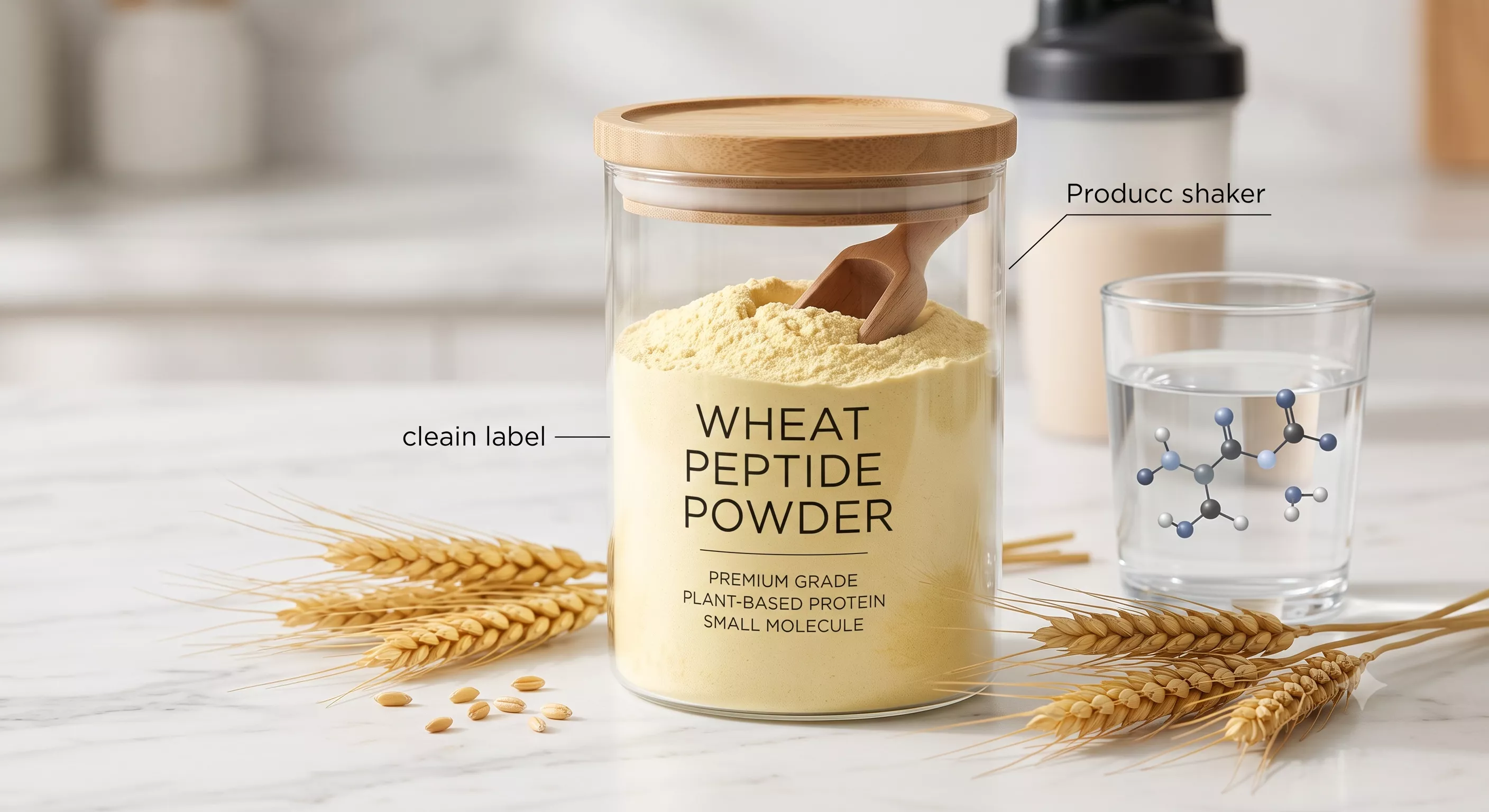
Source ultra-pure, high-solubility wholesale hydrolyzed wheat gluten peptide in bulk. Rich in plant-bound Glutamine ($\ge 25\%$) for muscle recovery and gut barrier health.
Manufacturer of bovine collagen peptide, shipping in containers all around the world
Tel:+86 21 65010906
Cell/Whatsapp/Wechat:
+86 13482884055
+86 18657345785
Email: sales@beyondbiopharma.com





User Comments
Service Experience Sharing from Real Customers
Megan
Elementary School TeacherAs someone who does science projects with my 4th graders, this edible crystal recipe was a total hit! The gelatin made the crystals firm yet chewy, and the kids loved that they could actually eat their 'experiment'. Much easier to handle than sugar-based ones. We made blue ones for our geology unit!
Leo
BartenderTried this for a cocktail garnish – wow! The crystals held their shape perfectly in chilled drinks and added a fun, upscale touch. I used clear gelatin and a drop of edible silver luster dust. Lost one star because my first batch set too fast, but once I got the timing down, it was brilliant.
Chloe
Stay-at-Home ParentMy picky eater finally got excited about something in the kitchen! We followed the gelatin crystal recipe for a rainy-day activity, and she was mesmerized watching them form. The texture is like a firm gummy – not too sticky. We used natural beet juice for color. Such a clever, safe recipe for kids.
Raj
Software DeveloperGeeky baking project success! As a total newbie in the kitchen, I appreciated how precise the instructions were. My crystals came out looking like tiny quartz clusters – great for my D&D game night. Only thing: I’d suggest clarifying the cooling time for thicker crystals. Still, super fun and oddly satisfying to make.