English EN


Halal & Kosher Gelatin Certification: How to Verify a Supplier's Claims
To verify halal kosher gelatin certificate validity, check issuing religious bodies in official databases and match lot numbers with Certificates of Analysis.
More
Beyond Biopharma
Jun-12-2026
Bovine gelatin is derived from cattle bones, hides, and connective tissues. For it to be considered Halal, the entire production chain must comply with Islamic dietary laws, from animal slaughtering to processing and packaging.
The cattle must be slaughtered according to Zabihah guidelines: a sharp cut to the jugular veins, carotid arteries, and windpipe while reciting the name of Allah (Tasmiyah). Only healthy, permissible animals are acceptable.
Learn about verified Halal gelatin sourcingProcessing facilities must be free from contamination with non-Halal substances (e.g., porcine derivatives, alcohol, or blood). Dedicated equipment and storage areas are required to maintain purity.
Check facility standards for gelatin productionAll chemicals, enzymes, and solvents used in extraction, purification, and drying must be Halal-certified. Acid and alkali treatments should not involve any Haram ingredients.
View Halal-certified pharmaceutical gelatinReputable Halal certification bodies (e.g., JAKIM, IFANCA, or GAC) audit the entire supply chain. Certificates must be current and specify the product batch, source, and processing methods.
See certified gelatin sheet productsTo verify certification: (a) Check the product label for a Halal logo and certifying body name. (b) Contact the manufacturer for a copy of the certificate. (c) Search the certifier’s online database using the batch number.
Explore Halal-certified gelatin for softgelsFull traceability from farm to finished product is mandatory. This includes slaughter records, processing logs, and transportation documents. Digital tracking systems are increasingly used for transparency.
Review traceability in collagen peptide products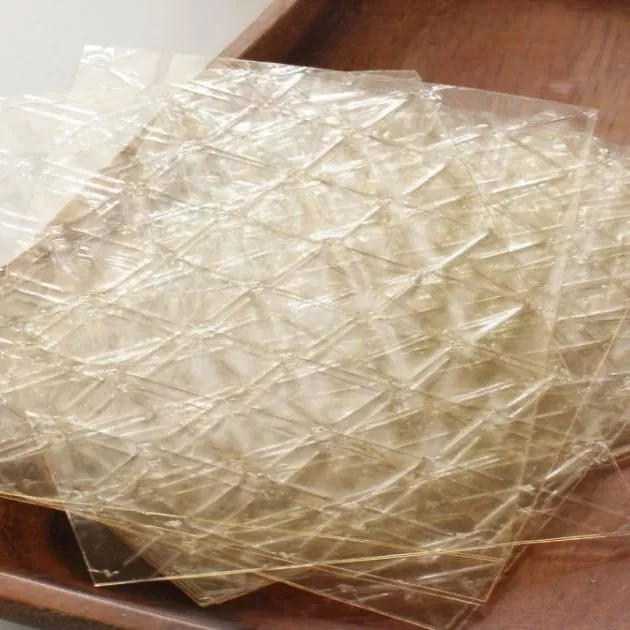
The primary distinction between Halal and non-Halal bovine gelatin lies in the sourcing and slaughtering method of the cattle. Halal gelatin requires animals to be slaughtered according to Islamic law, involving a swift cut to the throat while reciting a blessing, ensuring the blood is fully drained. Non-Halal gelatin may come from cattle slaughtered without this ritual or from unknown sources, potentially including animals that died naturally or were stunned before slaughter.
Another critical difference is the use of cross-contamination during processing. Halal certified facilities must ensure that equipment and production lines are free from contact with non-Halal substances, such as pork derivatives or alcohol-based cleaning agents. Non-Halal processing may not adhere to these segregation standards, increasing the risk of impurity.
Chemical extraction methods also vary. Halal gelatin often uses acid or alkaline hydrolysis from bones and hides of Halal-slaughtered cattle, with strict monitoring of additives. Non-Halal gelatin might involve enzymes or chemicals not verified for Halal compliance. To verify certification, always look for a recognized Halal logo from an accredited body, such as JAKIM or IFANCA, and check the supplier's documentation. For more details, visit this resource.
The halal status of bovine gelatin is heavily influenced by the slaughtering method of the cattle. Islamic dietary laws require that animals be slaughtered according to specific rites, known as Zabihah. This involves a swift, humane cut to the throat while invoking the name of Allah. If the cattle is not slaughtered in this manner, the gelatin derived from its bones and hides is generally considered non-halal, regardless of subsequent processing.
Furthermore, the entire supply chain must be free from cross-contamination with non-halal substances. This includes the separation of halal-slaughtered animal products from those of non-halal origin during transportation, storage, and manufacturing. Many certification bodies also require that the slaughterhouse and processing facilities undergo regular audits to ensure ongoing compliance with halal standards.
| Slaughtering Method | Halal Status | Common Application |
|---|---|---|
| Zabihah (Islamic Rite) | Halal | Food & Pharmaceutical Gelatin |
| Mechanical Stunning (Non-Ritual) | Non-Halal | Industrial Gelatin |
| Electrical Stunning (Non-Ritual) | Non-Halal | Pet Food Grade Gelatin |
| Unknown / Unverified Source | Mashbooh (Doubtful) | Requires Certification Review |
The table above summarizes how different slaughtering practices directly impact the halal classification of bovine gelatin. For gelatin to be certified halal, the entire process from slaughter to final product must be monitored and approved by a recognized Islamic authority.
To verify the certification of bovine gelatin, consumers and manufacturers should look for a halal logo from a reputable certifying body on the product packaging or ask for a halal certificate from the supplier. It is also advisable to review the specific slaughtering standards recognized by the certifying agency, as some may accept pre-stunning if the animal is still alive when slaughtered, while others strictly prohibit any form of stunning.
For further details on certified halal gelatin options, you can explore resources such as Halal and Kosher Verified Fish Gelatin or check the specifications of Premium Pharmaceutical Gelatin for compliance details.
Ensuring the halal status of bovine gelatin requires a thorough examination of supply chain records. From raw material sourcing to final product labeling, each step must be documented and verified by recognized certifying bodies. Below is a guide to tracing and confirming halal certification through key documents.
The first step is to review the supplier’s halal certificate for the bovine hides or bones. This document should be issued by a recognized Islamic authority and include the slaughter method, animal species, and processing details. Ensure the certificate is current and covers the entire batch.
Check the production records for any cross-contamination risks. Halal gelatin must be processed in dedicated facilities or with thorough cleaning procedures. Documentation should show that no non-halal additives or equipment were used during hydrolysis and drying.
Traceability is maintained through bills of lading, warehouse receipts, and transport logs. These should match the halal-certified batches from origin to destination. Any gaps in the chain may indicate potential contamination or substitution.
Independent halal certification bodies, such as JAKIM or IFANCA, conduct periodic audits. Request the latest audit report to verify that the facility complies with halal standards. Look for the audit scope, date, and any non-conformities noted.
Finally, verify that the final product label displays the halal logo and certificate number. Cross-check this number on the certifying body’s official website. For bovine gelatin, ensure the certificate explicitly states “bovine” and the halal status without ambiguity.
For more detailed information on halal gelatin sourcing and certification, visit:
https://www.beyondbiopharma.com/product/halal-and-kosher-verified-fish-gelatin-for-clean-label-foods.htmlHalal certification for bovine gelatin is typically granted by recognized Islamic organizations that audit production processes and sourcing. The most widely accepted marks include the Halal Certification Authority (HCA), the Islamic Food and Nutrition Council of America (IFANCA), and the Halal Food Authority (HFA). These bodies ensure that the gelatin is derived from cattle slaughtered according to Islamic law and that no cross-contamination with non-halal substances occurs during processing.
When verifying certification, look for the official seal or logo of these authorities on the product packaging or supplier documentation. Many manufacturers also provide a certificate of analysis or a halal certificate number that can be cross-checked on the authority's website. For example, products like halal and kosher verified fish gelatin often display multiple certifications to assure global compliance.
Trusted halal authorities vary by region. In Southeast Asia, JAKIM (Malaysia) and MUIS (Singapore) are highly respected. In the Middle East, the Emirates Authority for Standardization and Metrology (ESMA) and Saudi Arabia's SASO are key. For bovine gelatin specifically, it is essential to confirm that the supplier uses halal-slaughtered cattle and that the gelatin production does not involve enzymatic or chemical processes from non-halal sources. Reliable suppliers often list their certifications openly, such as on pages for premium pharmaceutical gelatin for tablet coating or standardized gelatin sheets for consistent gels.
To further verify, check for a valid halal certificate number and confirm its status through the issuing authority's online database. Some manufacturers also undergo annual audits, so the certification date should be current. For instance, ultra-high viscosity gelatin for softgel capsules may carry multiple halal marks to serve diverse markets. Always cross-reference the product's halal status with the authority's official list of certified products.
In summary, the most reliable way to verify halal certification for bovine gelatin is to check for recognized marks such as those from IFANCA, HFA, JAKIM, or ESMA, and to request a certificate of halal authenticity from the supplier. Many companies provide this information transparently on their product pages, including those for food grade porcine gelatin used for gummies and jellies and fish collagen peptide for skin health supplements, which often include halal verification details.
For final assurance, always contact the certifying body directly or use their online verification tools. This is especially important for specialized products like food grade hyaluronic acid HA powder or premium vegan glucosamine hydrochloride HCl, where halal status may also be required for combined formulations.
Understanding the core requirements for halal certification of bovine gelatin begins with verifying that the raw materials originate from animals slaughtered according to Islamic law. The key differences between halal and non-halal bovine gelatin processing methods lie in the use of permissible enzymes, cross-contamination prevention, and the avoidance of alcohol-based solvents.
The role of slaughtering practices in determining gelatin's halal status cannot be overstated — only cattle that have been blessed and slaughtered by a Muslim using a sharp knife, with complete drainage of blood, meet the criteria. To ensure compliance, it is essential to know how to trace and verify halal certification through supply chain documentation, including batch records, supplier declarations, and slaughterhouse certificates.
Common certification marks and trusted halal authorities for bovine gelatin include JAKIM (Malaysia), MUIS (Singapore), MUI (Indonesia), and IFANCA (USA). These bodies provide rigorous auditing and clear labeling, allowing consumers and manufacturers to confidently distinguish certified halal gelatin from non-certified alternatives.
Key Takeaways:


We provide you with comprehensive foreign trade solutions to help enterprises achieve global development
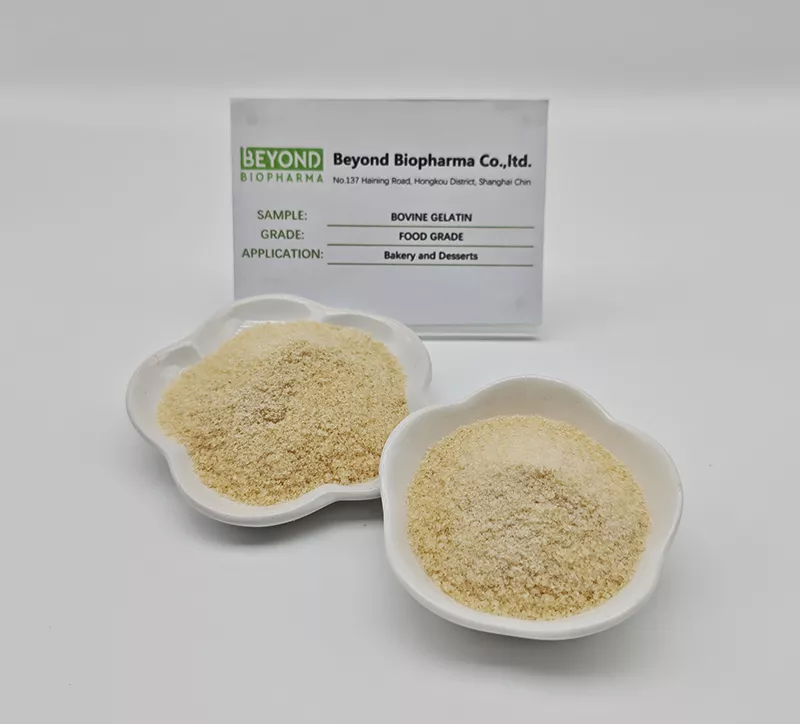
20 years experiences, 5000 ton/year capacity, Sustained supply with stable quality
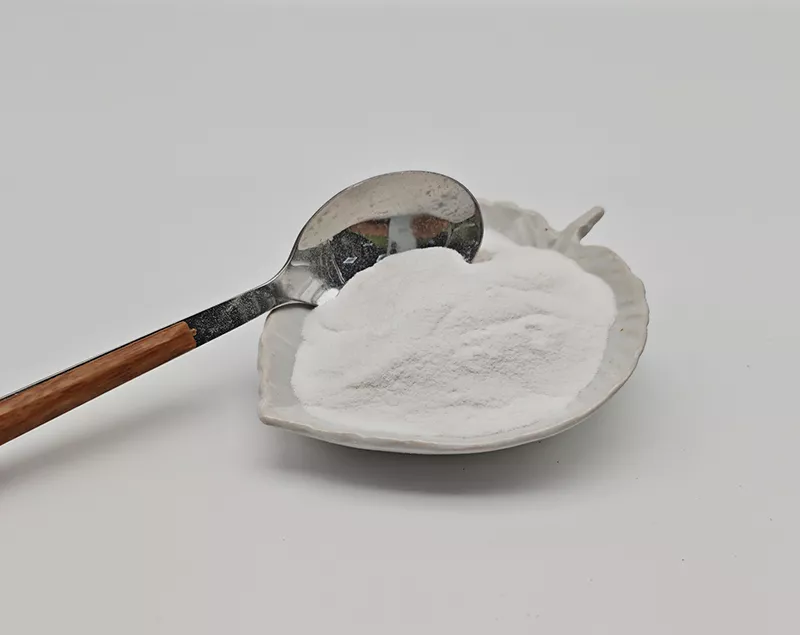
Fish Gelatin for foods is increasingly recognized as the premium alternative to traditional mammalian sources, meeting the growing global demand for clean-label ingredients that align with diverse dietary and religious requirements. Derived from the skin and scales of fish like cod and tilapia, fish gelatin offers unique functional benefits that make it an exceptional gelling, stabilizing, and texturizing agent.
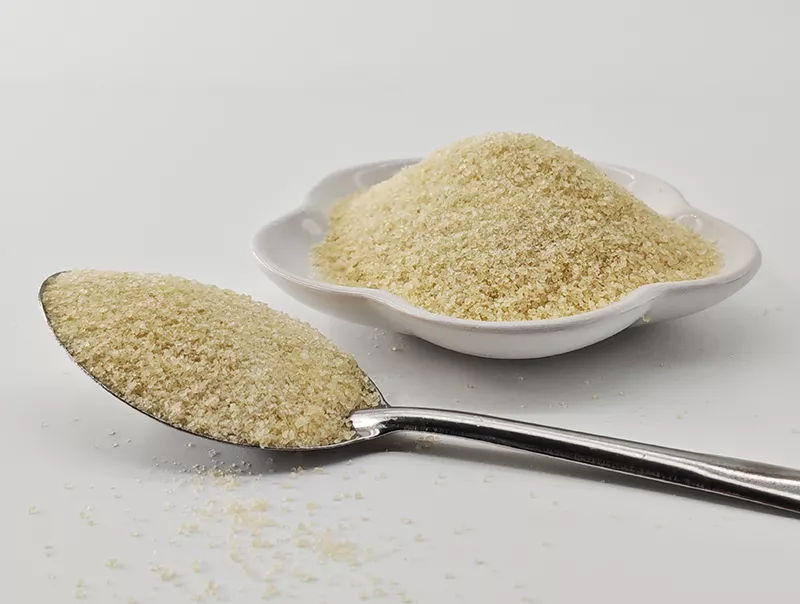
The High-Performance Barrier for Core Material Protection and Controlled Release.
Our Gelatin Sheets are produced to precise standards, ensuring consistency and reliability across different Bloom grades (Silver being the most common professional choice).
Tel:+86 21 65010906
Cell/Whatsapp/Wechat:
+86 13482884055
+86 18657345785
Email: sales@beyondbiopharma.com