English EN


How to Use Gelatin Powder? Applications of Gelatin Powder
Use gelatin powder by blooming it in cold water, dissolving gently, and adding to recipes for perfect texture in desserts, sauces, and supplements.
More
Understanding the technical distinction between gelatin sheets and powder is essential for consistent results in culinary and pharmaceutical applications. The primary difference lies in bloom strength measurement and concentration efficiency.
Bloom strength, measured in grams, quantifies the firmness of a gelatin gel. Sheets typically range from 120 to 300 bloom, while powders vary from 50 to 300 bloom. A higher bloom number indicates a stronger, stiffer gel. For example, a 250-bloom sheet sets faster and yields a clearer gel compared to a 160-bloom powder. This metric is critical when substituting one form for another in recipes or industrial formulations.
Concentration refers to the amount of gelatin relative to liquid. Sheets offer precise weight-based dosing (e.g., 2g per sheet), eliminating volume discrepancies common with powder. Powder concentration can be affected by compaction and moisture absorption, leading to variability. For applications requiring exact gel strength, such as in micro-encapsulation, sheets provide superior consistency.
Sheets hydrate evenly in cold water without clumping, ensuring uniform dispersion. Powder requires careful sprinkling to avoid lumps. For high-viscosity applications like softgel capsules, sheets dissolve more predictably, reducing processing time.
Choose sheets when clarity, precision, and no-fuss hydration are priorities—ideal for delicate desserts or pharmaceutical-grade consistent gels. Opt for powder when cost efficiency or rapid dispersion in warm liquids is needed, such as in hard capsule production. Always verify bloom strength equivalence when substituting.
For clean-label or dietary-specific needs, consider halal and kosher fish gelatin or bovine collagen peptide alternatives.
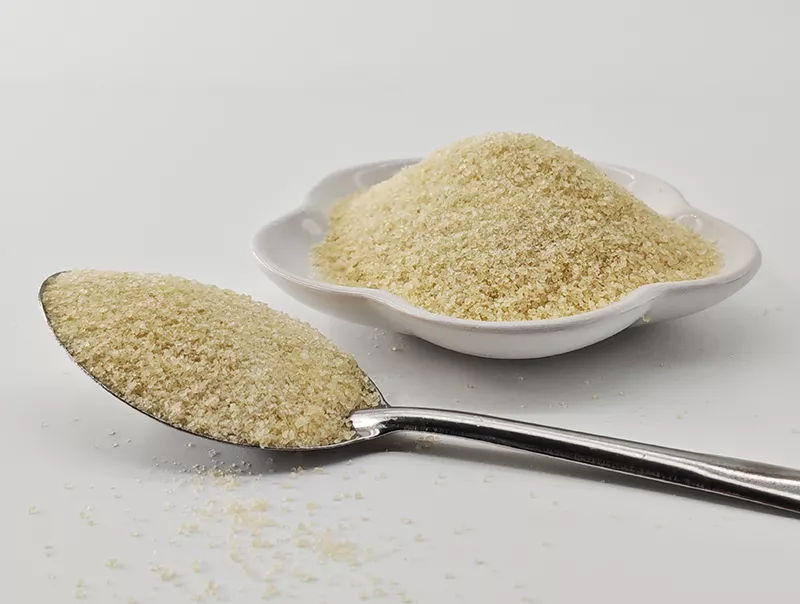
Gelatin sheets hydrate evenly in cold water within 5–10 minutes, absorbing a precise amount of liquid. Powder, on the other hand, requires careful sprinkling to avoid clumping and may need up to 20 minutes for complete hydration. The sheet form offers more predictable water absorption, which is critical for recipes requiring exact moisture ratios.
Sheets dissolve smoothly when added to warm liquids (around 50–60°C), leaving no residue. Powder dissolves quickly but can form lumps if not whisked vigorously. For cold-set applications, sheets are preferred because they dissolve without heat, while powder often requires gentle heating to fully incorporate.
Gelatin sheets produce crystal-clear gels with no cloudiness, making them ideal for mirror glazes and clear jellies. Powder can introduce tiny air bubbles and a slightly hazy appearance due to its granulated nature. For professional pastry work, sheets consistently deliver superior transparency and a silky mouthfeel.
Use sheets for delicate desserts, panna cotta, and stabilized whipped creams where clarity and controlled hydration matter. Powder works well for bulk production, savory gels, and recipes where slight cloudiness is acceptable. Always match the bloom strength to your recipe requirements for consistent results.
Selecting between gelatin sheets and powder depends largely on the texture, clarity, and setting time your recipe demands. Below is a quick comparison to guide your choice.
| Recipe Type | Best Form | Key Reason |
|---|---|---|
| Delicate Mousses & Bavarois | Sheets | Provides silky, lump-free texture with precise control |
| Clear Fruit Glazes & Aspics | Sheets | Produces crystal-clear gels with no cloudiness |
| Large-Volume Commercial Batches | Powder | Easier to scale, measure, and dissolve in bulk |
| Dry Mixes & Pre-Blended Formulas | Powder | Blends evenly with other dry ingredients |
| High-Precision Pastry Work | Sheets | Each sheet has consistent weight and bloom strength |
For applications requiring absolute clarity and a delicate melt-in-mouth feel, such as mirror glazes or terrine, gelatin sheets are the preferred choice. They hydrate evenly and produce a cleaner gel with less risk of over-hydration. Powder, on the other hand, offers greater flexibility for adjusting gel strength in industrial settings and is more cost-effective for large-scale use.
Always consider bloom strength: standard sheets are typically 200–220 bloom, while powder ranges from 100 to 300 bloom. Match the bloom to your recipe’s required firmness. For further details on sourcing high-quality gelatin, explore resources on standardized gelatin sheets or pharmaceutical-grade options.
Note: Always bloom sheets in cold water for 5–10 minutes, and sprinkle powder over cold water to avoid clumping. Proper hydration is key to achieving consistent results.
The choice between gelatin sheets and powder directly alters the final product's texture. Sheets, produced through a controlled drying process, create a more uniform gel network. This results in a clearer, firmer, and more elastic texture, often described as "clean" on the palate. Powder, being more fragmented, introduces microscopic air bubbles during hydration, leading to a slightly cloudier, softer, and sometimes more brittle gel.
Mouthfeel differences stem from how each form dissolves and interacts with liquids. Sheets hydrate slowly and evenly, allowing for precise control over gel strength. This is why professional pastry chefs favor them for delicate desserts like panna cotta or mirror glazes, where a silky, smooth mouthfeel is paramount. Powder, while convenient, can create a "short" or slightly grainy texture if not fully dissolved, affecting the overall sensory experience.
Understanding these behavioral differences is key to selecting the right gelling agent. For applications requiring high clarity and a tender, melt-in-the-mouth quality, sheets are superior. For robust gels used in gummy candies or thickening sauces where texture is less critical, powder offers efficiency and cost-effectiveness. The bloom strength also plays a role; a higher bloom number indicates a firmer gel, regardless of the form.
Learn more about standardized gelatin sheets for consistent results
Gelatin sheets and powder both provide the same gelling power if measured correctly. The key difference lies in how they dissolve and how you incorporate them into liquids. Sheets tend to produce clearer gels with a cleaner texture, while powder can sometimes introduce slight cloudiness or bubbles if not handled properly.
One standard gelatin sheet (typically 2g) equals about 1 teaspoon of powdered gelatin. For most recipes, you can swap 4 sheets (8g total) for 1 tablespoon of powder. Always weigh your gelatin for precision, especially in delicate desserts like panna cotta or mousses.
For sheets: Soak in cold water for 5-10 minutes until soft, then squeeze out excess water before adding to warm liquid. For powder: Sprinkle over cold water (use 3 tablespoons water per 1 tablespoon powder) and let bloom for 5-10 minutes, then gently warm to dissolve. Never boil gelatin or it will lose its setting ability.
When substituting, ensure your liquid base is warm (around 50-60°C / 120-140°F) but not boiling. Add hydrated gelatin gradually while stirring gently to avoid air bubbles. If using powder, make sure it is fully dissolved before cooling. For cold-set recipes, dissolve gelatin in a small amount of warm liquid first, then combine with the cold base.
Sheets produce a softer, more delicate gel, while powder yields a firmer, more brittle set. If substituting sheets for powder, reduce the amount by about 10% to avoid an overly stiff texture. Conversely, if using powder instead of sheets, increase liquid slightly or reduce gelatin by a small margin to maintain a silky mouthfeel.
If your dish contains acidic components like citrus, vinegar, or wine, use powder instead of sheets. Acid can weaken the gel strength of sheet gelatin more noticeably. For acidic recipes, increase the gelatin amount by 15-20% to compensate for reduced setting power.
If your gel doesn't set: reheat gently with additional bloomed gelatin. If it becomes rubbery: you used too much gelatin or overheated it. If it weeps liquid: the gelatin was not fully dissolved or the ratio was off. For fruit-based dishes, always use halal and kosher verified fish gelatin for clean label results.
Store both sheets and powder in a cool, dry place away from sunlight. Sheets last up to 2 years if kept in an airtight container; powder can last 3-4 years. For consistent results, use standardized gelatin sheets for predictable gelling every time.
For beginners or when precision is crucial, stick with the type specified in the recipe. If you must substitute, always test with a small batch first. For pharmaceutical or nutraceutical applications, consider pharmaceutical grade bovine bone gelatin for maximum purity and performance.
Bloom strength and concentration are the fundamental differences between gelatin sheets and powder. Sheets have a standardized bloom strength (typically 160–250), while powder varies widely. Always check the bloom number on your powder to adjust recipes accurately.
Hydration and dissolution differ significantly. Sheets require a cold water soak for 5–10 minutes, then gentle squeezing, while powder needs sprinkling over cold water (1:5 ratio) and blooming for 5–10 minutes. Sheets dissolve more evenly and produce clearer gels, making them ideal for mirror glazes and consommés.
Recipe type determines the winner. Sheets excel in delicate applications where clarity and precision matter—mousses, panna cottas, and jelly art. Powder wins for convenience and cost in applications like marshmallows, gummy candies, and large-batch production where slight cloudiness is acceptable.
Texture and mouthfeel are affected by how each form disperses. Sheets create a more homogenous, silky gel with less risk of "rubbery" pockets. Powder can produce a slightly firmer, sometimes less uniform texture if not properly hydrated.
Substitution tip: To replace sheets with powder, use 1 sheet (typically 2g at 200 bloom) = 2g powder of equal bloom strength. For powder to sheets, weigh the powder and divide by 2 to get the equivalent number of sheets. Always rehydrate in cold liquid first, never add dry gelatin directly to warm mixtures.


We provide you with comprehensive foreign trade solutions to help enterprises achieve global development
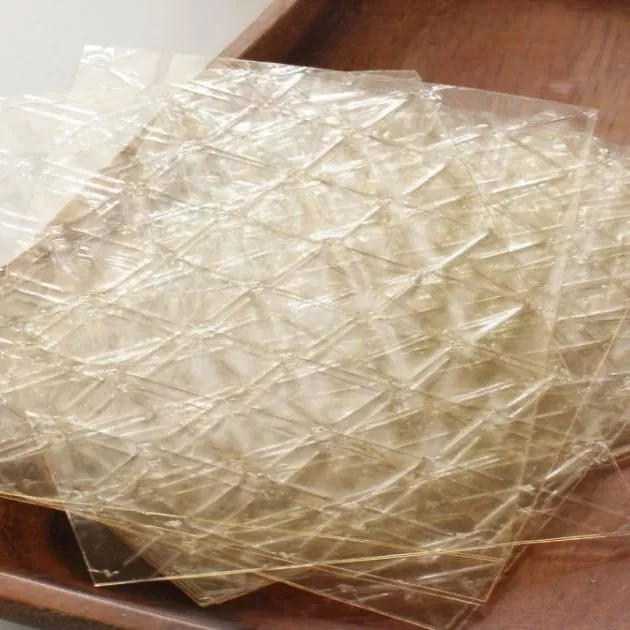
Our Gelatin Sheets are produced to precise standards, ensuring consistency and reliability across different Bloom grades (Silver being the most common professional choice).
The High-Performance Barrier for Core Material Protection and Controlled Release.
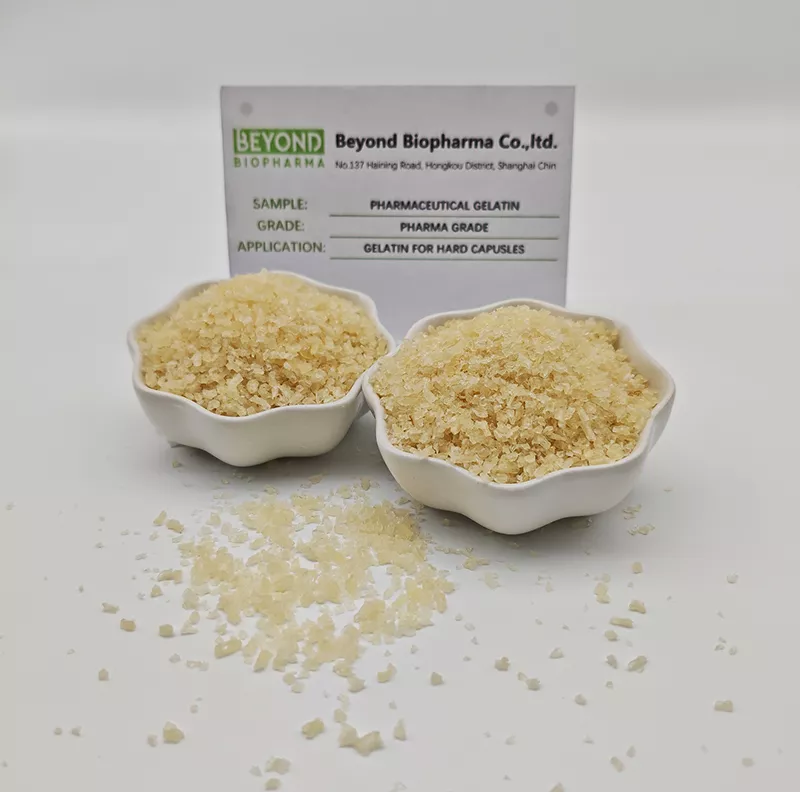
Precision, Purity, and Optimal Machinability
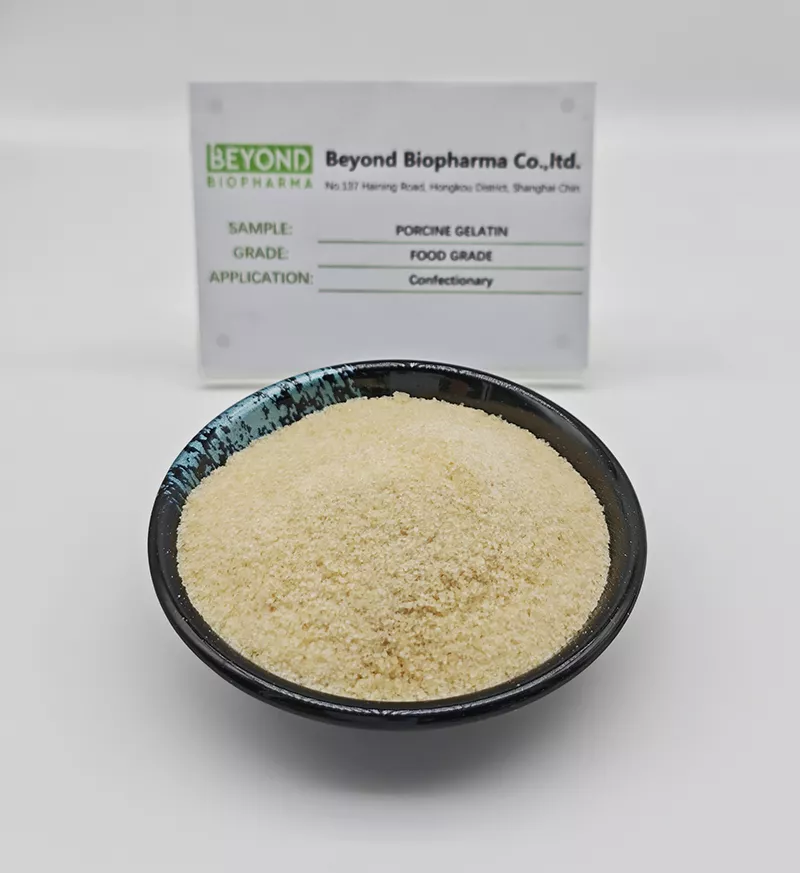
Food-grade porcine gelatin is a highly versatile and cost-effective natural protein derived from the collagen found in pig skin and bones. It is a premier gelling agent known for its exceptional clarity, neutral taste, and thermal reversibility.
Tel:+86 21 65010906
Cell/Whatsapp/Wechat:
+86 13482884055
+86 18657345785
Email: sales@beyondbiopharma.com