 English EN


Plant Peptides for Clinical & Senior Nutrition: Sarcopenia & Healthy Aging
Plant peptides bypass digestive barriers in older adults to rapidly stimulate muscle protein synthesis, helping manage sarcopenia and support healthy aging.
More
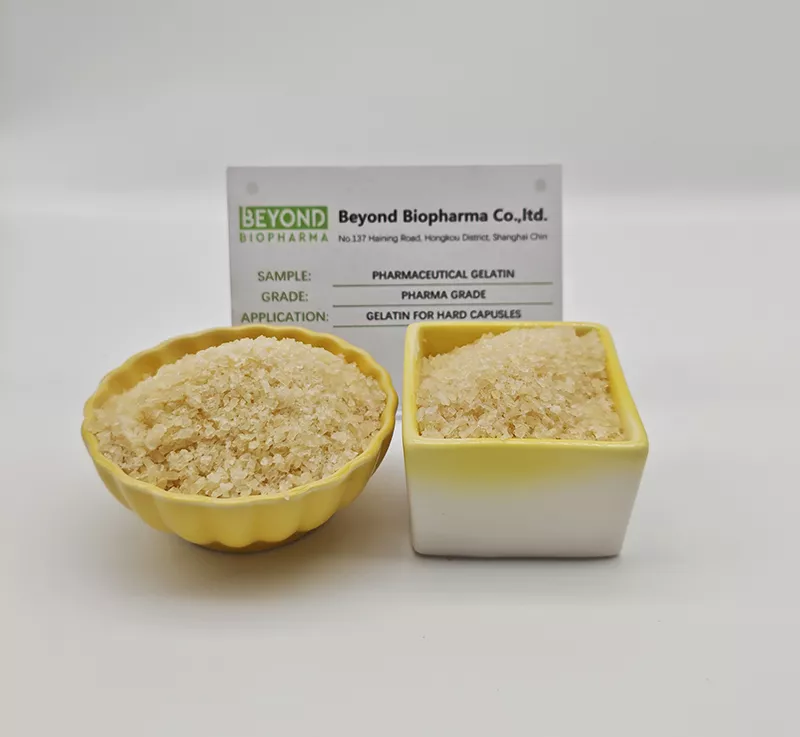
Sourcing high-quality protein ingredients for medical nutrition and dietary supplements comes with real challenges. Batch-to-batch consistency, off-notes or unpleasant taste, poor solubility, and the need for allergen-free or vegan certifications are common pain points. Plant peptides for medical nutrition address many of these concerns by offering a clean-label, hypoallergenic alternative to animal-derived proteins. These hydrolyzed peptides — typically derived from pea, rice, or soy — are designed for rapid absorption and easy formulation, making them ideal for clinical nutrition, sports recovery, and plant-based wellness products.
The production of plant peptides for medical nutrition typically involves enzymatic hydrolysis of plant protein isolates. This process breaks down large protein chains into smaller peptides with a molecular weight commonly below 5,000 Da. The result is a product that dissolves readily in water, has a neutral or mild flavor profile, and is rapidly absorbed by the body. For medical nutrition applications — such as enteral formulas, post-surgery recovery drinks, or geriatric nutrition — these attributes are critical. Unlike whole proteins, hydrolyzed plant peptides place less digestive burden on patients while still delivering a high nitrogen content for muscle maintenance and repair.
In practice, the choice of raw material matters. Pea protein peptides offer a balanced amino acid profile with high arginine content, supporting immune function and circulation. Rice protein peptides are naturally hypoallergenic and gentle on the stomach. Soy protein peptides provide a complete essential amino acid profile. When formulating for medical nutrition, manufacturers often blend sources to achieve a specific amino acid score or to meet allergen-labeling requirements. Beyond Biopharma’s Plant Protein Peptide line is designed to support such customized blends, with options for food-grade and pharmaceutical-grade specifications.
Buyers evaluating plant peptides for medical nutrition need to look beyond protein content. Key parameters include molecular weight distribution, solubility, heavy metal limits, and microbiological purity. Below is a table of commonly referenced industry ranges for plant protein peptides. Please note these are typical industry ranges; final values should be confirmed per Certificate of Analysis (COA) or sample testing.
| Parameter | Typical Industry Range | Notes |
|---|---|---|
| Protein Content | 80 – 90% | On dry basis; higher purity preferred for medical nutrition |
| Molecular Weight | Commonly | Lower MW improves absorption and solubility |
| Solubility | ≥ 98% (in water at 20°C) | High solubility reduces sedimentation in liquid formulas |
| Moisture | ≤ 8% | Low moisture ensures microbial stability |
| Heavy Metals (Pb, As, Cd, Hg) | Compliant with USP / EP limits | In-house lab testing per batch |
| Allergen Profile | Source-dependent (pea, rice, soy) | Pea and rice are common allergen-free options |
Typical industry range; final values per COA / sample.
The versatility of plant peptides for medical nutrition allows them to be used across a wide range of product formats. Here are the most common application areas and recommended selection criteria:
Beyond Biopharma is a Shanghai-based manufacturer with over 10 years of experience in the food-ingredient industry. Our product portfolio includes collagen peptides, gelatin, and plant protein peptides, all produced in a GMP clean workshop with fully automatic production lines and stainless-steel sealed piping. We maintain an annual capacity of approximately 3,000 MT for collagen and 5,000 MT for gelatin, and our plant peptide lines are manufactured under the same rigorous quality systems.
Our facilities are ISO 9001 certified and US FDA registered. Select products carry Halal and Kosher certifications (e.g., fish gelatin). Our bovine bone gelatin is BSE-free, and we operate an in-house laboratory for heavy-metal and microbiological testing, supported by a dedicated QA/QC team. For buyers seeking plant peptides for medical nutrition, we offer three grades — food, pharmaceutical, and cosmetic — and provide free samples along with formulation and selection support.
We also supply complementary ingredients such as Undenatured Collagen Type II for joint health, Fish Collagen Peptide for beauty-from-within, and Bovine Collagen Peptide for sports nutrition. Our Joint Health Ingredients range includes bovine chondroitin sulfate sodium, glucosamine HCl, and food-grade hyaluronic acid powder — all compatible with plant-based formulations.
Q: What is the difference between plant protein isolates and plant peptides for medical nutrition?
A: Plant protein isolates are whole proteins with minimal processing, while plant peptides are hydrolyzed into smaller chains for faster absorption and better solubility. Peptides are preferred in medical nutrition where rapid nitrogen delivery and low digestive load are required.
Q: Are plant peptides suitable for vegan and allergen-free medical formulas?
A: Yes. Pea and rice protein peptides are naturally free from common allergens like dairy, soy, and gluten. They are fully vegan and can be certified as such. Soy peptides are also plant-based but require clear allergen labeling.
Q: What molecular weight is best for enteral feeding formulas?
A: For enteral nutrition, peptides with a molecular weight below 3,000 Da are generally recommended. This range ensures rapid absorption and minimizes the risk of tube clogging due to low viscosity. Always check the COA for exact distribution.
Q: How do plant peptides compare to animal-derived collagen peptides in terms of amino acid profile?
A: Plant peptides are rich in arginine and glutamine but lack the high glycine and proline content found in collagen. For medical nutrition targeting connective tissue or joint health, combining plant peptides with Undenatured Collagen Type II may offer complementary benefits.
Q: Can plant peptides be used in gummy or softgel formats?
A: Yes, but they are typically used as the active protein ingredient rather than the gelling agent. For the gummy or softgel shell, gelatin (bovine, porcine, or fish) is still the standard. Beyond Biopharma offers Edible Gelatin and Pharmaceutical Gelatin for such applications.
Q: What certifications should I look for when sourcing plant peptides for medical nutrition?
A: Key certifications include ISO 9001, FDA registration, GMP compliance, and where applicable, Halal or Kosher. For medical nutrition, pharmaceutical-grade certification and a full heavy-metal panel per batch are essential. Beyond Biopharma provides all these with each shipment.
If you are evaluating plant peptides for medical nutrition for your next product line, we invite you to reach out to Beyond Biopharma. To help us provide the most accurate quotation and sample, please include the following details in your inquiry:
Once we receive your requirements, our team will send free samples along with a detailed quote and COA. We look forward to supporting your medical nutrition and dietary formula projects with consistent, high-quality plant peptides for medical nutrition and related ingredients.

We provide you with comprehensive foreign trade solutions to help enterprises achieve global development
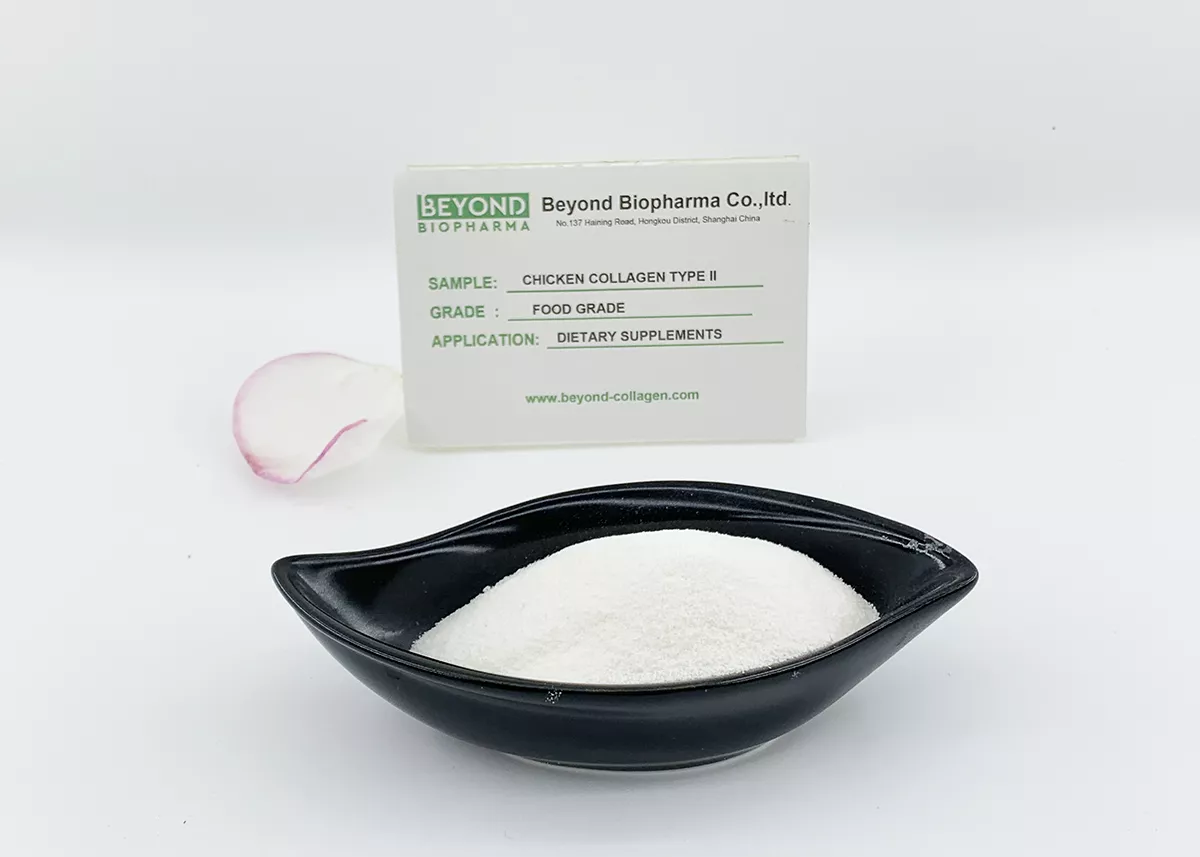
BEYOND BIOPHARMA is a specialized manufacturer of high-quality Undenatured Collagen Type II. Utilizing low-temperature, non-enzymatic extraction methods, our Undenatured Collagen Type II retains its native, triple-helix structure, essential for modulating the immune system's response to joint health and providing superior support for mobility, flexibility, and overall joint comfort.
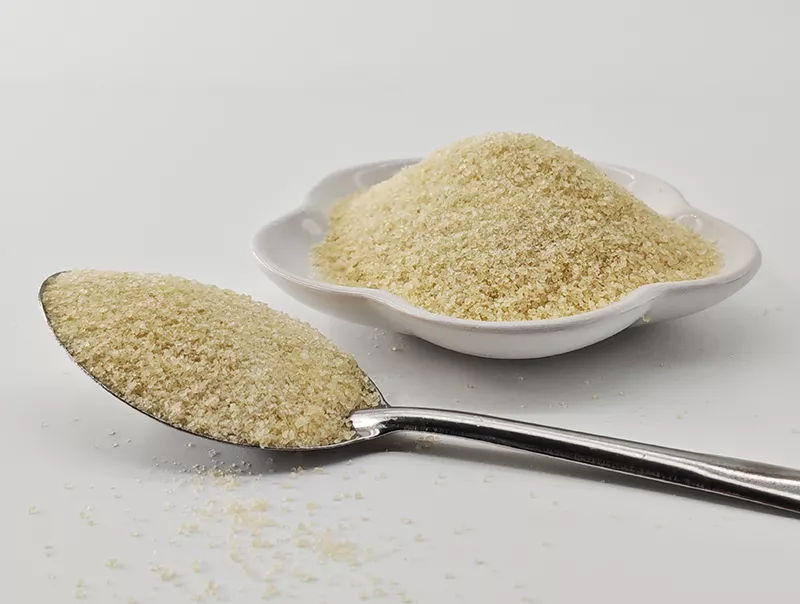
The High-Performance Barrier for Core Material Protection and Controlled Release.
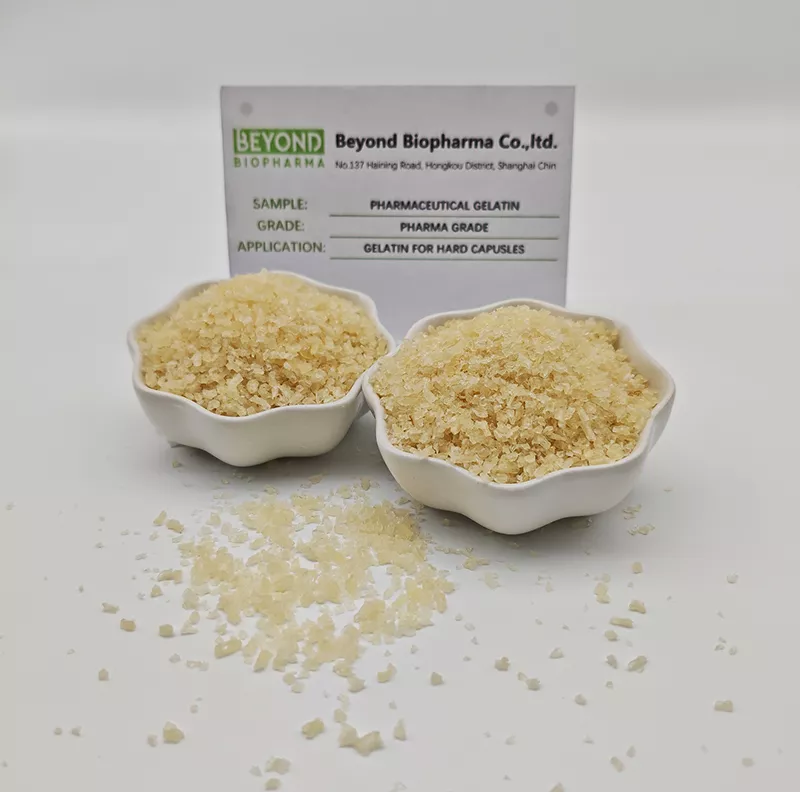
Precision, Purity, and Optimal Machinability
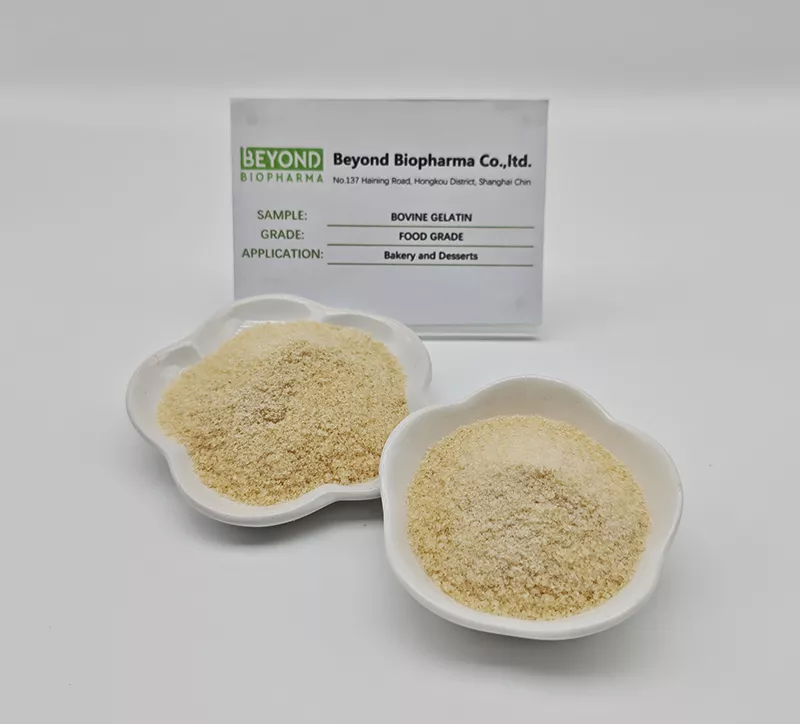
20 years experiences, 5000 ton/year capacity, Sustained supply with stable quality
Select the most popular foreign trade service products to meet your diverse needs
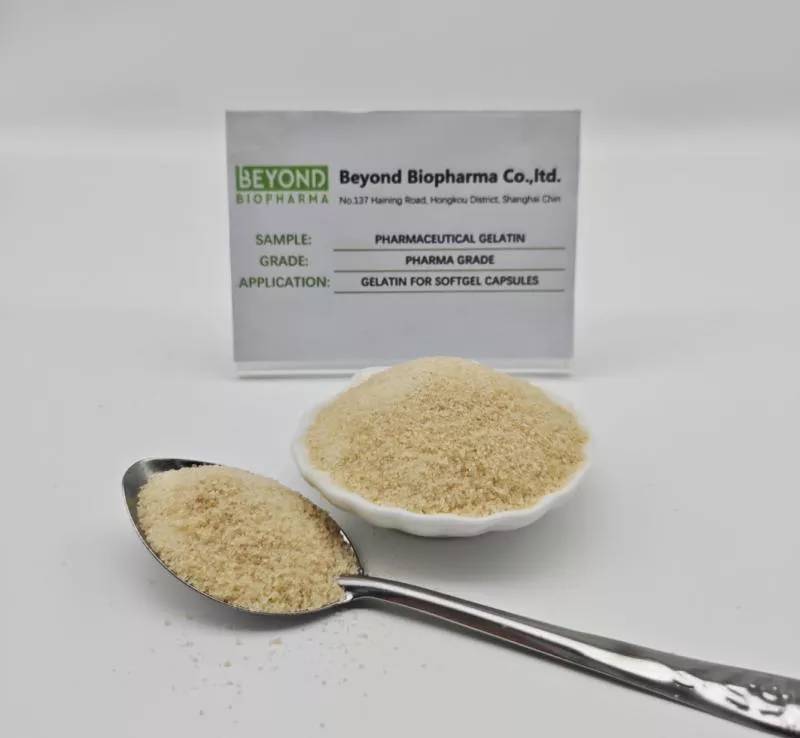
Softgel encapsulation demands a gelatin with unique physical attributes to perform optimally during the high-speed manufacturing process
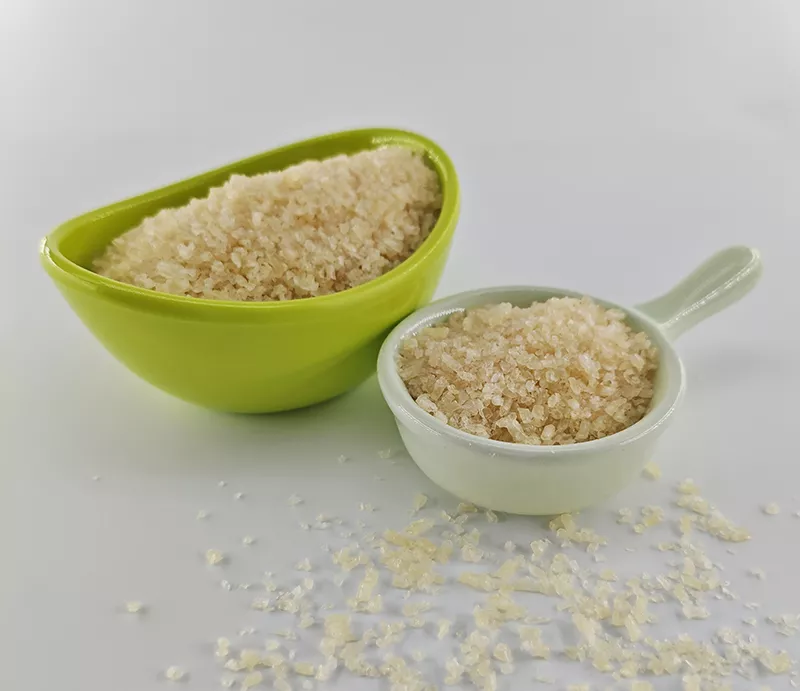
Stability, Swallowing Enhancement, and Controlled Release
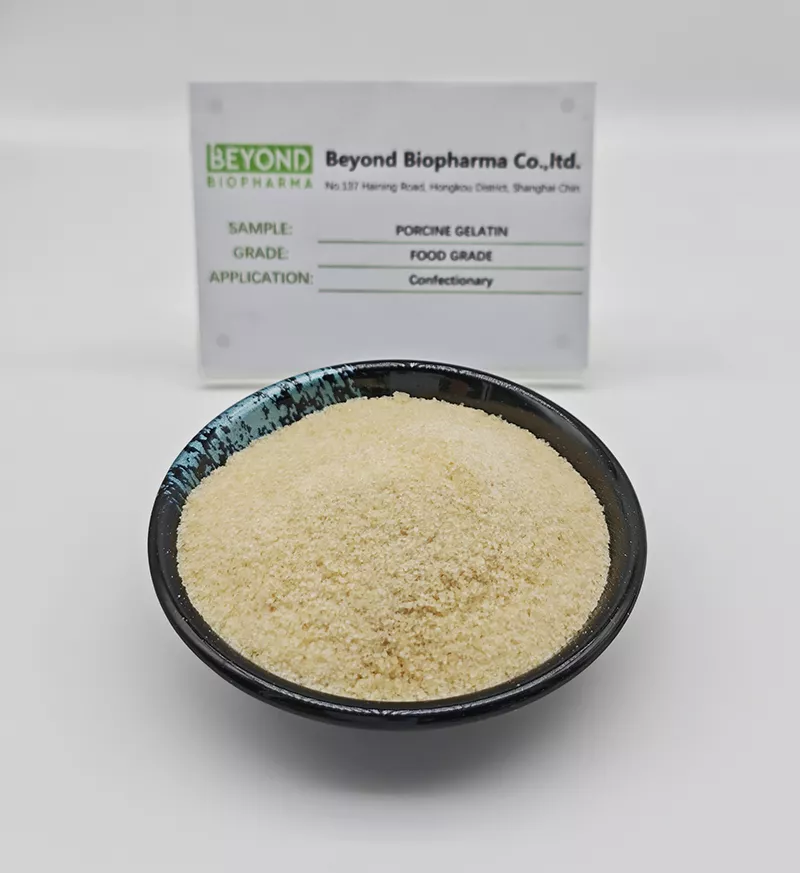
Food-grade porcine gelatin is a highly versatile and cost-effective natural protein derived from the collagen found in pig skin and bones. It is a premier gelling agent known for its exceptional clarity, neutral taste, and thermal reversibility.
Tel:+86 21 65010906
Cell/Whatsapp/Wechat:
+86 13482884055
+86 18657345785
Email: sales@beyondbiopharma.com





User Comments
Service Experience Sharing from Real Customers
Jack Morrison
Clinical NutritionistI’ve been recommending these plant peptides to my clients with gut issues for three months now. The amino acid profile is surprisingly complete for a non-animal source, and patients report less bloating and better recovery after workouts. One elderly client even said her skin feels firmer. Really solid product for medical nutrition protocols.
Emma Chen
Registered DietitianWas skeptical at first because most plant-based medical nutrition products taste like dirt. This one mixes well into smoothies and has a neutral flavor. I use it myself post-surgery to support healing. Only wish the packaging had a scoop that actually reaches the bottom of the jar. Otherwise, great value.
Marcus Webb
Product DeveloperWe’ve been testing these peptides in our new line of medical foods for oncology patients. The stability under heat and acidic conditions is impressive. No clumping, no bitter aftertaste. Our R&D team is blown away by the bioavailability data. This is going to change how we formulate plant-based enteral nutrition.
Liam O'Sullivan
Sports Medicine DoctorI prescribe these for athletes who need protein but can't tolerate whey or soy due to allergies. Recovery times seem to improve, and the low molecular weight peptides are easy on the stomach even during intense training camps. The only downside is the price—feels a bit steep for bulk orders. But the results speak for themselves.