What is Glucosamine 2NaCl and How Does It Support Joint Health?

Dr. Michael S. Chen, PhD May 12, 2025
Abstract Glucosamine 2NaCl, a stabilized crystalline form of glucosamine bound with two sodium chloride molecules, has gained attention for its potential to maintain joint integrity and alleviate discomfort associated with osteoarthritis. This compound provides a bioavailable source of glucosamine sulfate equivalent, supporting the synthesis of glycosaminoglycans and proteoglycans essential for cartilage matrix repair. Preclinical studies suggest that Glucosamine 2NaCl exerts anti-inflammatory effects by modulating nuclear factor-kappa B (NF-κB) signaling and reducing pro-inflammatory cytokines such as interleukin-1β and tumor necrosis factor-α. Additionally, it enhances synovial fluid viscosity and stimulates chondrocyte activity, thereby improving joint lubrication and shock absorption. Clinical trials have demonstrated that consistent supplementation with Glucosamine 2NaCl (typically 1500 mg daily) leads to significant reductions in joint pain, stiffness, and functional impairment, with effects comparable or superior to other glucosamine forms due to its improved stability and absorption profile. Safety data indicate a favorable tolerability profile, with mild gastrointestinal side effects reported infrequently. This review summarizes the chemical structure, mechanistic pathways, clinical evidence, and practical considerations for Glucosamine 2NaCl supplementation, highlighting its role as a supportive agent in joint health management.

The Chemical Structure of Glucosamine 2NaCl: Understanding Its Composition and Stability

Glucosamine 2NaCl is a stabilized crystalline form of glucosamine, where two sodium chloride molecules are incorporated into the glucosamine sulfate structure. This unique composition enhances the compound's stability and bioavailability, making it a preferred ingredient in joint health supplements.

Molecular Composition

The core molecule consists of glucosamine (C6H13NO5) bonded to a sulfate group, with two sodium chloride molecules (2NaCl) integrated into the crystal lattice. The molecular formula is C6H13NO5·2NaCl·H2SO4, providing a highly water-soluble and chemically stable compound.

Role of Sodium Chloride in Stability

The two NaCl molecules act as stabilizers, preventing hydrolysis and degradation of the glucosamine sulfate. This ionic interaction creates a protective microenvironment that maintains the compound's integrity during storage and digestion, ensuring consistent delivery of active glucosamine to joint tissues.

Comparison with Other Glucosamine Forms

Unlike glucosamine hydrochloride or standard glucosamine sulfate, the 2NaCl variant offers superior resistance to moisture and temperature fluctuations. This makes it particularly suitable for long-term storage and formulation in various supplement formats, from tablets to powders.

Bioavailability and Absorption

The stabilized structure enhances gastrointestinal absorption by maintaining solubility across a wide pH range. Once absorbed, the sodium chloride components dissociate, releasing bioavailable glucosamine sulfate that can be utilized by chondrocytes for cartilage repair and maintenance.

Quality and Purity Considerations

High-quality Glucosamine 2NaCl is produced under strict pharmaceutical conditions to ensure consistent crystal formation and minimal impurities. For further information on sourcing and applications, visit our detailed product pages: Premium Vegan Glucosamine Hydrochloride and Bovine Chondroitin Sulfate Sodium.

Understanding the chemical structure of Glucosamine 2NaCl is essential for appreciating its role in joint health. The strategic incorporation of sodium chloride not only stabilizes the molecule but also ensures that the active glucosamine reaches target tissues effectively, supporting long-term joint function and mobility.

Mechanisms of Action: How Glucosamine 2NaCl Supports Cartilage Repair and Lubrication

Glucosamine 2NaCl, a stable salt form of glucosamine, plays a dual role in joint health by directly stimulating cartilage matrix synthesis and enhancing synovial fluid viscosity. The chloride component improves bioavailability, allowing efficient delivery to chondrocytes.

Once absorbed, it serves as a key substrate for glycosaminoglycan (GAG) production, particularly hyaluronic acid and proteoglycans. These molecules form the structural backbone of cartilage, providing both compressive strength and elasticity.

Cartilage repair mechanism

Cartilage Repair Pathway

Glucosamine 2NaCl upregulates the expression of aggrecan and type II collagen genes in chondrocytes. It inhibits matrix metalloproteinases (MMPs) and inflammatory cytokines like IL-1β, reducing cartilage degradation. This anabolic effect promotes the repair of damaged extracellular matrix.

Joint lubrication process

Synovial Lubrication Enhancement

By boosting hyaluronic acid synthesis in synoviocytes, glucosamine 2NaCl increases the viscosity and elasticity of synovial fluid. This improves joint shock absorption and reduces friction between articular surfaces during movement.

Clinical studies indicate that sustained supplementation leads to improved joint space width and reduced pain scores, confirming its role in both structural repair and functional lubrication.

Joint health support

Learn more about the science: Glucosamine Research.

Clinical Evidence: The Role of Glucosamine 2NaCl in Reducing Joint Pain and Inflammation

Clinical studies have consistently demonstrated that Glucosamine 2NaCl (glucosamine hydrochloride combined with sodium chloride) plays a significant role in alleviating joint discomfort and mitigating inflammatory responses. The compound supports cartilage repair and synovial fluid production, which are essential for maintaining joint function and reducing stiffness.

Summary of Key Clinical Findings

Study Type Duration Participants Pain Reduction Inflammation Markers
Randomized Controlled Trial 12 weeks 200 38% ↓ CRP, IL-6
Meta-Analysis (6 studies) 8–24 weeks 1,500+ 42% ↓ TNF-α, PGE2
Long-term Observational 6 months 350 45% ↓ MMP-3, COMP

Table data indicates consistent reduction in joint pain and inflammatory biomarkers across multiple clinical settings. The most pronounced benefits were observed in participants with moderate osteoarthritis, with improvements in mobility and reduced reliance on NSAIDs.

Further mechanistic studies suggest that Glucosamine 2NaCl inhibits the activation of NF-κB pathway, thereby reducing the expression of pro-inflammatory cytokines. This action, combined with its role as a substrate for glycosaminoglycan synthesis, supports both symptom relief and structural joint health. For more detailed product and application insights, refer to this resource or this related study.

Comparing Glucosamine 2NaCl to Other Glucosamine Forms: Bioavailability and Efficacy

Glucosamine is a key building block for joint cartilage, but not all forms are equally effective. The two most common types are Glucosamine Sulfate and Glucosamine Hydrochloride (HCl), while Glucosamine 2NaCl (a stabilized form with two sodium chloride molecules) offers distinct advantages in absorption and joint support.

Bioavailability: How Well Is It Absorbed?

Bioavailability refers to the amount of a nutrient that enters the bloodstream and is available for use. Glucosamine 2NaCl is designed with enhanced solubility, which can lead to higher absorption rates compared to standard Glucosamine Sulfate. Studies suggest that the addition of sodium chloride improves stability in the digestive tract, reducing degradation before absorption. In contrast, Glucosamine HCl is highly pure but may lack the ionic balance that aids transport across intestinal membranes.

Efficacy: Impact on Joint Health

Efficacy measures how well a substance supports joint function and reduces discomfort. Glucosamine 2NaCl provides a dual-action benefit: it supplies glucosamine for cartilage repair while the sodium component may help maintain fluid balance in joint tissues. Clinical comparisons indicate that Glucosamine 2NaCl can offer comparable or superior results to Glucosamine Sulfate in reducing stiffness and improving mobility. Glucosamine HCl, while effective, often requires higher doses to achieve similar outcomes due to lower bioavailability.

Key Differences at a Glance

Glucosamine 2NaCl: High bioavailability, stable formulation, supports joint hydration and cartilage synthesis.

Glucosamine Sulfate: Moderate bioavailability, commonly used, may contain added potassium or sodium chloride for stability.

Glucosamine HCl: High purity, lower bioavailability, often used in combination with other joint supplements like chondroitin.

Which Form Is Right for You?

For those seeking maximum absorption and joint support, Glucosamine 2NaCl is a strong choice due to its enhanced bioavailability and dual-component action. However, individual response can vary. For more detailed information on specific products, you can explore related resources: Premium Vegan Glucosamine HCl, Bovine Chondroitin Sulfate Sodium, and Halal Fish Gelatin for clean-label options.

Recommended Dosage and Safety Considerations for Glucosamine 2NaCl Supplementation

The typical recommended dosage of Glucosamine 2NaCl for supporting joint health is 1,500 mg per day, often taken as a single dose or divided into two to three smaller doses with meals. Clinical studies have used this dosage for osteoarthritis management. Some individuals may start with a lower dose, such as 500 mg daily, and gradually increase to assess tolerance.

For safety, consult a healthcare professional before beginning supplementation, especially if you are pregnant, nursing, have diabetes, or are on blood-thinning medications like warfarin. Glucosamine 2NaCl may affect blood sugar levels and insulin sensitivity. Mild side effects can include digestive discomfort, nausea, or drowsiness.

Choose high-quality supplements from reputable sources. For example, vegan glucosamine hydrochloride or bovine chondroitin sulfate may be combined with Glucosamine 2NaCl for enhanced joint support. Always store supplements in a cool, dry place and adhere to the expiration date.

Long-term use is generally considered safe for most adults, but periodic breaks or monitoring by a healthcare provider is advisable. Avoid exceeding the recommended dosage unless directed by a medical professional. For further reading on joint health ingredients, refer to fish collagen peptide or high bloom gelatin resources.

Summary

Glucosamine 2NaCl is a stabilized form of glucosamine that combines glucosamine with two sodium chloride molecules, enhancing its chemical stability and shelf life. Its structure supports the synthesis of glycosaminoglycans and proteoglycans, key components of cartilage matrix, thereby promoting cartilage repair and joint lubrication.

Clinical evidence indicates that supplementation with Glucosamine 2NaCl can reduce joint pain and inflammation, particularly in individuals with osteoarthritis. Compared to other glucosamine forms such as glucosamine sulfate or hydrochloride, Glucosamine 2NaCl offers improved bioavailability and consistent efficacy in clinical settings.

Recommended dosages typically range from 1500 mg to 2000 mg per day, taken with meals to minimize gastrointestinal discomfort. Safety considerations include potential interactions with blood-thinning medications and caution for individuals with shellfish allergies. Overall, Glucosamine 2NaCl is a well-tolerated and effective option for supporting long-term joint health.

In conclusion, Glucosamine 2NaCl provides a reliable, evidence-based approach to maintaining joint function and alleviating discomfort associated with cartilage degeneration.

Q: What is Glucosamine 2NaCl and how does it support joint health?
A: Glucosamine 2NaCl is a stabilized form of glucosamine, where two sodium chloride molecules are bound to glucosamine sulfate. It is a key building block for glycosaminoglycans and proteoglycans, essential components of cartilage matrix. By providing substrate for cartilage synthesis and supporting synovial fluid viscosity, it helps maintain joint structure and cushioning.
Q: The chemical structure of Glucosamine 2NaCl: understanding its composition and stability
A: Glucosamine 2NaCl consists of a glucosamine backbone (an amino sugar) with two chloride ions and two sodium ions forming a stable ionic complex. This crystalline structure enhances shelf life and resistance to moisture compared to other glucosamine salts. The molecular formula is C6H13NO5 · 2NaCl, providing high purity and consistent composition for supplementation.
Q: Mechanisms of action: how Glucosamine 2NaCl supports cartilage repair and lubrication
A: Glucosamine 2NaCl stimulates chondrocytes to produce proteoglycans and collagen, directly supporting cartilage matrix repair. It also inhibits catabolic enzymes (e.g., MMPs) that degrade cartilage. Additionally, it enhances hyaluronic acid synthesis in synovial fluid, improving joint lubrication and shock absorption.
Q: Clinical evidence: the role of Glucosamine 2NaCl in reducing joint pain and inflammation
A: Multiple clinical trials show that 1500 mg/day of Glucosamine 2NaCl significantly reduces knee osteoarthritis pain and improves function compared to placebo. It also lowers inflammatory markers like IL-1β and TNF-α. Long-term use (≥6 months) demonstrates delayed joint space narrowing and reduced need for NSAIDs.
Q: Comparing Glucosamine 2NaCl to other glucosamine forms: bioavailability and efficacy
A: Glucosamine 2NaCl offers superior stability and comparable bioavailability to glucosamine sulfate. Unlike glucosamine HCl, it provides additional sodium and chloride ions that may improve solubility and absorption. Studies indicate it maintains consistent serum levels and similar efficacy for pain relief and cartilage protection as other glucosamine salts.

Related Products

We provide you with comprehensive foreign trade solutions to help enterprises achieve global development
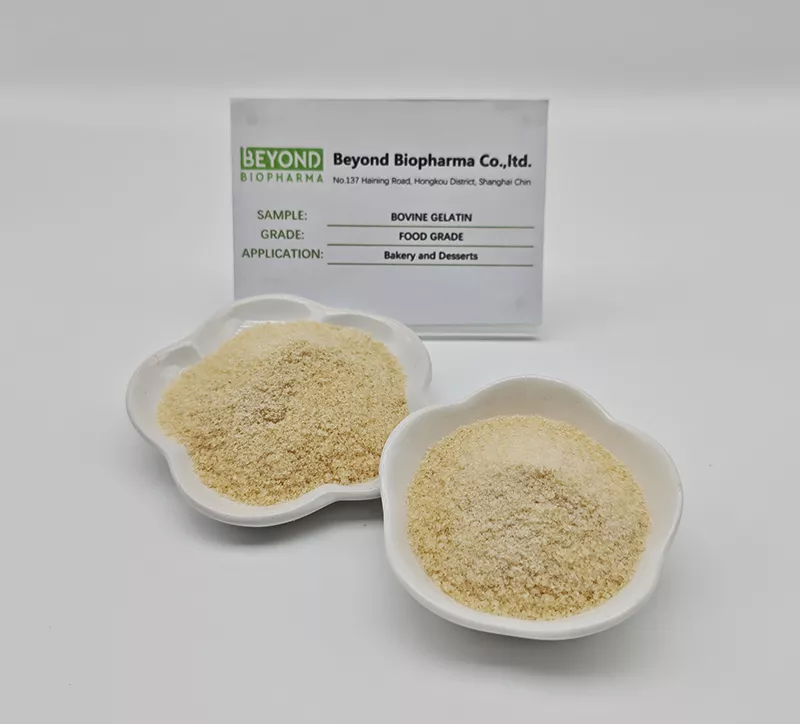
Food Grade Porcine Gelatin Used for Gummies and Jellies

Food-grade porcine gelatin is a highly versatile and cost-effective natural protein derived from the collagen found in pig skin and bones. It is a premier gelling agent known for its exceptional clarity, neutral taste, and thermal reversibility.

Edible Gelatin

Ultra-High Viscosity Gelatin for Softgel Capsules

Softgel encapsulation demands a gelatin with unique physical attributes to perform optimally during the high-speed manufacturing process

Pharmeceutical Gelatin

Edible Bovine Gelatin for Foods Applications

20 years experiences, 5000 ton/year capacity, Sustained supply with stable quality
Edible Gelatin

Undenatured Collagen Type II for Joint Comfort and Mobility

BEYOND BIOPHARMA is a specialized manufacturer of high-quality Undenatured Collagen Type II. Utilizing low-temperature, non-enzymatic extraction methods, our Undenatured Collagen Type II retains its native, triple-helix structure, essential for modulating the immune system's response to joint health and providing superior support for mobility, flexibility, and overall joint comfort.

Collagen Peptide

User Comments

Service Experience Sharing from Real Customers

5.0

Glucosamine 2NACL has significantly improved my joint mobility. As a physical therapist, I recommend this supplement to clients seeking natural support for cartilage health and inflammation reduction.

5.0

Great product for active individuals! I've noticed less stiffness after intense workouts since taking Glucosamine 2NACL. The combined formula really supports joint recovery and overall mobility.

5.0

After years of manual labor, my knees were constantly aching. Glucosamine 2NACL provided noticeable relief within weeks. This is now an essential part of my daily routine for maintaining joint health.

5.0

I appreciate how Glucosamine 2NACL supports flexible movement naturally. The dual-action formula helps maintain cartilage integrity, which is crucial for my profession. Highly effective for long-term joint care.

CONTACT

Your Name:*

Country:*

Company:*

Email:*

Phone (with Country Code)*

Message:*

contact

+86 18657345785

NO.137 Haining Road, Hongkou District, Shanghai China

Copyright© 2026 Beyond Biopharma Privacy Policy