 English EN


Gelatin sheet vs powder what science says in 2026
Gelatin sheet offers chefs better clarity, smooth texture, and consistent results than powdered gelatin, making it the top choice for desserts in 2026.
More
Sourcing the right gelling agent can be a challenge. You need batch consistency, the right solubility, and often specific certifications like Halal or vegan-friendly. This guide breaks down the key differences between agar agar powder and gelatin, helping you choose the best option for your food, nutraceutical, or pharmaceutical application.
For overseas buyers, understanding the difference between agar agar powder and gelatin is essential. Both are gelling agents, but they come from completely different sources and behave differently in formulations. Gelatin is derived from animal collagen, while agar agar is a plant-based polysaccharide from seaweed. This fundamental difference affects everything from melting point to texture and certification requirements.
Gelatin is produced through the partial hydrolysis of collagen from animal bones, hides, or fish skin. The process involves acid or alkaline treatment, followed by extraction, filtration, and drying. The result is a protein-based gelling agent with a bloom strength typically ranging from 50 to 300 grams. Agar agar, on the other hand, is extracted from red seaweed. The seaweed is boiled, filtered, and dried into a powder. It forms a gel at room temperature and has a much higher melting point, around 85°C to 95°C, compared to gelatin which melts at about 35°C to 40°C.
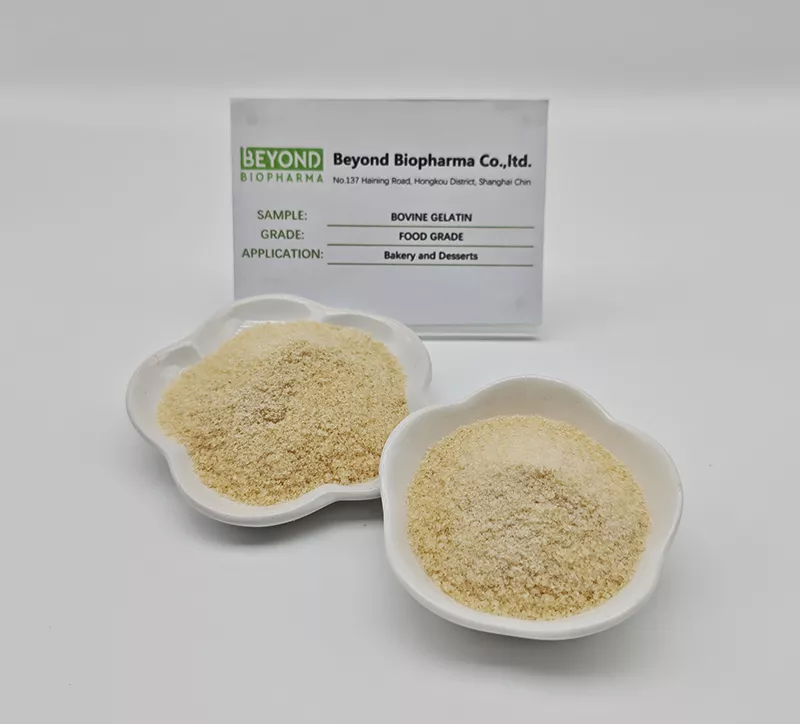
When comparing agar agar powder and gelatin, you need to look at specific parameters. Below is a table of typical industry ranges for both ingredients.
| Parameter | Gelatin (Typical Industry Range) | Agar Agar (Typical Industry Range) |
|---|---|---|
| Source | Bovine, porcine, fish (animal collagen) | Red seaweed (plant-based) |
| Bloom / Gel Strength | 50–300 g (pharma/gummies: 150–260 Bloom) | Not measured in bloom; gel strength varies by concentration |
| Melting Point | ~35–40°C | ~85–95°C |
| Solubility | Dissolves in warm water (40–60°C) | Dissolves in boiling water (85–100°C) |
| Moisture | ≤14% | ≤20% |
| Protein Content | 85–90% | Minimal (polysaccharide) |
Note: These are typical industry ranges. Final values should be confirmed per Certificate of Analysis (COA) or sample.
Choosing between agar agar powder and gelatin depends on your specific application. Here is a breakdown by industry:
Beyond Biopharma is a Shanghai, China-based manufacturer of collagen peptides, gelatin, and plant protein peptides. With over 10 years of experience, we export to more than 50 countries. Our facility has an annual capacity of approximately 3,000 MT for collagen and 5,000 MT for gelatin. We operate a fully automatic production line with GMP clean workshops, stainless-steel sealed piping, and automated temperature and pH control. Our products are ISO 9001 certified, US FDA registered, and select items carry Halal or Kosher certification. Our bovine bone gelatin is BSE-free. We have an in-house lab for heavy-metal and microbiological testing, supported by a dedicated QA/QC team. We offer three grades: food, pharmaceutical, and cosmetic. We also provide free samples and formulation support to help you select the right ingredient.
Q: Can I substitute agar agar powder for gelatin in any recipe?
A: Not directly. Agar agar creates a firmer, more brittle gel that sets at room temperature and has a higher melting point. You will need to adjust the concentration and liquid ratio. Typically, 1 teaspoon of agar agar powder equals about 1 tablespoon of gelatin powder, but results vary by application.
Q: Which one is better for vegan products?
A: Agar agar is plant-based and suitable for vegan and vegetarian products. Gelatin is animal-derived. For vegan formulations, agar agar is the clear choice, though it requires higher temperatures to dissolve.
Q: Does agar agar have the same nutritional benefits as gelatin?
A: No. Gelatin provides protein and collagen peptides, which support joint, skin, and bone health. Agar agar is primarily a source of fiber and does not offer the same functional protein benefits.
Q: What certifications should I look for when sourcing gelatin or agar agar?
A: For gelatin, look for Halal, Kosher, and BSE-free certifications. For agar agar, vegan and non-GMO certifications are common. Beyond Biopharma offers Halal and Kosher options for select gelatin products.
Q: How do I ensure batch consistency when ordering agar agar powder or gelatin?
A: Request a Certificate of Analysis (COA) and samples before bulk orders. Work with suppliers that have in-house QA/QC labs and automated production lines, like Beyond Biopharma, to ensure consistent bloom, viscosity, and solubility.
Q: What is the shelf life of agar agar powder compared to gelatin?
A: Both have a shelf life of 2–3 years when stored in a cool, dry place. Agar agar is more stable at room temperature, while gelatin may degrade faster in humid conditions due to its protein content.
Choosing between agar agar powder and gelatin depends on your product requirements. To make the right decision, we invite you to contact Beyond Biopharma. Please provide the following details so we can send you free samples and a tailored quote:
Our team will help you select the best ingredient for your formulation. We look forward to supporting your next project.

We provide you with comprehensive foreign trade solutions to help enterprises achieve global development
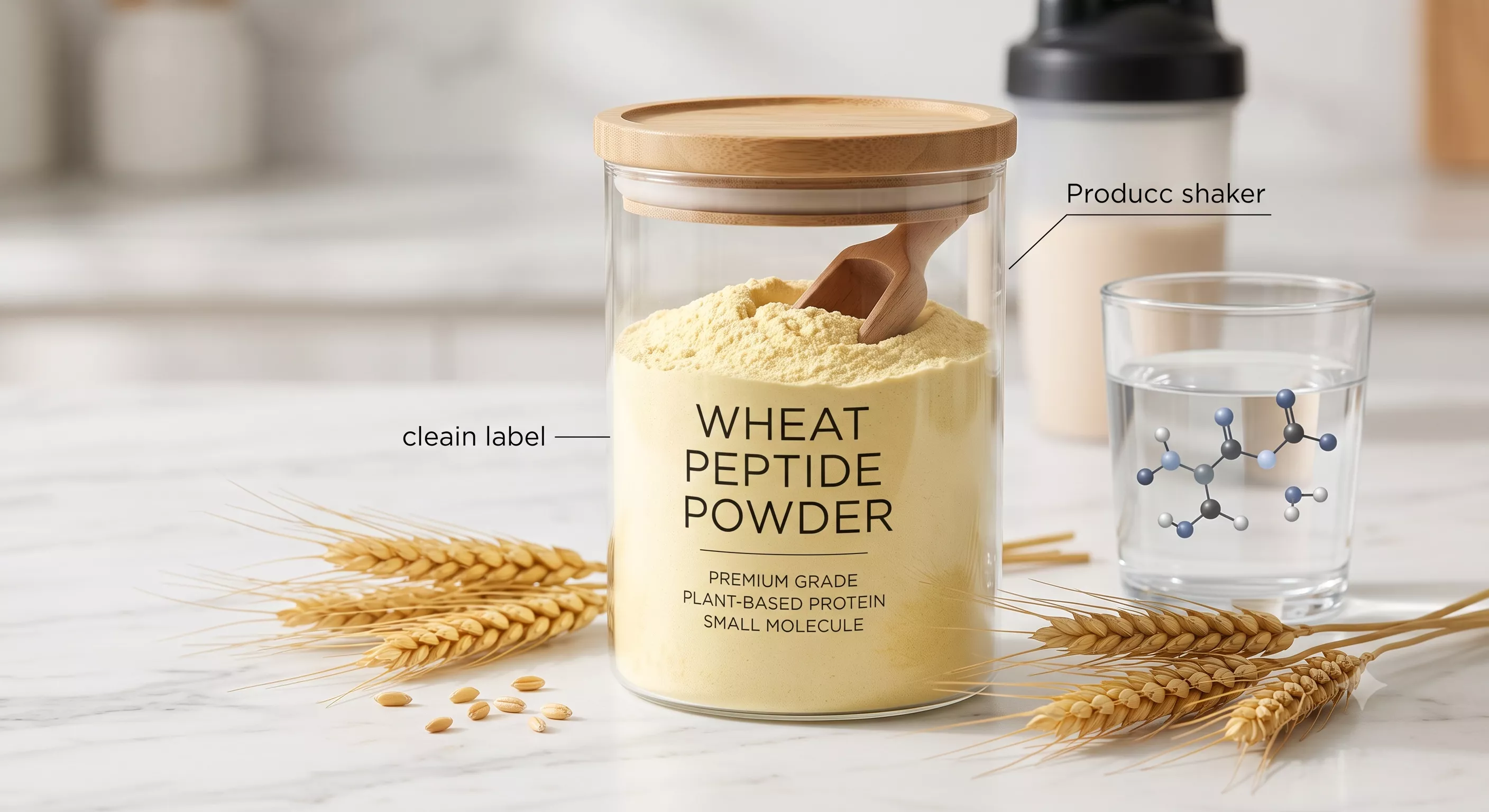
Source ultra-pure, high-solubility wholesale hydrolyzed wheat gluten peptide in bulk. Rich in plant-bound Glutamine ($\ge 25\%$) for muscle recovery and gut barrier health.
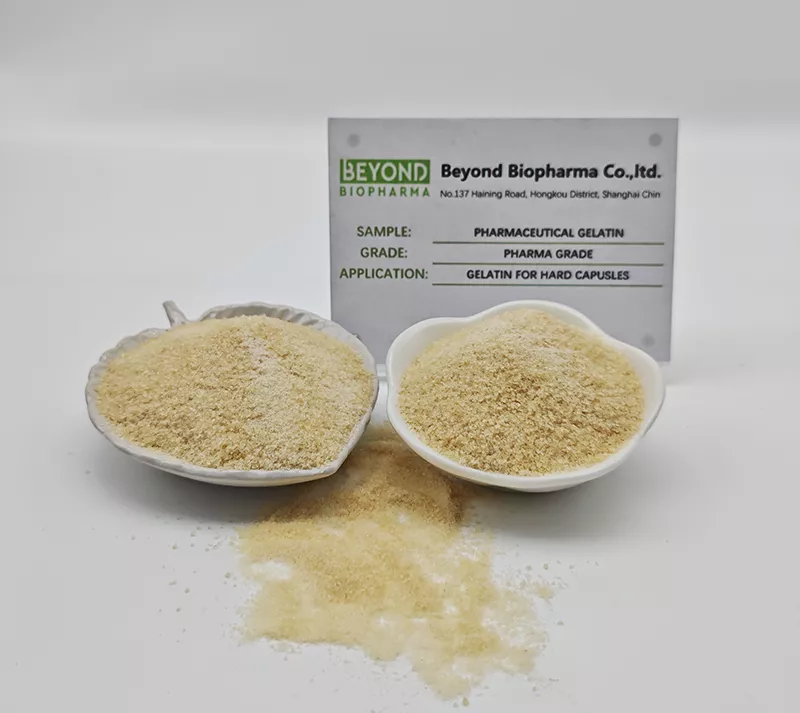
The high-strength and rapid-setting characteristics of Bovine Bone Gelatin ensure it forms a stable, uniform, and durable shell that preserves the integrity of the active pharmaceutical ingredient (API).
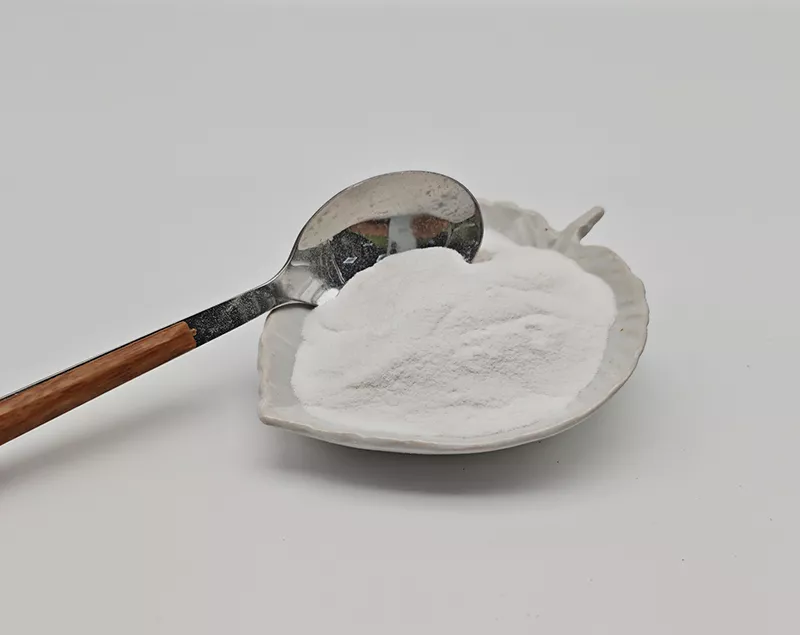
Fish Gelatin for foods is increasingly recognized as the premium alternative to traditional mammalian sources, meeting the growing global demand for clean-label ingredients that align with diverse dietary and religious requirements. Derived from the skin and scales of fish like cod and tilapia, fish gelatin offers unique functional benefits that make it an exceptional gelling, stabilizing, and texturizing agent.
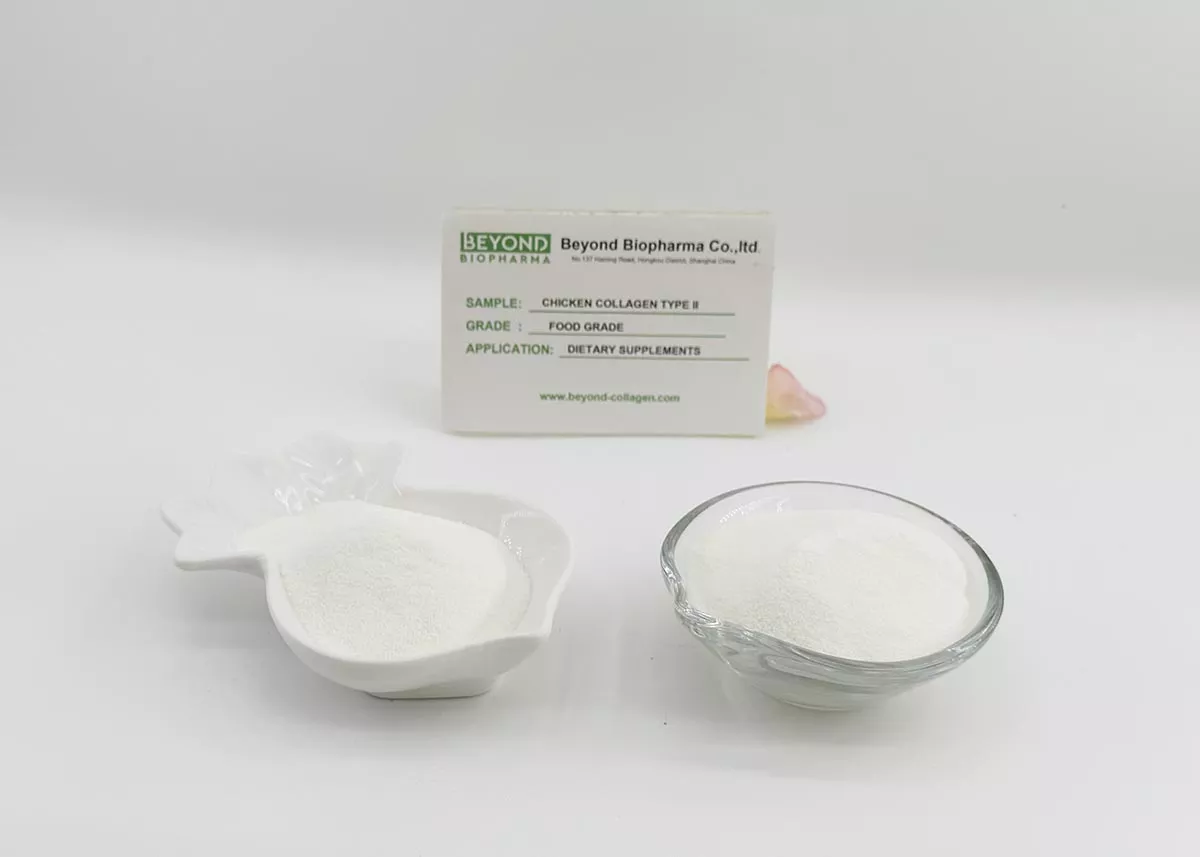
BEYOND BIOPHARMA is a specialized manufacturer of highly purified Hydrolyzed Collagen Type II. Through advanced enzymatic hydrolysis, we create low-molecular-weight collagen peptides that are highly bioavailable, offering foundational nutritional support for cartilage repair, joint function, and skin health. Our product is designed for rapid absorption and maximum efficacy in oral supplements.
Select the most popular foreign trade service products to meet your diverse needs
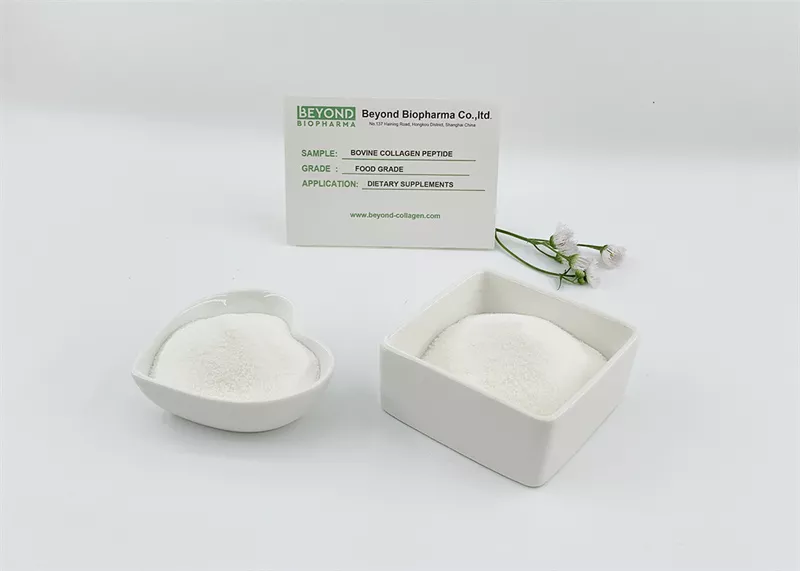
Manufacturer of bovine collagen peptide, shipping in containers all around the world
BEYOND BIOPHARMA is a specialized manufacturer of highly purified Hydrolyzed Collagen Type II. Through advanced enzymatic hydrolysis, we create low-molecular-weight collagen peptides that are highly bioavailable, offering foundational nutritional support for cartilage repair, joint function, and skin health. Our product is designed for rapid absorption and maximum efficacy in oral supplements.
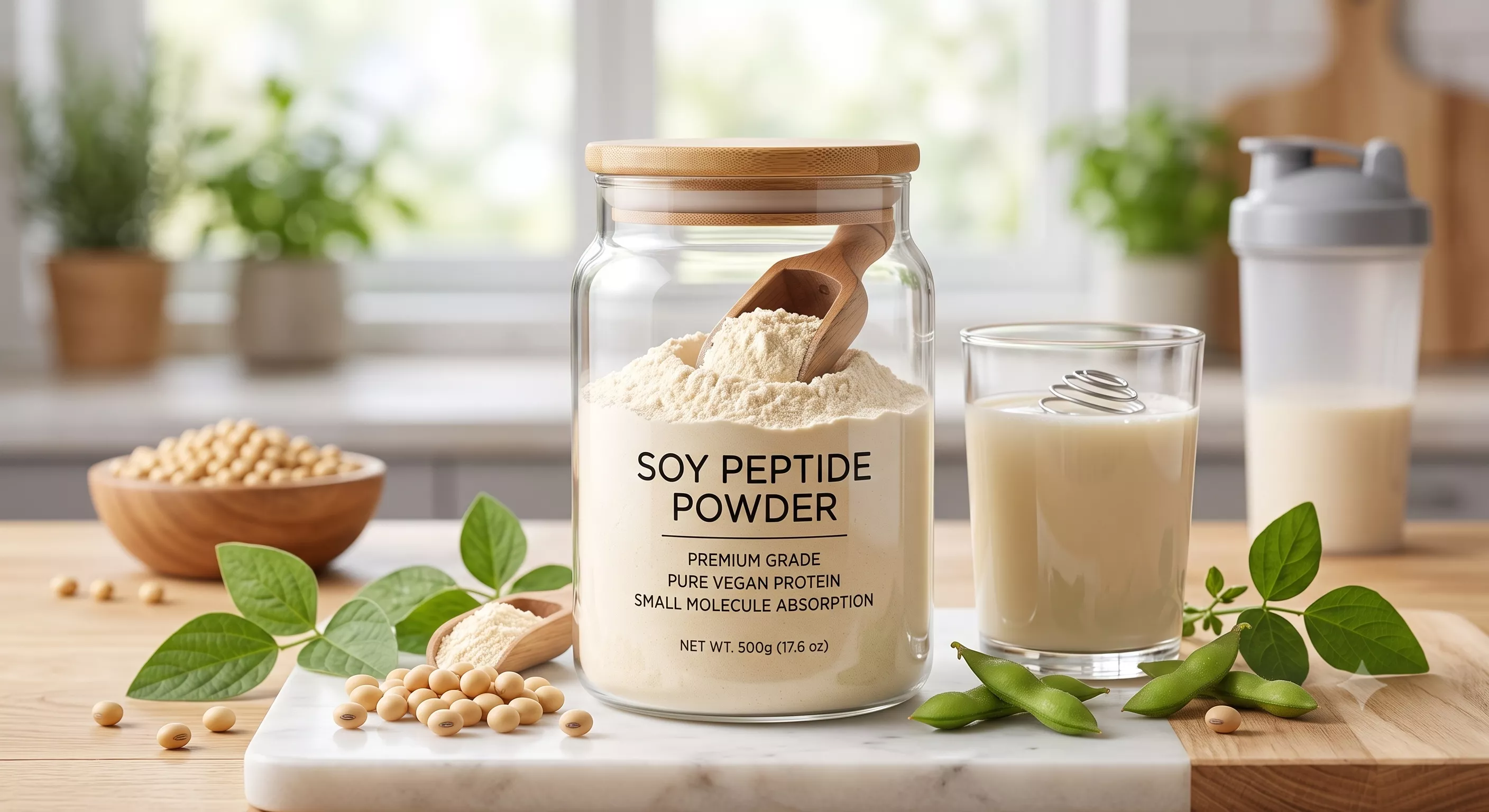
Source ultra-pure, non-GMO hydrolyzed soybean oligopeptide powder in bulk. Complete water solubility, over 80% peptides under 1000 Da. Ideal for sports nutrition and immune recovery formulas.
Tel:+86 21 65010906
Cell/Whatsapp/Wechat:
+86 13482884055
+86 18657345785
Email: sales@beyondbiopharma.com





User Comments
Service Experience Sharing from Real Customers
Megan
Pastry ChefAs a pastry chef, I've used gelatin for years but was looking for a plant-based alternative for our vegan menu items. Agar agar powder has been a game-changer! It sets firmer and works beautifully with acidic fruits that gelatin struggles with. The learning curve on proportions is different, but once you get it, it's fantastic. My berry panna cotta is now 100% plant-based and holds its shape perfectly, even in warm weather.
Leo
Home BakerOkay, so I'm just a guy who likes to experiment in the kitchen. Tried agar agar for the first time after my vegetarian sister complained about my jellies. It's definitely not a 1:1 swap with gelatin – you need less and have to boil it. Took me two tries to get my mango pudding right, but wow, the texture is so clean and it doesn't have that slight 'animal' taste some gelatins do. Minus one star because it's trickier to dissolve completely.
Chloe
Lab TechnicianComing from a microbiology background, I find the comparison fascinating. For cooking at home, I switched to agar agar purely for its vegetarian source. It's incredible how a tool we use to culture bacteria in the lab makes such a great gelling agent for food. It gives a crisper, more brittle set compared to gelatin's elasticity, which I actually prefer for my fruit glazes and vegan cheesecake. It feels more 'scientific' and precise to work with.
Raj
Food BloggerI've tested both side-by-side for my blog's 'Science of Setting' series. Gelatin is forgiving and gives that classic, wobbly dessert feel. Agar agar is a powerhouse – it sets fast and firm, and it's shelf-stable, which is great. I love it for creating sharp, geometric dessert pieces that hold at room temp. The only downside? It can make things a bit too firm if you miscalculate. Not ideal for a delicate panna cotta, but perfect for layered vegan terrines. A solid alternative for sure.