What is Fish Gelatine? Benefits, Uses, and How It Compares to Other Gelatins
Fish gelatine is a protein derived from fish skin and bones, offering a clean-label alternative for food, pharmaceutical, and nutraceutical applications. For overseas buyers, sourcing fish gelatine with consistent batch quality, low odor, and proper certifications can be a challenge. This article breaks down its benefits, uses, and how it stacks up against bovine and porcine gelatins, with practical guidance for purchasing managers and product developers.
How Is Fish Gelatine Produced and What Makes It Different?
Fish gelatine is made through enzymatic hydrolysis of fish skin and bones, typically from cold-water species like cod or tilapia. The process involves cleaning, acid treatment, extraction at controlled temperatures, filtration, and drying. This method preserves the protein structure while minimizing the fishy smell. Compared to bovine or porcine gelatine, fish gelatine has a lower melting point (around 25–30°C) and a milder flavor profile, making it ideal for applications where a neutral taste is critical.
The key differentiator lies in its gel strength, measured in Bloom. Fish gelatine typically ranges from 150 to 260 Bloom, similar to high-quality bovine gelatine, but with a faster setting time. For collagen peptides, fish-derived options often have a lower molecular weight (around 2,000–3,000 Da), which supports quicker absorption in the body. This makes fish gelatine a preferred choice for sports nutrition and beauty supplements.
What Are the Typical Specifications for Fish Gelatine?
When sourcing fish gelatine, buyers should review the following common parameters. These are typical industry ranges; final values should be confirmed per Certificate of Analysis (COA) and sample testing.
| Parameter |
Typical Range |
Notes |
| Bloom (gel strength) |
150–260 g |
Higher Bloom for gummies and softgels |
| Viscosity |
2.0–5.5 mPa·s |
Affects processing and mouthfeel |
| Mesh size |
8–60 mesh |
Fine mesh for faster dissolution |
| Moisture |
≤14% |
Standard for shelf stability |
| Protein content |
≥90% |
High purity for nutraceutical use |
| Molecular weight (peptides) |
2,000–5,000 Da |
Fish typically lower, faster absorption |
Note: These are typical industry ranges; final values per COA and sample.
What Are the Main Applications of Fish Gelatine?
Fish gelatine is versatile across several industries. Here is a breakdown by application with selection tips:
- Food and Gummies: For gummy candies and jellies, use fish gelatine with a Bloom of 200–260. It provides a clean, neutral taste and is compatible with halal and kosher requirements. Check out our halal and kosher verified fish gelatine for clean-label foods.
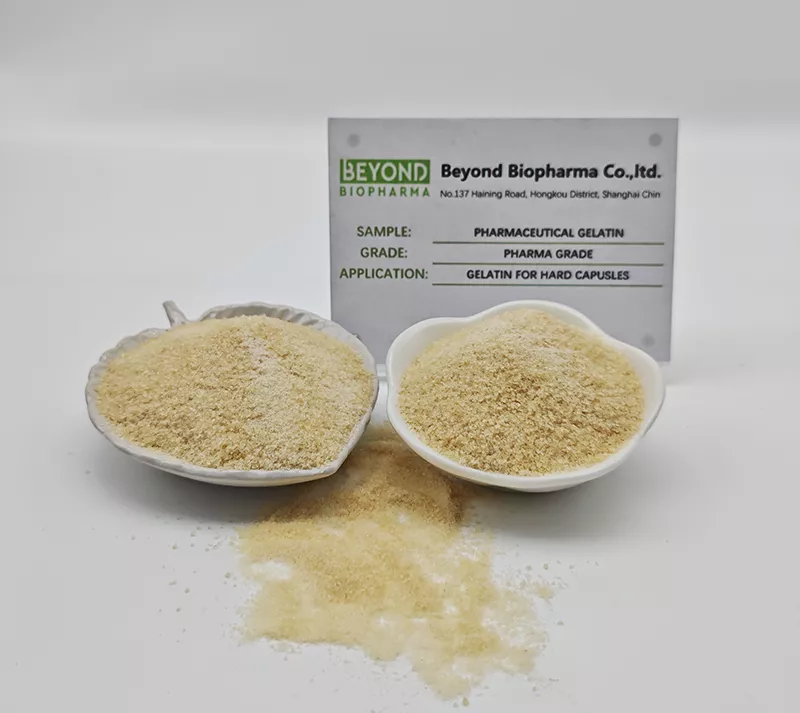
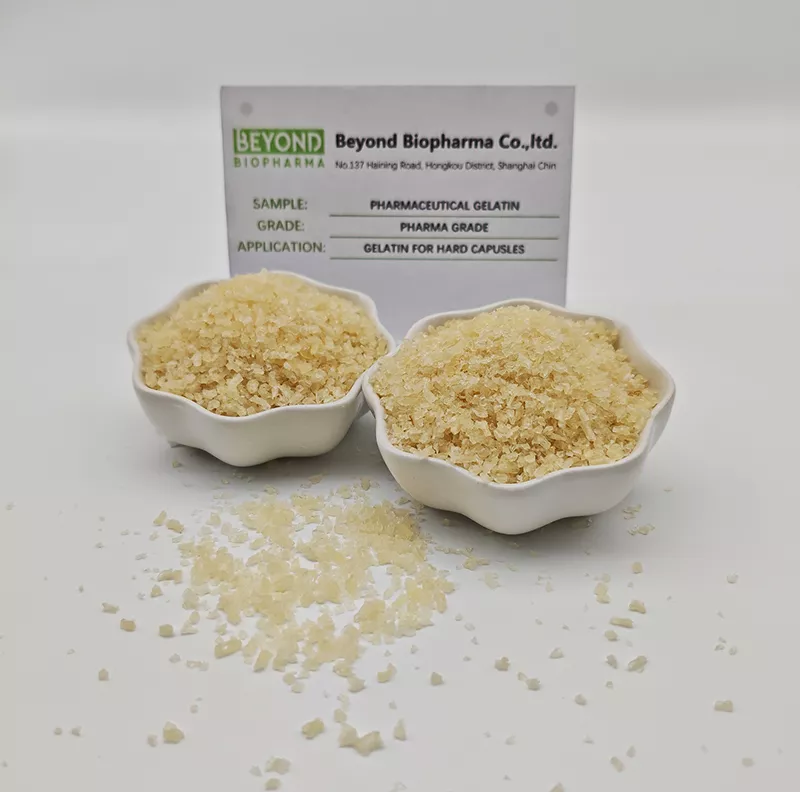
- Softgel and Hard Capsules: Pharmaceutical-grade fish gelatine with ultra-high viscosity (e.g., 4.5–5.5 mPa·s) is ideal for softgel encapsulation. It offers good film-forming properties. See our ultra-high viscosity gelatine for softgel capsules.
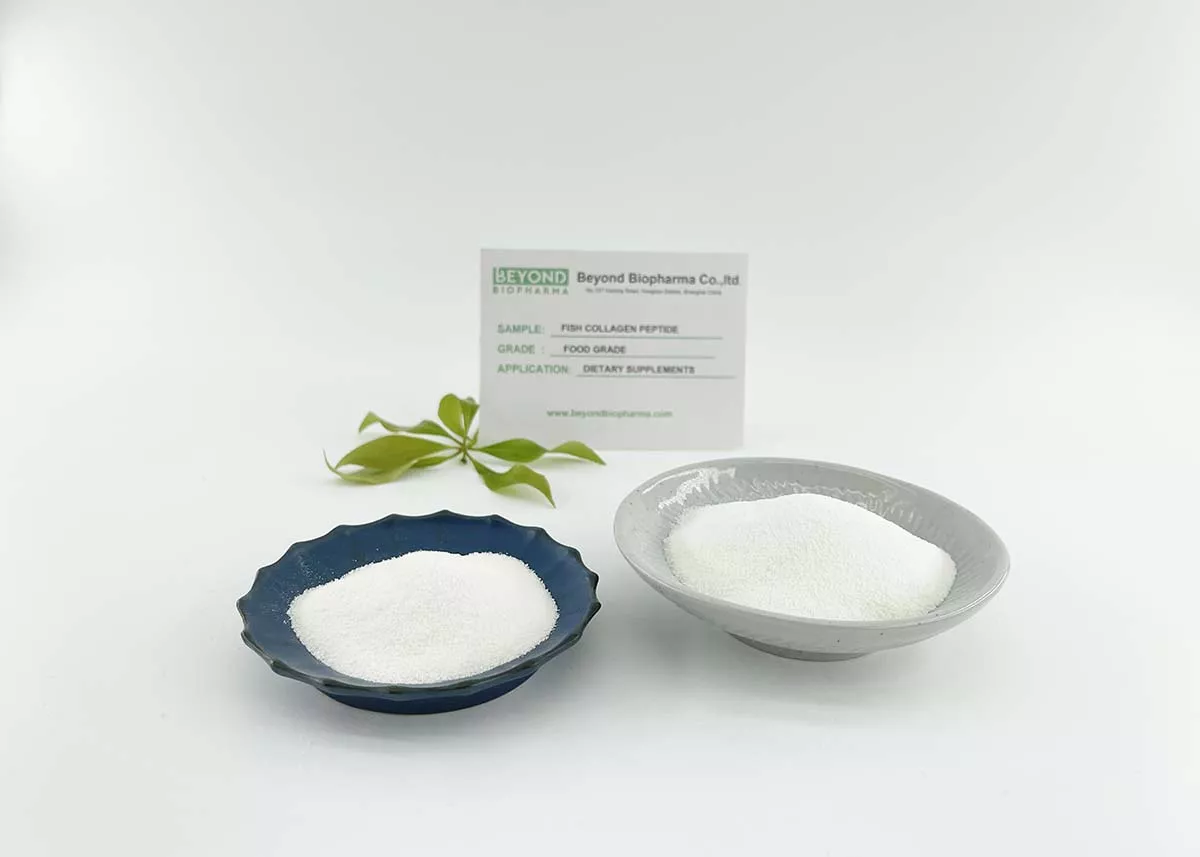
- Sports Nutrition and Beauty Supplements: Fish collagen peptides with low molecular weight (around 2,000 Da) are popular for joint health and skin elasticity. They dissolve easily in cold water and have minimal odor. Explore our fish collagen peptide for skin health supplements.
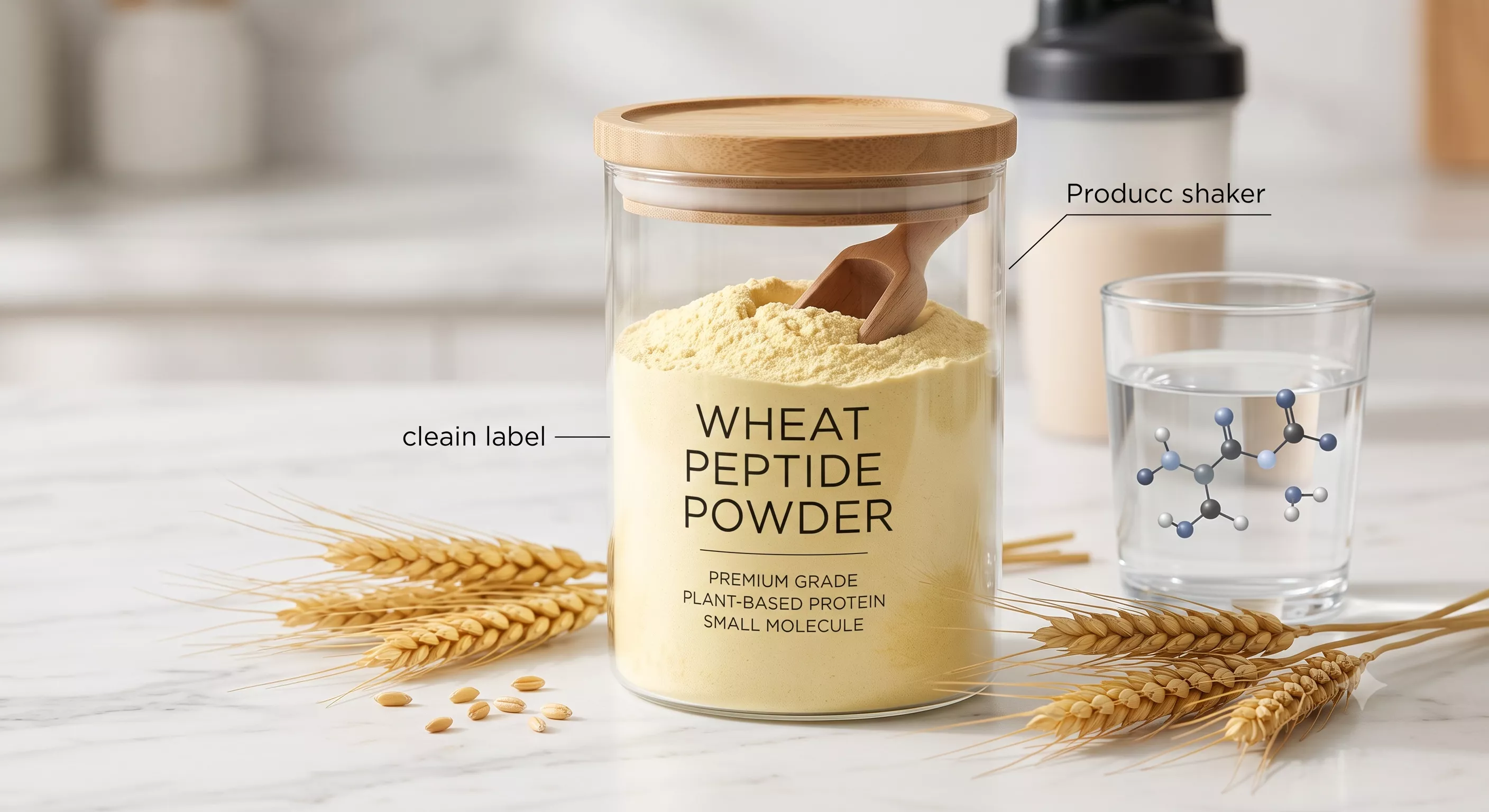
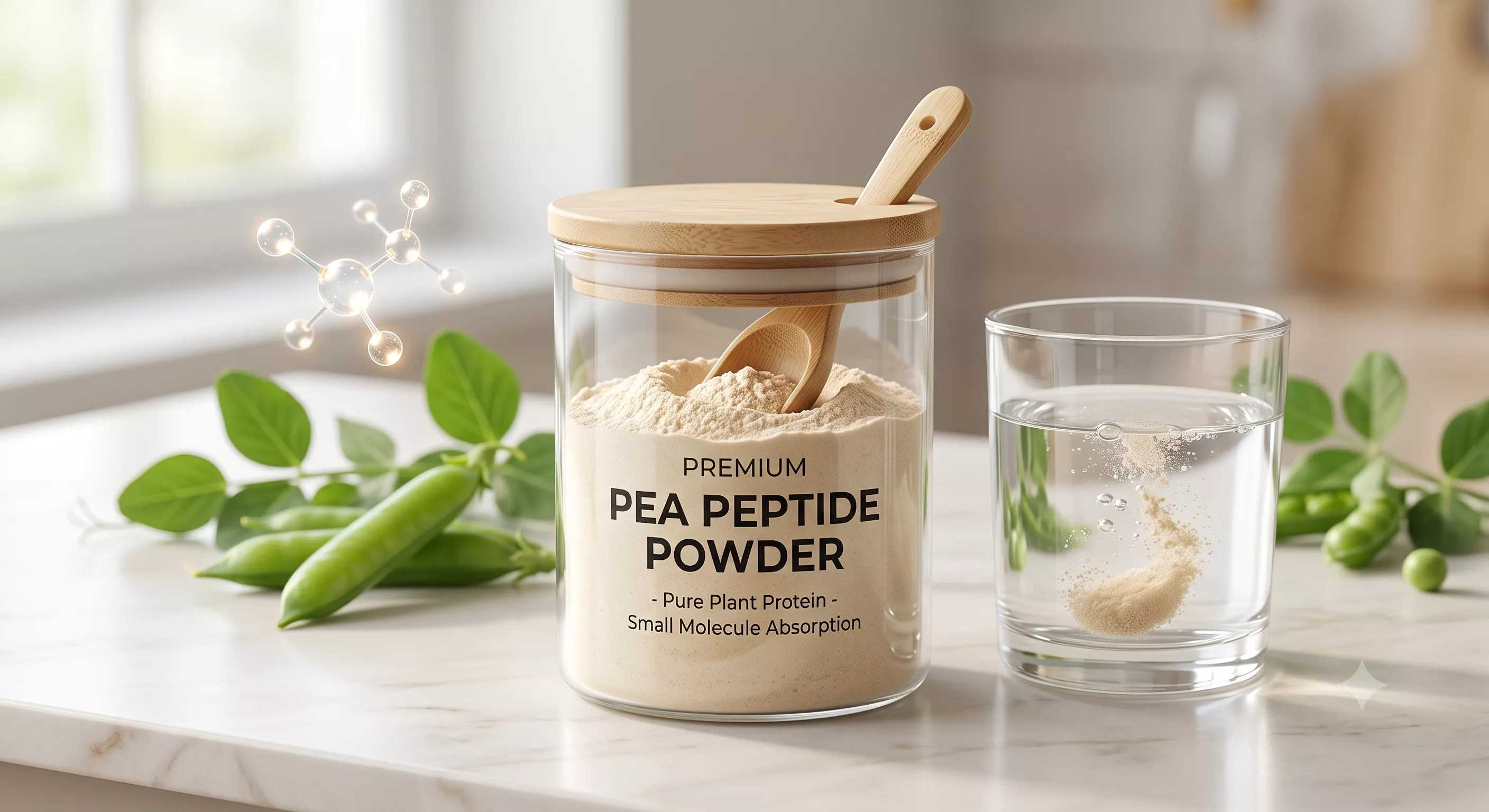
- Plant-Based and Vegan Formulations: While fish gelatine is not vegan, it is often used as a cleaner alternative to bovine gelatine in products targeting pescatarian or flexitarian consumers. For fully vegan options, consider plant protein peptides like pea or rice hydrolysates.
How Does Fish Gelatine Compare to Bovine and Porcine Gelatins?
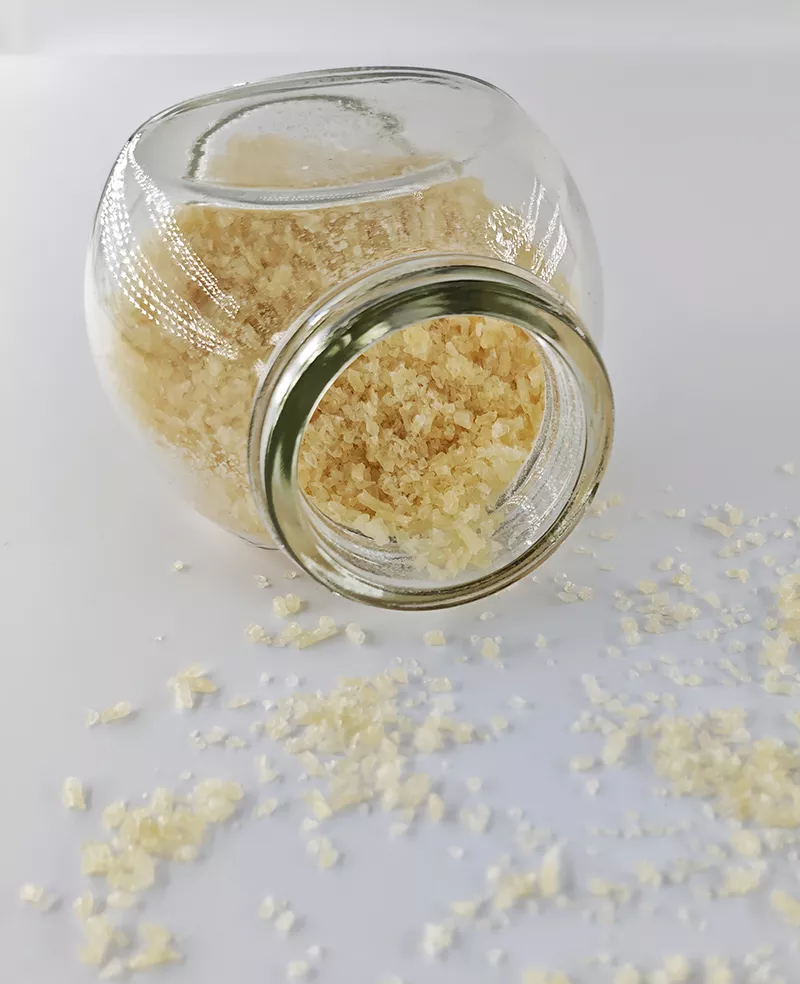
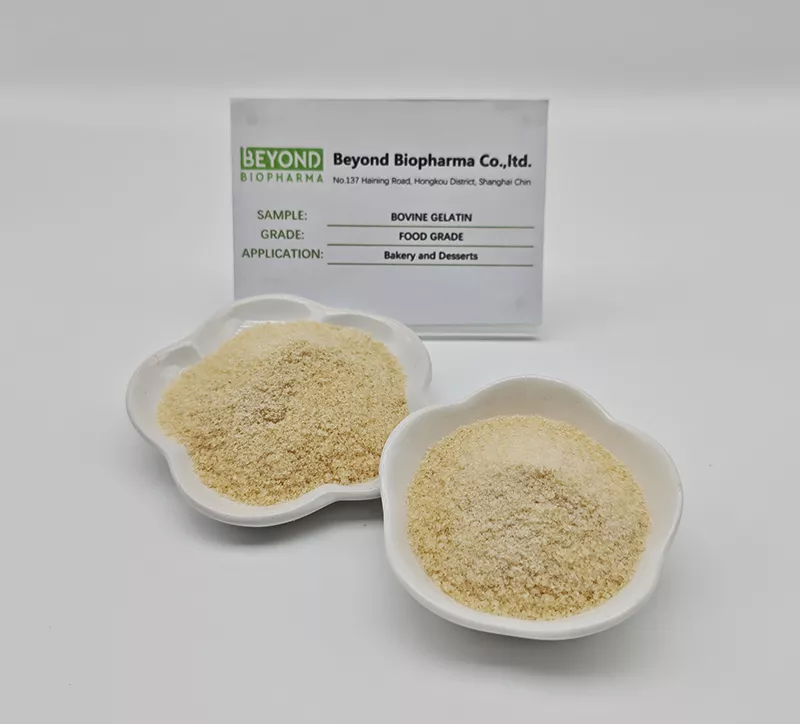
Each gelatine source has distinct properties. Fish gelatine is comparable to products from suppliers like Rousselot or Gelita in terms of Bloom and viscosity, but it stands out for its lower melting point and neutral flavor. Bovine gelatine (from hide or bone) typically has a higher Bloom range (200–300) and is more heat-stable, making it suitable for hard capsules and tablet coatings. Porcine gelatine offers a balance of strength and cost, often used in gummies. However, fish gelatine is preferred for applications requiring halal, kosher, or allergen-free certifications, as it avoids bovine spongiform encephalopathy (BSE) concerns and is compatible with pescatarian diets.
Why Choose Beyond Biopharma for Fish Gelatine?
Beyond Biopharma is a Shanghai, China–based manufacturer with over 10 years of experience in the food-ingredient industry. Our products are exported to more than 50 countries. We operate a fully automatic production line with GMP clean workshops, stainless-steel sealed piping, and automated temperature and pH control to ensure batch consistency. Our annual capacity is approximately 3,000 MT for collagen and 5,000 MT for gelatine.
We hold ISO 9001 certification, are US FDA registered, and select products carry Halal and Kosher certifications (e.g., fish gelatine). Our bovine bone gelatine is BSE-free. An in-house lab conducts heavy-metal and microbiological testing, supported by a dedicated QA/QC team. We offer three grades—food, pharmaceutical, and cosmetic—and provide free samples along with formulation and selection support.
For buyers needing specific applications, we also supply bovine collagen peptide for energy bar products and hydrolyzed collagen type II powder for joint health. Our product lines also include food-grade porcine gelatine for gummies and premium pharmaceutical gelatine for tablet coating.
Frequently Asked Questions About Fish Gelatine
Q: Is fish gelatine suitable for halal and kosher diets?
A: Yes, fish gelatine from Beyond Biopharma is available with Halal and Kosher certifications. It is derived from fish skin, which is generally accepted in both dietary standards, making it a clean-label choice for global markets.
Q: How can I minimize the fishy smell in my final product?
A: Choose high-quality fish gelatine with low odor, typically from cold-water fish. Use a deodorization step during processing, and ensure the gelatine has a low molecular weight (around 2,000–3,000 Da) for better solubility and reduced aroma.
Q: What Bloom strength should I use for gummy supplements?
A: For gummy supplements, a Bloom of 200–260 is typical. This provides a firm yet chewy texture. Higher Bloom values (250+) are better for softgels, while lower Bloom (150–200) works for jellies and desserts.
Q: Can fish gelatine be used in vegan products?
A: No, fish gelatine is not vegan as it is animal-derived. For vegan formulations, consider plant protein peptides like pea or rice hydrolysates, which offer similar gelling properties without animal ingredients.
Q: What certifications should I look for when sourcing fish gelatine?
A: Look for ISO 9001, US FDA registration, and Halal/Kosher certifications if needed. Also request a COA for heavy-metal and microbiological testing to ensure purity and safety.
Q: How does fish gelatine compare to bovine gelatine in terms of cost?
A: Fish gelatine is generally priced higher than porcine gelatine but comparable to high-quality bovine gelatine. The cost reflects its specialized sourcing and processing for low odor and clean-label appeal.
Request a Quote and Free Samples
If you are evaluating fish gelatine for your next product, we invite you to reach out. Please provide your application (e.g., gummies, softgels, sports nutrition), required grade (food, pharmaceutical, or cosmetic), estimated quantity or MOQ, target specifications (Bloom, mesh, molecular weight, certifications), and destination country. Beyond Biopharma can send free samples and a tailored quote to support your development process.
Fish gelatine offers a reliable, clean-label solution for food, pharmaceutical, and nutraceutical applications. With consistent quality and proper certifications, it is a strong alternative to bovine and porcine gelatins for global buyers.

 English EN








User Comments
Service Experience Sharing from Real Customers
Megan
Pastry ChefAs someone who's been experimenting with plant-based desserts for years, I was skeptical about fish gelatine. But this product sets perfectly for my vegan panna cotta and doesn't alter the flavor profile. Finally found a sustainable alternative that actually works!
Leo
Biomedical ResearcherUsed this in our lab for capsule prototyping. The clarity and gel strength are impressive compared to mammalian gelatines. One point off because the viscosity varies slightly between batches, but overall it's been reliable for our pharmaceutical applications.
Chloe
Home BakerI'm allergic to beef and pork gelatines, so discovering this fish-based version was a game-changer! Made marshmallows for my kid's birthday party and nobody could tell the difference. The texture is spot-on, and it dissolves way easier than I expected.
Raj
Pet Food FormulatorWe've been incorporating this into premium cat treat formulations. The palatability tests show higher acceptance rates than synthetic binders. Only minor issue is the slight fishy odor in raw form, but it disappears completely after processing. Great for sensitive diets.