 English EN


Bovine gelatin pros and cons everyone should know
Bovine gelatin offers strong gelling and health benefits but has dietary, ethical, and allergen concerns. Compare bovine gelatin to other gelatin options here.
More
For procurement managers and product developers sourcing gelatin, the choice between powdered gelatin and sheet gelatin often comes down to application consistency, solubility, and processing efficiency. While both forms deliver comparable gel strength, their physical properties influence hydration ratios, dissolution behavior, and final texture in food, pharmaceutical, and nutraceutical products. This guide breaks down the key differences, typical specifications, and selection criteria to help you make an informed sourcing decision.
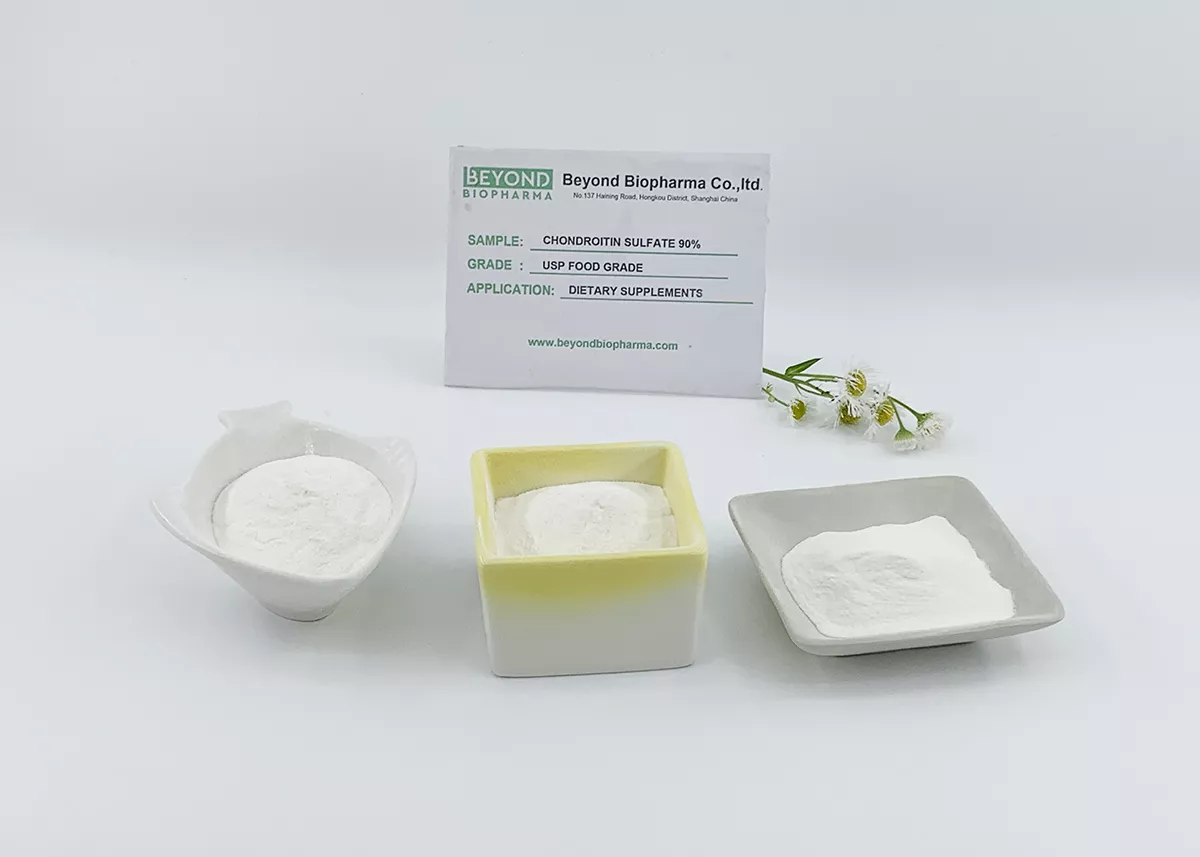
Powdered gelatin is a dry, granular form of gelatin that dissolves quickly in warm water and is widely used in gummy production, capsule shells, and powdered beverage mixes. Sheet gelatin, also known as leaf gelatin, comes in thin, transparent sheets that require soaking in cold water before use, offering more controlled dissolution and clarity in culinary and pharmaceutical settings. The primary pain point buyers face is batch consistency: powdered gelatin can vary in particle size and bloom strength, while sheet gelatin provides uniform weight per sheet but may require longer hydration times.
Both forms are derived from collagen through controlled hydrolysis. For powdered gelatin, the dried gelatin is milled into fine granules, typically with mesh sizes ranging from 8 to 60. Sheet gelatin is produced by casting a gelatin solution into thin films, then drying and cutting into standardized sheets. In application, powdered gelatin hydrates rapidly when stirred into warm water (50–60°C), making it ideal for high-volume industrial mixing. Sheet gelatin must be bloomed in cold water (4–10°C) for 10–20 minutes, then gently heated to dissolve, offering superior clarity and a more delicate texture in desserts and pharmaceutical coatings. The bloom strength—a measure of gel firmness—ranges from 50 to 300 g for both forms, with typical industry ranges of 150–260 Bloom for gummies and softgels.
The table below outlines common parameter ranges for both forms. Note: these are typical industry ranges; final values should be confirmed per Certificate of Analysis (COA) and sample testing.
| Parameter | Powdered Gelatin | Sheet Gelatin |
|---|---|---|
| Bloom Strength (g) | 50–300 (typical 150–260) | 80–250 (typical 160–220) |
| Viscosity (mPa·s) | 2.0–5.5 | 2.5–5.0 |
| Mesh Size | 8–60 | N/A (sheet thickness: 1.5–3.0 mm) |
| Moisture Content (%) | ≤14 | ≤12 |
| Solubility | Rapid in warm water | Requires cold water bloom |
Typical industry range; final values per COA / sample.
The choice between powdered and sheet gelatin depends on your production process and end-product requirements. Here is guidance by industry:
Based in Shanghai, China, Beyond Biopharma is a B2B manufacturer with over 10 years of experience in the food-ingredient industry, exporting to more than 50 countries. Our production facility has an annual capacity of approximately 3,000 MT for collagen and 5,000 MT for gelatin, supported by a fully automatic production line, GMP clean workshop, stainless-steel sealed piping, and automated temperature/pH control. We hold ISO 9001 certification, US FDA registration, and select products carry Halal/Kosher certification (e.g., fish gelatin). Our bovine bone gelatin is BSE-free, and our in-house lab conducts heavy-metal and microbiological testing with a dedicated QA/QC team. We offer three grades—food, pharmaceutical, and cosmetic—and provide free samples along with formulation and selection support. For consistent sheet gelatin, see our standardized gelatin sheets.
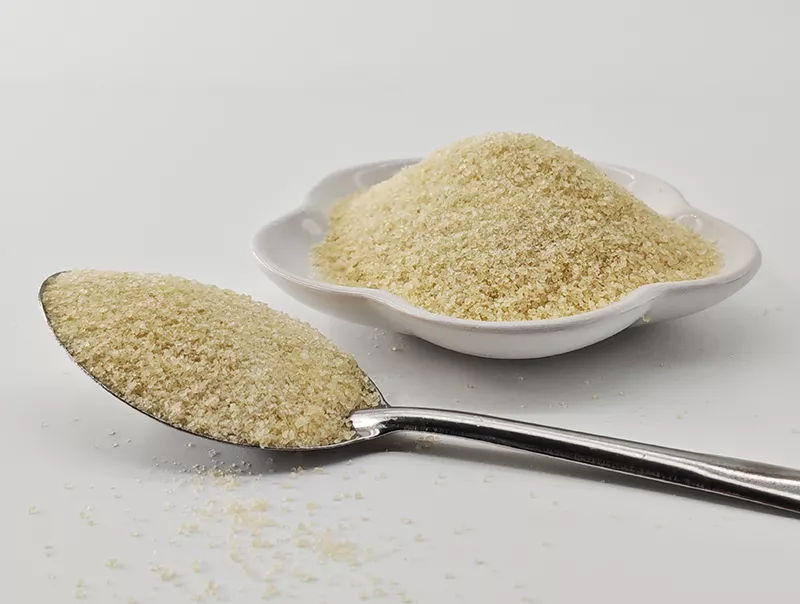
Yes, but you must adjust the hydration ratio. One sheet of gelatin (approx. 2 g) equals about 1 teaspoon of powdered gelatin. Powdered gelatin requires dissolving in warm water, while sheets need cold water blooming. Texture may vary slightly due to differences in dissolution rate.
Sheet gelatin generally produces clearer gels because the slow hydration process reduces air incorporation and undissolved particles. For pharmaceutical coatings or high-end desserts, sheet gelatin is preferred. Powdered gelatin can achieve good clarity with proper mixing and filtration.
For gummies, a bloom strength of 200–260 g is typical. Higher bloom yields firmer, chewier gummies. Powdered gelatin with 250 Bloom is a common choice for industrial gummy lines. Sheet gelatin with similar bloom can be used but requires longer hydration.
Both forms have similar shelf life (2–3 years) when stored in a cool, dry place. Sheet gelatin may be more susceptible to moisture absorption due to larger surface area. Always check moisture content (≤12% for sheets, ≤14% for powder) per COA.
No, traditional gelatin is animal-derived. For vegan formulations, consider plant protein peptides such as pea or rice protein hydrolysates. Beyond Biopharma offers plant protein peptide options for allergen-free and vegan applications.
Request a COA for each batch, verifying bloom strength, viscosity, mesh size, and microbiological limits. Work with suppliers who have in-house QA/QC labs. Beyond Biopharma provides dedicated testing and can supply free samples for pre-qualification.
To source powdered gelatin or sheet gelatin for your specific application, please provide the following details to Beyond Biopharma: your target application (food, pharmaceutical, or cosmetic), required grade, estimated quantity or MOQ, target specifications (bloom strength, mesh size, molecular weight, certifications), and destination country. Our team will send free samples and a tailored quotation. Contact us to discuss your formulation needs—whether you require food-grade porcine gelatin for gummies or gelatin for micro-encapsulation.

We provide you with comprehensive foreign trade solutions to help enterprises achieve global development
Source ultra-pure, non-GMO hydrolyzed soybean oligopeptide powder in bulk. Complete water solubility, over 80% peptides under 1000 Da. Ideal for sports nutrition and immune recovery formulas.
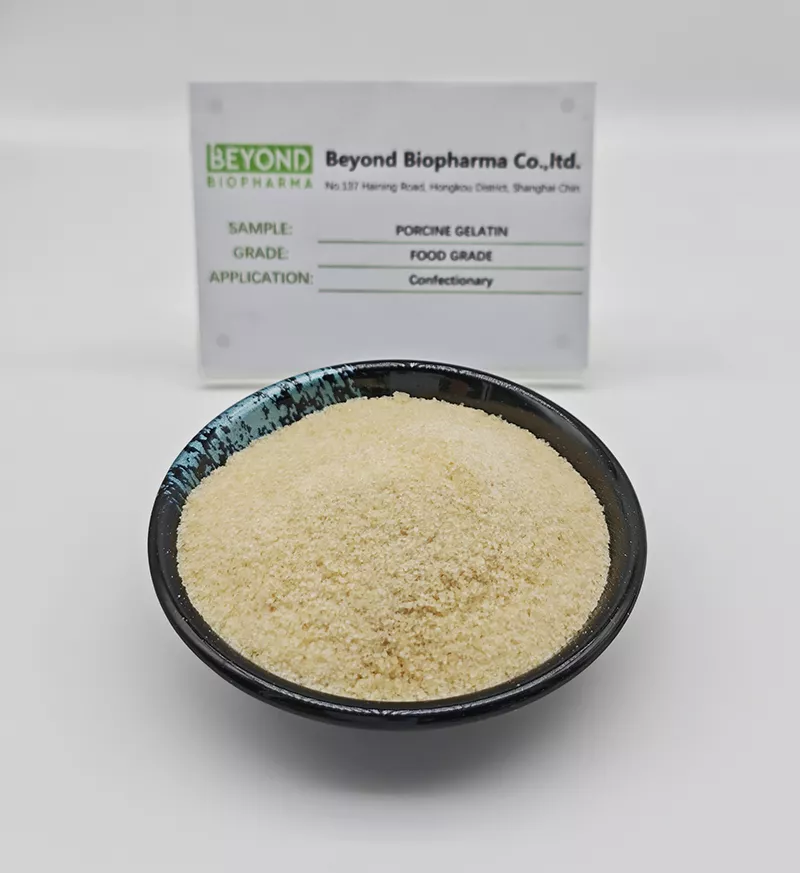
Food-grade porcine gelatin is a highly versatile and cost-effective natural protein derived from the collagen found in pig skin and bones. It is a premier gelling agent known for its exceptional clarity, neutral taste, and thermal reversibility.
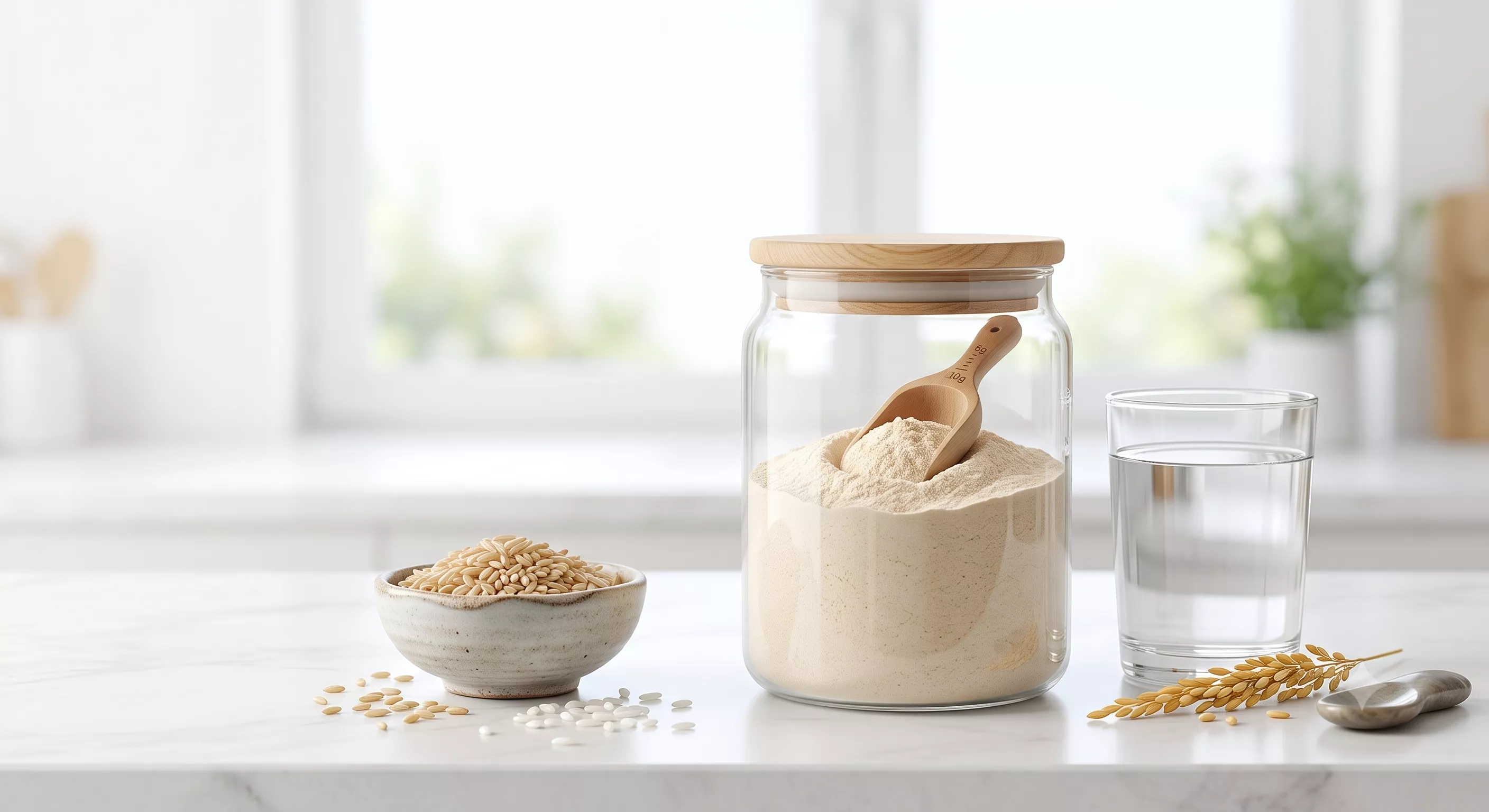
Source ultra-pure, 100% water-soluble wholesale hydrolyzed rice protein peptide in bulk. Over 85% molecules under 1000 Da. Ideal for infant nutrition, clean-label sports formulas, and sensitive skincare.
High Purity and Efficacy for Joint Health Formulations
Select the most popular foreign trade service products to meet your diverse needs
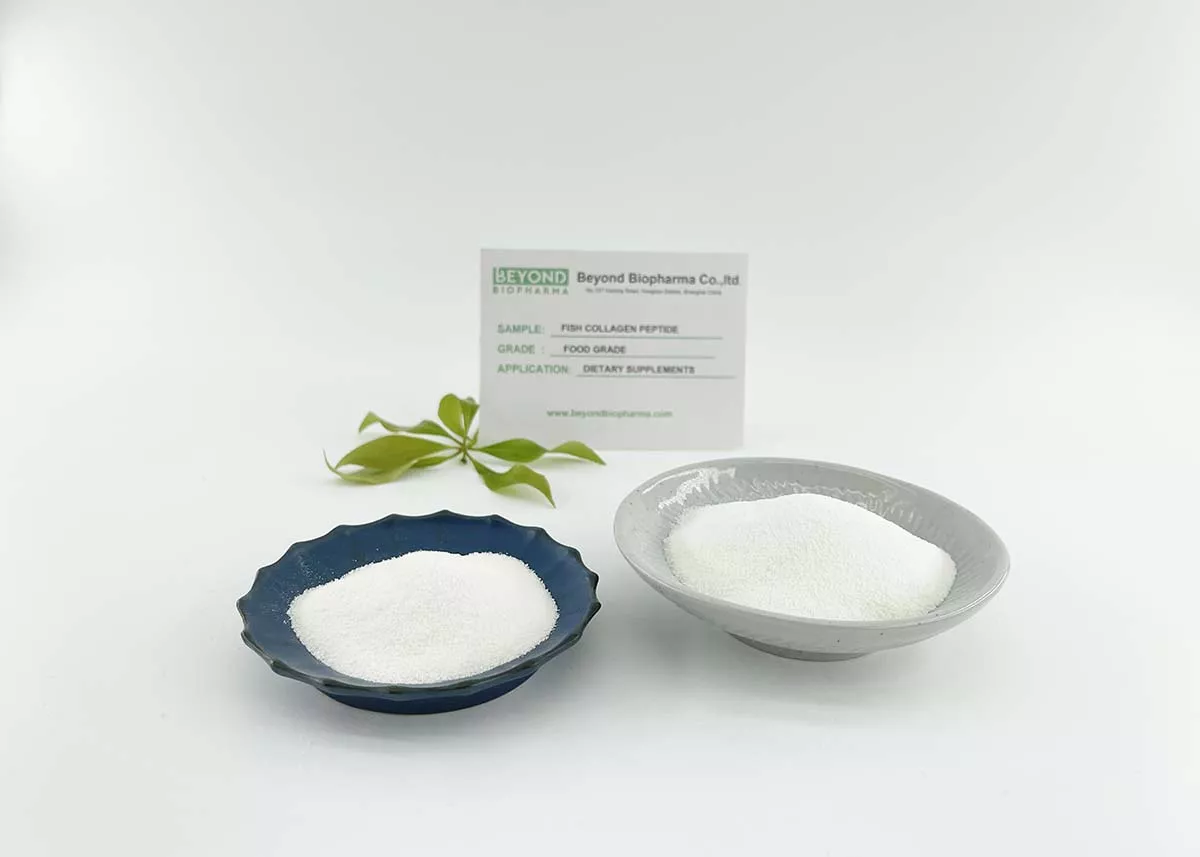
Premium marine-sourced collagen peptides with >90% protein content and low molecular weight (1000-3000 Da) for superior bioavailability. Sustainably sourced, neutral taste, and fully soluble—ideal for nutricosmetics and functional foods.
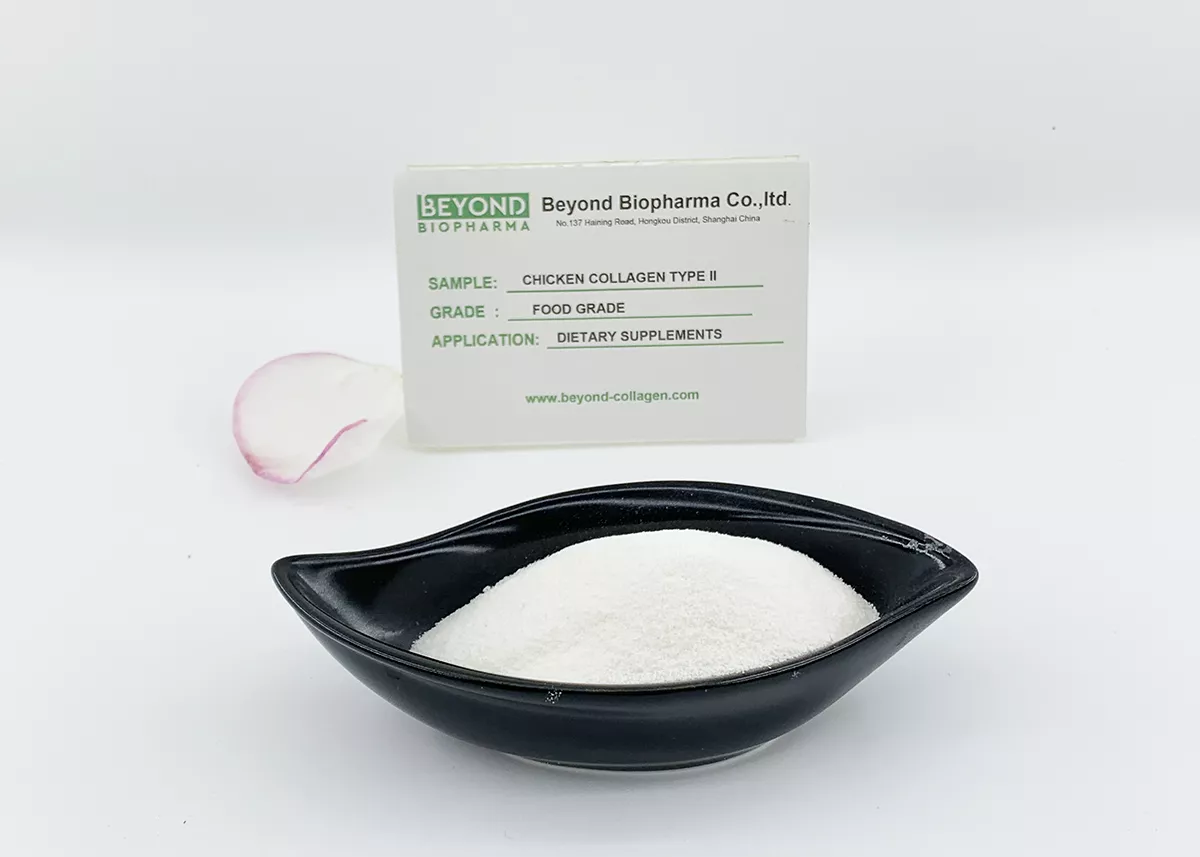
BEYOND BIOPHARMA is a specialized manufacturer of high-quality Undenatured Collagen Type II. Utilizing low-temperature, non-enzymatic extraction methods, our Undenatured Collagen Type II retains its native, triple-helix structure, essential for modulating the immune system's response to joint health and providing superior support for mobility, flexibility, and overall joint comfort.
Fish Gelatin for foods is increasingly recognized as the premium alternative to traditional mammalian sources, meeting the growing global demand for clean-label ingredients that align with diverse dietary and religious requirements. Derived from the skin and scales of fish like cod and tilapia, fish gelatin offers unique functional benefits that make it an exceptional gelling, stabilizing, and texturizing agent.
Tel:+86 21 65010906
Cell/Whatsapp/Wechat:
+86 13482884055
+86 18657345785
Email: sales@beyondbiopharma.com





User Comments
Service Experience Sharing from Real Customers
Marcus
Line CookI’ve always used powdered gelatin for my panna cottas at home, but tried sheets for a restaurant special last week. The clarity is definitely better—no cloudiness—but I messed up the bloom time on the first try. Powdered is way more forgiving if you’re in a rush. Sheets are great for precision work though.
Lena
Pastry Chef de PartieSwitching from powder to sheets was a game-changer for my mousse bases. Less whisking, no lumps, and the final texture is silkier. I use gold-strength sheets now exclusively. Only downside? You have to plan ahead because soaking takes a few minutes—can’t just sprinkle in like powder.
Tomás
Home BakerI bought sheets thinking they’d be easier than powder, but honestly I’m sticking with powder for now. The sheets are nice if you’re making clear jellies, but for my everyday fruit gels and marshmallows, the powder dissolves just fine and I don’t have to count sheets. Might try again if I ever do a layered mirror cake.
Priya
R&D TechnologistFor our lab-scale test batches of gummy confections, sheet gelatin gives us way more consistent bloom strength than powder. No issues with hydration ratios or clumping. I know it’s pricier, but for reproducibility in product development, it’s worth every penny. Just store it airtight or it gets brittle.