 English EN


Bovine gelatin pros and cons everyone should know
Bovine gelatin offers strong gelling and health benefits but has dietary, ethical, and allergen concerns. Compare bovine gelatin to other gelatin options here.
More
Sourcing the best gelatin for collagen applications is a critical decision for overseas buyers. Whether you are a purchasing manager for food ingredients, a nutraceutical brand R&D professional, or a pharmaceutical excipient buyer, batch consistency, solubility, odor control, and certification barriers are real pain points. This guide cuts through the noise to help you select the right grade—edible, pharmaceutical, or cosmetic—based on your specific application. We cover working principles, typical parameter ranges, and industry-specific recommendations, all grounded in real-world sourcing needs.
The best gelatin for collagen is not a one-size-fits-all answer. It depends on your end product—whether you are formulating gummies, hard or soft capsules, sports nutrition bars, or beauty drinks. Gelatin is derived from collagen through partial hydrolysis, and its functional properties (bloom strength, viscosity, and gelling ability) determine its suitability. For collagen peptide applications, hydrolyzed collagen (fully broken down) offers high solubility and rapid absorption, while traditional gelatin provides structure and texture. When sourcing, look for a supplier that offers both gelatin and collagen peptides, as this indicates deep expertise in the protein value chain.
Key sourcing pain points include batch-to-batch consistency, fishy or off-odors, solubility in cold water, and compliance with certifications like Halal, Kosher, or BSE-free status. A reliable manufacturer will provide a Certificate of Analysis (COA) for every batch, ensuring you meet your quality targets.
Gelatin is produced through enzymatic hydrolysis of collagen-rich animal tissues—typically bovine hide, bovine bone, porcine skin, or fish skin. The process involves controlled heating and enzymatic treatment to break down collagen into smaller protein chains. The degree of hydrolysis determines whether the end product is a high-bloom gelatin (for gelling) or a low-molecular-weight collagen peptide (for rapid absorption).
In application, bloom strength (measured in grams) is the key parameter for gelling. A bloom of 150–260 g is typical for gummies and softgels. For collagen peptides, molecular weight (2,000–5,000 Da) dictates absorption rate—fish collagen peptides tend to have lower molecular weight, leading to faster uptake. Solubility and low odor are critical quality markers for both categories.
Below is a reference table of common industry specifications. Note: These are typical ranges; final values should be confirmed per COA or sample.
| Parameter | Edible Gelatin | Pharmaceutical Gelatin | Collagen Peptide | Plant Protein Peptide |
|---|---|---|---|---|
| Bloom (g) | 50–300 | 150–260 | N/A (non-gelling) | N/A (non-gelling) |
| Viscosity (mPa·s) | 2.0–5.5 | 2.5–5.0 | Low | Low |
| Mesh Size | 8–60 | 20–40 | Fine powder | Fine powder |
| Moisture (%) | ≤14 | ≤14 | ≤8 | ≤8 |
| Protein (%) | ≥85 | ≥90 | ≥90 | 80–90 |
| Molecular Weight (Da) | N/A | N/A | 2,000–5,000 | Typically |
Typical industry range; final values per COA / sample.
Selection depends on your industry and product format. Here is a breakdown by application:
Beyond Biopharma, based in Shanghai, China, is a B2B manufacturer specializing in collagen peptides, gelatin, and plant protein peptides. With over 10 years of experience in the food-ingredient industry, our products are exported to more than 50 countries. Our facility has an annual capacity of approximately 3,000 MT for collagen and 5,000 MT for gelatin, supported by a fully automatic production line, GMP clean workshop, stainless-steel sealed piping, and automated temperature/pH control.
We hold ISO 9001 certification, are US FDA registered, and maintain a GMP clean workshop. Select products carry Halal and Kosher certifications (e.g., fish gelatin), and our bovine bone gelatin is BSE-free. Our in-house lab conducts heavy-metal and microbiological testing, with a dedicated QA/QC team ensuring every batch meets your specifications. We offer three grades—food, pharmaceutical, and cosmetic—and provide free samples along with formulation and selection support.
Our product lines include edible bovine gelatin, pharmaceutical gelatin, fish and bovine collagen peptides, undenatured collagen type II, and plant protein peptides. We also supply joint health ingredients like bovine chondroitin sulfate sodium, glucosamine HCl, and food-grade hyaluronic acid powder.
A: Gelatin is partially hydrolyzed collagen that forms a gel when cooled, making it ideal for gummies and capsules. Collagen peptides are fully hydrolyzed, meaning they dissolve in cold water and are absorbed faster by the body. Choose gelatin for structure; choose peptides for rapid bioavailability.
A: Bovine gelatin is preferred for high-bloom applications and BSE-free requirements. Porcine gelatin is common in food and pharmaceutical uses. Fish gelatin is ideal for Kosher, Halal, and pescatarian diets, and it has a lower melting point. Your choice should align with your target market's dietary restrictions and functional needs.
A: Key certifications include ISO 9001, FDA registration, GMP, Halal, and Kosher. For bovine gelatin, ensure BSE-free documentation. For plant-based alternatives, look for non-GMO and allergen-free certifications. Always request a COA for heavy-metal and microbiological data.
A: Traditional gelatin is animal-derived. For vegan formulations, consider plant protein peptides (pea, rice, or soy) as alternatives. They provide similar functional benefits—solubility, emulsification, and protein content—without animal ingredients.
A: Work with a manufacturer that has automated production lines and in-house QA/QC testing. Request a COA for each batch, and ask for samples before bulk ordering. A supplier with ISO 9001 and GMP certification is more likely to deliver consistent quality.
A: Typically, gelatin and collagen peptides have a shelf life of 2–3 years when stored in a cool, dry place away from direct sunlight. Always check the manufacturer's recommended storage conditions and expiration date on the COA.
Ready to source the best gelatin for your collagen application? Contact Beyond Biopharma with the following details so we can send you free samples and a tailored quote:
We provide formulation and selection support to help you find the perfect match for your product. Our team is ready to assist with samples, COAs, and bulk supply. Reach out today to start your sourcing journey.

We provide you with comprehensive foreign trade solutions to help enterprises achieve global development
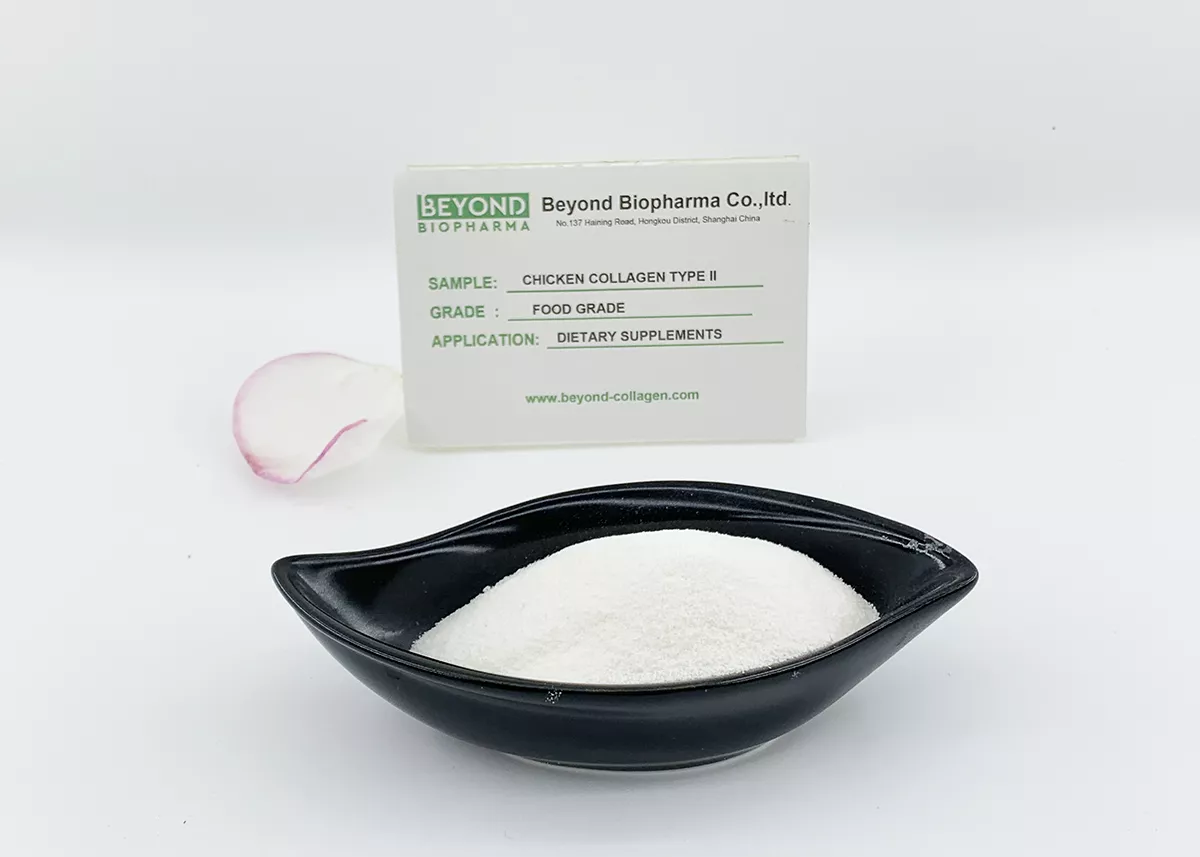
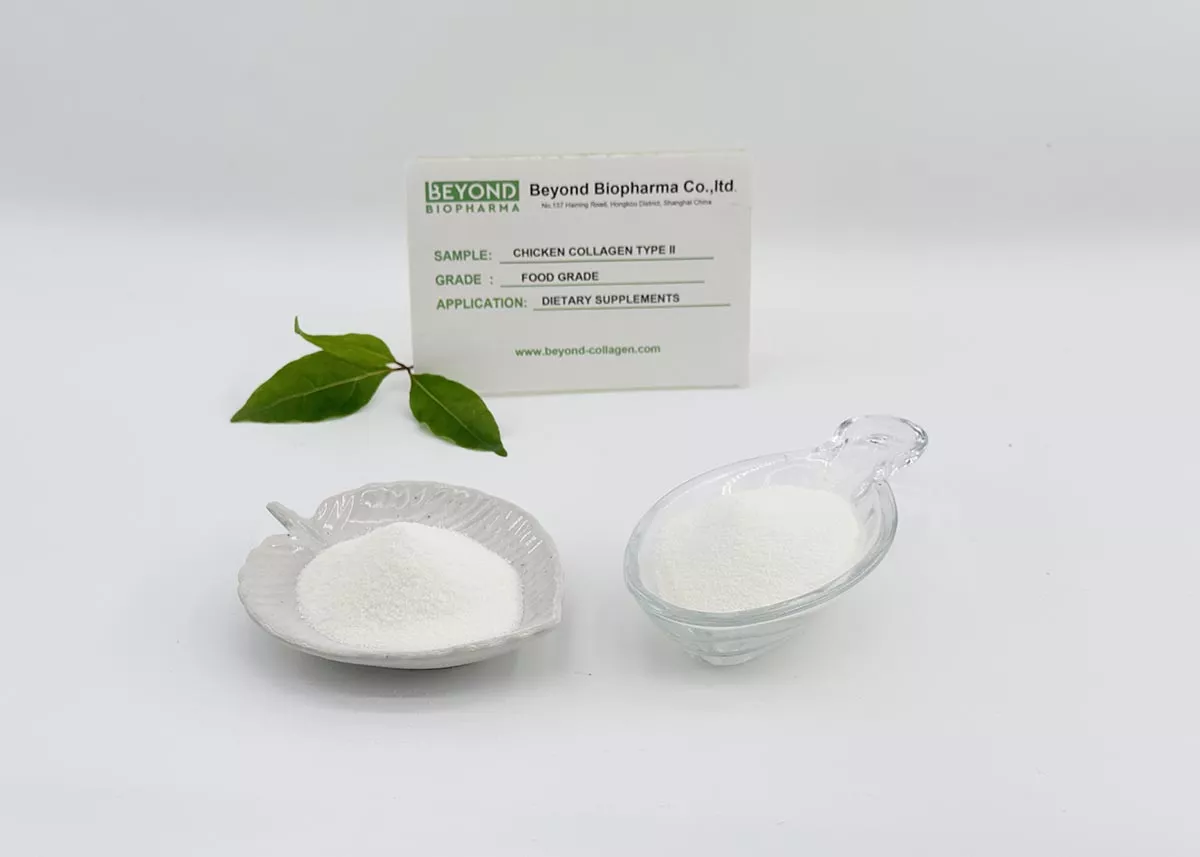
BEYOND BIOPHARMA is a specialized manufacturer of high-quality Undenatured Collagen Type II. Utilizing low-temperature, non-enzymatic extraction methods, our Undenatured Collagen Type II retains its native, triple-helix structure, essential for modulating the immune system's response to joint health and providing superior support for mobility, flexibility, and overall joint comfort.
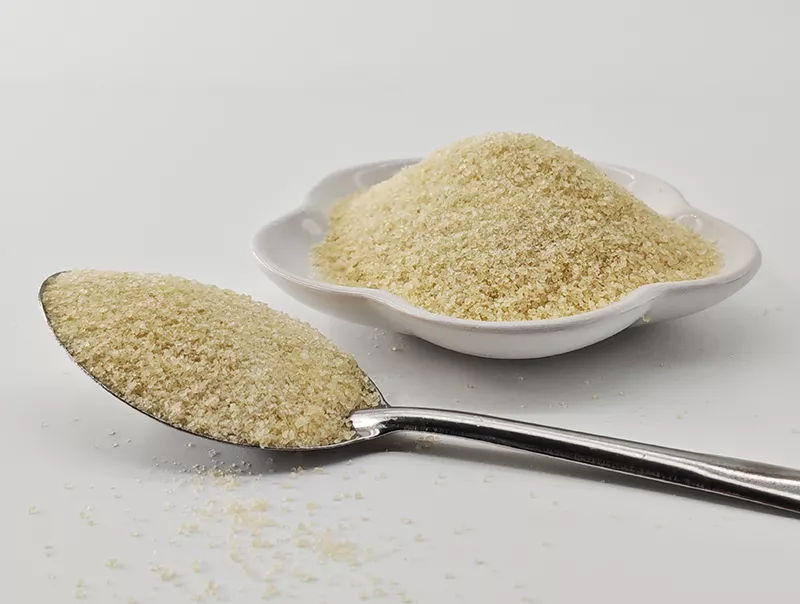
The High-Performance Barrier for Core Material Protection and Controlled Release.
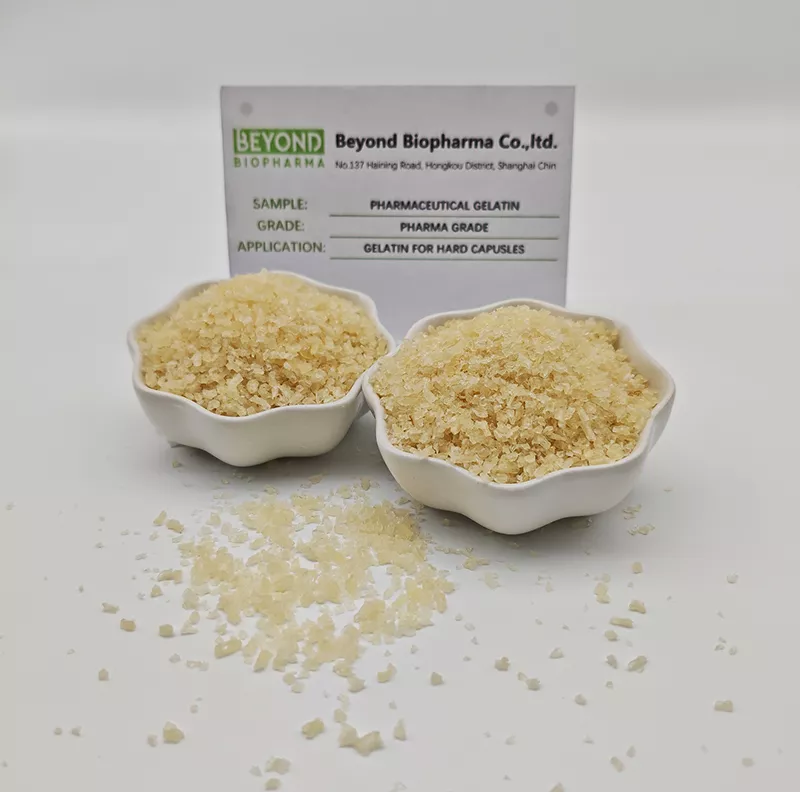
Precision, Purity, and Optimal Machinability
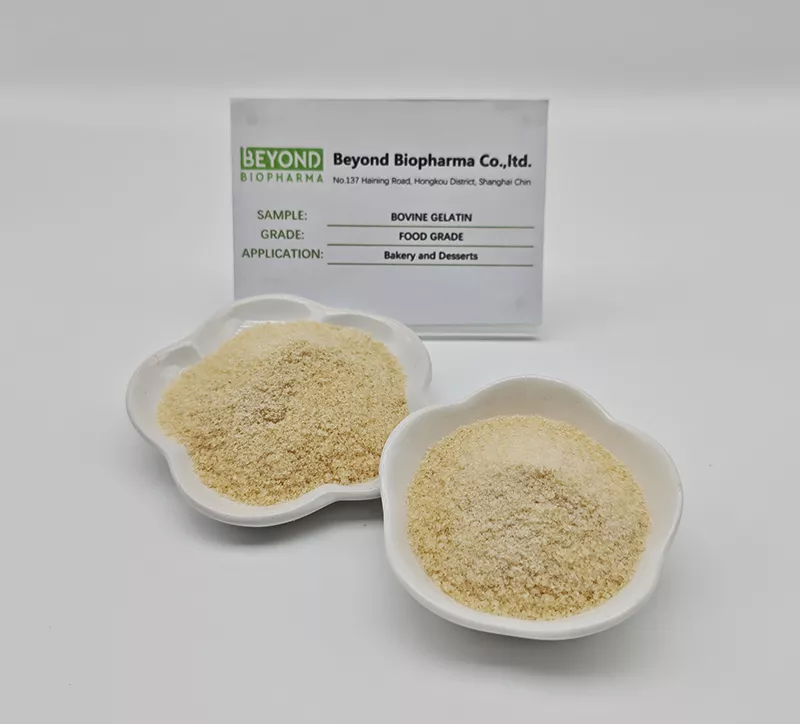
20 years experiences, 5000 ton/year capacity, Sustained supply with stable quality
Select the most popular foreign trade service products to meet your diverse needs
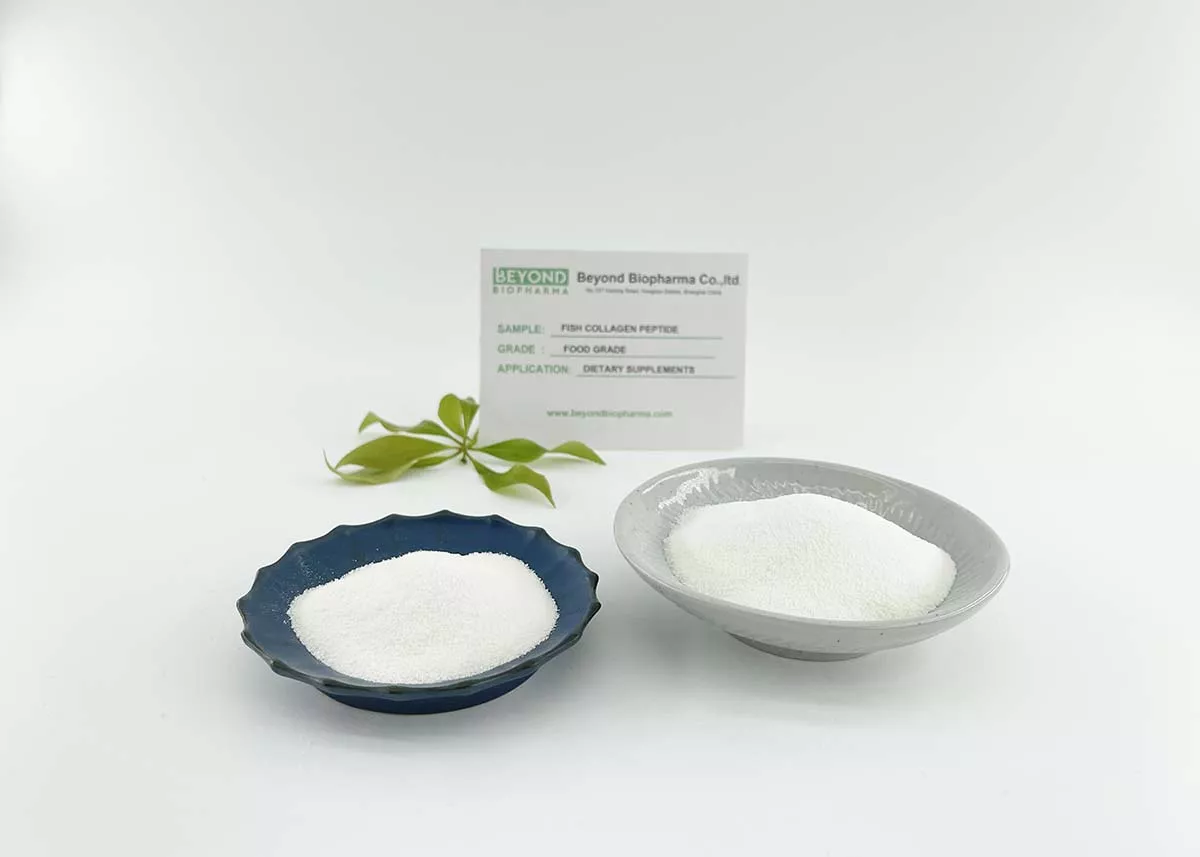
Premium marine-sourced collagen peptides with >90% protein content and low molecular weight (1000-3000 Da) for superior bioavailability. Sustainably sourced, neutral taste, and fully soluble—ideal for nutricosmetics and functional foods.
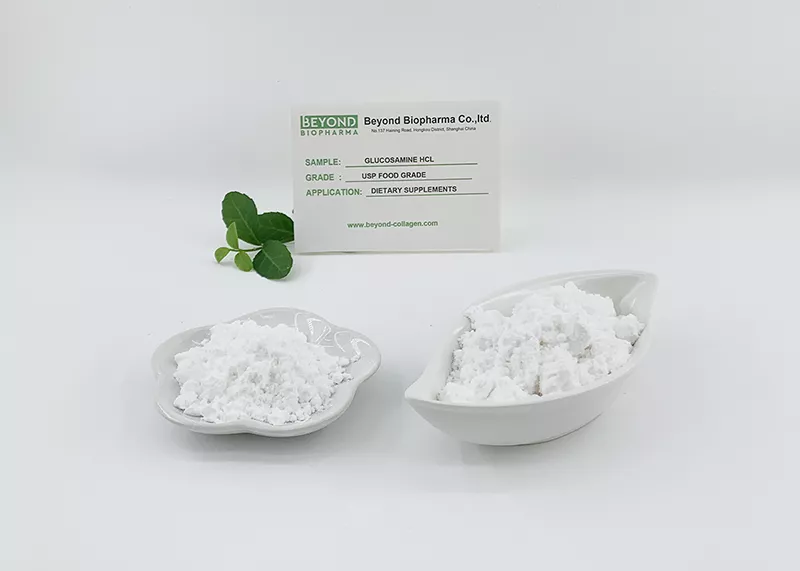
The Purest Plant-Based Joint Support Solution
The High-Performance Barrier for Core Material Protection and Controlled Release.
Tel:+86 21 65010906
Cell/Whatsapp/Wechat:
+86 13482884055
+86 18657345785
Email: sales@beyondbiopharma.com





User Comments
Service Experience Sharing from Real Customers
Mackenzie
Yoga InstructorAs someone who's tried at least five different brands, this gelatin is a game-changer. My joints feel so much better after months of use – I can hold poses longer without that annoying stiffness. Mixes easily in my morning smoothie, no weird aftertaste. Finally found my holy grail!
Jackson
Construction SupervisorMy knees used to ache like crazy after long days on site. Started using this about 3 months ago after my wife read about collagen. Not a miracle cure, but definitely noticed less cracking and more flexibility. Half a star off because the packaging could be sturdier – mine tore in my lunchbox once.
Jackie
Graphic DesignerOkay, I was skeptical – another wellness trend, right? But working 10-hour days at my desk murdered my posture and skin. Two months in, my nails are actually strong for once, and that dull 'computer skin' is brighter. I just stir it into cold brew coffee; dissolves perfectly. Worth every penny.
Jax
Retail ManagerBeen using this for my gut health more than anything – heard collagen helps with lining. Honestly, my digestion is smoother, and as a bonus, my hair seems thicker? I take it daily with warm water. Knocked off one star because I wish they offered a smaller trial size first; committing to the big tub was a leap of faith.