How to Choose the Right Collagen Manufacturer for High-Quality Supplements

Beyond Biopharma  |  Jun-19-2026
Selecting the right collagen manufacturer is critical for brands aiming to deliver high-quality supplements that meet consumer trust and regulatory standards. This guide outlines key evaluation criteria to ensure your partner aligns with your quality and business goals. First, assess the manufacturer's sourcing and raw material quality standards, including the origin of collagen (bovine, marine, or porcine), grass-fed or wild-caught certifications, and heavy metal testing protocols. Second, evaluate their production processes and adherence to GMP certifications, such as FDA-registered facilities or ISO 22000, to confirm consistent manufacturing controls. Third, verify third-party testing and transparency of purity and potency reports, ensuring independent lab results are readily available for each batch. Fourth, review the manufacturer's customization capabilities and scalability for your brand, including flavoring, encapsulation, and private labeling options that can grow with your demand. Finally, compare pricing models and minimum order quantities without compromising quality, balancing cost-efficiency with the integrity of raw materials and production standards. A thorough evaluation across these areas will help you forge a reliable partnership and bring a premium collagen product to market.

Assess the manufacturer's sourcing and raw material quality standards

The foundation of any premium collagen supplement lies in the origin and purity of its raw materials. A responsible manufacturer sources collagen from healthy, pasture-raised bovine hides or wild-caught fish, ensuring traceability from farm to finished product. Always verify that the supplier provides detailed documentation on the species, geographic origin, and animal welfare practices.

Raw material quality standards should include rigorous testing for heavy metals, pesticides, and microbial contaminants. Look for manufacturers who implement third-party lab analysis and hold certifications like GMP, HACCP, or ISO 22000. Low-grade collagen often comes from unknown sources with inconsistent peptide profiles, which can compromise both safety and efficacy.

To ensure you are selecting a trustworthy partner, request certificates of analysis and visit the production facility if possible. Transparent sourcing practices and a commitment to non-GMO, hormone-free, and antibiotic-free raw materials are strong indicators of a manufacturer dedicated to high-quality supplements. For example, explore fish collagen peptide sourcing details or review bovine collagen peptide standards for more insight.

Additionally, check for certifications such as Halal and Kosher verified fish gelatin or food-grade porcine gelatin to match your market requirements. Consistent quality starts with uncompromising raw material selection.
Evaluate their production processes and adherence to GMP certifications

Collagen production process

A manufacturer's production workflow directly impacts collagen purity, bioavailability, and safety. Look for facilities that use low-temperature enzymatic hydrolysis to preserve amino acid chains and avoid excessive heat that degrades protein quality. The best manufacturers maintain strict temperature and pH controls throughout extraction and drying stages.

GMP (Good Manufacturing Practice) certification ensures every batch follows documented protocols for sanitation, equipment calibration, and cross-contamination prevention. Verify that the manufacturer holds current GMP certification from recognized bodies such as NSF International or SQF. Regular third-party audits of their facilities provide additional assurance of consistent quality.

Advanced manufacturers invest in in-house testing laboratories for real-time monitoring of heavy metals, microbial levels, and molecular weight distribution. Request certificates of analysis for each batch to confirm the product meets label claims. Transparent manufacturers will share detailed production records and testing results upon request, demonstrating their commitment to quality control.

Verify third-party testing and transparency of purity and potency reports

Reliable collagen manufacturers provide independent lab results confirming active peptide content, heavy metal screening, and microbiological safety. Always request Certificates of Analysis (CoA) for each batch.

Test Parameter Specification Result
Collagen Peptide Content ≥ 95% 96.2%
Heavy Metals (Pb, As, Cd, Hg) All
Microbiological (TPC)
Solubility (99% pass) Clear solution Pass

Third-party labs like Eurofins or SGS verify these metrics. Insist on batch-specific CoAs before purchase. Manufacturers with open access to historical reports demonstrate higher accountability.

Learn more about quality collagen testing standards at this resource.

Review the manufacturer's customization capabilities and scalability for your brand

Assessing a manufacturer's ability to tailor formulations and scale production is critical for brand growth. Look for partners offering flexible encapsulation, flavor masking, and custom potency options to differentiate your product line.
Collagen manufacturing facility

Evaluate minimum order quantities and lead times to ensure alignment with your demand forecasts. A scalable manufacturer should accommodate both small-batch launches and high-volume retail orders without compromising quality.

Request case studies or references demonstrating successful customization for other brands. This reveals their problem-solving approach and technical expertise in developing unique collagen blends.

Verify that their production capacity can support your projected growth over 12-24 months. Transparent communication about expansion timelines and ingredient sourcing helps avoid supply chain disruptions.

Compare pricing models and minimum order quantities without compromising quality
When evaluating collagen manufacturers, understanding their pricing structure and order flexibility is essential to maintain both budget and product standards. Below are key considerations to balance cost-efficiency with high-quality output.
Pricing models
Manufacturers typically offer tiered pricing based on volume, contract duration, or customization level. Request a detailed breakdown of per-unit costs for different batch sizes, and verify whether the price includes testing, certification, or packaging. Avoid suppliers with unusually low rates, as they may compromise raw material sourcing or processing standards.
Minimum order quantities (MOQs)
MOQs vary widely among manufacturers, from small trial batches to large industrial volumes. For startups or product testing, look for suppliers offering lower MOQs without surcharges. Established manufacturers may require higher MOQs but often provide better per-unit pricing. Always confirm if the MOQ applies per product variant or across your entire order.
Quality assurance in cost analysis
A lower price per kilogram does not guarantee value if quality control is inconsistent. Ensure the manufacturer provides third-party lab reports, heavy metal testing, and purity certificates. Factor in the cost of potential re-testing or product failure when comparing quotes. Reliable manufacturers will transparently share their quality metrics alongside pricing.
Negotiation and long-term partnerships
Discuss volume discounts, payment terms, and the possibility of staggered deliveries to manage cash flow. Some manufacturers offer reduced MOQs for first-time clients or annual contracts. Building a long-term relationship can lead to better pricing and priority access to premium collagen batches. Always document agreed terms in a formal contract.
Sample testing before bulk order
Request samples from multiple manufacturers to compare texture, solubility, taste, and potency. Conduct in-house or independent lab tests to verify amino acid profile and molecular weight. This step helps ensure that the chosen pricing model and MOQ align with your quality benchmarks before committing to large-scale production.
Hidden costs to watch for
Beyond the quoted price, inquire about additional fees for custom formulations, packaging design, storage, or shipping. Some manufacturers charge extra for certificates of analysis or compliance documentation. A transparent pricing model should include all potential costs upfront, allowing you to accurately compare total expenditure across suppliers.
Real-world examples of quality-focused suppliers
Review case studies or testimonials from brands that have successfully balanced cost and quality. For instance, a manufacturer offering fish collagen peptide for skin health supplements may provide competitive MOQs while maintaining strict purity standards. Similarly, suppliers of hydrolyzed collagen type II powder for comprehensive joint support often have transparent pricing models. Exploring options like halal and kosher verified fish gelatin for clean label foods can also reveal manufacturers who prioritize both ethical sourcing and cost-effectiveness.

Summary

Selecting the right collagen manufacturer requires a thorough evaluation of sourcing and raw material quality standards to ensure the highest grade ingredients. Equally important is assessing their production processes and adherence to GMP certifications, which guarantees consistent and safe manufacturing practices.

Verifying third-party testing and transparency of purity and potency reports provides critical assurance of product integrity. Additionally, reviewing the manufacturer's customization capabilities and scalability for your brand allows for tailored solutions that grow with your business.

Finally, comparing pricing models and minimum order quantities without compromising quality ensures a cost-effective partnership. A manufacturer that excels in these areas will deliver reliable, high-quality collagen supplements that build trust and support long-term success.


How to Choose the Right Collagen Manufacturer for High-Quality Supplements
Q: What should I assess first when evaluating a collagen manufacturer?
A: Assess the manufacturer's sourcing and raw material quality standards. Look for grass-fed, pasture-raised bovine or wild-caught marine sources, and verify that raw materials are tested for heavy metals, antibiotics, and hormones.
Q: How do I verify production quality and compliance?
A: Evaluate their production processes and adherence to GMP certifications. Ensure the facility is GMP-certified, follows strict hygiene protocols, and uses validated hydrolysis and filtration methods to maintain peptide integrity.
Q: How can I confirm the supplement's purity and potency?
A: Verify third-party testing and transparency of purity and potency reports. Request Certificates of Analysis (COAs) from independent labs like USP or Eurofins, and ensure they test for solvents, pesticides, and microbial contaminants.
Q: What if I need custom formulations for my brand?
A: Review the manufacturer's customization capabilities and scalability for your brand. Confirm they offer private labeling, custom flavoring, and dosage forms (powder, capsules, liquid), and can scale from small batches to full production without quality loss.
Q: How do I balance cost and quality when ordering?
A: Compare pricing models and minimum order quantities without compromising quality. Request quotes from multiple manufacturers, evaluate per-unit cost at different volumes, and ensure MOQs align with your budget while maintaining ingredient and production standards.
Post time: Jun-19-2026 athuor:James

James

Marketing Specialist, Shanghai Beyond Biopharma
As a dedicated professional in the collagen industry, I explore the limitless potential of bioactive peptides and gelatin applications. Backed by Beyond Biopharma's R&D expertise, I share insights on hydrolyzed collagen, manufacturing processes, and industry trends to help you find high-quality ingredient solutions in the health and nutrition market.

Related Products

We provide you with comprehensive foreign trade solutions to help enterprises achieve global development

Fish Collagen Peptide For Skin Health Supplements

Premium marine-sourced collagen peptides with >90% protein content and low molecular weight (1000-3000 Da) for superior bioavailability. Sustainably sourced, neutral taste, and fully soluble—ideal for nutricosmetics and functional foods.
Collagen Peptide

Undenatured Collagen Type II for Joint Comfort and Mobility

BEYOND BIOPHARMA is a specialized manufacturer of high-quality Undenatured Collagen Type II. Utilizing low-temperature, non-enzymatic extraction methods, our Undenatured Collagen Type II retains its native, triple-helix structure, essential for modulating the immune system's response to joint health and providing superior support for mobility, flexibility, and overall joint comfort.
Collagen Peptide

Bovine Collagen Peptide for Energy Bar Products

Manufacturer of bovine collagen peptide, shipping in containers all around the world
Collagen Peptide

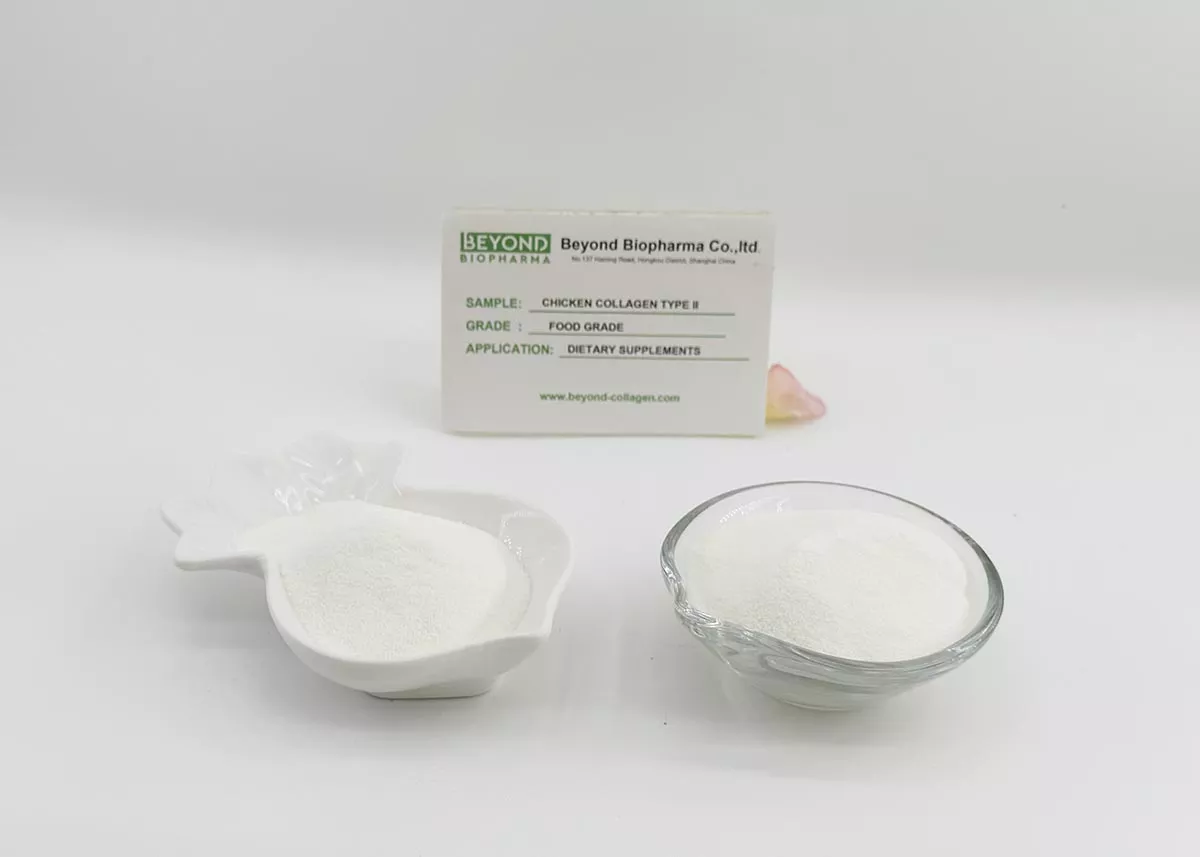
Hydrolyzed Collagen Type II Powder for Comprehensive Joint

BEYOND BIOPHARMA is a specialized manufacturer of highly purified Hydrolyzed Collagen Type II. Through advanced enzymatic hydrolysis, we create low-molecular-weight collagen peptides that are highly bioavailable, offering foundational nutritional support for cartilage repair, joint function, and skin health. Our product is designed for rapid absorption and maximum efficacy in oral supplements.

Collagen Peptide

CONTACT

Your Name:*

Country:*

Company:*

Email:*

Phone (with Country Code)*

Message:*

contact

Tel:+86 21 65010906

Cell/Whatsapp/Wechat:
+86 13482884055
+86 18657345785

Email: sales@beyondbiopharma.com

Copyright© 2026 Beyond Biopharma Privacy Policy



