English EN


Fish Gelatin vs Bovine and Pork Gelatin What Sets Them Apart
Fish gelatin differs from bovine and pork gelatin in melting point, texture, and dietary suitability, making it ideal for soft desserts and special diets.
More
Beyond Biopharma
Jun-30-2026
Bovine gelatin is derived from cattle hides and bones, offering high bloom strength and thermal stability. In contrast, porcine gelatin comes from pig skin and provides a softer gel texture, while marine gelatin is sourced from fish skin and scales, featuring a lower melting point ideal for specific applications.
Bovine gelatin is extracted through acid or alkaline hydrolysis of cattle by-products, yielding a product with consistent gelling properties. Porcine gelatin undergoes similar processing but results in a lower viscosity. Marine gelatin requires milder extraction methods to preserve its delicate structure, making it suitable for kosher and halal markets.
Bovine gelatin typically exhibits a bloom value between 200 and 300, offering firm gels ideal for hard capsules and confectionery. Porcine gelatin ranges from 150 to 250 bloom, providing a more elastic texture. Marine gelatin has a bloom of 100 to 200, creating softer gels that dissolve at lower temperatures.
Bovine gelatin maintains stability at higher temperatures, making it suitable for pharmaceutical coatings and encapsulation. Porcine gelatin has moderate thermal resistance, while marine gelatin melts at around 25°C to 30°C, limiting its use in heat-sensitive formulations.
Bovine gelatin is avoided in Hindu and some Buddhist diets, while porcine gelatin is prohibited in halal and kosher practices unless certified. Marine gelatin offers a universal alternative, accepted across most religious and dietary restrictions.
Bovine gelatin is widely used in hard capsules, tablet coatings, and meat products. Porcine gelatin is common in marshmallows, gummies, and desserts. Marine gelatin is preferred in fish-based supplements, low-temperature gels, and cosmetic formulations.
For specific product applications, explore premium bovine bone gelatin for capsules at Pharmaceutical Grade Bovine Bone Gelatin or high bloom gelatin at High Bloom Gelatin for Hard Capsules. For encapsulation needs, see Gelatin for Micro-Encapsulation.
Bovine gelatin excels in strength and stability, porcine gelatin offers versatility in texture, and marine gelatin provides unique low-temperature functionality. Choosing the right source depends on desired gel characteristics, processing conditions, and market compliance.
For related products, consider bovine collagen peptide for energy bars at Bovine Collagen Peptide for Energy Bar Products or fish collagen peptide for skin health at Fish Collagen Peptide for Skin Health Supplements.
For pharmaceutical applications, premium gelatin for tablet coating is available at Premium Pharmaceutical Gelatin for Tablet Coating and standardized gelatin sheets at Standardized Gelatin Sheets for Consistent Gels.
Bovine gelatin is derived from the collagen of cattle hides and bones, possessing a distinct triple-helix molecular structure that unravels during hydrolysis into smaller peptide chains. This unique arrangement of amino acids—rich in glycine, proline, and hydroxyproline—gives bovine gelatin its exceptional gelling, thickening, and stabilizing properties. The molecular weight distribution and amino acid profile directly influence its bloom strength, viscosity, and thermal reversibility, making it highly functional in food, pharmaceutical, and cosmetic applications. Understanding this structure is key to optimizing its performance in products like hard capsules, gummy confections, and emulsified systems.
The functionality of bovine gelatin is deeply tied to its molecular architecture. The presence of repeating Gly-X-Y triplets allows for the formation of stable collagen-like helices, which upon cooling create a strong three-dimensional network that traps water and forms a gel. This network strength is measured by bloom value, with higher bloom indicating greater rigidity. Additionally, the amphoteric nature of gelatin—due to both acidic and basic amino acid side chains—enables it to act as an effective emulsifier and foaming agent. These molecular characteristics make bovine gelatin a versatile ingredient in industries requiring precise texture control, binding, and film-forming capabilities.
For formulators, the molecular structure dictates processing conditions. The thermal reversibility of bovine gelatin gels (melting below body temperature and setting upon cooling) is ideal for pharmaceutical capsules and confectionery. Its film-forming ability, driven by hydrogen bonding between peptide chains, creates a strong yet flexible barrier for coating applications. The controlled hydrolysis of collagen also yields gelatin with tailored molecular weights, enabling specific functionalities like rapid dissolution or high gel strength. By leveraging these molecular insights, manufacturers can select the optimal bovine gelatin grade for their product requirements.
To explore premium bovine gelatin products and their functional applications, visit our product page for detailed specifications and sourcing information.
Learn more about our bovine gelatin solutionsBovine gelatin serves as a critical functional ingredient across multiple industries due to its unique gelling, thickening, and stabilizing properties. Below is a concise overview of its primary sectors and specific applications.
| Industry | Primary Function | Key Application Examples |
|---|---|---|
| Food & Confectionery | Gelling agent, stabilizer, texturizer | Gummy candies, marshmallows, dairy desserts, meat aspics |
| Pharmaceuticals | Capsule shell material, coating agent | Hard & soft gelatin capsules, tablet coating, micro-encapsulation |
| Nutraceuticals | Protein source, binding agent | Collagen supplements, energy bars, joint health formulations |
In the food sector, bovine gelatin provides the desired chewy texture in confectionery and ensures stable emulsions in dairy products. Within pharmaceuticals, its biocompatibility and film-forming ability make it the material of choice for hard capsules and controlled-release coatings. For nutraceutical applications, bovine collagen peptides derived from gelatin support joint mobility and skin health.
For premium-grade bovine gelatin suitable for tablet coating and hard capsule production, explore our pharmaceutical gelatin range. Additionally, our bovine collagen peptide is ideal for functional food bars and sports nutrition.
Bovine gelatin is derived from cattle hides and bones, making its dietary compliance highly dependent on the sourcing and processing methods. For Kosher certification, the gelatin must come from cattle slaughtered according to Jewish dietary laws, and all equipment must be kosherized. Many Orthodox authorities accept bovine gelatin only if it is from kosher-slaughtered animals, while some liberal interpretations may allow gelatin from non-kosher sources due to chemical transformation.
Halal status requires that cattle are slaughtered in the name of Allah, with complete blood drainage. Bovine gelatin produced from halal-certified cattle and processed without cross-contamination with non-halal substances is permissible for Muslim consumers. Many gelatin manufacturers now offer dedicated halal production lines to meet global demand.
From an allergen perspective, bovine gelatin is not one of the major food allergens recognized by FDA (milk, eggs, fish, shellfish, tree nuts, peanuts, wheat, soybeans). However, individuals with beef protein allergy or alpha-gal syndrome may experience reactions. Gelatin is highly processed and typically contains minimal residual proteins, but sensitive individuals should consult their healthcare provider.
Bovine gelatin is generally considered low-risk for celiac disease as it is gluten-free by nature. However, consumers should verify that no gluten-containing additives are introduced during manufacturing. For those following a paleo or whole30 diet, bovine gelatin is often accepted as it is a natural animal product.
When selecting bovine gelatin for dietary purposes, always look for certification logos from recognized Kosher (OU, Kof-K, OK) or Halal (IFANCA, HFA) authorities. These certifications ensure that the entire supply chain meets religious requirements. Many pharmaceutical and food-grade bovine gelatins now carry multiple certifications to serve diverse global populations.
Selecting the appropriate gelatin for your application requires a clear understanding of two critical parameters: bloom strength and purity level. These factors directly influence the texture, stability, and performance of the final product, whether you are formulating hard capsules, gummy confections, or pharmaceutical coatings.
Bloom strength, expressed in grams (g), quantifies the firmness of a gelatin gel. A higher bloom value indicates a stronger, more rigid gel, while a lower bloom yields a softer, more flexible texture. For hard capsule production, high bloom gelatin (e.g., 250–300 g) provides the necessary shell hardness and disintegration control. In contrast, low bloom gelatin (e.g., 100–150 g) is preferred for soft gels or dessert applications where a tender mouthfeel is desired.
Purity refers to the absence of impurities such as minerals, fats, and microbial contaminants. Pharmaceutical-grade gelatin undergoes rigorous purification to meet stringent pharmacopeial standards (e.g., USP, EP). High purity ensures consistent gelling properties, clarity, and safety for oral ingestion. For industrial uses like micro-encapsulation, purity affects the encapsulation efficiency and release profile of active ingredients.
Different applications demand specific combinations of bloom and purity. For example, bovine bone gelatin with high bloom (280 g) and pharmaceutical purity is ideal for hard capsules requiring rapid dissolution. Conversely, lower bloom gelatin (180 g) with food-grade purity suits protein bars or chewy candies. Always verify the source and processing method to ensure compatibility with your formulation.
When evaluating gelatin, request a certificate of analysis (COA) confirming bloom strength, viscosity, pH, and microbial limits. Conduct small-scale trials to assess gelation time and syneresis (water separation). For specialized uses like tablet coating, a gelatin with consistent particle size and low ash content is essential for uniform film formation.
For further guidance on specific products, explore our range of high bloom gelatin for hard capsules and premium pharmaceutical gelatin for tablet coating. These options represent the intersection of optimal bloom strength and exceptional purity for demanding applications.
Understanding the source of gelatin is critical for both formulators and consumers. Bovine gelatin, derived from cow hides and bones, offers distinct molecular characteristics that set it apart from porcine and marine alternatives.
Bovine gelatin features a unique amino acid profile with higher glycine and proline content, resulting in stronger gel strength and thermal stability compared to porcine or marine gelatin. This structural difference directly influences its performance in various applications.
In the food industry, bovine gelatin provides superior gelling, thickening, and stabilizing properties for confectionery, dairy products, and meat processing. In pharmaceuticals, it is essential for hard and soft capsule production, tablet binding, and wound dressing due to its excellent film-forming ability and biocompatibility.
Bovine gelatin is not inherently kosher or halal, but certified options are available. It is generally low in allergens, though individuals with beef protein sensitivity should exercise caution. Unlike porcine gelatin, it avoids religious restrictions related to pork, but marine gelatin remains the preferred choice for pescatarian or certain kosher diets.
When choosing bovine gelatin, bloom strength (typically 100–300) determines gel firmness, while purity levels affect clarity and odor. Higher bloom values are ideal for chewy confections and firm capsules, while lower bloom suits soft gels and dairy applications. Always verify sourcing, certification, and processing methods to match your specific formulation needs.
This summary consolidates the essential differences, functional impacts, and practical considerations for bovine gelatin across food, pharmaceutical, and dietary contexts.


We provide you with comprehensive foreign trade solutions to help enterprises achieve global development
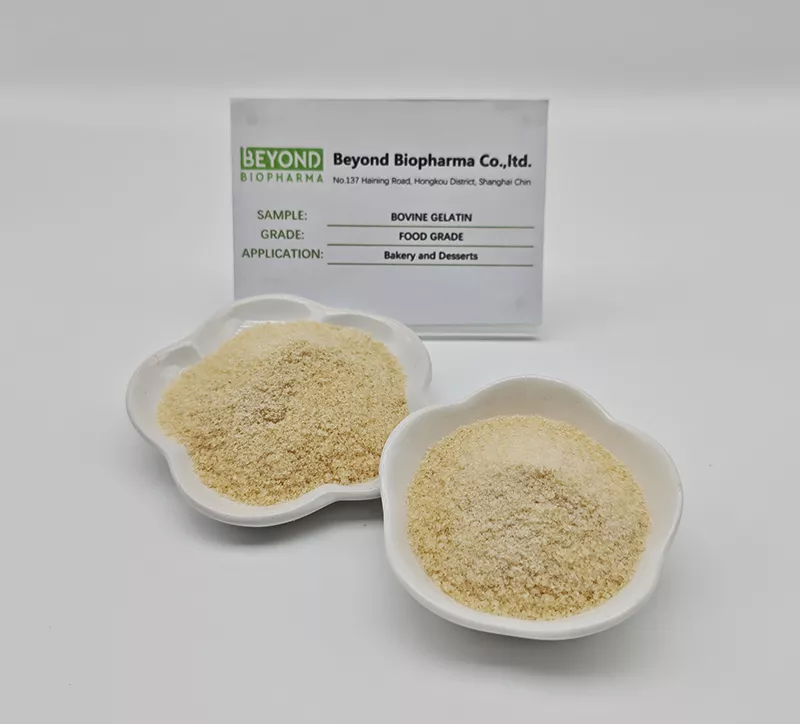
20 years experiences, 5000 ton/year capacity, Sustained supply with stable quality
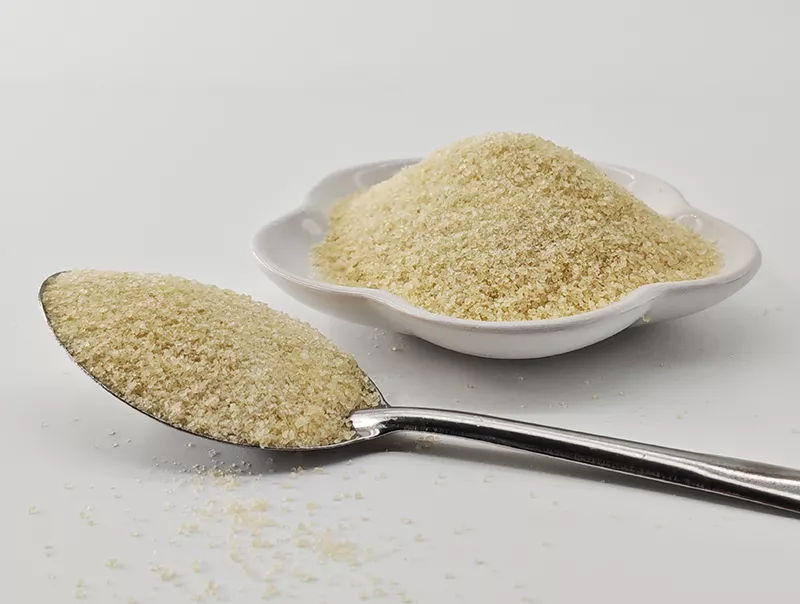
The High-Performance Barrier for Core Material Protection and Controlled Release.
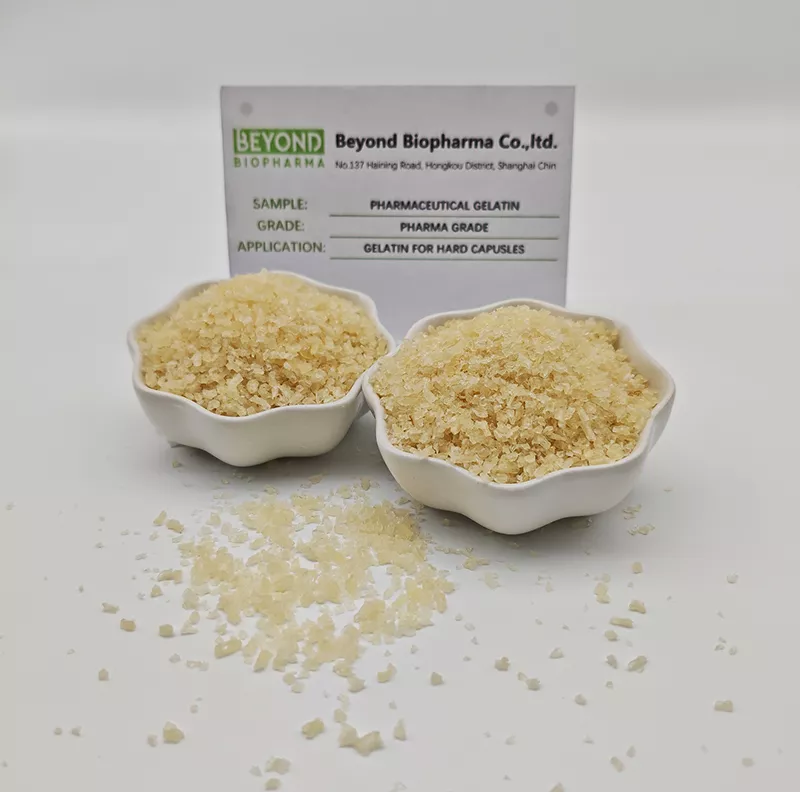
Precision, Purity, and Optimal Machinability
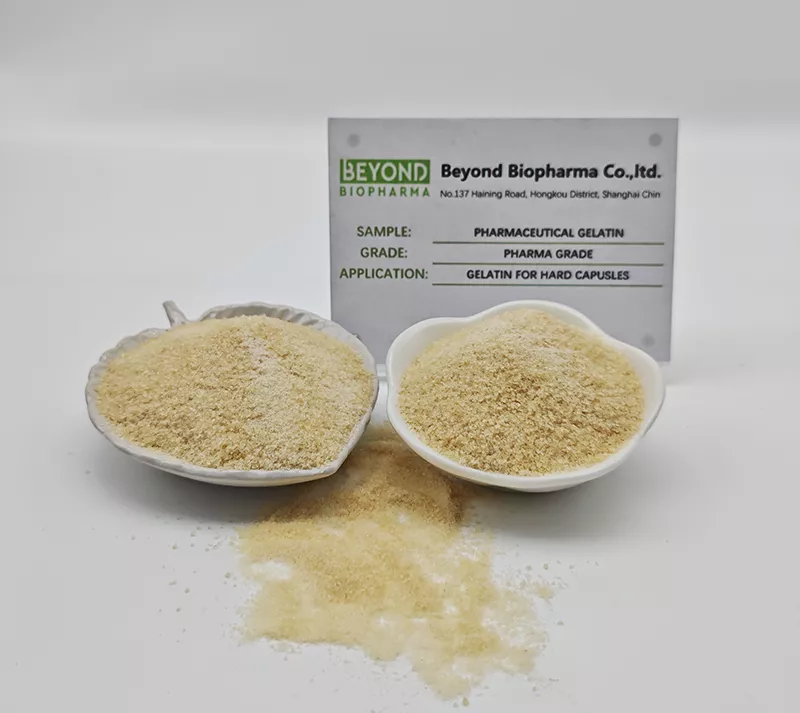
The high-strength and rapid-setting characteristics of Bovine Bone Gelatin ensure it forms a stable, uniform, and durable shell that preserves the integrity of the active pharmaceutical ingredient (API).
Tel:+86 21 65010906
Cell/Whatsapp/Wechat:
+86 13482884055
+86 18657345785
Email: sales@beyondbiopharma.com