English EN


Fish Gelatin vs Bovine and Pork Gelatin What Sets Them Apart
Fish gelatin differs from bovine and pork gelatin in melting point, texture, and dietary suitability, making it ideal for soft desserts and special diets.
More
Bovine gelatin is a protein derived from the collagen found in cow hides, bones, and connective tissues. It is a natural ingredient widely used in food, pharmaceuticals, cosmetics, and industrial applications due to its gelling, thickening, and stabilizing properties. The production process involves several key steps to extract pure gelatin while preserving its functional qualities.
The raw materials for bovine gelatin come from cattle by-products that are inspected and approved for human use. These materials are cleaned, cut into small pieces, and soaked in cold water to remove impurities. Acid or alkali treatment is then applied to break down the collagen structure, making it easier to extract during the next stages.
The prepared material is heated with water at controlled temperatures to release gelatin into a liquid solution. This process is repeated multiple times to maximize yield. The resulting liquid is then filtered to remove fats, fibers, and other solids, producing a clear broth rich in gelatin proteins.
After filtration, the gelatin solution is concentrated through evaporation to increase the protein content. It is then cooled to form a gel, which is cut into noodles or sheets and dried using hot air. The dried gelatin is milled into a fine powder or left as sheets, depending on the intended application.
Quality control tests are performed throughout the process to ensure consistent bloom strength, viscosity, and purity. The final product is packaged in moisture-proof containers to maintain its stability and shelf life.
Bovine gelatin is valued for its high protein content and neutral flavor. It is commonly used in gummy candies, marshmallows, yogurt, desserts, and as a clarifying agent in juices. In pharmaceuticals, it serves as a capsule shell material and binder for tablets. The cosmetic industry uses it in face masks and creams for its film-forming and moisturizing properties.
For more detailed information about specific bovine gelatin products, visit this product page or explore related gelatin applications.
Derived from cattle collagen through a multi-step extraction process.
Available in powder, sheet, and granular forms with different bloom strengths.
Widely used in food, pharmaceuticals, and cosmetics for gelling and binding.
Halal and kosher certified options are available from many manufacturers.
For sourcing high-quality bovine gelatin, check this micro-encapsulation grade gelatin or standardized gelatin sheets.
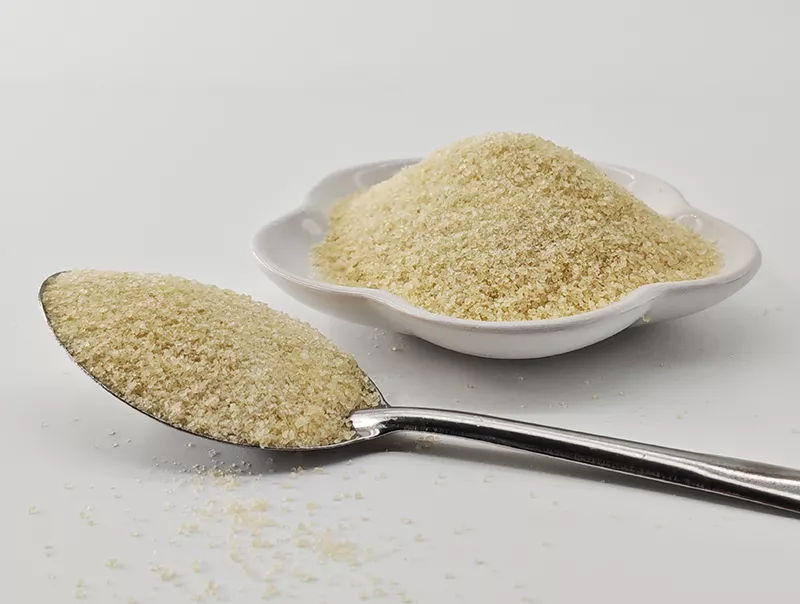
Bovine gelatin is a natural protein derived from the collagen of cattle hides and bones. It is widely used in food, pharmaceutical, and cosmetic industries due to its unique nutritional profile and functional versatility.
Nutritionally, bovine gelatin is rich in amino acids, particularly glycine, proline, and hydroxyproline. These amino acids support joint health, skin elasticity, and digestive function. It is a low-calorie source of protein and contains no fat or carbohydrates, making it suitable for various dietary needs.
Functionally, bovine gelatin exhibits excellent gelling, thickening, and stabilizing properties. It forms reversible gels that melt at body temperature, providing a smooth mouthfeel in confectionery and dairy products. Its film-forming ability makes it valuable for encapsulation in pharmaceuticals and as a binder in food products.
Additionally, bovine gelatin is highly soluble in warm water and has a neutral taste and odor, which allows it to blend seamlessly into various formulations without altering flavor. It also possesses emulsifying and foaming properties, enhancing texture and stability in processed foods.
For more detailed information, please visit: https://www.beyondbiopharma.com/product/bovine-collagen-peptide-for-energy-bar-products.html
Bovine gelatin is derived from cow skin and bones, offering versatile functionality across multiple industries. Its unique gelling, thickening, and stabilizing properties make it indispensable in both food production and pharmaceutical formulations.
In the food sector, bovine gelatin is widely used to create chewy confectioneries, improve texture in dairy products, and clarify beverages. It provides a clean melt-in-mouth feel and enhances the overall mouthfeel of low-fat items. Common examples include gummy candies, marshmallows, yogurt, and dessert gels.
Within pharmaceuticals, bovine gelatin serves as a primary material for hard and soft capsules, tablet binders, and coating agents. Its biocompatibility ensures safe delivery of active ingredients. Additionally, it is used in wound dressings and as a carrier for micro-encapsulation, protecting sensitive nutrients until release.
| Application Area | Specific Use | Typical Product Form |
|---|---|---|
| Confectionery | Gummy candies, marshmallows | Gelatin sheets, powder |
| Dairy & Desserts | Yogurt, puddings, mousses | Instant gelatin powder |
| Beverages | Clarifying agents, stabilizers | Hydrolyzed gelatin |
| Pharmaceutical Capsules | Hard/soft capsules, tablet coating | Pharma-grade gelatin |
| Micro-encapsulation | Nutrient protection, controlled release | Encapsulation-grade gelatin |
The table above summarizes the primary uses of bovine gelatin across food and pharmaceutical sectors. Each application leverages the protein's ability to form reversible gels, bind ingredients, and create stable matrices. For micro-encapsulation, bovine gelatin acts as a reliable shell material, safeguarding active components from environmental degradation while enabling targeted release. In confectionery, it delivers the desired chewy texture, while in dairy, it prevents syneresis and improves creaminess.
To explore specific bovine gelatin products and their technical specifications, refer to our product pages: Bovine Collagen Peptide, Gelatin for Micro-encapsulation, and Standardized Gelatin Sheets.
Bovine gelatin, derived from cow hides and bones, differs significantly from other gelatin types such as porcine and fish gelatin. The primary distinction lies in its source, which influences its gel strength, melting point, and amino acid profile.
Compared to porcine gelatin, bovine gelatin typically exhibits a higher Bloom strength, making it ideal for applications requiring firmer gels, such as pharmaceutical capsules and confectionery. Fish gelatin, on the other hand, has a lower melting point and is often preferred for products needing softer textures or lower temperature processing.
Another key difference is dietary compliance. Bovine gelatin is generally not suitable for vegetarians or vegans, while fish gelatin may be acceptable in pescatarian diets. Porcine gelatin is avoided in halal and kosher diets unless certified, whereas bovine gelatin can be certified halal if sourced from properly slaughtered cattle.
In terms of allergenicity, fish gelatin poses a risk for individuals with fish allergies, while bovine and porcine gelatins are less likely to cause allergic reactions. The choice between these gelatins ultimately depends on the desired functional properties, dietary restrictions, and regulatory requirements of the final product.
Bovine gelatin is generally recognized as safe (GRAS) by regulatory agencies including the FDA and EFSA. It is produced through controlled hydrolysis of collagen from bovine hides and bones, with rigorous quality controls to ensure purity and absence of contaminants. Bovine collagen peptide products undergo strict testing for heavy metals and microbial safety. The manufacturing process involves acid or alkaline treatment followed by thermal extraction, which effectively inactivates potential pathogens. For pharmaceutical and food applications, bovine gelatin must meet specific standards for gel strength, viscosity, and microbiological limits, ensuring consistent safety across batches.
Allergic reactions to bovine gelatin are rare but documented. The primary allergen is the protein component, which can trigger responses in sensitive individuals. Cross-reactivity with other mammalian gelatins (porcine) is possible. People with known allergies to beef or bovine proteins should exercise caution. Porcine gelatin may be an alternative for some, but individual tolerance varies. Hypersensitivity symptoms can include urticaria, angioedema, or gastrointestinal discomfort. For those with severe allergies, gelatin derived from fish sources is available as a non-mammalian option, such as fish collagen peptide.
Bovine gelatin is not suitable for vegetarians or vegans as it is an animal-derived product. It also does not comply with kosher or halal dietary laws unless specifically certified from appropriately slaughtered animals. For halal-compliant options, look for certified bovine gelatin. Vegan glucosamine is an alternative for those avoiding animal products. Additionally, bovine gelatin contains no gluten, making it safe for individuals with celiac disease. However, those following a paleo or keto diet may include it as a source of collagen protein. For gelatin used in micro-encapsulation, such as gelatin for micro-encapsulation, dietary status depends on the final application.
Bovine gelatin is widely used in food products (gummies, marshmallows, desserts), pharmaceuticals (capsules, tablets), and cosmetics. It is available in powder, sheet, and granular forms. Standardized gelatin sheets provide consistent gel strength for professional use. In joint health supplements, undenatured collagen type II is a specific form, as seen with undenatured collagen type II. For comprehensive joint support, hydrolyzed collagen type II is also available, such as hydrolyzed collagen type II powder.
Bovine gelatin must comply with food-grade or pharmaceutical-grade standards depending on use. Suppliers like Beyond Biopharma provide detailed specifications for each product, including gel strength, bloom value, and particle size. For specialized ingredients, food grade hyaluronic acid and bovine chondroitin sulfate sodium are examples of complementary joint health ingredients. Always verify sourcing and certifications to ensure dietary compliance and safety.
Bovine gelatin is a protein derived from cow skin, bones, and connective tissues through controlled hydrolysis. The production involves cleaning, acid or alkaline treatment, hot water extraction, filtration, concentration, drying, and grinding into powder or sheets.
Bovine gelatin is rich in amino acids, particularly glycine and proline. It provides gelling, thickening, stabilizing, and emulsifying properties. It forms thermoreversible gels, has film-forming ability, and acts as a foaming agent in various applications.
In food, it is used in desserts, confectionery, dairy products, meat products, and beverages as a gelling agent and stabilizer. In pharmaceuticals, it serves as a capsule shell material, coating agent, binder in tablets, and component in wound dressings and plasma expanders.
Compared to porcine gelatin, bovine gelatin has higher melting and gelling temperatures, different amino acid profile, and is preferred in certain halal and kosher applications. It differs from fish gelatin in gel strength, clarity, and thermal stability. Bovine gelatin also has distinct rheological properties compared to poultry gelatin.
Bovine gelatin is generally recognized as safe (GRAS) by regulatory authorities. Allergic reactions are rare but possible in individuals with beef protein sensitivity. It is not suitable for vegans or vegetarians. Halal and kosher certified bovine gelatin is available. Bovine spongiform encephalopathy (BSE) risks are mitigated through strict sourcing and processing regulations.


We provide you with comprehensive foreign trade solutions to help enterprises achieve global development
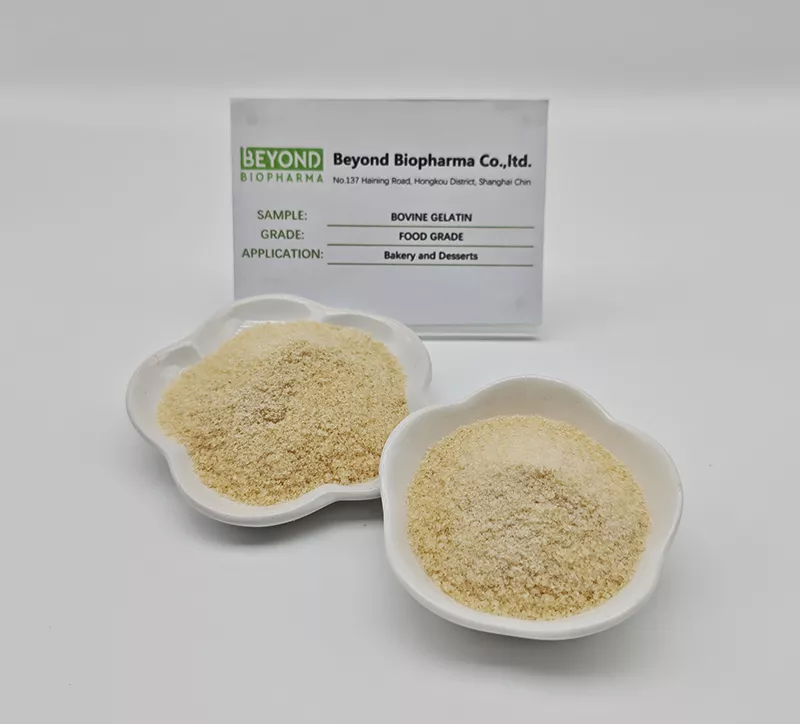
20 years experiences, 5000 ton/year capacity, Sustained supply with stable quality
The High-Performance Barrier for Core Material Protection and Controlled Release.
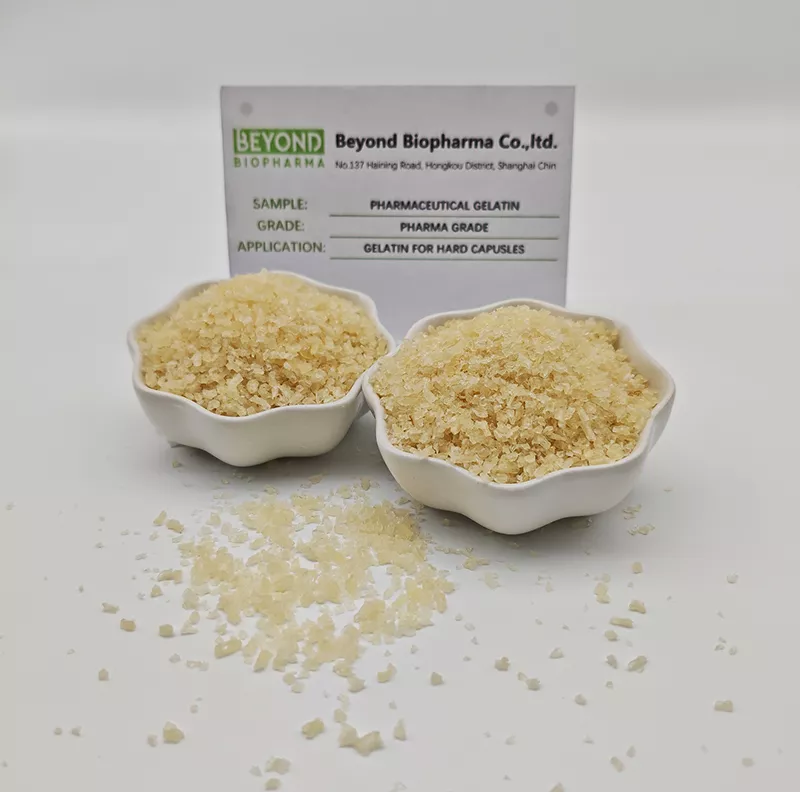
Precision, Purity, and Optimal Machinability
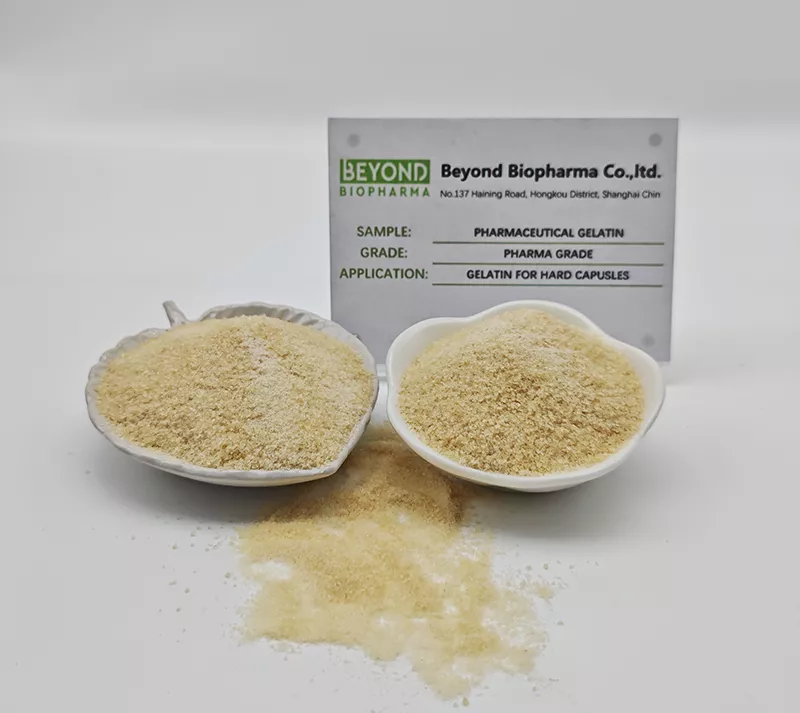
The high-strength and rapid-setting characteristics of Bovine Bone Gelatin ensure it forms a stable, uniform, and durable shell that preserves the integrity of the active pharmaceutical ingredient (API).
Tel:+86 21 65010906
Cell/Whatsapp/Wechat:
+86 13482884055
+86 18657345785
Email: sales@beyondbiopharma.com