English EN


Fish Gelatin Powder or Beef and Pork Gelatin Which Is Right for You
Compare fish gelatin powder with beef and pork gelatin to find the best option for dietary needs, texture, and recipes, including kosher and halal diets.
More
Understanding the key differences between agar powder and gelatin is essential for creating successful vegan desserts. Agar powder, derived from red algae, functions as a plant-based gelling agent that sets firmly at room temperature, unlike gelatin which requires refrigeration and is animal-based. When comparing texture and setting properties, agar produces a more brittle, firm gel while gelatin yields a softer, more elastic mouthfeel. For best dessert applications, agar excels in panna cotta, jellies, and custards where a clean slice is desired, but common pitfalls include failing to fully dissolve the powder or using acidic ingredients that can weaken the gel. Flavor neutrality is a major advantage of agar, as it does not impart any taste, making it ideal for delicate fruit desserts and layered confections. Culinary tips for using agar in vegan recipes include boiling it for at least one to two minutes to activate its gelling power, using a ratio of about one teaspoon of agar powder per cup of liquid, and allowing the mixture to cool completely before refrigeration to achieve the perfect set. With proper technique, agar powder serves as a reliable and versatile vegan substitute that can replicate the structural qualities of gelatin without compromising dietary preferences.
Both agar powder and gelatin serve as gelling agents in desserts, but their origins and properties differ significantly. Agar is derived from seaweed, making it a vegan-friendly option, while gelatin is obtained from animal collagen, typically from bovine or porcine sources.
Agar powder is plant-based and suitable for vegan, vegetarian, and halal diets. Gelatin, being animal-derived, is not vegan. For those seeking plant-based alternatives, agar is the clear choice. However, for traditional recipes requiring specific textures, bovine or porcine gelatin may be preferred. Explore edible bovine gelatin for conventional applications.
Agar sets at room temperature and requires heating to 85-90°C to activate, then gels upon cooling to around 32-40°C. Gelatin must be bloomed in cold water and dissolves at 50-60°C, setting at cooler temperatures around 15-20°C. This makes agar more stable in warm environments. For precise gelling, standardized sheets are available from standardized gelatin sheets.
Agar produces a firmer, more brittle gel that can be crumbly, while gelatin yields a softer, elastic, and melt-in-the-mouth texture. For desserts like panna cotta or gummies, gelatin provides a smoother result. High-quality options include food-grade porcine gelatin for gummies.
Agar is more powerful by weight; typically 1 teaspoon of agar powder equals about 1 tablespoon of gelatin. Gelatin strength is measured in bloom values, with higher bloom indicating firmer gels. For industrial applications, high bloom gelatin for hard capsules offers consistent performance.
Agar is resistant to acidic ingredients and enzymes, making it suitable for fruit-based desserts. Gelatin can break down in highly acidic environments or when exposed to certain enzymes like bromelain from pineapple. For encapsulation needs, gelatin for micro-encapsulation provides protective properties.
Agar is the go-to substitute for gelatin in vegan desserts such as jellies, mousses, and custards. It requires thorough mixing and boiling to activate. For those seeking non-animal alternatives, premium vegan options like premium vegan glucosamine hydrochloride support plant-based formulations.
Agar is low in calories and contains fiber, while gelatin is rich in protein and collagen amino acids. For joint health benefits, undenatured collagen type II is available from undenatured collagen type II. For energy bars, consider bovine collagen peptide for energy bar products.
Both agar and gelatin should be stored in a cool, dry place. Agar has a longer shelf life and does not require refrigeration. Gelatin, especially in sheet form, is best kept sealed. For tablet coating applications, premium pharmaceutical gelatin for tablet coating ensures stability.
When replacing gelatin with agar, use 1 teaspoon agar powder per 1 cup of liquid. Dissolve agar in cold liquid first, then bring to a boil. For gelatin, bloom in cold water for 5-10 minutes before heating. For softgel capsules, ultra-high viscosity gelatin for softgel capsules offers specialized consistency.
Agar powder, derived from red seaweed, is a powerful plant-based gelling agent that creates firm, heat-stable gels in desserts. Unlike gelatin, which requires animal collagen, agar works through a unique polysaccharide structure that forms a rigid network when cooled.
When dissolved in hot liquid (above 85°C), agar molecules disperse evenly. As the mixture cools to around 35-40°C, the agar chains reorganize into a three-dimensional matrix that traps water, resulting in a stable gel. This process is reversible, allowing agar gels to melt and reset multiple times.
For best results in desserts like panna cotta, jellies, or fruit gels, use 1 teaspoon of agar powder per 2 cups of liquid. Boil for 2-3 minutes to fully activate, then pour into molds. Agar sets quickly at room temperature, making it ideal for no-fuss vegan dessert preparation.
The resulting gel is translucent, firm, and holds its shape well, even at warm temperatures. This makes agar a superior choice for layered desserts, terrines, and vegan cheesecakes where structural integrity is essential.
When selecting a gelling agent for desserts, understanding the textural differences and setting behaviors of agar and gelatin is essential. Agar, derived from seaweed, creates a firm, brittle gel that sets at room temperature, while gelatin, an animal-derived protein, yields a soft, elastic, and melt-in-the-mouth texture. The table below summarizes key comparison points.
| Property | Agar | Gelatin |
|---|---|---|
| Source | Seaweed (vegan) | Animal collagen (not vegan) |
| Setting Temperature | 32–43°C (90–109°F) | Below 15°C (59°F) |
| Texture | Firm, brittle, non-elastic | Soft, elastic, smooth |
| Melting Point | 85°C (185°F) – heat stable | 35°C (95°F) – melts in mouth |
| Clarity | Slightly cloudy | Clear, transparent |
Agar gels are thermo-reversible only at high temperatures, making them ideal for desserts that need to hold shape at room temperature, such as fruit jellies and vegan panna cotta. Gelatin, however, provides a delicate, creamy mouthfeel that is preferred in traditional desserts like mousses and marshmallows. For vegan applications, agar is the primary substitute, though it requires careful hydration and boiling to activate its gelling power. Learn more about gelatin grades for specific dessert uses.
Agar powder excels in plant-based panna cotta and custard recipes, providing a firm, clean sliceable texture that holds its shape at room temperature. Unlike gelatin, agar sets quickly without refrigeration, making it ideal for layered desserts and molded presentations.
Pitfall: Overheating agar with acidic fruits like citrus or pineapple can weaken the gel strength. Always add acid after the agar has fully dissolved and slightly cooled to maintain a stable set.
Agar produces transparent, firm fruit jellies with a crisp bite, perfect for vegan gummy candies and fruit-based gel desserts. Its high melting point means these treats stay intact in warm environments, unlike gelatin-based sweets.
Pitfall: Undissolved agar granules create gritty lumps and uneven setting. Always boil the agar liquid for at least 2 minutes while stirring continuously to ensure complete hydration before cooling.
For vegan mousses, agar provides stable aeration and a light texture when properly whipped into aquafaba or coconut cream. It prevents weeping and maintains volume longer than gelatin in dairy-free applications.
Pitfall: Adding agar too early during whipping causes premature setting and deflation. Cool the agar mixture to lukewarm before folding into whipped bases to achieve a smooth, airy consistency.
Agar's rapid setting ability allows for quick assembly of multi-layered terrines and entremets without long refrigeration waits. Each layer sets firmly before the next is added, creating clean, defined stripes.
Pitfall: Pouring overly hot agar mixtures over delicate layers can melt existing structures. Cool each agar batch to just above setting temperature (around 40°C) before pouring to preserve layer integrity.
A small amount of agar prevents large ice crystal formation in vegan ice creams and sorbets, producing a smoother mouthfeel and slower melting rate. It also helps stabilize fruit purees in frozen desserts.
Pitfall: Excessive agar creates a rubbery, chewy texture in frozen desserts. Use no more than 0.5% of the total base weight for subtle stabilization without compromising creamy mouthfeel.
Agar, derived from seaweed, is prized for its nearly invisible taste profile, making it a seamless addition to both sweet and savory dishes. Unlike some gelling agents that impart a distinct aftertaste, agar remains neutral, allowing the primary flavors of your dessert—such as fruit, chocolate, or vanilla—to shine without interference.
When properly dissolved and hydrated, agar contributes no salty, fishy, or metallic notes. This neutrality is particularly beneficial for delicate desserts like panna cotta, fruit jellies, or mousses, where even a subtle off-flavor can be noticeable. Always ensure agar is fully boiled (at least 2-3 minutes) to activate its gelling power and eliminate any raw seaweed essence.
Agar sets firmer than gelatin at room temperature. For a tender, spoonable gel, use approximately 1 teaspoon of agar powder per 1 cup of liquid. For a firmer, sliceable texture, increase to 1.5 teaspoons. Always whisk agar into cold liquid before heating to prevent clumping, then bring to a full boil while stirring constantly.
High-acid foods (citrus, berries, vinegar) can weaken agar's gel strength. To compensate, increase the agar amount by 10-20% when working with acidic purées or juices. Alternatively, add a pinch of calcium carbonate or use a slightly higher boiling time to stabilize the gel.
For vegan cheesecakes, puddings, or custards, blend agar with plant-based milks and creamers. Heat the mixture to a boil, then cool slightly before folding into other ingredients. Agar sets at around 35-40°C (95-104°F), so work quickly once it begins to thicken. For a smoother texture, use an immersion blender to eliminate any graininess.
Do not add agar to cold desserts directly—it must be heated to fully dissolve. Also, avoid over-acidification or adding too much sugar, which can inhibit gelling. Test your mixture by chilling a small spoonful for 2-3 minutes; if it doesn't set, boil the mixture again with additional agar.
Agar-based desserts can be stored in the refrigerator for up to 5 days. Unlike gelatin, agar does not melt at room temperature, making it ideal for warm-weather serving. To reheat, gently warm the dessert in a water bath or microwave, then re-chill to restore its shape.
For further guidance on gelling agents and vegan dessert techniques, explore resources like food-grade gelatin applications or edible gelatin alternatives.
Understanding the key differences between agar powder and gelatin is essential for selecting the right gelling agent in vegan desserts. Agar, derived from seaweed, functions as a plant-based gelling agent that sets at room temperature and requires boiling to activate, whereas gelatin is animal-based and needs refrigeration. In terms of texture, agar creates a firmer, more brittle set compared to gelatin's soft, elastic gel, making agar ideal for desserts like panna cotta, jellies, and custards that require stable structure.
For best dessert applications, agar works well in recipes that benefit from a clean slice or shape retention, such as fruit jellies, vegan cheesecakes, and layered terrines. Common pitfalls include using too much agar, which leads to a rubbery texture, or not fully dissolving it in liquid, resulting in grainy spots. To avoid these, always boil agar for at least one minute and measure precisely—typically one teaspoon of agar powder replaces one tablespoon of gelatin.
Flavor neutrality is a key advantage of agar, as it does not impart any taste, making it suitable for both sweet and savory vegan recipes. Culinary tips include whisking agar into cold liquid before heating to prevent clumping, and allowing desserts to set at room temperature before refrigerating for optimal firmness. When used correctly, agar powder delivers reliable, consistent results in plant-based dessert making.


We provide you with comprehensive foreign trade solutions to help enterprises achieve global development
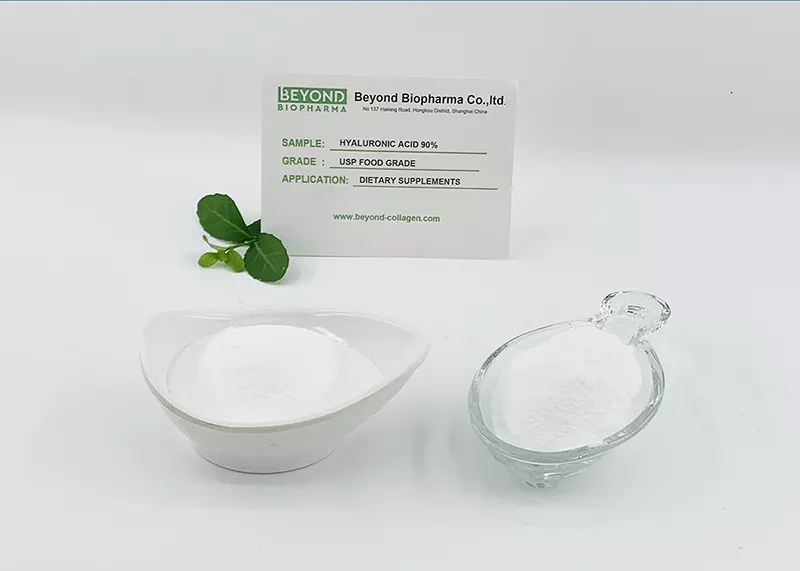
High Molecular Weight for Superior Joint, Skin, and Eye Health.
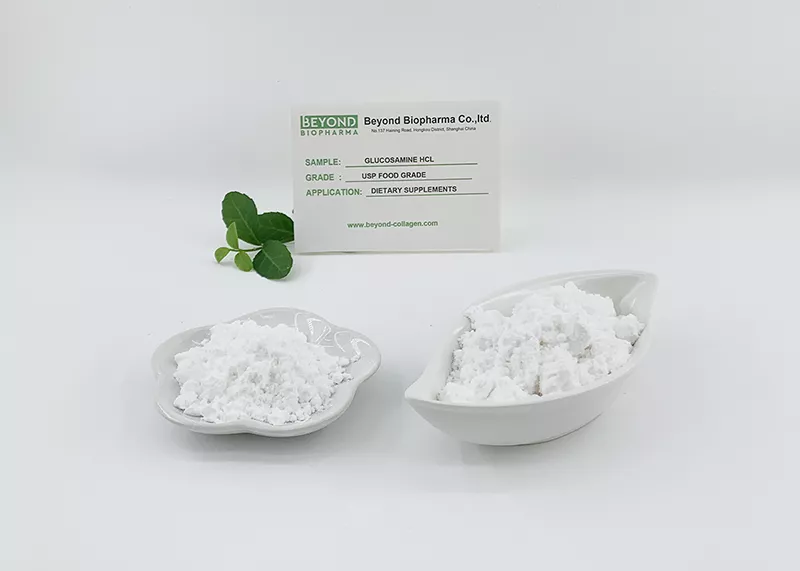
The Purest Plant-Based Joint Support Solution
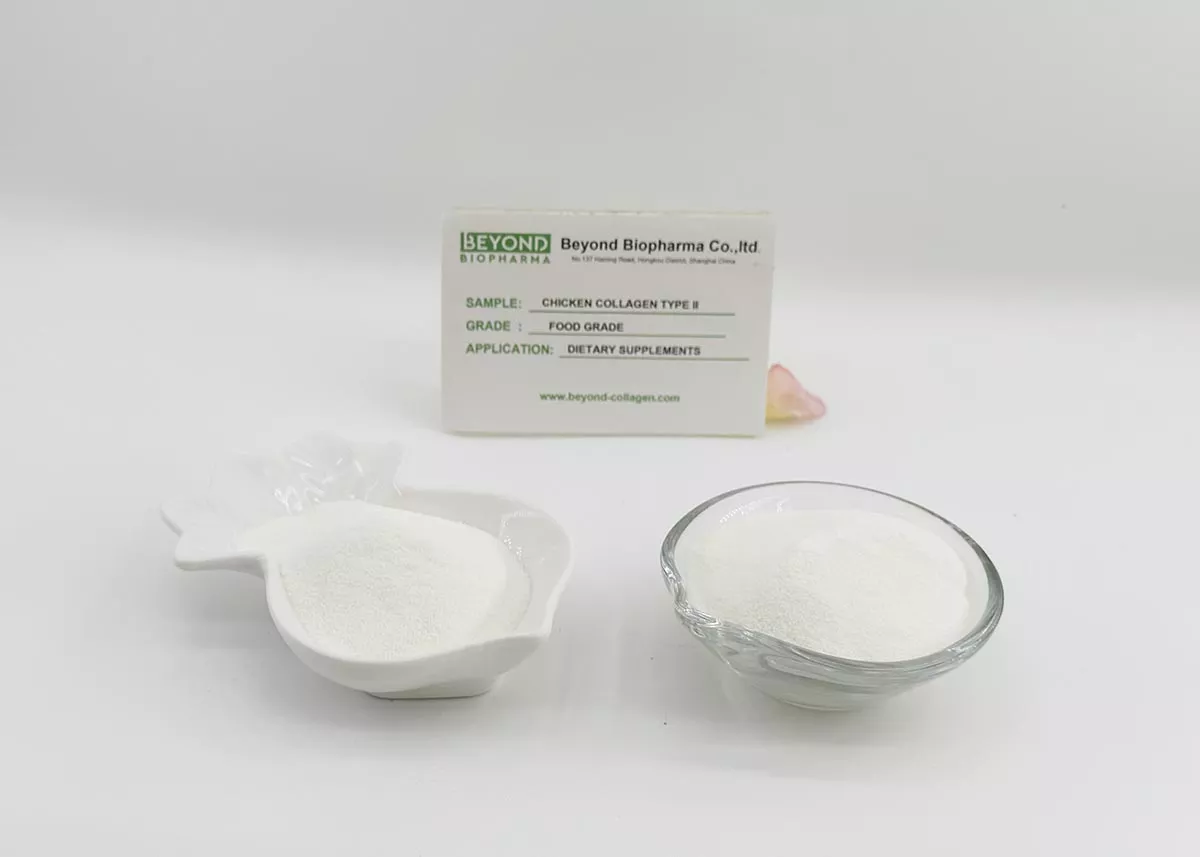
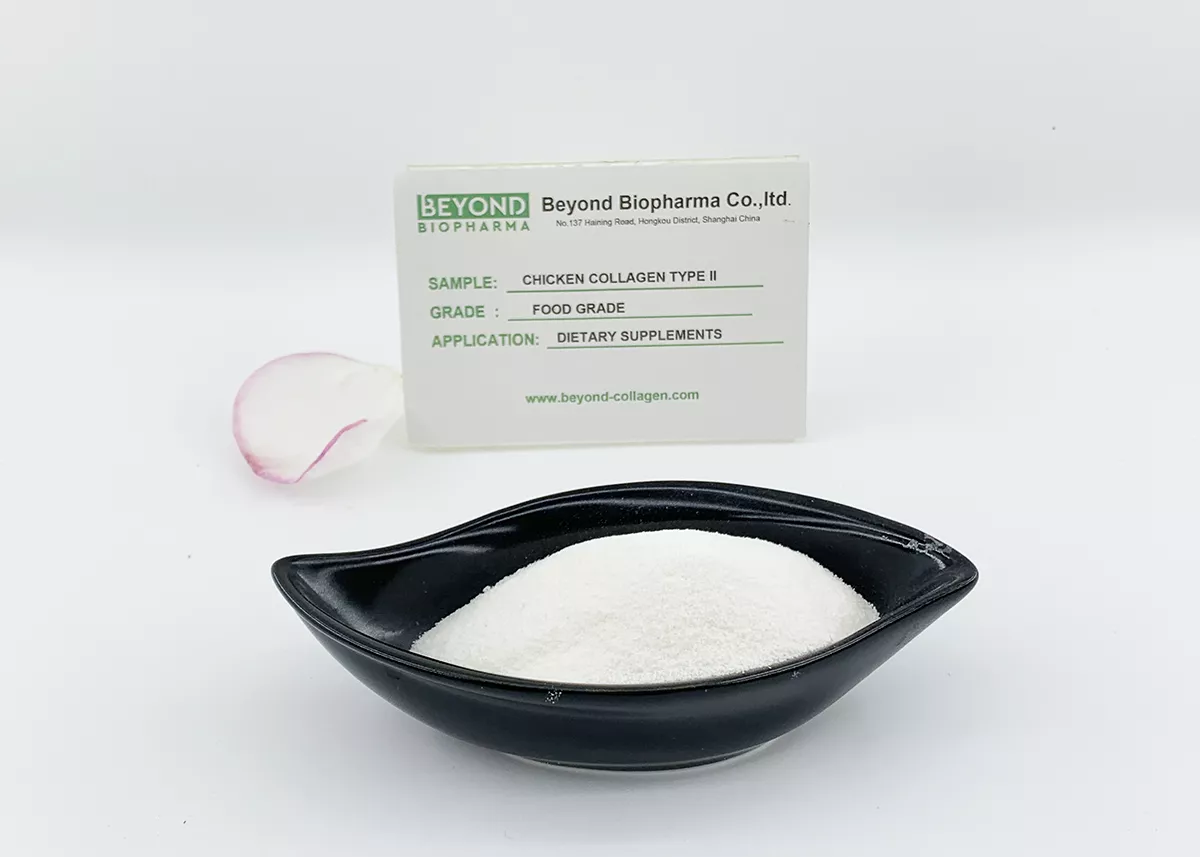
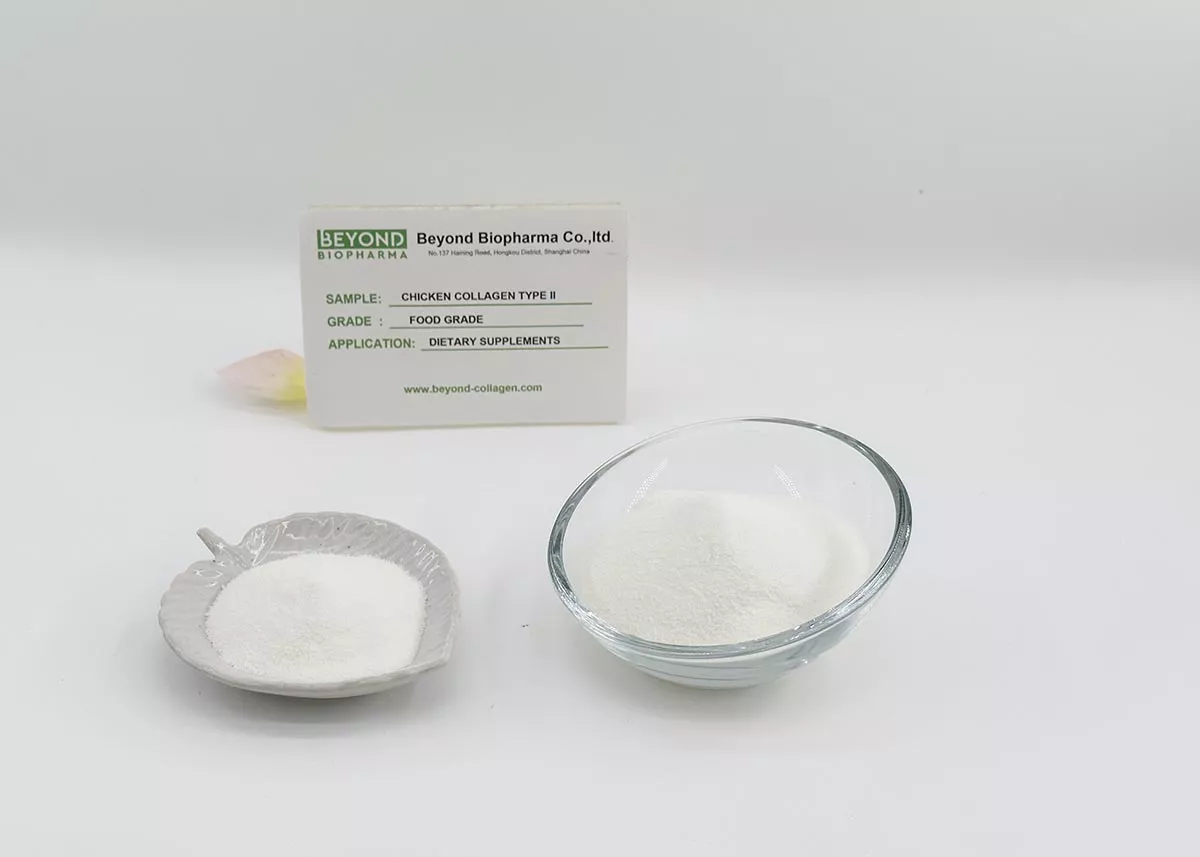
BEYOND BIOPHARMA is a specialized manufacturer of highly purified Hydrolyzed Collagen Type II. Through advanced enzymatic hydrolysis, we create low-molecular-weight collagen peptides that are highly bioavailable, offering foundational nutritional support for cartilage repair, joint function, and skin health. Our product is designed for rapid absorption and maximum efficacy in oral supplements.
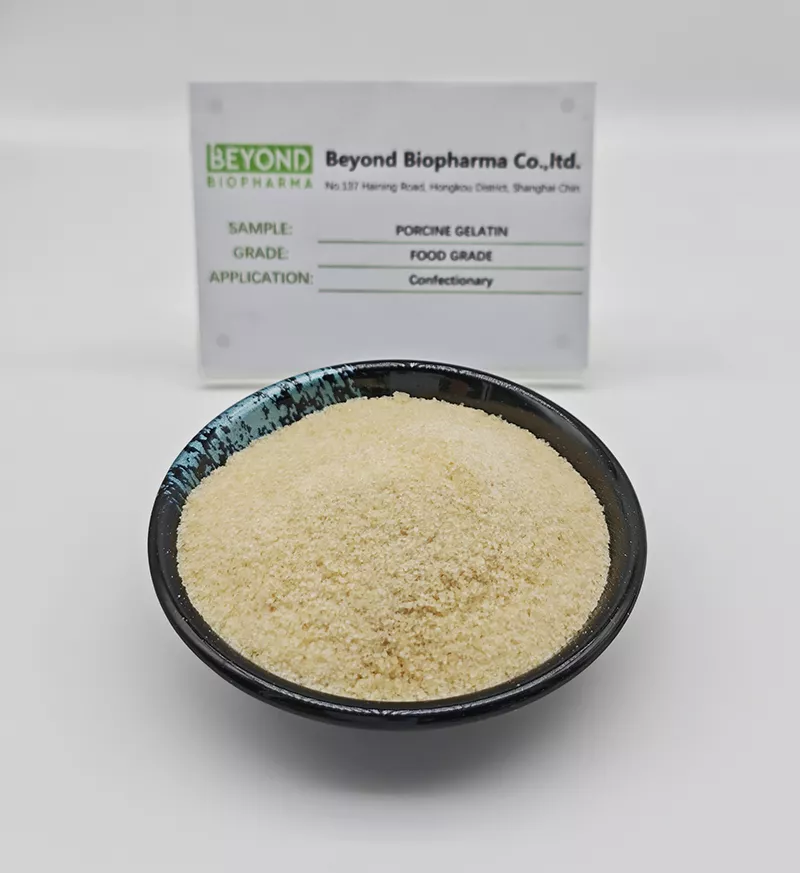
Food-grade porcine gelatin is a highly versatile and cost-effective natural protein derived from the collagen found in pig skin and bones. It is a premier gelling agent known for its exceptional clarity, neutral taste, and thermal reversibility.
Tel:+86 21 65010906
Cell/Whatsapp/Wechat:
+86 13482884055
+86 18657345785
Email: sales@beyondbiopharma.com