What Are the Best Ingredients for Joint Health? A Science-Backed Guide
Sourcing joint health ingredients that deliver consistent quality, batch-to-batch reliability, and regulatory compliance is a growing challenge for nutraceutical buyers. This guide cuts through the marketing noise, offering a clear, evidence-based look at the most effective compounds—collagen peptides, gelatin, chondroitin, glucosamine, and hyaluronic acid—along with practical selection criteria for food, supplement, and pharmaceutical applications.
Whether you are a purchasing manager evaluating new suppliers or an R&D formulator optimizing a joint-support product, understanding the science behind each ingredient is essential. Joint health ingredients like collagen, gelatin, and specialized compounds work through distinct mechanisms—and choosing the right form, grade, and source can make or break your final product.
What Are the Key Joint Health Ingredients and How Do They Work?
Joint health ingredients generally fall into two categories: structural building blocks (collagen, gelatin, hyaluronic acid) and cartilage-supporting compounds (chondroitin, glucosamine). Collagen peptides, especially hydrolyzed forms, provide the amino acids needed to rebuild connective tissue. Gelatin, derived from collagen, offers gel-forming properties useful in gummies and softgels. Chondroitin sulfate and glucosamine HCl help maintain cartilage integrity, while hyaluronic acid lubricates joints.
Production methods matter. Enzymatic hydrolysis breaks down collagen into low-molecular-weight peptides (typically 2,000–5,000 Da) for rapid absorption. Gelatin is produced through controlled thermal denaturation, with bloom strength (50–300 g) and viscosity (2.0–5.5 mPa·s) as key quality markers. These are typical industry ranges; final values should always be verified per COA or sample.
How Do You Choose the Right Joint Health Ingredient for Your Product?
Selection depends on your target application. For gummies and softgels, high-bloom gelatin (150–260 Bloom) provides the necessary texture and stability. For powdered beverages or capsules, hydrolyzed collagen peptides with high solubility and low odor are preferred. Undenatured collagen type II is ideal for immune-tolerance-based joint support. Plant-based formulations may require plant protein peptide alternatives, though these lack the specific joint matrix of animal-derived collagen.
Typical Parameter Ranges for Joint Health Ingredients
| Ingredient |
Key Parameter |
Typical Range (Industry) |
Quality Indicators |
| Edible Gelatin |
Bloom / Viscosity |
50–300 g / 2.0–5.5 mPa·s |
Mesh 8–60; moisture ≤14% |
| Collagen Peptides |
Molecular Weight |
2,000–5,000 Da |
Protein ≥90%; high solubility |
| Plant Protein Peptides |
Protein / MW |
80–90% /
| Allergen profile varies by source |
| Chondroitin Sulfate |
Purity |
≥90% (bovine) |
Low heavy metals |
| Glucosamine HCl |
Assay |
99–101% |
Kosher/Halal options |
Note: These are typical industry ranges. Final specifications should be confirmed per COA or sample.
Applications and Recommended Solutions
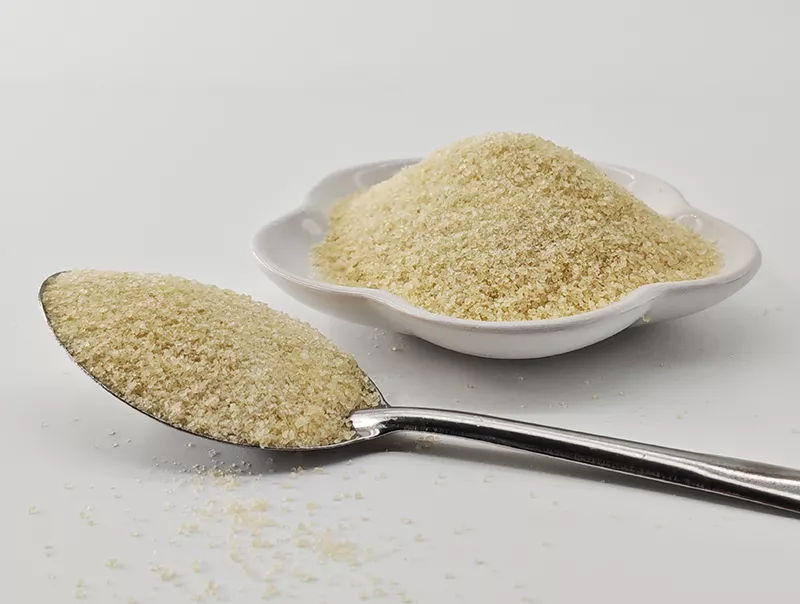
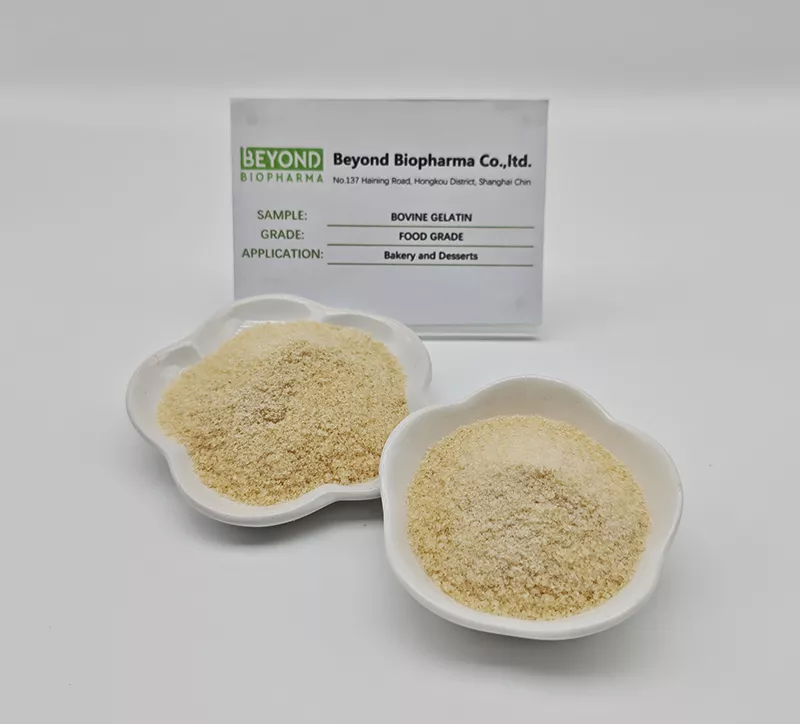
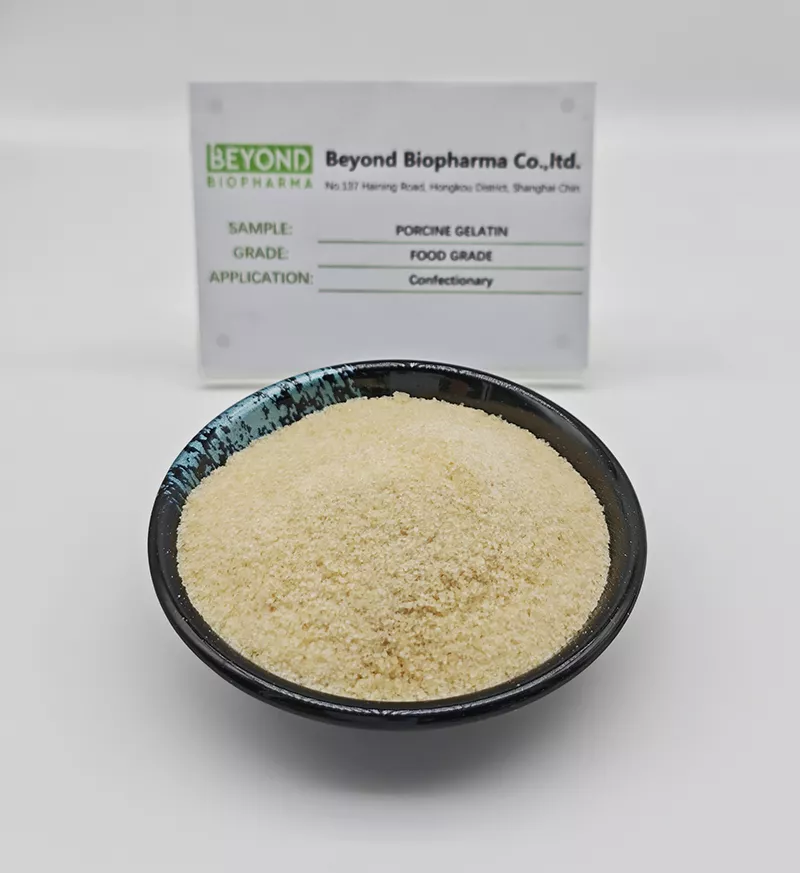
Food & Gummies: Use food-grade porcine gelatin or high-bloom bovine gelatin for chewy textures. For vegan options, plant protein peptides from pea or rice offer an alternative, though they lack gelatin’s gel strength.
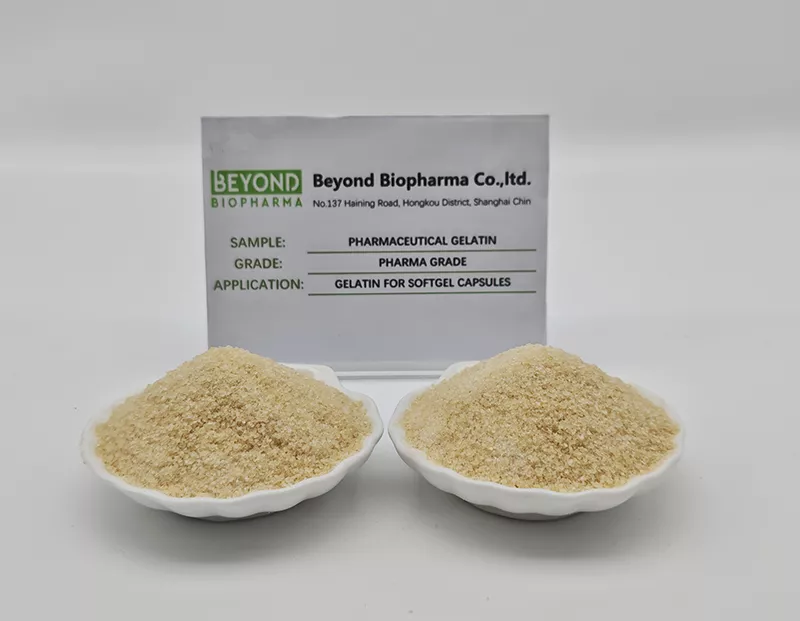
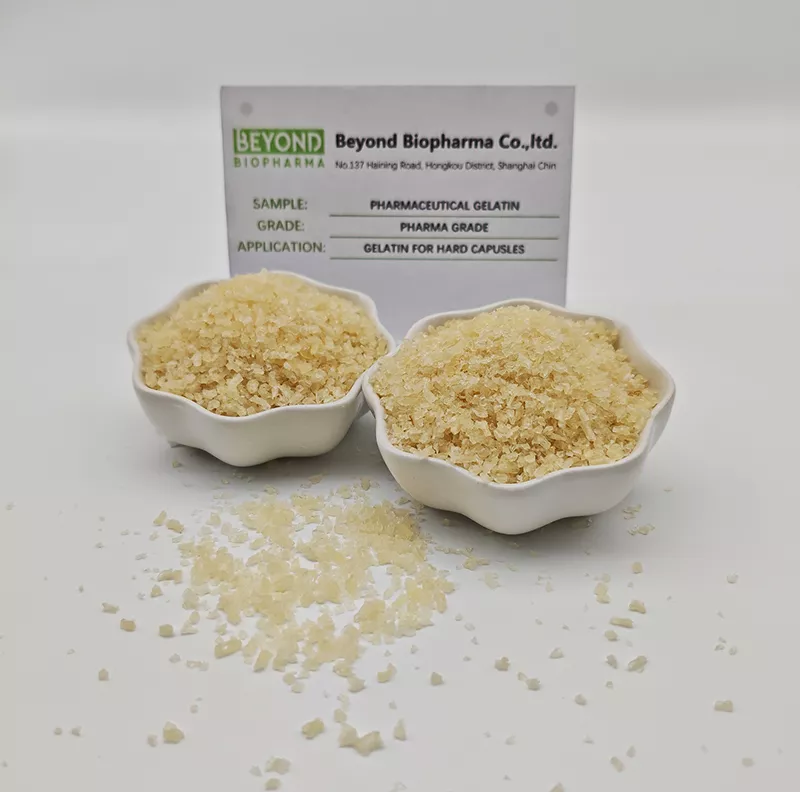
Hard & Soft Capsules: Pharmaceutical-grade gelatin with tight viscosity control is critical. High-bloom gelatin for hard capsules ensures shell integrity, while ultra-high-viscosity gelatin works best for softgels.
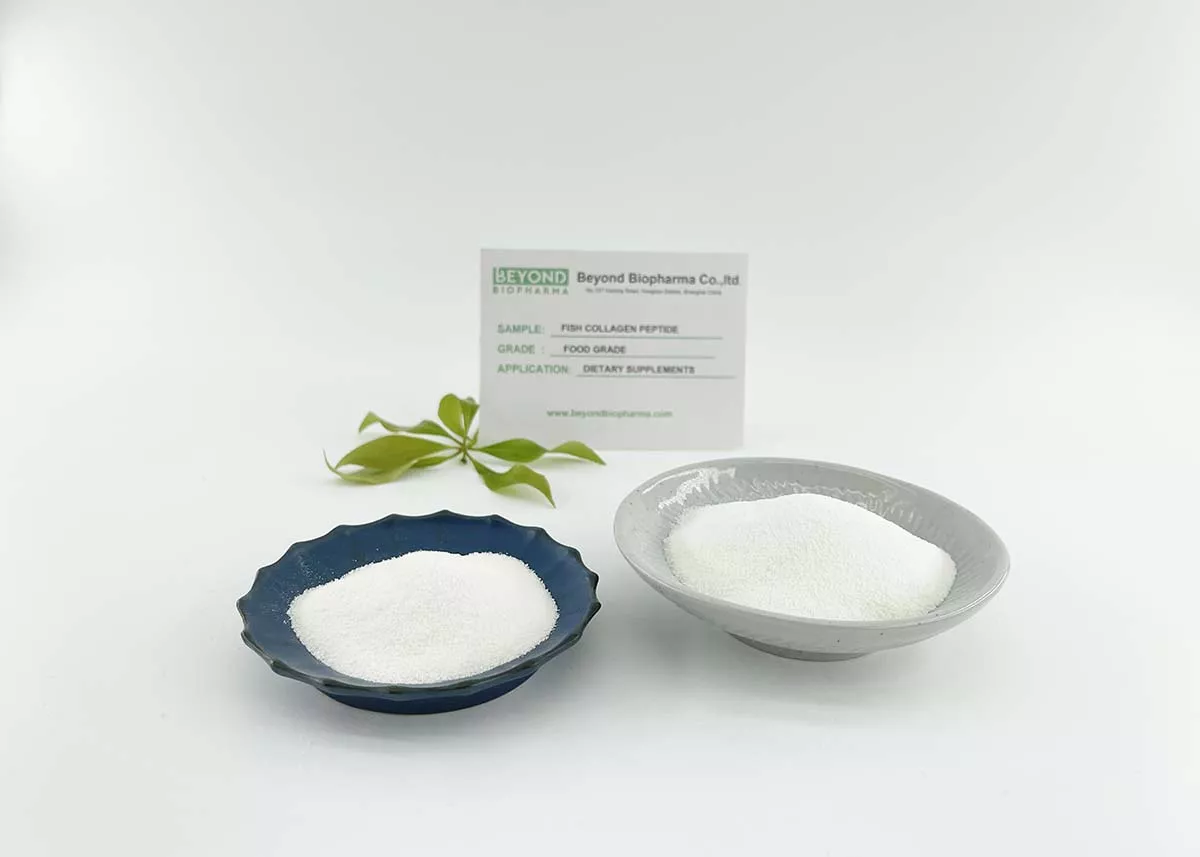
Sports Nutrition & Joint Health: Hydrolyzed collagen peptides, especially fish collagen tripeptide, are rapidly absorbed and ideal for pre- and post-workout formulas. Undenatured collagen type II targets joint comfort directly.
Beauty-from-Within: Low-molecular-weight collagen peptides (fish or bovine) support skin elasticity. Hyaluronic acid powder adds joint and skin hydration benefits.
Plant-Based & Vegan Formulations: Plant protein peptides (pea, rice, soy) are hydrolyzed to
Why Beyond Biopharma for Joint Health Ingredients?
Beyond Biopharma is a Shanghai-based manufacturer with over 10 years of experience in the food-ingredient industry. We produce collagen peptides, gelatin, and plant protein peptides for B2B buyers worldwide, exporting to more than 50 countries. Our facility has an annual capacity of approximately 3,000 MT for collagen and 5,000 MT for gelatin, supported by a fully automatic production line, GMP clean workshop, stainless-steel sealed piping, and automated temperature/pH control.
We hold ISO 9001 certification, are US FDA registered, and maintain a GMP clean workshop. Select products carry Halal or Kosher certification (e.g., fish gelatin). Our bovine bone gelatin is BSE-free. An in-house lab conducts heavy-metal and microbiological testing, supported by a dedicated QA/QC team. We offer three grades—food, pharmaceutical, and cosmetic—and provide free samples along with formulation and selection support.
Frequently Asked Questions
Q: What is the difference between collagen peptides and gelatin for joint health?
A: Collagen peptides are hydrolyzed for cold-water solubility and rapid absorption, ideal for powders and beverages. Gelatin retains gel-forming ability and is better for gummies and capsules. Both support joint tissue, but peptides offer higher bioavailability.
Q: Can plant-based ingredients replace animal-derived joint health ingredients?
A: Plant protein peptides provide amino acids but lack the specific collagen matrix and chondroitin/glucosamine profile of animal sources. They work well for vegan formulations but may not deliver identical joint-support benefits.
Q: What certifications should I look for when sourcing joint health ingredients?
A: Key certifications include ISO 9001, FDA registration, GMP, Halal, and Kosher. For bovine gelatin, BSE-free certification is critical. Always request COAs for heavy-metal and microbiological data.
Q: How do I ensure batch consistency for joint health ingredients?
A: Work with manufacturers that use automated production lines and in-house QA/QC labs. Request spec sheets for bloom, viscosity, molecular weight, and microbial limits. Free samples allow you to test before committing to bulk orders.
Q: What is the typical molecular weight for fish collagen peptides?
A: Fish collagen peptides generally have a lower molecular weight (2,000–3,000 Da) compared to bovine, leading to faster absorption. This is a typical industry range; confirm with the supplier’s COA.
Q: Can I use the same ingredient for food and pharmaceutical applications?
A: Not always. Food-grade ingredients meet general safety standards, while pharmaceutical-grade requires stricter purity and viscosity controls. Always specify your target grade—food, pharma, or cosmetic—when sourcing.
Request a Quote and Free Samples
Ready to source joint health ingredients that meet your exact specifications? Tell us your application, required grade (food, pharmaceutical, or cosmetic), estimated quantity or MOQ, target specs (bloom, mesh, molecular weight, certifications), and destination country. Beyond Biopharma will send free samples and a competitive quote. Contact our team to start the conversation.

 English EN








User Comments
Service Experience Sharing from Real Customers
Mackenzie
Landscape DesignerAs someone who spends hours kneeling and digging in gardens, my knees used to ache every evening. I started taking this supplement after reading about the best ingredients for joint health – the glucosamine and MSM combo is a game-changer. After 6 weeks, I can actually squat to plant seedlings without that grinding feeling. It doesn't feel like a miracle pill, just steady, real support. My husband noticed I'm not groaning when I stand up anymore!
Jax
Warehouse SupervisorHonestly, I was skeptical. I've tried a few things for my creaky shoulders from years of lifting boxes. This one actually lists the good stuff – turmeric and omega-3s – right up front. It's not an overnight fix, but after a month, the morning stiffness is way less. I docked one star because the capsules are a bit large, but the effect is there. Feels like it's helping my body recover from the daily grind.
Jackie
Yoga InstructorMy entire livelihood depends on my joints being mobile and pain-free. I'm super picky about what I put in my body. This blend has hyaluronic acid and chondroitin, which are, in my opinion, among the best ingredients for joint health. I've been using it for 3 months now alongside my practice, and the subtle but consistent lubrication it provides is noticeable, especially in my hips during deep poses. It's become a non-negotiable part of my routine.
Jackson
Retired MechanicAfter 40 years under cars, my hands and knees were shot. My daughter found this for me, saying it had the 'good ingredients.' I don't know all the science, but I know what my body feels. The pain isn't gone – let's be real – but it's dialed down enough that I can play with my grandkids in the yard without needing to sit out. It works gradually, but it works. Wish I'd had this stuff 20 years ago.