
EN
If you have ever watched a panna cotta wobble just right or bitten into a gummy that snaps cleanly instead of sticking to your teeth, you already know that gelatin is doing quiet, important work behind the scenes. This guide walks through what professional edible gelatin actually is, how Bloom strength and viscosity shape dessert texture, and what to look for when sourcing gelatin for confectionery, dairy, and dessert applications. We will keep it practical, draw on real specification data, and help you avoid the most common formulation headaches.
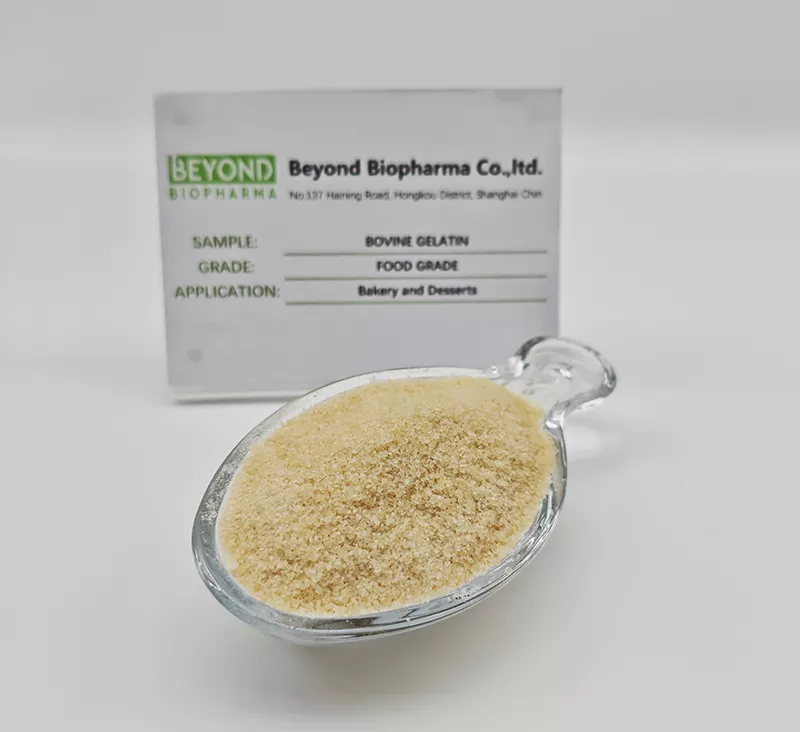
Food-grade gelatin is a natural protein derived from animal skins or bones. What sets it apart is not just its gelling ability but the consistency behind it. A professional-grade Edible Gelatin should deliver predictable Bloom strength, low odor, high clarity, and a clean label story that holds up to regulatory scrutiny. For dessert makers, those details translate directly into whether your mousse sets evenly across every batch or whether your gummies lose their chew after a few weeks on the shelf.
Gelatin is thermally reversible, meaning it gels as it cools and melts again when heated. That property is what makes it so useful in layered desserts, soft confectionery, and dairy products where you want structure without a heavy mouthfeel. But not all gelatin behaves the same way. The source material, extraction process, and post-processing all influence how the final product performs in your formulation.
Bloom strength measures the firmness of a gelatin gel under standardized conditions. In dessert applications, it is the single most useful number for predicting how your product will set. A lower Bloom gelatin gives you a softer, more delicate set, which works well for panna cotta or mousses. A higher Bloom gelatin provides a firmer, more resilient gel, which is better suited for gummies, marshmallows, and molded desserts that need to hold their shape.
Viscosity, on the other hand, affects how the gelatin behaves in liquid form. Higher viscosity can improve suspension of particles and contribute to a richer mouthfeel, but it also influences how easily the gelatin dissolves and flows through your production line. For dessert manufacturers, the sweet spot is usually a gelatin with a Bloom range that matches your target texture and a viscosity that fits your processing equipment. Customization is possible here, and it is worth asking your supplier about the specific ranges they can deliver.
Bovine gelatin is one of the most widely used types in dessert manufacturing, and for good reason. It offers a neutral odor and flavor profile, good clarity, and reliable gelling across a range of Bloom strengths. For products like marshmallows, nougat, and gummy candies, bovine gelatin provides the elastic chew and structure that consumers expect. In dairy desserts such as yogurt, ice cream, and puddings, it helps control syneresis, reduces ice crystal formation, and supports a smooth, creamy texture.
If you are sourcing for food applications, it helps to work with a supplier who understands the difference between a general-purpose gelatin and one that is tuned for dessert performance. Edible Bovine Gelatin for Foods Applications is a good example of a product line built around those needs, with customizable Bloom, viscosity, and pH ranges to match different dessert formats.
When evaluating edible gelatin for dessert use, the specification sheet is your first filter. Here are the parameters that matter most, based on typical food-grade gelatin standards:
| Parameter | Typical Range / Standard | Why It Matters for Desserts |
|---|---|---|
| Jelly Strength (Bloom) | 120–270 Bloom (6.67%), customizable | Directly determines gel firmness and set speed |
| Viscosity | 2.2–5.0 mPa·s, customizable | Affects mouthfeel, suspension, and processing flow |
| pH (at 55°C) | 3.8–7.6, customizable | Influences gelation behavior and compatibility with acidic ingredients |
| Sulphur Dioxide | ≤50 ppm | Indicates processing cleanliness and sensory neutrality |
| Total Aerobic Count | ≤1000 cfu/g | Microbiological safety for ready-to-eat desserts |
| Salmonella / E. coli | Absent | Non-negotiable for food safety compliance |
Beyond the numbers, ask about traceability and certifications. A supplier that maintains full traceability from raw material to finished product and holds certifications such as GMP, ISO 22000, ISO 9001, and FSSC 22000 is giving you a much stronger safety and quality foundation. For export markets, FDA compliance and veterinary health certificates are also important boxes to tick.
Gelatin shows up in more dessert categories than most people realize. Here is a quick rundown of where it earns its place:
Gummy and chewy confectionery: Gelatin provides the elastic, springy bite that defines a good gummy. Bloom strength and viscosity both play a role in how the candy sets and how it feels in the mouth.
Marshmallows and nougat: Gelatin helps aerate the mix and stabilize the foam structure, giving these products their characteristic light texture and shape retention.
Puddings, mousses, and panna cotta: A softer set is usually preferred here. Lower Bloom gelatin or a reduced dosage can deliver that delicate, creamy texture without rubberiness.
Yogurt and fermented dairy: Gelatin reinforces the protein network, improves viscosity, and helps prevent whey separation during storage.
Ice cream and frozen desserts: It reduces ice crystal growth and improves melt resistance, contributing to a smoother scoop and better shelf stability.
Layered desserts and glazes: Gelatin sets softly while maintaining structure, making it useful for mirror glazes, fruit terrines, and multi-layer desserts that need clean slicing.
Even with a good gelatin, technique matters. Here are a few field-tested pointers that can save you from common texture problems:
Bloom the gelatin properly. Sprinkle it evenly over cold water and let it hydrate for at least five to ten minutes before heating. Skipping this step can leave you with lumps that never fully dissolve.
Watch your temperature. Gelatin dissolves best around 50–60°C. Heating it too aggressively or holding it at high temperature for long periods can degrade its gelling ability. Once dissolved, incorporate it into your base quickly and evenly.
Respect acidic and enzymatic ingredients. Fresh pineapple, kiwi, papaya, and ginger contain enzymes that break down gelatin. If you are working with these, briefly heat or blanch them first to deactivate the enzymes, or use a gelatin that is formulated to tolerate those conditions.
Adjust for sugar and alcohol. High sugar content can slow gelation and affect final firmness, while alcohol can weaken the gel network. If you are formulating dessert gels with either, plan for a slightly higher gelatin dosage or a higher Bloom grade.
Test your set. Small-batch trials are still the most reliable way to dial in the right Bloom level and dosage. What works in a 500g test batch does not always scale perfectly to a 500kg production run, so build in a scale-up check.
When you are buying gelatin at production scale, supply reliability and consistency matter as much as the specification sheet. Look for a supplier with a proven production track record, stable raw material sourcing, and the ability to customize Bloom, viscosity, and particle size to your process. It also helps to have technical support on hand for formulation questions, especially when you are developing new dessert products or reformulating existing ones.
Packaging and shipping are worth a conversation too. Standard 25 kg bags with moisture-proof inner liners are common, but if your production setup requires something different, ask about customization. A supplier with export experience across multiple regions can also help you navigate documentation requirements and avoid delays at customs.
Edible gelatin is one of those ingredients that rewards careful selection. The right Bloom strength, viscosity, and purity profile can mean the difference between a dessert that delights and one that disappoints. By understanding the key specifications, matching them to your application, and working with a supplier who can support your formulation and scale-up needs, you give yourself a much better shot at consistent, silky smooth results every time.
Whether you are developing a new gummy line, refining a panna cotta recipe, or scaling up a dairy dessert, the fundamentals stay the same: know your gelatin, test your process, and keep your specifications tight. That is the practical path to texture you can count on.


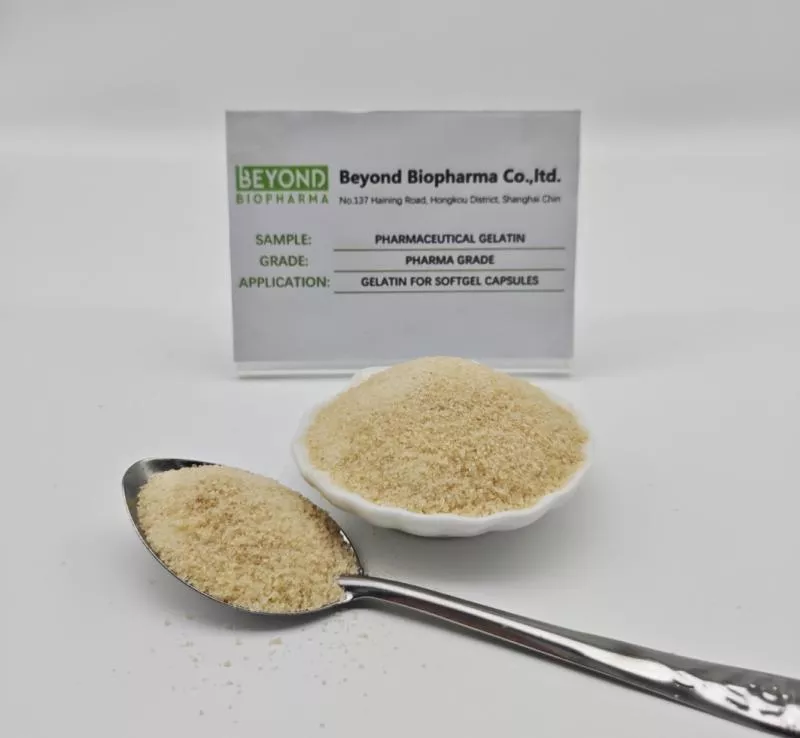
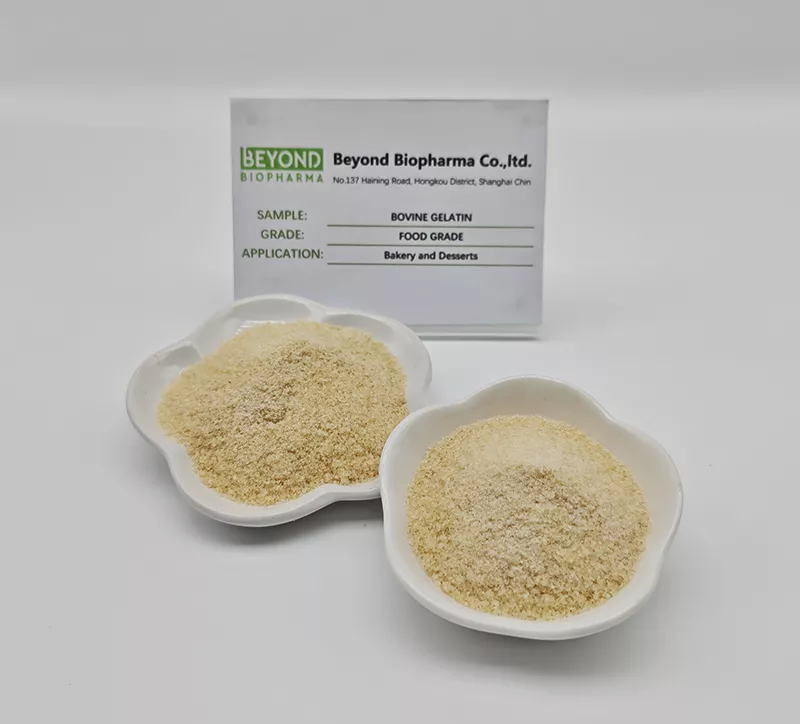
A practical overview of ten edible gelatin applications ranging from confectionery and dairy stabilization to pharmaceutical capsules and wine fining. The article covers technical considerations like Bloom values and usage concentrations, helping food manufacturers and formulators make informed ingredient decisions in 2026.
Tel:+86 21 65010906
Cell/Whatsapp/Wechat:
+86 13482884055
+86 18657345785
Email: sales@beyondbiopharma.com





 English EN


