
EN
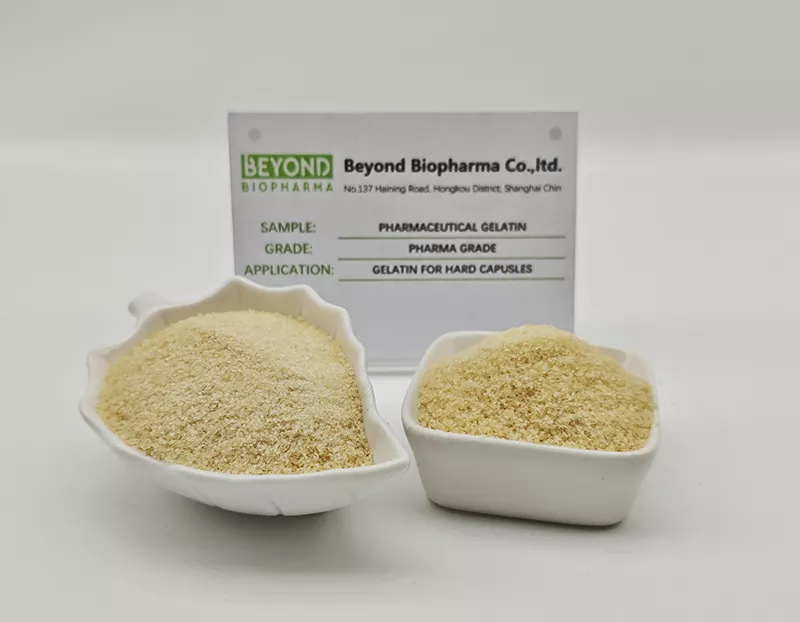
Issuing a purchase order without evaluation creates severe operational risks. Unvetted materials cause cross-linking issues, batch variation, BSE non-compliance, and supply delays. Procurement teams must conduct a vendor quality audit across four core evaluation pillars:
Regulatory compliance
Quality control
Supply chain resilience
Technical support
Executing a complete gelatin supplier audit resolves material safety concerns. Direct questions allow specialists to verify legal standing, manufacturing capacity, and raw gelatin purity. This detailed checklist teaches teams how to choose a gelatin supplier effectively. Each checklist item validates traceable batch records and origin certificates. A reliable supplier guarantees consistent long-term production outputs for every application.
Executing a gelatin supplier audit establishes regulatory safety before ordering commercial materials. Procurement managers perform a vendor quality audit to confirm that facility operations satisfy international quality standards and safety standards. Quality assurance teams use an inspection checklist to review controls. Every facility audit evaluates quality management system effectiveness, ISO 9001 compliance, GMP standards, and HACCP plans. An ISO 9001 framework guarantees structured management. Suppliers holding ISO 9001 certification maintain strict control. Choosing an ISO 9001 facility ensures risk evaluation, while ISO 9001 monitoring drives process refinement. ISO 9001 requirements align practices with expectations.
Certification | Regulatory Focus | Role in Facilities |
|---|---|---|
ISO 9001 | Quality management system tracking | Establishes a quality management system to drive optimization |
GMP | Hygienic premises and maintenance | Ensures production follows regulatory standards for release |
HACCP | Hazard analysis and point monitoring | Controls hazards across every step in the production process |
A comprehensive supplier audit checklist confirms whether facilities hold FSSC 22000, SQF, or BRC food safety audit certification. This facility compliance checklist verifies that plant hygiene meets expectations. Operational compliance with these standards confirms manufacturing reliability. International market access requires valid Halal certification. Independent reviewers verify audit records to validate integrity.
Verifying legal records prevents vendor fraud prior to purchase orders. Procurement teams review material traceability to confirm origin records and health compliance. Rigorous traceability guarantees safety. High-purity gelatin production demands strict food-grade raw material sourcing to eliminate biological risk factors, including BSE and TSE concerns. Beyond Collagen sets the benchmark by supplying high-purity, BSE-free bovine bone, bovine hide, and porcine sourcing for pharmaceutical and nutraceutical applications.
Buyers verify supplier validity and traceability through a four-step process:
Approved Supplier Vetting: The verification checklist requires veterinary certificates to confirm animal safety.
Granular Batch Documentation: Quality managers log origin records to guarantee full traceability for every material lot.
Religious Supervision: Line operators enforce isolation protocols to preserve Kosher compliance.
Certification Agency Audit Review: External agencies audit batch records to validate species traceability and compliance standards.
A final regulatory checklist ensures total accuracy before ordering. Conducting a vendor quality audit protects brand safety while securing reliable supplier partnerships.
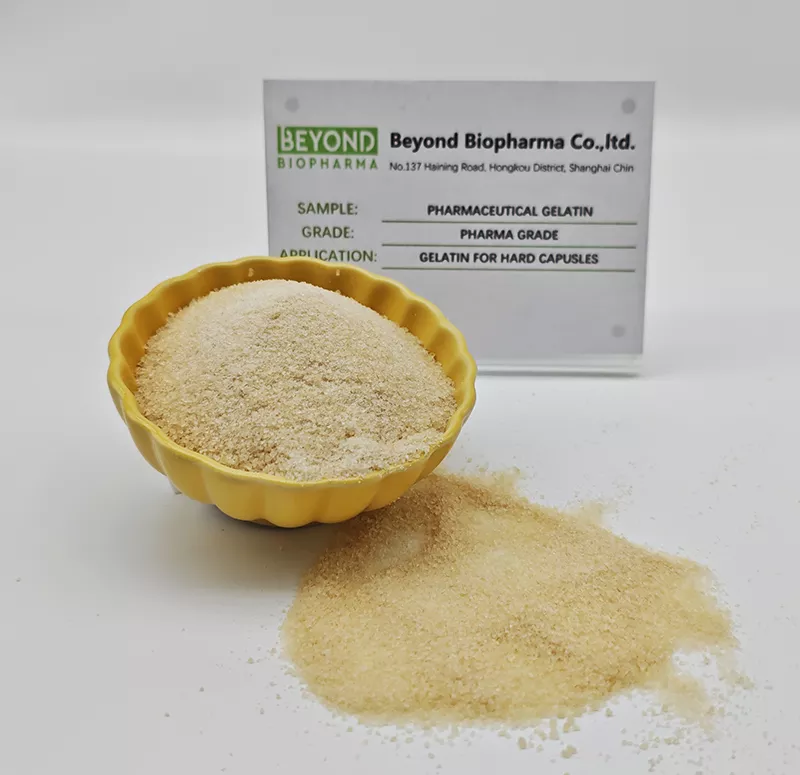
Executing a gelatin supplier audit requires a thorough supplier audit checklist to evaluate physical raw material specifications. Quality managers include direct questions in their checklist regarding Bloom strength, viscosity, particle mesh size, clarity, and dissolution profiles. Standardized physical testing methods align with compendial standards from USP and GME monographs, measuring Bloom gel strength with a 6.67% gelatin solution at 10°C. Hard capsule manufacturing typically specifies 200–250 g Bloom, while softgel capsule production requires 150–200 g Bloom paired with plasticizers such as glycerin. Proper testing prevents structural flaws during high-speed capsule filling.
Beyond Collagen Pharmaceutical Gelatin sets an industry benchmark for customizable Bloom strengths and tailored viscosity profiles. Formulators use these precise physical raw material parameters to produce hard capsules with uniform wall thickness and smooth shell stripping. This excipient also supports efficient film-forming microencapsulation, protecting sensitive active ingredients like fish oils from environmental oxidation. Strict quality control optimizes the overall encapsulation process and maintains structural consistency across production lines.
A comprehensive supplier audit checklist evaluates batch-to-batch consistency, cross-linking resistance, and chemical purity standards across consecutive lots. The high-volume manufacturing process demands continuous analytical verification to maintain uniform dissolution profiles, prevent shell cross-linking, and ensure process consistency. Formulators select specialized anti-cross-linking gelatin for aldehyde-sensitive fill formulations. Advanced biomedical applications require ultra-pure low-endotoxin excipient options to satisfy stringent safety standards. A reliable supplier provides clear certificates of analysis detailing high quality purity standards, low ash content below 1%, heavy metal screening via ICP-MS, and strict microbial limits.
Quality assurance teams use an actionable checklist to confirm regulatory compliance before placing purchase orders. The formal audit process verifies full raw material traceability from verified animal origins to finished excipient release. A certified ISO 9001 facility maintains strict quality standards through continuous ISO 9001 monitoring. Verifying ISO 9001 registration on your audit checklist confirms complete lot traceability and controlled production parameters. This rigorous supplier evaluation establishes regulatory compliance and secures long-term product stability.
Procurement teams evaluate production capacity during supplier selection to prevent unexpected supply bottlenecks. A thorough audit verifies manufacturing throughput, maximum annual output, and standard lead time requirements. Auditors evaluate whether plant facilities maintain high operational standards for commercial lot outputs.
Procurement specialists request operational data to verify production stability:
Maximum annual output data and minimum purchase order quantities
Standard lead time metrics for standard and custom products
Secondary production facilities operating across distinct geographic regions
Strategic inventory reserves paired with real-time tracking systems
Documented emergency response plans supporting continuous order delivery
This detailed process helps buyers confirm continuous material flow across global markets. The audit team measures lead time stability during peak seasonal demand periods. Buyers maintain continuous material flow by verifying vendor capacity metrics against a verification checklist.
Upstream disruption creates major operational risks for pharmaceutical manufacturers. Historical data shows COVID-related plant closures reduced Indian capsule output by 30-40%. Indian pharmaceutical firms imported about 70% of raw ingredients from China, which restricted drug exports during supply shocks. The United States imported $258 million of raw material inputs in 2018, with about 20% coming from Asia and 25% coming from Europe. Procurement managers analyze these risk indicators using a standardized supplier audit checklist to guide every risk management decision.
Risk Indicator | KPI Focus | Disruption Impact |
|---|---|---|
Raw Material Availability | Supplier Defect Rate | Plant halts lowered raw material availability |
Geographic Concentration | Heavy import reliance disrupted ingredient supplies | |
Quality Management System | Process variation increases unresolved issues |
A reliable gelatin supplier relies on a certified quality management system to ensure raw material consistency across batches. Quality assurance managers track incoming supplier defect metrics to drive ongoing process improvement. Auditors examine root-cause analyses whenever internal plant records reveal negative audit findings. Systematic risk tracking drives continuous quality improvement across every manufacturing process stage. Strict quality standards prevent non-conforming lots from entering commercial distribution networks. Using an operational checklist safeguards production reliability, while a plant checklist enables continuous system improvement to meet safety standards across facility operations.
A thorough gelatin supplier audit evaluates technical assistance and application development. Quality assurance teams use a vendor quality audit to review R&D capability and pilot trials. Auditors assign an 8% weight to R&D capability within the checklist. Beyond Collagen supplies pharmaceutical gelatin and partners with formulators to provide application-specific technical assistance and dependable supply logistics. The team guides client formulations for microencapsulation and optimizes tablet binders. Formulators run a supplier qualification trial to test pre-shipment samples before commercial runs.
Audit Area | Review Focus | Key Verification |
|---|---|---|
Regulatory Documentation Support | Regulatory dossiers and certificates | Confirm ISO 9001, HACCP, and food safety and quality credentials |
Technical Application Support | Batch testing and trial production | Confirm COA values like Bloom strength, moisture, and ash |
A structured vendor quality audit checks change-control procedures for recipes, test methods, and packaging. The supplier audit checklist assigns a 10% weight to regulatory documentation support. Suppliers must provide a batch-specific COA to verify physical standards and chemical standards. Auditors confirm ISO 9001 registration to ensure process control and quality improvement.
The buyer checklist verifies commercial terms during the vendor quality audit. Standard factory-direct lead time runs within 15 working days. High-volume orders require minimum quantities of 1,000 kg packed in 25 kg bags. Flexible suppliers offer sampling volumes from 1 kg to 25 kg. Buyers confirm FOB or CIF terms to clarify shipping responsibility and pricing structure. Clear pricing terms help buyers calculate total landed cost rather than initial pricing alone.
Buyers maintain strict audit rights to conduct facility inspections. Auditors review continuous process tracking to drive process improvement. The checklist ensures full compliance with international standards and iso 9001 quality rules. A comprehensive checklist requires clear policies for non-conforming batches. Suppliers replace defective lots to uphold compliance and protect batch quality.
Evaluating answers across this 20-question audit provides a complete risk profile for procurement teams. Executing a comprehensive gelatin supplier audit verifies raw material safety, legal compliance, and manufacturing resilience. Quality assurance specialists must request pre-shipment samples from each potential gelatin supplier. Independent laboratory testing verifies physical attributes like Bloom gel strength, dissolution profiles, and particle mesh size. This rigorous verification checklist guarantees consistent batch performance across continuous commercial manufacturing.
Conducting a systematic vendor quality audit simplifies complex procurement decisions. Applying a structured audit checklist informs your strategic supplier choice. Beyond Collagen supplies Pharmaceutical Gelatin as a fully certified, dependable excipient solution to streamline qualification procedures.
QA teams measure Bloom gel strength using a standard 6.67% gelatin solution at 10°C following USP standards. Hard capsule manufacturing requires 200–250 g Bloom. Softgel capsule production requires 150–200 g Bloom. This physical testing confirms material specs before line execution.
Facilities must maintain ISO 9001 quality system management alongside GMP standards and HACCP plans. Food safety assurance requires FSSC 22000, SQF, or BRC food safety audit certification. Verified Halal and Kosher credentials grant compliance for international religious dietary requirements.
Standard factory lead time runs within 15 working days. Commercial bulk orders require minimum purchase quantities of 1,000 kg shipped in 25 kg bags. Flexible partners provide sample testing volumes ranging from 1 kg to 25 kg for preliminary laboratory evaluation.
Procurement managers conduct a thorough facility inspection to verify raw material origin records and batch consistency. Buyers evaluate technical performance, low ash parameters under 1%, and specialized anti-cross-linking options to select a dependable, fully certified supplier.



Tel:+86 21 65010906
Cell/Whatsapp/Wechat:
+86 13482884055
+86 18657345785
Email: sales@beyondbiopharma.com





 English EN


