As consumer demand for plant-based nutrition accelerates, food scientists and product developers face a persistent challenge: traditional plant proteins often fall short in solubility, digestibility, and sensory performance. This article examines how hydrolyzed plant protein—produced through controlled enzymatic hydrolysis—addresses these limitations by breaking intact proteins into smaller peptide fractions. We explore the science behind protein hydrolysis, the functional advantages over conventional isolates, and real-world applications across sports nutrition, functional foods, and dietary supplements. Readers will gain a technical understanding of why leading brands are transitioning to hydrolyzed plant protein for cleaner, more effective formulations.
Key Takeaways
Hydrolyzed plant protein offers significantly higher digestibility and absorption rates compared to intact plant protein isolates.
Enzymatic hydrolysis improves solubility and dispersibility, enabling cleaner formulations with smoother mouthfeel.
These protein peptides provide greater formulation flexibility for high-protein beverages, bars, and functional foods.
Leading brands leverage hydrolyzed plant protein to meet clean label trends without compromising on performance or nutrition.
Hydrolyzed plant protein refers to plant-derived protein that has been broken down into smaller peptide chains and amino acids through a controlled process called enzymatic hydrolysis. Unlike standard plant protein isolates or concentrates, which contain mostly intact protein molecules, hydrolyzed versions consist predominantly of short-chain peptides and free amino acids. This structural difference is fundamental to their improved performance in food and supplement applications.
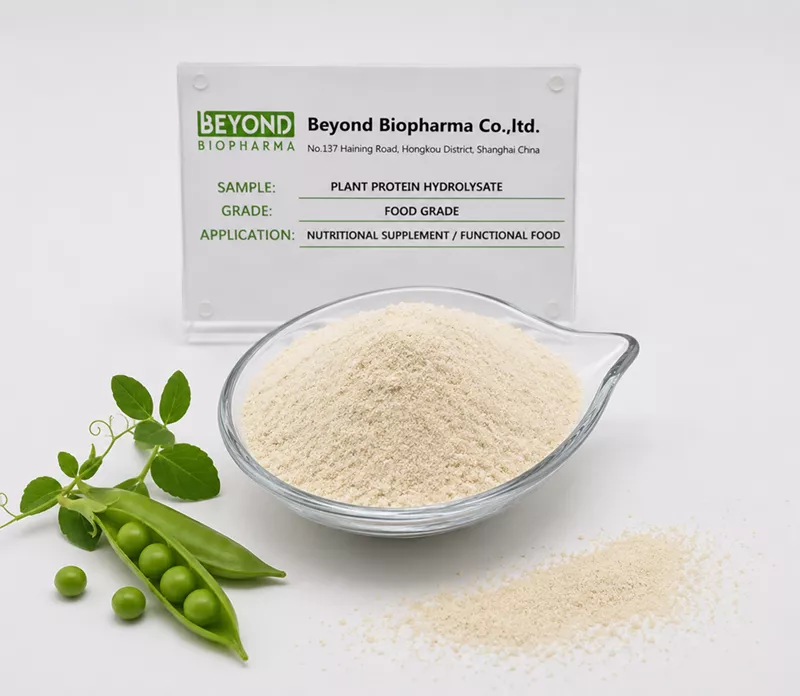
Hydrolyzed plant protein can be produced from a wide range of botanical sources. Common raw materials include:
Pea — widely used for its balanced amino acid profile and low allergenicity.
Soy — a complete protein source with decades of research backing.
Rice — often combined with pea protein for complementary amino acids.
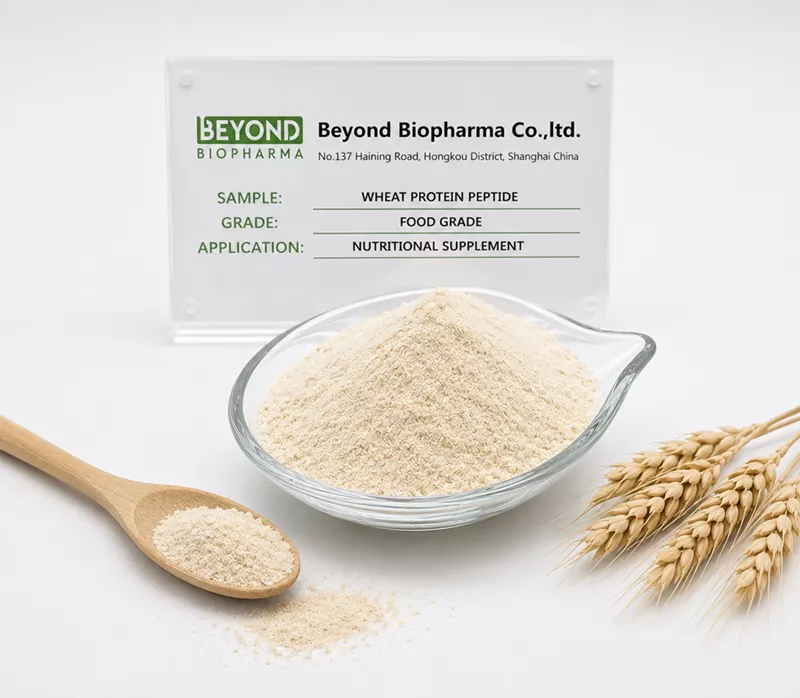
Wheat — provides functional properties but requires gluten management.
Corn — cost-effective source with specific peptide profiles.
Potato — emerging source with neutral flavor characteristics.
Mung bean — gaining traction in plant-based meat alternatives.
Sunflower seed and pumpkin seed — popular for allergen-free formulations.
The choice of raw material significantly influences the final peptide profile, solubility behavior, and sensory attributes of the hydrolyzed product.
Manufacturing hydrolyzed plant protein involves several controlled steps:
Protein extraction — The plant material is processed to isolate the protein fraction, removing fibers, starches, and other non-protein components.
Enzymatic hydrolysis — Food-grade proteases (enzymes) are added under precisely controlled temperature and pH conditions. These enzymes cleave peptide bonds, breaking large protein molecules into smaller peptides. The degree of hydrolysis (DH) is carefully monitored to achieve target molecular weight distributions.
Separation and purification — The hydrolysate is filtered to remove insoluble residues and deactivate enzymes, often through heat treatment or pH adjustment.
Drying — The purified peptide solution is spray-dried or freeze-dried to produce a stable powder with consistent particle size and moisture content.
This process transforms plant protein into plant protein hydrolysates with molecular weights typically ranging from 500 to 5000 Daltons, compared to intact proteins which can exceed 100,000 Daltons.
Molecular weight distribution — Predominantly di- and tri-peptides, which are absorbed more rapidly than intact proteins or free amino acids.
Solubility — High solubility across a wide pH range (pH 3–8), unlike many intact plant proteins that precipitate near their isoelectric point.
Dispersibility — Excellent dispersion in cold water without clumping, reducing processing time and energy.
Digestibility — Pre-digested peptides require less enzymatic work in the gastrointestinal tract, making them ideal for sensitive populations or rapid delivery scenarios.
Formula compatibility — Low viscosity even at high concentrations (15–20% protein), enabling high-protein liquid formulations that remain pourable.
The transition from intact plant protein to plant-derived peptides is not merely a processing step—it fundamentally alters the ingredient's behavior in formulations and within the human body.
Intact plant proteins often contain antinutritional factors such as trypsin inhibitors and lectins, which can reduce protein digestibility. Hydrolysis removes or deactivates many of these compounds. Furthermore, plant protein peptides are absorbed via peptide transporters (PepT1) in the small intestine, which is more efficient than the transport of free amino acids. Research suggests that di- and tri-peptides can be absorbed 2–3 times faster than intact proteins, making them particularly valuable for post-exercise recovery and clinical nutrition.
One of the most persistent challenges with conventional plant protein isolates is their tendency to form gritty, sandy textures in beverages. Hydrolyzed plant protein overcomes this through its reduced molecular size and altered surface charge. The peptides remain soluble even at low pH (such as in acidic sports drinks) and high ionic strength. This property allows formulators to create clear or translucent protein beverages—a category previously dominated by whey protein hydrolysates.
Because hydrolyzed plant protein contributes significantly lower viscosity than intact proteins, manufacturers can achieve higher protein concentrations without creating unpumpable slurries. This is critical for ready-to-drink (RTD) protein shakes, high-protein yogurts, and protein bars where texture and mouthfeel directly impact consumer acceptance. Industry experience indicates that replacing 30–50% of intact plant protein with its hydrolyzed counterpart can dramatically improve processing efficiency and final product quality.
Beyond basic nutrition, certain bioactive peptides released during hydrolysis may contribute to physiological effects. Depending on the enzyme used and the degree of hydrolysis, peptides with ACE-inhibitory, antioxidant, or opioid-like activities have been identified in plant protein hydrolysates. While these effects are not therapeutic claims, they represent an area of active research that adds value for functional food developers. Under typical formulation conditions, these bioactive fragments remain stable during processing and storage.
Hydrolyzed plant protein has found its way into a diverse range of commercial products. Below we examine the most significant application areas, along with the specific formulation challenges each presents.
The sports nutrition segment demands rapid protein delivery, clean labels, and excellent sensory properties. Sports nutrition ingredients must dissolve quickly, taste neutral, and support muscle protein synthesis. Hydrolyzed plant protein meets these requirements by providing fast-absorbing peptides that can be formulated into both powders and ready-to-drink shakes.
✅ Product positioning: Plant-based post-workout recovery powders, pre-workout peptide blends.
✅ Recommended application: Replace 40–60% of intact pea or rice protein with hydrolyzed versions for improved mixability and faster perceived absorption.
✅ Formulation considerations: Monitor bitterness—higher degrees of hydrolysis can increase bitterness. Use masking technologies or flavor systems designed for peptide-based ingredients.
High-protein beverages are notoriously difficult to stabilize. Intact plant proteins tend to sediment, form gels, or create chalky textures. Hydrolyzed plant protein, due to its low viscosity and high solubility, enables stable, smooth beverages with up to 15–20% protein content.
✅ Product positioning: Clean-label protein waters, clear protein drinks, high-protein coffee creamers.
✅ Recommended application: Use fully hydrolyzed protein for clear beverages; partially hydrolyzed for creamy textures.
✅ Formulation considerations: pH stability—hydrolyzed plant protein remains soluble at pH 3.0–4.5, ideal for fruit-flavored protein drinks.
Functional food brands are incorporating functional protein ingredients into bars, soups, sauces, and baked goods. The challenge is maintaining protein content without compromising texture or taste. Hydrolyzed plant protein integrates more seamlessly into these matrices.
✅ Product positioning: High-protein meal replacements, nutrition bars, savory functional snacks.
✅ Recommended application: Use in combination with intact protein to balance cost, texture, and nutritional profile.
✅ Formulation considerations: Water activity and binding properties—hydrolyzed protein may reduce water binding, requiring adjustments in humectants for bar applications.
Older adults often experience reduced digestive efficiency and muscle wasting (sarcopenia). Easily digestible protein sources are critical. Hydrolyzed plant protein provides a vegan protein ingredient option that is gentle on the digestive system while still delivering essential amino acids.
✅ Product positioning: Senior nutrition shakes, post-surgical recovery formulas, plant-based tube feeding supplements.
✅ Recommended application: Use fully hydrolyzed protein with a degree of hydrolysis above 20% for maximum digestibility.
✅ Formulation considerations: Ensure adequate levels of branched-chain amino acids (BCAAs), particularly leucine, for muscle protein synthesis stimulation.
As the plant-based sector matures, formulators seek ingredients that improve texture and binding without relying on additives. Hydrolyzed plant protein can act as a natural emulsifier and texturizer in meat analogs and cheese alternatives.
✅ Product positioning: Clean-label plant-based burgers, sausages, cheese slices, and yogurt alternatives.
✅ Recommended application: Use at 2–5% of total formulation to improve moisture retention and mouthfeel.
✅ Formulation considerations: Heat stability—hydrolyzed proteins may denature differently than intact proteins; test under specific processing conditions.
| Property | Traditional Plant Protein | Hydrolyzed Plant Protein |
|---|---|---|
| Digestibility | Moderate (PDCAAS 0.6–0.9 depending on source) | High (near-complete absorption due to pre-digestion) |
| Solubility | Poor at pH 4–6; requires stabilizers | Excellent across pH 3–8; no stabilizers needed |
| Formula Flexibility | Limited; high viscosity at >10% concentration | High; low viscosity even at 20% concentration |
| Sensory Performance | Gritty, chalky, beany flavor | Smooth, neutral, minimal off-flavors |
| Application Range | Powders, bars, some RTD (with processing aids) | Clear beverages, RTD, gels, soups, clinical nutrition |
Selecting the right partner for hydrolyzed plant protein is critical for product success. The market includes suppliers with varying levels of technical capability and quality control. Here are the key factors to assess.
A reputable supplier should provide full traceability from farm to finished ingredient. Ask about sourcing regions, non-GMO certifications, and pesticide residue testing. For clean label products, organic or sustainably sourced raw materials add significant value.
The enzyme system used directly impacts peptide profile, bitterness, and functionality. Suppliers with in-house enzyme expertise and the ability to customize degree of hydrolysis offer greater flexibility. Ask about enzyme specificity, reaction control, and inactivation methods.
Consistent molecular weight distribution is essential for predictable performance. Request molecular weight profiles (e.g., percentage below 1000 Da, 1000–5000 Da, etc.) and batch-to-batch variability data. A quality supplier will provide this as part of their technical data sheet.
Look for facilities with certifications such as ISO 9001, FSSC 22000, or GMP. For specific markets, Halal and Kosher certifications may be required. These certifications indicate a commitment to consistent quality and food safety.
✅ Raw material traceability and sourcing documentation
✅ Complete technical specification sheets including molecular weight distribution, solubility, and degree of hydrolysis
✅ Certificate of Analysis (CoA) for each batch, covering microbiological and chemical parameters
✅ Application development support and formulation guidance
✅ Supply chain stability and backup sourcing options
✅ Regulatory compliance (FDA GRAS, EU Novel Food status if applicable)
Q1: What is the main difference between hydrolyzed plant protein and regular plant protein?
Hydrolyzed plant protein has been enzymatically broken down into smaller peptides, resulting in faster absorption, better solubility, and lower viscosity compared to intact plant protein isolates or concentrates. This makes it more suitable for liquid formulations and products requiring rapid protein delivery.
Q2: Does the degree of hydrolysis affect product performance?
Yes. A higher degree of hydrolysis (DH) produces shorter peptides with higher solubility and faster absorption, but may also increase bitterness. A lower DH retains some functional properties of intact protein while improving digestibility. The optimal DH depends on the target application and desired sensory profile.
Q3: Can hydrolyzed plant protein be used in clear protein beverages?
Yes. Fully hydrolyzed plant protein (DH >20%) can produce transparent or translucent beverages at pH 3–4, similar to whey protein hydrolysates. This opens up new product categories such as protein-infused waters and clear recovery drinks.
Q4: How should I evaluate the quality of a hydrolyzed plant protein sample?
Key parameters include molecular weight distribution (ideally >50% below 1000 Da for rapid absorption), solubility at target pH, viscosity at typical usage levels, sensory profile (bitterness, off-flavors), and microbiological purity. Request a Certificate of Analysis and compare with your formulation requirements.
Hydrolyzed plant protein represents a meaningful evolution in plant-based nutrition technology. By converting intact proteins into well-defined peptide fractions, manufacturers gain access to ingredients with superior digestibility, solubility, and formulation flexibility. For brands targeting the growing market for clean label, high-performance plant protein products, this ingredient offers a practical path forward.
The technology is mature, the supply base is established, and application knowledge continues to expand. Whether you are developing a sports nutrition line, a functional food range, or a clinical nutrition product, incorporating hydrolyzed plant protein can help you meet both performance and label claims.
For product development teams ready to explore this ingredient category, the next step is to request technical documentation and samples from qualified suppliers. Evaluate how different degrees of hydrolysis and raw material sources perform in your specific formulation matrix. With the right partner and the right peptide profile, hydrolyzed plant protein can become a cornerstone of your clean label product strategy.



Tel:+86 21 65010906
Cell/Whatsapp/Wechat:
+86 13482884055
+86 18657345785
Email: sales@beyondbiopharma.com


 English EN