
EN
Athletes and health-conscious people look for effective ways to speed up recovery, and Wheat Gluten Peptide steps in as a powerful solution. Packed with glutamine, it gives the body what it needs after tough workouts. Many turn to glutamine because it helps repair muscles, fuels immune cells, and strengthens the gut barrier. In fact, the sports nutrition segment drives about 60% of the L-Glutamine market, showing just how popular this nutrient is. BEYOND BIOPHARMA’s Hydrolyzed Wheat Gluten Peptide offers a highly bioavailable choice for those who want the best results.
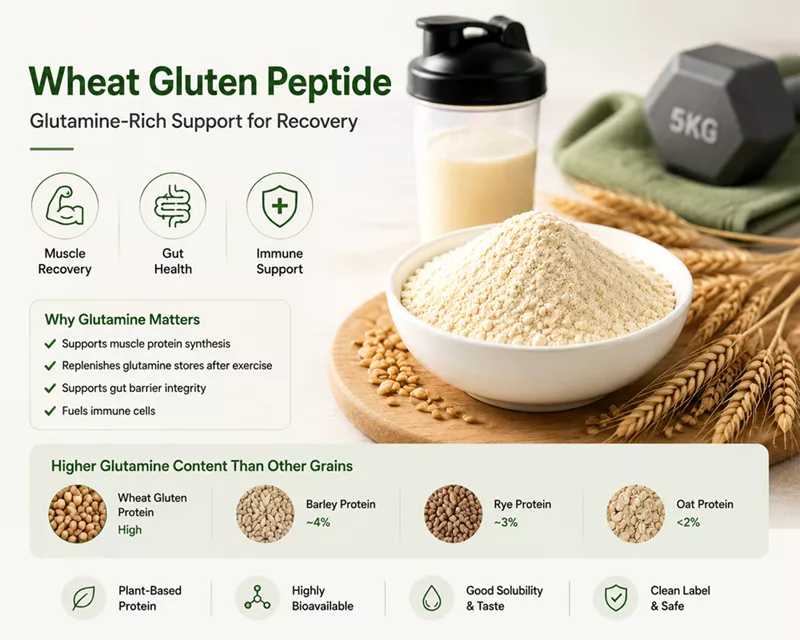
Wheat Gluten Peptide comes from wheat gluten, a protein found in wheat grains. Manufacturers use a special process called enzymatic hydrolysis to break down wheat gluten into smaller, easy-to-digest peptides. This process makes the peptides more soluble and helps the body absorb them quickly. People often choose Wheat Gluten Peptide because it offers a plant-based protein option that supports recovery and wellness.
The source of this ingredient is food-grade wheat gluten. Companies like BEYOND BIOPHARMA use advanced technology to turn wheat gluten into a high-quality peptide product. This transformation gives athletes and health-focused individuals a reliable way to add extra protein and glutamine to their diets.
Wheat Gluten Peptide stands out because of its unique blend of amino acids and proteins. The main components include glutenin and gliadin, which work together to give wheat gluten its special texture and structure. These proteins also help create a smooth mouthfeel in drinks and bars.
The peptide contains a high level of glutamine, which plays a key role in muscle repair and gut health. Here’s how the glutamine content in wheat gluten compares to other grains:
Wheat gluten proteins have a high glutamine content, which helps with their structure.
Barley proteins contain about 4% glutamine.
Rye proteins have around 3% glutamine.
Oat proteins offer less than 2% glutamine.
The table below shows the main components of Wheat Gluten Peptide and their nutritional benefits:
Component | Contribution to Nutritional Profile |
|---|---|
Glutenin | Forms an elastic network, adds texture and structure to foods. |
Gliadin | Works with glutenin for elasticity, improves functional properties. |
Glutamine | High content (>30%), supports gene expression and nutrient metabolism. |
Proline | Significant presence (>10%), aids digestibility and structure. |
This rich composition makes Wheat Gluten Peptide a smart choice for anyone who wants to boost recovery, support gut health, and enjoy a plant-based protein source.
Glutamine plays a big part in helping muscles recover after exercise. Many athletes use Wheat Gluten Peptide because it delivers a high amount of glutamine right when the body needs it most. Glutamine acts as a building block for other amino acids and coenzymes. These molecules help cells produce energy and divide, which is important for muscle repair.
Muscle tissue faces stress during workouts. Glutamine helps restore redox balance and boosts glutathione levels in muscle cells. Glutathione is a powerful antioxidant that protects muscles from damage. When athletes take glutamine after exercise, it can replenish TCA cycle intermediates and support muscle protein synthesis. This process helps muscles rebuild and recover faster.
Clinical studies have looked at how glutamine affects muscle recovery. The table below shows some findings:
Study Focus | Findings |
|---|---|
Pre-exercise supplementation | May help maintain plasma glutamine levels and support antioxidant defense. |
Post-exercise supplementation | Replenishes TCA cycle intermediates, facilitates muscle protein synthesis, and sustains immune function during recovery. |
Effects on intestinal integrity | A single dose post-exercise improved intestinal mucosa integrity in healthy young men. |
Immune function | Three weeks of supplementation enhanced oral mucosa immunity and reduced upper respiratory infections in athletes. |
HIV/AIDS patients | Short-term supplementation reduced TNF-α increase and improved cognitive performance after resistance exercise. |
Some pooled data from clinical trials show that glutamine does not always reduce exercise-induced muscle damage or improve body composition. Still, many athletes feel that Wheat Gluten Peptide gives them an edge in recovery, especially when their diets may lack enough protein.
Glutamine is essential for keeping the gut healthy. The cells lining the intestines use glutamine as their main energy source. Wheat Gluten Peptide provides a steady supply of glutamine, which helps these cells grow and repair themselves.
When the body runs low on glutamine, the gut barrier can weaken. This leads to inflammation and poor digestion. Glutamine supports the tight-junction proteins that keep the gut lining strong. Clinical trials show that glutamine supplementation improves intestinal permeability and helps people with Crohn's disease or IBS feel better.
Glutamine also affects gut microbiota. Studies found that glutamine supplementation can shift the balance of bacteria in the gut. For example:
Glutamine decreased the Firmicutes-to-Bacteroidetes ratio in obese individuals.
Obese subjects had lower fecal glutamate and glutamate/glutamine ratios compared to non-obese people.
Supplementation increased beneficial bacteria like Bacteroidetes and Actinobacteria in constipated animals.
Glutamine treatment helped maintain certain bacterial species during cancer treatment.
These changes support digestive health and may help the body absorb nutrients more efficiently.
Glutamine is vital for the immune system. Immune cells such as lymphocytes, neutrophils, and macrophages depend on glutamine to multiply and fight off germs. When the body faces infection or stress, the demand for glutamine rises.
Wheat Gluten Peptide can help meet this demand. Studies show that glutamine is necessary for lymphocyte proliferation and cytokine production. Without enough glutamine, immune cells cannot work properly. Macrophages also need glutamine to carry out phagocytosis, which is how they destroy harmful invaders.
The table below highlights key research findings:
Study | Findings |
|---|---|
Newsholme et al. | Demonstrated that glutamine is essential for lymphocyte proliferation and cytokine production. |
Ardawi et al. | Showed lower rates of lymphocyte function in the absence of glutamine. |
Calder et al. | Indicated that macrophage-mediated phagocytosis is influenced by glutamine availability. |
Glutamine supplementation can boost oral mucosa immunity and reduce upper respiratory infections in athletes. When the immune system works well, the body recovers faster and stays healthier.
Tip: Choosing a glutamine-rich ingredient like Wheat Gluten Peptide can support muscle repair, gut health, and immune function, making it a smart addition to any recovery routine.
BEYOND BIOPHARMA uses a multi-stage enzymatic hydrolysis process to create its Hydrolyzed Wheat Gluten Peptide. This method breaks down wheat gluten proteins into smaller, more digestible peptides. The process uses food-grade proteases under controlled conditions. This approach allows for a targeted breakdown, which leads to predictable and clean functional properties. Here’s what happens during hydrolysis:
Enzymatic hydrolysis splits large proteins into smaller peptides, making them easier to digest.
The process improves solubility, so the peptides dissolve completely in cold water.
It also enhances functional properties, such as flavor and emulsification, which is great for nutrition drinks and bars.
This advanced technology transforms wheat gluten into a premium ingredient that supports recovery and wellness.
The bioavailability of Wheat Gluten Peptide sets it apart from other protein sources. The enzymatic hydrolysis produces low-molecular-weight peptides, most of which are less than 600 Da. These small peptides are absorbed quickly in the gut. The PepT1 transporter in the intestinal wall helps move these di- and tripeptides into the bloodstream. Scientists have studied this pathway for over 30 years, confirming its importance in nutrient absorption.
Process Step | Benefit |
|---|---|
Two-step enzymatic hydrolysis and separation | Produces highly bioactive, small peptides |
Removal of large, undigested proteins | Increases bioavailability |
Use of PepT1 transporter for absorption | Enables rapid uptake of peptides |
This means athletes and patients can get the benefits of glutamine and other amino acids faster, right when their bodies need them most.
BEYOND BIOPHARMA takes quality seriously. The company follows strict standards to make sure every batch of Hydrolyzed Wheat Gluten Peptide is safe and consistent. Their facility holds several important certifications:
Certification | Purpose |
|---|---|
Ensures consistent, controlled production | |
ISO 22000 | Manages food safety |
ISO 9001 | Maintains quality management |
FSSC 22000 | Provides comprehensive food safety |
With a production capacity of 15,000 tons per year and over 20 years of experience, BEYOND BIOPHARMA delivers reliable service and premium quality. Their Hydrolyzed Wheat Gluten Peptide fits perfectly into sports nutrition, clinical nutrition, and plant-based products.
Many athletes and health-conscious people choose Wheat Gluten Peptide for its versatility in nutrition products. Sports nutrition leads the way, with this ingredient appearing in recovery drinks, protein blends, and plant-based bars. Companies market it as a plant-based alternative to whey protein hydrolysates. People who want fast-absorbing protein often reach for products with wheat gluten peptides. Clinical nutrition products also use these peptides because they deliver amino acids quickly. Older adults and those recovering from illness benefit from the rapid absorption and easy digestion. The ingredient fits well in functional dietary products for active and aging populations.
Tip: Look for clear recovery beverages or meal replacement shakes that list wheat gluten peptides as a main ingredient. These products often offer a smooth mouthfeel and high glutamine content.
Manufacturers recommend different dosages based on the product type and user needs. Most sports nutrition drinks contain 10–20 grams of protein per serving. Clinical nutrition products may use lower amounts for easier digestion. People can mix wheat gluten peptide powder into water, smoothies, or shakes. The cold-water solubility makes it easy to use without clumping. Always check the label for serving size and instructions. Athletes often take a serving after workouts to support muscle recovery. Older adults may use it as part of a meal replacement or supplement.
Product Type | Typical Dosage (per serving) |
|---|---|
Recovery Beverage | 10–20 grams |
Protein Blend | 15–25 grams |
Clinical Nutrition | 5–15 grams |
Safety matters for everyone, especially those with gluten sensitivity or celiac disease. Studies show that hydrolyzed wheat gluten, when formulated correctly, does not cause immediate hypersensitivity reactions in sensitive individuals. Experts recommend keeping the average molecular weight of hydrolysates below 3,500 Da for safety. Regulatory guidelines for gluten-free labeling set a limit of 20 parts per million (ppm) of gluten. There is no consensus on the safe daily gluten intake for sensitive populations because individual thresholds vary. People should always check product labels and consult healthcare providers if they have concerns.
Hydrolyzed wheat gluten is safe for most people when processed properly.
Cosmetic Ingredient Review panels approve its use in products with short polypeptide chains.
Gluten-free labeling requires strict limits on gluten content.
Note: Those with celiac disease or severe gluten sensitivity should look for products that meet gluten-free standards and consult a doctor before use.
Wheat Gluten Peptide stands out as a smart choice for recovery thanks to its high glutamine content and rapid absorption. BEYOND BIOPHARMA’s hydrolyzed version supports muscle, gut, and immune health with premium quality and safety. People benefit from its essential nutrients and prebiotic effects, which include:
Promoting beneficial gut bacteria like bifidobacteria
Providing fiber, protein, and key minerals
Supporting a healthy gut and reducing inflammation
Misconception | Scientific Evidence |
|---|---|
Gluten is harmful to most people | Research shows gluten benefits those without sensitivity |
Gluten peptides cause inflammation | Studies confirm rapid breakdown and low activity in healthy individuals |
Gluten leads to weight gain | No link found between gluten and BMI |
Try adding this ingredient to your post-workout shakes or meal plans for a simple boost to your recovery routine.
BEYOND BIOPHARMA uses advanced enzymatic hydrolysis. Their product offers high glutamine content, rapid absorption, and cold-water solubility. The company follows strict quality standards and delivers consistent results.
Athletes often choose wheat gluten peptide for its fast absorption and high glutamine levels. It supports muscle repair and helps speed up recovery after intense exercise.
Yes! Wheat gluten peptide comes from wheat. It fits perfectly into plant-based nutrition plans. Many people use it in vegan protein blends and functional foods.
Glutamine in wheat gluten peptide fuels intestinal cells. It helps maintain a strong gut barrier and supports healthy digestion. Many clinical studies show positive effects on gut health.
People with gluten sensitivity should check product labels and consult a healthcare provider. BEYOND BIOPHARMA’s hydrolyzed wheat gluten peptide meets strict safety standards, but individual tolerance may vary.


Tel:+86 21 65010906
Cell/Whatsapp/Wechat:
+86 13482884055
+86 18657345785
Email: sales@beyondbiopharma.com





 English EN


