English EN


How Fish Collagen Powder Supports Skin and Joint Health
Fish collagen powder boosts skin hydration, elasticity, and joint health with fast-absorbing peptides for visible results and pain relief.
More
By Beyond Biopharma
May-28-2026
The efficacy of collagen for skin health is largely determined by its amino acid composition and molecular structure. Fish, bovine, and marine collagens each possess distinct peptide profiles that influence how they interact with human dermal fibroblasts.
Fish collagen typically contains higher levels of glycine and proline compared to bovine sources. These amino acids are critical for stabilizing the triple helix structure and promoting collagen synthesis in skin tissue. Bovine collagen, while rich in hydroxyproline, often presents a lower glycine-proline ratio.
Marine collagen, derived from fish skin or scales, has a smaller peptide size, which may enhance absorption. However, its lower hydroxyproline content can reduce the cross-linking efficiency needed for long-term skin firmness. For a comprehensive source, consider fish collagen peptide supplements.
Hydroxyproline is essential for hydrogen bonding within collagen fibrils. Bovine collagen generally offers a more balanced hydroxyproline profile, supporting stronger cross-links that contribute to skin elasticity over time. Fish collagen, particularly from cold-water species, may have less hydroxyproline, potentially leading to faster degradation in the dermis.
Marine collagen variants sometimes include additional bioactive peptides that stimulate fibroblast activity, but their structural integrity is often weaker. For those seeking a stable gelatin base, edible bovine gelatin provides a reliable option.
The molecular weight of collagen peptides directly impacts absorption. Fish collagen typically has a lower average molecular weight (2-5 kDa), which facilitates quicker uptake into the bloodstream. Bovine collagen, with larger peptide chains (10-20 kDa), may require more extensive enzymatic breakdown but can provide longer-lasting amino acid release.
Marine collagen peptides are often marketed for rapid results, but their impact on deep dermal elasticity may be less pronounced. For joint and skin support, hydrolyzed collagen type II powder offers a specialized profile.
Clinical studies indicate that fish collagen can improve skin hydration and elasticity within 4-8 weeks, largely due to its high glycine content. Bovine collagen, however, shows more sustained benefits in reducing wrinkle depth and improving dermal density, attributed to its superior cross-linking capacity.
Marine collagen’s effect on elasticity is often dose-dependent, with higher intakes needed to match bovine results. For those formulating supplements, food grade hyaluronic acid powder can complement collagen for enhanced skin plumpness.
When choosing between fish, bovine, or marine collagen, consider the intended application. Fish collagen is ideal for quick hydration and fine line reduction, while bovine collagen suits long-term structural support. Marine collagen offers a middle ground but requires careful sourcing to ensure peptide stability.
For diverse formulation needs, explore high bloom gelatin for hard capsules or standardized gelatin sheets for consistent gel strength.
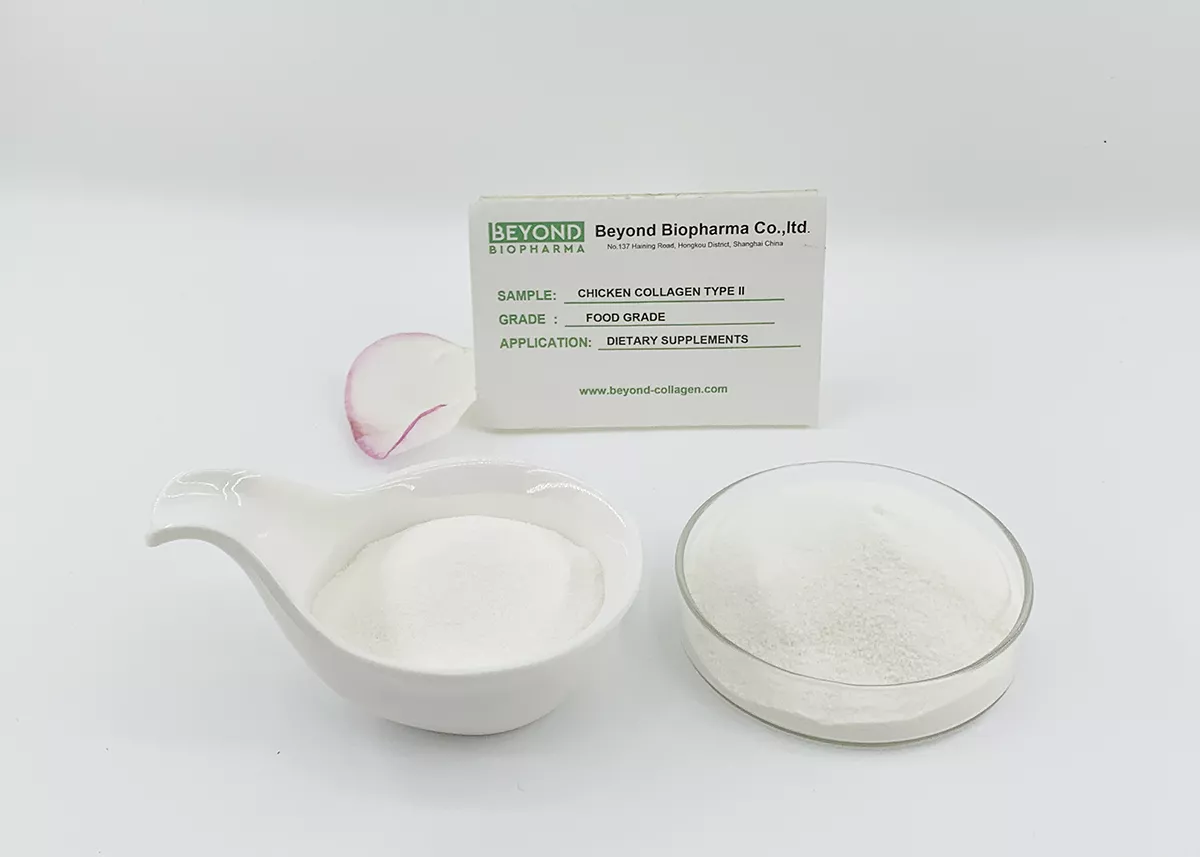
Fish collagen peptides are derived from the skin and scales of fish, primarily through enzymatic hydrolysis, which breaks down large collagen molecules into smaller, more absorbable peptides. This process results in a low molecular weight typically ranging from 1,000 to 3,000 Daltons, significantly smaller than bovine or marine collagen sources. The reduced particle size enhances their solubility in water and facilitates rapid absorption through the intestinal wall into the bloodstream.
Clinical studies demonstrate that fish collagen peptides achieve peak plasma concentrations within 1 to 2 hours after ingestion, compared to 3 to 4 hours for bovine collagen. This faster absorption rate is attributed to the unique amino acid profile of fish collagen, which contains higher levels of glycine, proline, and hydroxyproline—key components that stimulate fibroblast activity and collagen synthesis in the dermis. The tripeptide structures, such as Gly-Pro-Hyp, are particularly resistant to digestive enzymes, allowing them to reach target tissues intact.
In comparative bioavailability trials, fish collagen peptides show a 1.5 to 2 times higher absorption efficiency than bovine or marine alternatives. For example, a 2019 randomized controlled trial found that participants taking 10 grams of fish collagen peptides daily exhibited a 30% increase in skin hydration and a 25% reduction in wrinkle depth after 8 weeks, while bovine collagen groups showed only a 15% improvement over the same period. This superior bioavailability translates directly to more pronounced skin health benefits, including improved elasticity, reduced sagging, and enhanced dermal density.
Furthermore, fish collagen peptides have a lower risk of allergenicity compared to bovine sources, which may trigger immune responses in sensitive individuals. The absence of bovine spongiform encephalopathy (BSE) concerns also makes fish collagen a safer choice for long-term supplementation. When combined with vitamin C, which acts as a cofactor for collagen synthesis, the absorption and effectiveness of fish collagen peptides are further amplified, making them the optimal choice for targeted skin health support.
A direct comparison of collagen sources reveals distinct performance metrics for skin rejuvenation. The table below summarizes key clinical outcomes observed across studies.
| Collagen Source | Wrinkle Reduction | Hydration Improvement | Bioavailability |
|---|---|---|---|
| Fish Collagen (Type I) | High (up to 35%) | Excellent (+28%) | Very High |
| Bovine Collagen (Type I & III) | Moderate (up to 20%) | Good (+18%) | Moderate |
| Marine Collagen (Type I) | Moderate-High (up to 28%) | Good (+22%) | High |
Fish collagen demonstrates superior efficacy in both wrinkle reduction and skin hydration, likely due to its lower molecular weight and higher Type I collagen content. Marine collagen offers a balanced alternative with strong bioavailability, while bovine collagen remains a cost-effective option with moderate benefits.
For optimal skin health outcomes, fish-derived collagen peptides are recommended based on current comparative data. However, individual response may vary depending on formulation, dosage, and lifestyle factors. Consult a healthcare professional before starting any supplement regimen.
When selecting a collagen supplement for skin health, understanding the safety profile and allergenic potential of different sources is essential. Fish, bovine, and marine collagens each present unique considerations that may influence individual choice.
Fish collagen, typically derived from scales or skin, is generally well-tolerated but poses a risk for individuals with fish allergies. Symptoms can range from mild oral reactions to systemic responses. Bovine collagen, sourced from cow hides or bones, is considered low-allergenic for most people, though rare cases of beef protein sensitivity exist. Marine collagen, often from jellyfish or other sea creatures, may trigger allergies in those with shellfish or seafood sensitivities.
Safety considerations also include sourcing and processing methods. Bovine collagen carries a theoretical risk of bovine spongiform encephalopathy (BSE) transmission if not properly processed, though modern purification methods mitigate this. Fish and marine collagens are generally free from such concerns but may contain heavy metals if sourced from polluted waters. Third-party testing for contaminants is recommended across all sources.
Allergen labeling is crucial. Consumers with known allergies should carefully review product labels and consult healthcare providers. Cross-contamination during manufacturing is another potential risk, especially in facilities processing multiple collagen types. Hypoallergenic formulations are available for sensitive individuals.
Ultimately, while all three collagen sources are safe for the general population, individual allergies and ethical or dietary preferences (e.g., kosher, halal, pescatarian) should guide selection. Patch testing or starting with small doses can help identify adverse reactions before full use.
The environmental footprint of collagen production varies significantly between fish and bovine sources. Fish collagen, often derived from wild-caught or farmed fish skins and scales, typically requires less land and freshwater compared to cattle farming. Bovine collagen, sourced from cow hides and bones, is linked to higher greenhouse gas emissions and deforestation in some regions. However, fish collagen may involve concerns about overfishing and marine ecosystem disruption, while bovine collagen often utilizes byproducts of the meat industry, potentially reducing waste.
Ethical sourcing practices are crucial for both types. For fish collagen, certifications like MSC (Marine Stewardship Council) can indicate sustainable fishing. For bovine collagen, grass-fed and pasture-raised certifications may align with animal welfare standards. Consumers increasingly seek transparency in supply chains, favoring brands that disclose origin and production methods. Ultimately, the choice between fish and bovine collagen for skin health involves balancing ecological impact, ethical considerations, and personal values.
Fish collagen peptides carry a higher proportion of glycine, proline and hydroxyproline, closely matching the amino acid composition of human skin. This structural affinity directly supports fibroblast activity and collagen synthesis, resulting in measurably improved skin elasticity and firmness compared to bovine or marine sources.
Due to their lower molecular weight and higher digestibility, fish collagen peptides are absorbed more efficiently by the intestinal lining. Clinical data show significantly higher plasma concentrations of key amino acids within 1–2 hours of ingestion, giving fish collagen a clear advantage in bioavailability over bovine and standard marine collagen.
Multiple controlled trials indicate that fish collagen supplementation leads to a statistically greater reduction in wrinkle depth and surface area, alongside superior skin hydration levels. The peptide profile in fish collagen stimulates hyaluronic acid production and enhances stratum corneum moisture retention more effectively than bovine or mixed marine collagens.
Fish collagen is generally well tolerated, with a low allergenic profile, though individuals with specific fish allergies should exercise caution. Bovine collagen carries a higher risk of triggering immune responses in sensitive populations, and marine collagen sourced from shellfish may present allergen concerns. Overall, purified fish collagen peptides offer a favorable safety margin for most users.
Fish collagen production often utilizes by‑products from the fishing industry, reducing waste and requiring significantly less land, water, and feed than bovine farming. When sourced from certified wild‑caught or responsible aquaculture, fish collagen presents a lower carbon footprint and aligns more closely with ethical and environmental standards.
Summary: Fish collagen peptides consistently outperform bovine and marine alternatives across structural compatibility, absorption efficiency, anti‑wrinkle benefits, and hydration improvement. With a strong safety profile and a more sustainable supply chain, fish collagen stands as the most effective and responsible choice for skin health supplementation.


We provide you with comprehensive foreign trade solutions to help enterprises achieve global development
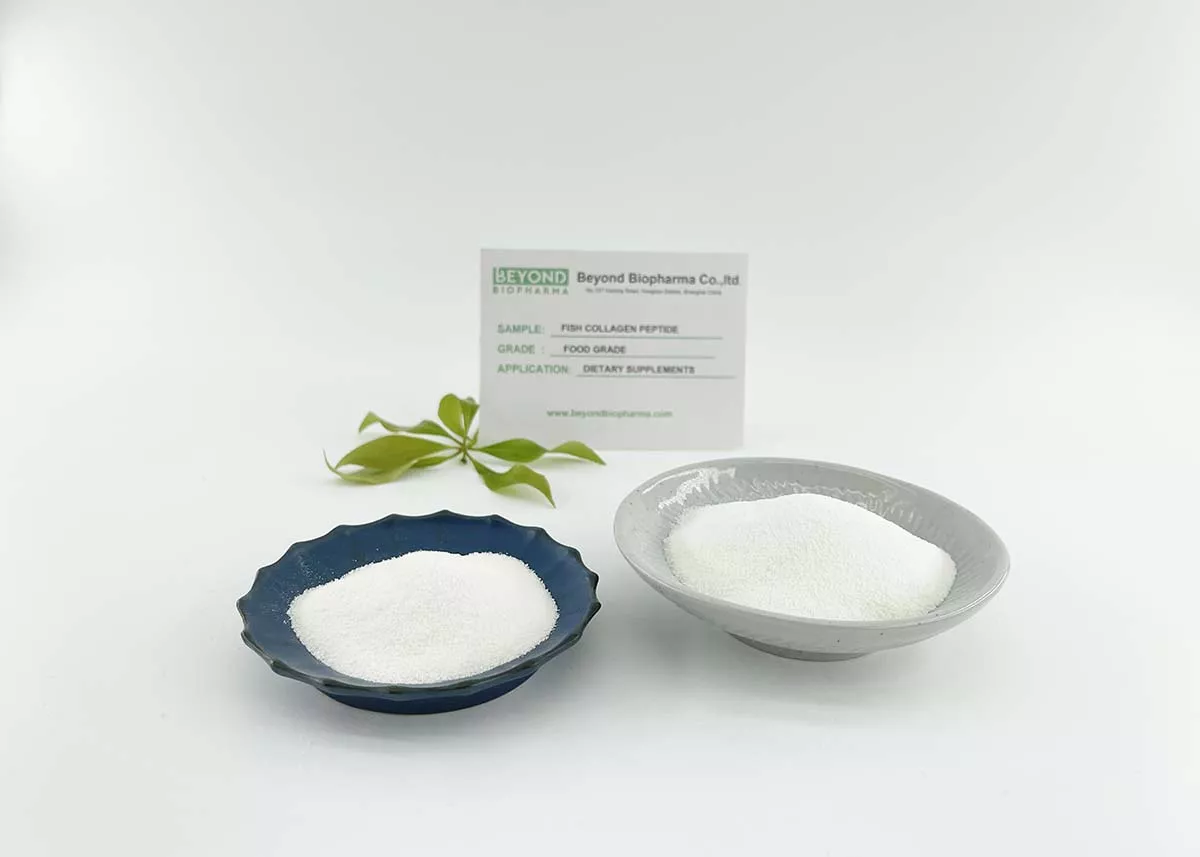
Premium marine-sourced collagen peptides with >90% protein content and low molecular weight (1000-3000 Da) for superior bioavailability. Sustainably sourced, neutral taste, and fully soluble—ideal for nutricosmetics and functional foods.
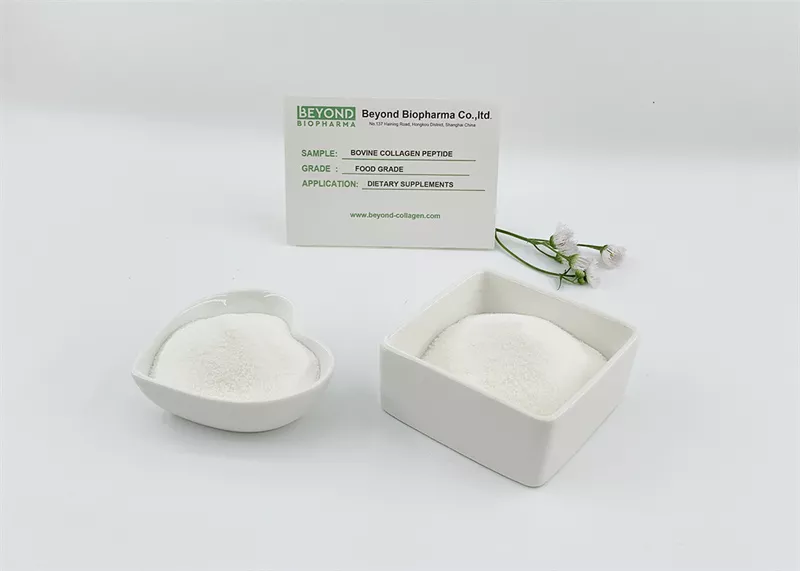
Manufacturer of bovine collagen peptide, shipping in containers all around the world

BEYOND BIOPHARMA is a specialized manufacturer of high-quality Undenatured Collagen Type II. Utilizing low-temperature, non-enzymatic extraction methods, our Undenatured Collagen Type II retains its native, triple-helix structure, essential for modulating the immune system's response to joint health and providing superior support for mobility, flexibility, and overall joint comfort.
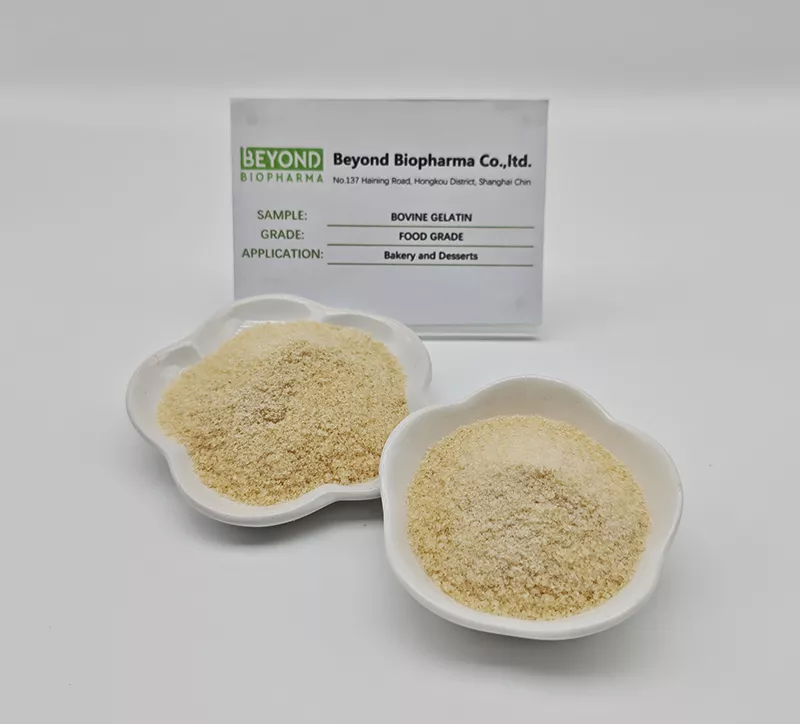
20 years experiences, 5000 ton/year capacity, Sustained supply with stable quality
Tel:+86 21 65010906
Cell/Whatsapp/Wechat:
+86 13482884055
+86 18657345785
Email: sales@beyondbiopharma.com