
EN
If you’re developing a new supplement, a pharmaceutical dosage form, or a functional food, the quality of your gelatin can make or break the final product. Not all gelatins are the same – the source, the extraction process, and the technical specifications (like bloom and viscosity) directly affect how your capsules form, how your tablets bind, and how your gummies feel in the mouth. This guide is designed to give you a clear, no-nonsense overview of pharmaceutical gelatin types, their applications, and the key parameters you need to look for when sourcing from a supplier.
We work with both bovine and porcine sources, and we understand that every formulation has its own demands. Whether you need a low endotoxin grade for a sensitive biomedical application or a high bloom gelatin for a hard shell capsule that needs to dissolve quickly, the right choice depends on your specific production line and your target market. Below, we break down the most common types and how to match them to your project.
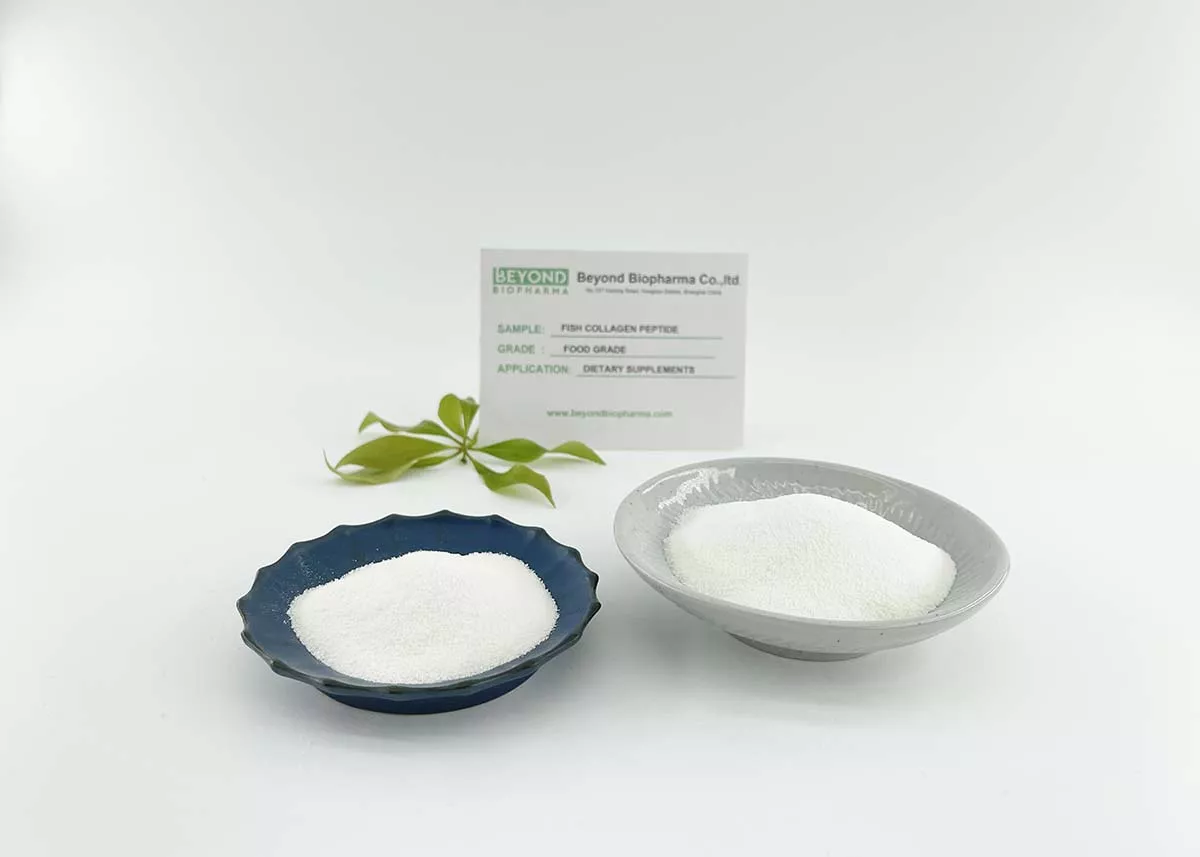
The two most common sources of pharmaceutical gelatin are bovine (cattle) and porcine (pig). Both can be processed to meet strict pharmacopeia standards, but there are practical differences. Bovine gelatin, often derived from bone or hide, tends to have a higher bloom and is frequently used in hard capsules and tablet coating. Porcine gelatin is widely used in softgels due to its excellent clarity and film-forming properties. However, the choice is often driven by regional regulations, religious considerations (Halal/Kosher), and the specific characteristics of your fill formulation.
For example, if you’re producing a softgel that contains aldehyde-sensitive ingredients, you’ll need a gelatin with low cross-linking potential. In that case, a specialized porcine or bovine gelatin with anti-cross-linking properties is a better fit. On the other hand, if you’re making a hard shell capsule that needs to disintegrate rapidly, a high bloom bovine gelatin with a balanced viscosity is a solid choice. We always recommend sharing your full formulation details with your supplier so they can point you to the right grade.
When you look at a gelatin spec sheet, you’ll see values like “Bloom 250” or “viscosity 4.5 mPas”. Bloom is a measure of gel strength – higher bloom means a firmer gel at the same concentration. For gummies and hard capsules, a higher bloom (200-280) is often preferred because it gives a snappy texture and allows for lower usage levels. For softgels, a medium bloom (150-200) with a higher viscosity is usually better, as it provides the right film strength and elasticity for encapsulation.
Viscosity, measured in mPas, affects how easily the gelatin solution flows and how it coats or binds. High viscosity gelatins are excellent for softgel production because they create a thicker, more durable shell. Low viscosity gelatins are often used for tablet coating or microencapsulation, where a thinner, even layer is required. Particle size (mesh) also matters for dissolution speed and dust control. Most pharmaceutical grades come in 8-30 mesh, but we can customize to your handling needs.
Hard capsules – For two-piece hard shells, you need a gelatin with high bloom (typically 240-260) and moderate viscosity. It should have excellent machinability, meaning it strips cleanly from the pins and forms uniform wall thickness. We offer a high bloom bovine bone gelatin that is BSE-free and meets all major pharmacopeia standards. It also allows for customizable dissolution profiles, from immediate release to enteric coatings.
Softgel capsules – Softgels require a gelatin with a balanced bloom (around 170-190) and higher viscosity to ensure strong seams and resistance to leakage. Our ultra-high viscosity gelatin is specifically designed for softgel production, offering superior seam strength and stable shelf life even with challenging fills like fish oils or vitamins. We also offer a specialized anti-cross-linking grade for aldehyde-sensitive ingredients.
Tablets & microencapsulation – When used as a tablet binder, gelatin provides cohesive strength without delaying disintegration. For microencapsulation, a low viscosity, film-forming gelatin protects sensitive active ingredients like omega-3 or probiotics from oxidation and moisture. Our gelatin for micro-encapsulation is available in different mesh sizes to suit your spray-drying or coacervation process.
Biomedical & tissue engineering – This is a niche but growing field. For hemostatic sponges, wound dressings, or 3D bioprinting scaffolds, you need an ultra-pure gelatin with low endotoxin levels. We offer a specialized grade that is tested for endotoxin and biocompatibility, ensuring it meets the stringent requirements of medical device applications.
| Grade | Bloom (g) | Viscosity (mPas) | Best for |
|---|---|---|---|
| Bovine bone, high bloom | 240 – 270 | 4.0 – 5.0 | Hard capsules, tablet coating |
| Porcine hide, medium bloom | 180 – 210 | 3.5 – 4.5 | Softgels, gummies |
| Ultra-high viscosity | 150 – 170 | 5.5 – 6.5 | Softgel shells with high oil content |
| Low endotoxin, biomedical | 200 – 240 | 3.0 – 4.0 | Wound care, 3D printing |
Q: What is the molecular weight of your hydrolyzed collagen peptides?
Our collagen peptides are enzymatically hydrolyzed to a low molecular weight, typically between 1000 Da to 3000 Da. This ensures superior bioavailability and rapid absorption by the human body.
Q: Are your collagen peptides soluble in cold water?
Yes, our peptides feature excellent cold-water solubility. Through a specialized agglomeration process, we ensure that the powder disperses quickly and dissolves completely without clumping or precipitation. The resulting solution remains clear and transparent, making it an ideal ingredient for functional beverages, RTD products, and instant protein mixes.
Q: Does the product have any specific taste or odor?
Our product is characterized by its neutral taste and odor profile. We utilize a multi-stage purification process, including advanced filtration and deodorization technologies, to eliminate the characteristic 'fishy' or 'earthy' notes often associated with raw collagen. This neutrality allows you to incorporate high dosages into food and beverage products without affecting the original flavor profile or requiring heavy masking agents.
Q: What are the main sources of your collagen peptides?
We offer high-quality collagen derived from several premium sources to meet diverse market demands: Marine Collagen (sourced from deep-sea fish skins/scales, Non-GMO, sustainable), Bovine Collagen (from 100% grass-fed, pasture-raised cattle hides), and Porcine Collagen (available for specific pharmaceutical or food applications). All our raw materials are fully traceable and comply with global safety standards. We can provide HALAL, KOSHER, and ISO certifications upon request to ensure compatibility with your target market.
Choosing the right pharmaceutical gelatin is a balance of technical specs, regulatory compliance, and your specific production process. We hope this guide has given you a clearer picture of what to look for. If you need more detailed information about a particular grade or want to request a sample, we’re happy to help you find the right fit for your project.
For a deeper dive into our full range of pharmeceutical gelatin options, or to access technical data sheets and certificates, you can download our detailed documentation. We’re here to support your formulation journey with reliable, high-quality ingredients.


Tel:+86 21 65010906
Cell/Whatsapp/Wechat:
+86 13482884055
+86 18657345785
Email: sales@beyondbiopharma.com





 English EN


