
EN
Purchasing managers check plant-based health extracts using strict business and technical rules. Controlled enzyme breakdown makes natural peptides that dissolve easily in cold water and digest quickly.
Decision Criteria | Technical & Commercial Specifications | Logistics & Procurement Impact |
|---|---|---|
Bulk plant peptide MOQ | 10 kg to 25 kg standard minimum limits | Sets the first order size and small trial tests |
Molecular Weight | 1,000 to 3,000 Da small particle range | Guarantees good body absorption and fast digestion |
Production Schedule | 1 to 6 weeks lead time | Manages stock levels and raw material delivery |
Logistics Terms | Incoterms (FOB, CIF, or DDP) | Shows who covers cold shipping risks and freight fees |
Buying teams must check these details before placing final orders to avoid global shipping problems.
Buying teams review supplier order limits before issuing real purchase orders. Plant peptide makers create different order requirements based on production needs. Basic catalog items have smaller setup needs, setting standard minimum catalog limits at 500 kg. Custom blends need bigger production runs, reaching up to 164,000 kg for special orders. Bulk pricing deals reduce unit costs for buyers who commit to huge orders.
Purchasing leads ask for test samples and small trial batches before signing final contracts. Testing these small batches checks important powder traits, cold-water mixing abilities, and flavor profiles. Reviewing a bulk plant peptide MOQ tier during early tests helps companies check factory equipment fit. Early batch testing reduces supply chain risks before buyers place major commercial orders.
Choosing plant raw materials directly affects basic ingredient prices and product performance. Suppliers process different plant options like pea, soy, rice, wheat, corn, and walnut hydrolysates. Beyond Biopharma acts as a main industry example for custom plant peptides. Beyond Biopharma provides custom molecular weight options ranging from 1,000 to 3,000 Da. Technical teams tweak enzyme processing steps and custom plant blends to meet target recipes.
Modern cleaning methods create clear custom choices and supplier price tiers. The summary table below shows main technical points that change bulk hydrolysate cost models:
Key Factor | Technical Consideration | Pricing Tier Impact |
|---|---|---|
Raw Material Source | Protein selection (pea, soy, rice, oat) | Base cost foundation |
Enzymatic Processing | Multi-enzyme breakdown and membrane filtration | Functional purity premium |
Drying Technology | Spray-drying versus freeze-drying | Bioactive stability cost |
Special freeze-drying methods boost ingredient stability while pushing product prices higher. Continuous automated factory lines cut fixed machinery costs for large orders. Safety certificates and heavy metal tests also shape final price tiers. Buying managers use flexible choices, arranging a bulk plant peptide MOQ to balance inventory and working cash.
Making pure plant protein hydrolysates needs careful schedule planning. Regular production lead times usually take 1 to 6 weeks to finish a full batch. Factory work starts by getting raw botanical items from clean, non-GMO crops. Processing facilities collect pea, soy, rice, wheat, corn, and walnut protein sources. Next, controlled enzymatic hydrolysis splits complex proteins into smaller, active short-chain peptides. Multi-stage purification steps then clear out heavy plant solids, unwanted natural colors, and bitter flavor notes.
Modern production facilities closely watch every phase of the enzymatic reaction. Clean-label processing ensures total cold-water solubility without grit, cloudy liquid, or settled dirt. Beyond Biopharma uses controlled enzymatic breakdown methods to capture ideal low-molecular-weight peptide fractions. Spray-drying tools turn clear liquid hydrolysates into stable bulk powders that mix easily into sports nutrition products. Steady raw material deliveries help factory lines run smoothly without unexpected work stops.
In-house quality teams execute mandatory lab test steps for every single production batch. Skilled chemists run High-Performance Liquid Chromatography (HPLC) and Liquid Chromatography-Mass Spectrometry (LC-MS) tests. These detailed testing tools verify the exact molecular weight distribution stays between 1,000 and 3,000 Da. Testing methods also confirm successful debittering, chemical purity, and steady bioactive results. Lab directors release a formal Certificate of Analysis (COA) only when a batch meets strict internal rules.
Lab testing steps add important quality checks directly to master supply schedules. Careful lab work shields health drink brands from cloudy mixes, bad solubility, or bad flavor changes. Changing primary ingredient suppliers brings long-term business risks to corporate purchasing leads. Setting up new botanical peptide suppliers often takes 12 to 24 months due to needed product shelf-life testing. Smart purchasing leads plan supplier quality checks ahead of time to keep production running without interruptions.
Purchasing managers pick trade terms to set costs and legal duties. Free on Board (FOB) terms make buyers handle shipping after items board at the departure port. Buyers organize ocean freight, purchase transit insurance, and handle customs clearance directly.
Cost, Insurance, and Freight (CIF) shifts sea logistics back to the raw material supplier. The seller pays shipping and sea insurance to the destination port. Meanwhile, Delivered Duty Paid (DDP) terms give buyers maximum protection. Suppliers manage long shipping runs, import customs, local tariffs, and final factory delivery.
Incoterm | Freight Cost Payor | Risk Transfer Location | Customs Duties Responsibility |
|---|---|---|---|
FOB | Buyer | Origin Port Loading | Buyer |
CIF | Supplier | Origin Port Loading | Buyer |
DDP | Supplier | Buyer Final Facility | Supplier |
Easy-dissolving plant hydrolysates need careful protection during ocean shipping. Bioactive plant protein powders quickly soak up air moisture inside warm cargo containers. High moisture causes fine powders to clump, lose clarity, and mix poorly. Exposing delicate small-particle peptides to humid ocean air ruins ingredient freshness.
Buyers lower money risks by setting clear risk handover points in supply deals. Under basic FOB terms, buyers take damage risks right after container loading. Smart buyers prevent damage by requiring protective heat liners and moisture trackers in sea shipments.
Sellers like Beyond Biopharma shield delicate peptides with thick, moisture-proof bulk bag liners. Advanced packaging protects small 1,000 to 3,000 Da particles from air moisture during ocean travel. Picking DDP terms shifts all transit risk to the material supplier. Buyers check container seals and test product quality before signing final delivery forms.
Buying teams create clear vendor ranking systems to rate potential ingredient sellers fairly. Procurement officers score government compliance history at 30% weight to stop market holdups. Factory network strength carries a 25% weight since direct control prevents unexpected material shortages. Price fairness accounts for 20% weight, while global political danger represents 15% weight. Green production methods and eco-friendly practices cover the final 10% weight.
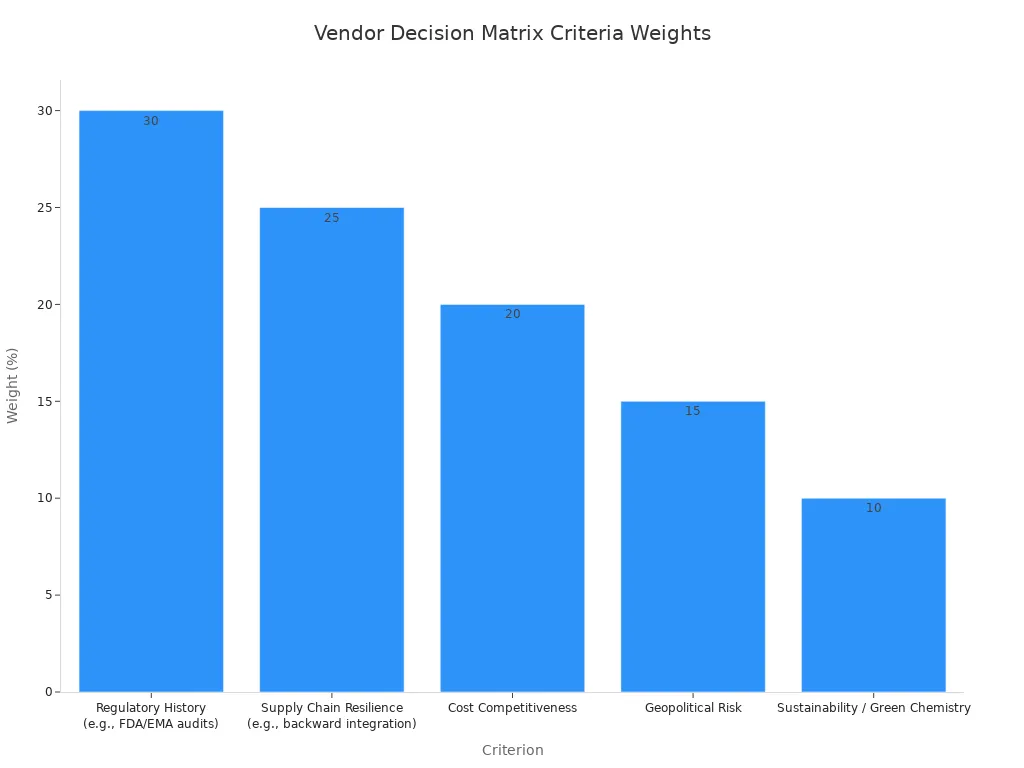
Buying teams focus on daily factory performance and business safety during seller reviews. Basic scoring plans set overall cost and base pricing at 30% weight. Item purity and mixing success get a 25% weight inside the choice table. Future adaptability skills carry 15% weight, while freight safety holds a matching 15% weight. Scoring these key items lets shoppers weigh factory adaptability. Checking a vendor's bulk plant peptide MOQ guarantees full harmony with plant production limits.
Purchasing leads confirm real product details prior to writing binding order forms. Sellers must provide early quality test sheets showing total lot testing results. Freight bills and cargo tracking notices need to show up right at departure. Inspection crews finish basic incoming material checks within 2 business days after goods arrive. Delivered peptide lots must keep a minimum of 7 months or 75% total freshness. Quality managers alert sellers regarding lot flaws within 5 business days.
Supply deals set clear factory rules for shipping control and problem solving. Vendors must respond to quality issues within 24 hours and fix material problems within 3 days. Clients keep an official report window running 60 days after unloading. Normal supply deals apply penalty fees of 2.5% order value weekly for late arrivals. Deals allow full order cancellation power if freight delays go past 1 week.
Sourcing teams have to manage order sizes, test times, and ocean freight risks. Wise buyers check vendors using clear plant operational setups before making final agreements.
Production Model | MOQ Requirement | Average Lead Time |
|---|---|---|
Micro‑lab (on‑demand) | None | 3–5 days |
Large plant (batch) | 5 g + | 14–21 days |
Although the unit cost from big factories seems smaller, extra storage fees, shelf aging, and late launches hurt your overall profits. Small lab setups cover higher fees by removing trash, shipping instantly, and updating item lines each week.
Buying leaders follow three quick steps during large botanical peptide orders:
Check technical sheets and ask for batch quality lab files.
Review exact bulk plant peptide MOQ rules alongside present operational plans.
Choose DDP trade terms to shield cold-dissolving non-GMO powders from air water.
Getting pure natural hydrolysates from Beyond Biopharma delivers top water mixing and keeps your product reputation safe.
Beyond Biopharma turns natural plant proteins into small peptides sized from 1,000 to 3,000 Da. These tiny particles break down fast in your body, soak in quickly, and dissolve completely in cold water without leaving any gritty dirt at the bottom.
Buying groups can pick active hydrolysates made from many different plants. Processing plants create pure peptides using pea, soy, rice, wheat, corn, and walnut proteins. Product teams can ask for custom plant mixes and adjusted breakdown levels.
Making and cleaning a full batch takes 1 to 6 weeks. Detailed lab testing steps like High-Performance Liquid Chromatography can add extra time. Purchasing managers check the bulk plant peptide MOQ with these timelines to stop factory work delays.
DDP terms put all shipping risks directly onto the ingredient seller. The seller manages ocean freight, import taxes, and safe shipping boxes. This deal protects fast-dissolving powders from damp sea air, heat waves, and water damage on the way.


Tel:+86 21 65010906
Cell/Whatsapp/Wechat:
+86 13482884055
+86 18657345785
Email: sales@beyondbiopharma.com





 English EN


